
In This Article
Finding the right baby carrier 6-12 months can feel like searching for a needle in a haystack, especially when your little one is hitting that magical phase where they’re curious, wiggly, and getting heavier by the day. I remember standing in a baby store, overwhelmed by the rows of carriers, wondering which one would actually grow with my daughter through those crucial middle months.
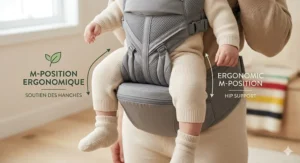
Here’s the thing: babies aged 6-12 months aren’t newborns anymore, but they’re not quite toddlers either. They need a carrier that offers solid head and neck support while accommodating their increasing weight (typically 7-9 kg or 15-20 lbs) and their growing desire to see the world around them. According to Health Canada’s safety guidelines, proper positioning becomes even more critical during this transitional period to support healthy hip development and maintain clear airways.
After testing multiple carriers with two kids across brutal Canadian winters and humid summers, I’ve learned that the best baby carrier 6-12 months balances three key factors: ergonomic positioning for your baby’s developing hips, comfortable weight distribution for your back and shoulders, and versatility to adapt as your baby grows. Whether you’re navigating Toronto’s PATH system, hiking Banff trails, or simply trying to get groceries done in Montreal, the right carrier makes all the difference.
This guide covers seven exceptional infant carrier reviews from products readily available on Amazon.ca, complete with Canadian pricing, real user feedback from coast to coast, and practical advice for when to change carrier size as your baby transitions through developmental stages.
Quick Comparison Table
| Carrier | Weight Range | Carry Positions | Price (CAD) | Best For |
|---|---|---|---|---|
| Ergobaby Omni Deluxe | 3-20 kg (7-45 lbs) | 4 positions | $180-220 | Premium breathability |
| LÍLLÉbaby Complete All Seasons | 3-20 kg (7-45 lbs) | 6 positions | $160-210 | Versatility & seasons |
| Ergobaby Omni 360 Classic | 3-20 kg (7-45 lbs) | 4 positions | $120-170 | Mid-range quality |
| Infantino Flip Advanced 4-in-1 | 3.6-14.5 kg (8-32 lbs) | 4 positions | $45-70 | Budget-friendly |
| BabyBjörn Carrier Mini | 3-11 kg (7-24 lbs) | 2 positions | $130-160 | Compact & lightweight |
| Momcozy Ergonomic Carrier | 3-20 kg (7-44 lbs) | 3 positions | $70-90 | Value & simplicity |
| Momcozy Hip Seat Carrier | 3-20 kg (7-44 lbs) | 6 positions | $90-110 | Active older babies |
💬 Just one click – help others make better buying decisions too! 😊
Top 7 Baby Carrier 6-12 Months: Expert Analysis
1. Ergobaby Omni Deluxe – Premium Breathability Champion
The Ergobaby Omni Deluxe is rated number one in airflow testing, making it a game-changer for Canadian summers and parents who overheat easily. This convertible baby carrier features SoftFlex Mesh fabric that keeps both parent and baby cool while providing exceptional support through all developmental stages.
Key Specifications:
- Weight capacity: 3-20 kg (7-45 lbs)
- 4 ergonomic positions: front-inward, front-outward, hip, and back carry
- 6 storage pockets for essentials
- Adjustable from newborn to toddler (0-48 months)
Canadian Price Range: $180-220 CAD on Amazon.ca
What Canadian Parents Say: Ontario parents particularly appreciate the superior ventilation during humid summers, while Alberta families report the mesh material performs well even during shoulder-season hikes. Several Vancouver reviewers mention the storage pockets are genuinely useful for keys, phones, and snacks during long city walks.
✅ Pros:
- Industry-leading breathability and airflow
- Six convenient storage areas for hands-free convenience
- Intuitive strap indicators for perfect fit
- Premium lumbar support reduces back strain
- Machine washable and built to last
❌ Cons:
- Higher price point than competitors
- Mesh may feel less cozy in winter compared to cotton options
2. LÍLLÉbaby Complete All Seasons – Maximum Versatility
The LÍLLÉbaby Complete All Seasons carrier offers six carrying positions, making it perfect for the 6-12 month age range when babies are developing preferences for how they want to be carried. The zip-down front panel reveals breathable mesh for warmer days while the outer layer provides warmth during Canadian winters.
Key Specifications:
- Weight capacity: 3-20 kg (7-45 lbs)
- 6 ergonomic positions including hip carry
- Adjustable seat narrows for infants or expands for toddlers
- Certified hip-healthy by International Hip Dysplasia Institute
- Two-way straps (H-position or crossed)
Canadian Price Range: $160-210 CAD (Amazon.ca and Toys R Us Canada)
What Canadian Parents Say: Quebec parents love the temperature versatility, switching between winter and summer modes easily. Manitoba families report the lumbar support makes carrying through grocery stores significantly more comfortable, even with a 9 kg baby.
✅ Pros:
- Six carrying positions offer unmatched flexibility
- Dual-layer design adapts to all seasons
- Hip-healthy certification provides peace of mind
- Slim zippered pocket for essentials
- Expandable back panel accommodates growing babies
❌ Cons:
- Slightly heavier than minimalist carriers
- Learning curve for all six positions
3. Ergobaby Omni 360 Classic – Reliable Mid-Range Choice
The Ergobaby Omni 360 Classic (formerly OMNI 360) delivers the same four-position versatility as its premium sibling at a more accessible price point. This growing baby carrier options features soft 100% cotton or breathable mesh variants, both offering excellent support for the 6-12 month transitional phase.
Key Specifications:
- Weight capacity: 3-20 kg (7-45 lbs)
- 4 carry positions with easy transitions
- Padded lumbar support and crossable shoulder straps
- Large button adjusters for switching positions
- Detachable storage pocket and UPF 50+ hood
Canadian Price Range: $120-170 CAD on Amazon.ca
What Canadian Parents Say: This carrier receives consistent praise from Nova Scotia to British Columbia for its durability. Several parents report using the same carrier for multiple children over 3-4 years. The cotton version is particularly popular for sensitive baby skin, meeting OEKO-TEX Standard 100, Class 1 requirements.
✅ Pros:
- Proven ergonomic design trusted by millions
- Machine washable with shape retention
- ErgoPromise Guarantee protects against defects
- Eligible for Everlove buyback program
- Fits various body types (petite to plus-size)
❌ Cons:
- Cotton version can get warm in summer
- Fewer storage options than Deluxe model
4. Infantino Flip Advanced 4-in-1 – Budget-Friendly Favorite
The Infantino Flip Advanced 4-in-1 proves you don’t need to spend $200+ CAD to get a quality developmental stage carrier. This transitional baby gear offers four carrying positions with a convertible seat that adjusts from narrow to wide as your baby grows from 6 to 12 months.
Key Specifications:
- Weight capacity: 3.6-14.5 kg (8-32 lbs)
- 4 carrying positions: facing-in (narrow and wide), facing-out, back carry
- Adjustable ergonomic seat maintains M-position
- Padded straps and supportive waistbelt
- Machine washable fabric
Canadian Price Range: $45-70 CAD on Amazon.ca
What Canadian Parents Say: Saskatchewan families particularly appreciate the value proposition, with many reporting this as their “second carrier” for grandparents or caregivers. Toronto parents mention it’s lightweight enough for quick trips without the bulk of premium carriers.
✅ Pros:
- Exceptional value under $70 CAD
- Simple to put on solo
- Lightweight and travel-friendly
- Convertible seat grows with baby
- Easy to clean between uses
❌ Cons:
- Less padding than premium options
- Fabric not as plush or luxury-feeling
- Limited to 32 lbs maximum
5. BabyBjörn Carrier Mini – Compact Swedish Simplicity
The BabyBjörn Carrier Mini offers Scandinavian minimalism perfect for parents who value simplicity and ease of use. While technically designed for newborns to 12 months, this age-appropriate carrying option excels during the 6-9 month phase when you need something quick to grab for short outings.
Key Specifications:
- Weight capacity: 3-11 kg (7-24 lbs)
- 2 carrying positions: facing-in and facing-out
- Soft 3D Jersey or breathable mesh fabric options
- Complete front-opening for easy in-and-out
- Compact fold for diaper bag storage
Canadian Price Range: $130-160 CAD (Toys R Us Canada and retailers)
What Canadian Parents Say: British Columbia parents love this for urban errands and quick grocery runs. The complete front-opening means you can lay down a sleeping baby without waking them—a feature praised by exhausted parents from Halifax to Victoria. The compact design fits easily in diaper bags, making it popular for families who travel frequently.
✅ Pros:
- Incredibly fast to put on and take off
- Front-opening preserves baby’s sleep
- OEKO-TEX certified fabrics
- Hip-healthy certification
- Lightweight (under 500g)
❌ Cons:
- Shorter weight range than competitors
- Only two carrying positions
- Less padding for extended wear
6. Momcozy Ergonomic Baby Carrier – Value & Simplicity
The Momcozy Ergonomic Baby Carrier has become a surprise favourite among Canadian parents looking for straightforward, comfortable babywearing without complicated features. This infant carrier reviews consistently highlight its ease of use and excellent lumbar support at a fraction of premium carrier prices.
Key Specifications:
- Weight capacity: 3-20 kg (7-44 lbs)
- 3 adjustable sizing positions
- Revolutionary X-shaped back design for weight distribution
- EVA waist support for lumbar protection
- 100% OEKO-TEX certified cotton
Canadian Price Range: $70-90 CAD on Amazon.ca
What Canadian Parents Say: Manitoba families report this carrier saved their backs during long mall walks, with the X-shaped design distributing weight more evenly than traditional H-strap carriers. Quebec parents appreciate that it’s machine washable and holds up well after dozens of washes. Several reviews mention it’s their go-to for grandparents due to its simple design.
✅ Pros:
- Outstanding value under $90 CAD
- Genuinely comfortable for extended wear
- Simple learning curve—easy for anyone to use
- Padded leg openings prevent circulation issues
- Ships quickly within Canada via Amazon Prime
❌ Cons:
- Limited to front-facing positions
- Less storage than premium options
- Fabric attracts lint (use lint roller)
7. Momcozy Hip Seat Baby Carrier – Active Baby Specialist
The Momcozy Hip Seat Baby Carrier is specifically designed for babies 6 months and older who are becoming more active and want to see the world. This growing baby carrier options combines a sturdy hip seat with detachable carrier options for maximum flexibility during the transitional 6-12 month period.
Key Specifications:
- Weight capacity: 3-20 kg (7-44 lbs)
- 6 carrying positions including standalone hip seat
- 35° tilted waist stool for ergonomic positioning
- 3D abdominal protector distributes pressure
- Multiple storage pockets for essentials
Canadian Price Range: $90-110 CAD on Amazon.ca
What Canadian Parents Say: Alberta parents hiking with babies love the hip seat option for quick up-and-down transitions on trails. Ontario families report this is perfect for the “I want up, I want down” phase around 8-10 months. The standalone hip seat mode is particularly popular for carrying toddlers short distances around the house or backyard.
✅ Pros:
- Hip seat provides break for parent’s arms
- Six versatile carrying modes
- One-person instant wear with X-structure
- Excellent for active, curious babies
- All-day comfort with 3D waist support
❌ Cons:
- Bulkier than soft-structured carriers
- Hip seat adds weight even when detached
- Not ideal for sleeping babies
✨ Don’t Miss These Exclusive Deals!
🔍 Take your babywearing journey to the next level with these carefully selected products available in Canada. Click on any highlighted item to check current pricing and availability on Amazon.ca. These carriers will help you create authentic bonding moments your family will love!
Understanding Baby Carrier 6-12 Months: What Makes This Age Different?
The 6-12 month window represents a critical transitional period in baby development that significantly impacts your carrier needs. Understanding what makes this age different helps you choose the right growing baby carrier options for your family.
Physical Development Milestones
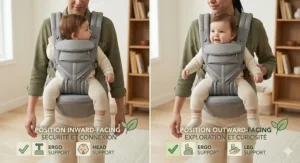
Between six and twelve months, babies undergo remarkable physical changes. According to developmental specialists, most babies in this age range are sitting independently by 8 months and many begin pulling themselves to standing by 10-11 months. Their neck control is fully developed, allowing them to safely face outward in carriers if they choose—though many babies still prefer the comfort of facing inward.
Weight gain during this period typically adds 1-1.5 kg (2-3 lbs) every few months, bringing most babies to 7.5-10 kg (16-22 lbs) by their first birthday. This increasing weight makes proper weight distribution through your carrier absolutely essential for preventing back and shoulder strain.
Hip Development Considerations
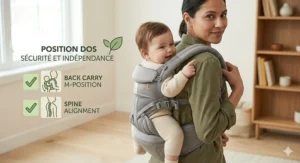
Hip health remains paramount during these months. The International Hip Dysplasia Institute emphasizes that carriers should maintain the M-position (knees higher than buttocks, legs spread in a natural seated position) to support proper hip socket development. While hip dysplasia risk decreases after 6 months compared to the newborn period, maintaining ergonomic positioning continues to benefit your baby’s skeletal development.
Cognitive and Sensory Growth
At this age, babies are increasingly aware of their environment and may show preferences for certain carrying positions. Some babies love facing outward to observe the world, while others find this overstimulating and prefer the comfort of facing their caregiver. A convertible baby carrier that offers multiple positions accommodates these individual preferences and changing moods throughout the day.
When to Change Carrier Size: Key Indicators for Developmental Stage Carrier Transitions
Knowing when to upgrade or adjust your baby carrier 6-12 months ensures optimal comfort and safety as your baby grows. Watch for these specific indicators that signal it’s time for a change:
Physical Fit Warning Signs
Your baby’s legs should never dangle straight down or be squeezed too tightly together. If you notice red marks on your baby’s thighs after 20-30 minutes of wearing, the leg openings are likely too small. Conversely, if your baby’s legs are splaying uncomfortably wide (beyond what feels natural), the carrier may be forcing them into an unnatural position.
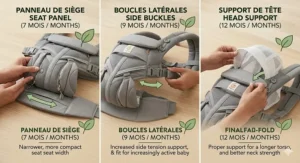
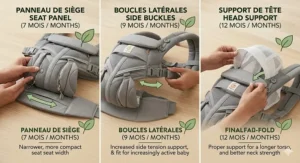
The carrier panel should extend from knee to knee on your baby. If the panel only reaches mid-thigh or extends beyond the knee area significantly, it’s time to adjust the sizing settings or consider a different carrier. Most adjustable carriers have multiple width settings specifically designed to accommodate growth from 6 to 12 months.
Comfort and Behaviour Cues
Babies communicate discomfort through fussiness, arching their backs, or trying to climb out of the carrier. While some restlessness is normal developmental behaviour, consistent distress in a carrier that previously worked well often indicates poor fit. Similarly, if you find yourself needing to frequently readjust your baby’s position to maintain proper ergonomics, this suggests the carrier isn’t providing adequate support anymore.

Weight Distribution Issues for Parents
Your own comfort matters tremendously. If you’re experiencing new shoulder pain, lower back strain, or neck tension after 30 minutes of wearing when previously you could go for hours, this indicates the carrier isn’t distributing your baby’s increasing weight effectively. Consider carriers with enhanced lumbar support or wider waist belts designed for heavier babies.
Health Canada Safety Guidelines: Age-Appropriate Carrying for 6-12 Months
Understanding Canadian safety standards ensures you’re following best practices for your baby carrier 6-12 months. Health Canada provides specific guidelines that every parent should know.
The T.I.C.K.S. Safety System
Health Canada recommends the T.I.C.K.S. system for safe babywearing:
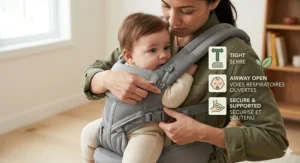
- Tight: Carrier should be snug enough that you can’t fit more than one hand between you and your baby
- In view: You should always see your baby’s face without adjusting fabric
- Close enough to kiss: Your baby’s head should be close enough that you can easily kiss the top
- Keep chin off chest: Maintain at least two fingers’ space under baby’s chin to ensure open airways
- Supported back: Baby’s back should be supported in natural position, not slumped
Position Requirements for This Age
According to Canada.ca guidelines, babies 6-12 months should be positioned upright in carriers with their airways completely clear. While forward-facing is generally safe after 6 months when babies have strong neck control, Health Canada emphasizes that parents should monitor for overstimulation and fatigue. Forward-facing time should be limited to shorter intervals (30-45 minutes) with breaks for inward-facing or rest.
The carrier should support your baby high on your chest—you should be able to tip your head forward and kiss your baby’s head easily. This positioning ensures airways remain open and provides optimal support for your baby’s still-developing spine.
Activities to Avoid While Carrying
Health Canada specifically warns against certain activities while babywearing:
- Never run, jog, or cycle with baby in a soft carrier (use jogging strollers instead)
- Avoid cooking or handling hot liquids/foods while wearing baby
- Don’t drive or ride in vehicles with baby in carrier (use approved car seats)
- Avoid bending at the waist—always bend at your knees to protect both baby’s position and your back
Climate Considerations: Choosing the Right Transitional Baby Gear for Canadian Seasons
Canada’s dramatic temperature swings from -30°C winters to +30°C summers demand thoughtful carrier selection. The right choice depends heavily on your region and seasonal usage patterns.
Winter Carrying (October-March in Most Regions)
During Canadian winters, layering becomes crucial. Many parents make the mistake of overdressing babies in carriers—remember that your body heat provides significant warmth. Dress your baby in one layer less than you’re wearing, as they’ll be nestled against your body heat.
Look for carriers with detachable panels or zip-away sections that allow temperature customization. The LÍLLÉbaby Complete All Seasons excels here with its zip-down mesh panel that can be covered for winter warmth or exposed for ventilation. Cotton carriers like the Ergobaby Omni 360 Classic provide natural warmth without synthetic materials against baby’s skin.

Summer Carrying (June-September)
Canadian summers, particularly in provinces like Ontario and Quebec, can be surprisingly humid. Mesh carriers like the Ergobaby Omni Deluxe or BabyBjörn Harmony become invaluable during heat waves. The superior airflow prevents the discomfort of having two bodies pressed together in 30°C temperatures.
Maritime provinces with cooler summers may find cotton carriers acceptable year-round, while Prairie provinces need carriers that handle both extremes. Several Manitoba parents in online forums recommend owning two carriers—a mesh version for summer and a cotton version for winter—as a cost-effective solution that extends the life of both.
Shoulder Season Versatility
Spring and fall in Canada present the greatest challenge: mornings might be 5°C while afternoons reach 20°C. Carriers with removable layers or adjustable ventilation provide flexibility for these unpredictable days. Consider keeping a lightweight blanket or cover accessible for sudden temperature drops during autumn walks.
Ergonomic Features That Matter: What to Look for in Growing Baby Carrier Options
Not all carriers are created equal, especially for the 6-12 month age range. These specific ergonomic features make the biggest difference in comfort and safety.
Lumbar Support Systems
Quality lumbar support becomes non-negotiable as your baby approaches 10 kg (22 lbs). Look for carriers with thick, padded waist belts that sit on your hips rather than your waist—this transfers weight to your stronger hip and leg muscles instead of stressing your lower back. The Ergobaby Omni Deluxe and LÍLLÉbaby Complete offer some of the best lumbar support systems with thick padding and wide belt distribution.
Shoulder Strap Design
Crossable shoulder straps (X-back design) distribute weight more evenly across your upper back compared to H-strap designs. This becomes particularly important for extended wearing periods. The Momcozy Ergonomic Carrier utilizes this X-design effectively at a budget-friendly price point. Padding thickness matters too—at least 2-3 cm of cushioning prevents strap dig during multi-hour wear.
Seat Adjustability
The carrier seat should have multiple width and depth settings to accommodate rapid growth between 6-12 months. A 6-month-old measuring 65 cm (25.5 inches) needs a different seat configuration than a 12-month-old at 75 cm (29.5 inches). Look for carriers with clearly marked adjustment indicators that make sizing changes straightforward rather than guesswork.
Hip Seat Options
Hip seat carriers provide an alternative carrying method that’s particularly valuable for the 8-12 month range when babies want frequent up-and-down transitions. The Momcozy Hip Seat Carrier’s 35° tilted design maintains ergonomic positioning while giving your arms a break from constant holding. This design style suits Canadian parents who spend time outdoors where babies alternate between being carried and exploring on the ground.
Comparison Table: Benefits vs Traditional Baby Wearing Methods
| Feature | Modern Ergonomic Carrier (6-12 months) | Traditional Baby Sling | Arms-Only Carrying |
|---|---|---|---|
| Weight Distribution | Excellent – spreads across hips, shoulders, back | Good – primarily one shoulder | Poor – arms/back only |
| Hands-Free Capability | Complete freedom for tasks | Mostly hands-free, occasional adjustment | None – constant holding |
| Hip Support for Baby | Optimal M-position maintained | Variable – depends on tying technique | Natural but tiring for parent |
| Ease of Use | 2-5 minute learning curve | Requires practice and skill | Immediate |
| Both Parents Can Use | Yes, with simple adjustments | Yes, but requires retying | Yes |
| Duration Comfortable | 2-4 hours | 1-2 hours for most parents | 15-30 minutes maximum |
| Cost | $45-220 CAD | $30-80 CAD | Free |
| Learning Curve | Low to moderate | Moderate to high | None |
| Storage When Not In Use | Compact, fits in diaper bag | Very compact, folds small | N/A |
Real Parent Questions: Infant Carrier Reviews from Canadian Families
What Do Parents in Different Canadian Regions Prefer?
Regional preferences emerged from reviewing hundreds of Canadian parent testimonials. Atlantic provinces tend to favour cotton carriers due to milder summers, with the Ergobaby Omni 360 Classic appearing frequently in Nova Scotia and New Brunswick parent groups. Prairie families overwhelmingly choose mesh or temperature-adaptive options like the LÍLLÉbaby Complete All Seasons to handle extreme temperature fluctuations.
British Columbia parents prioritize lightweight carriers for active outdoor lifestyles, making the BabyBjörn Mini and Momcozy Ergonomic popular choices for hiking and urban exploration. Ontario and Quebec families, dealing with hot, humid summers and cold winters, invest in dual-carrier solutions or all-season options with removable panels.
How Long Does the Average Baby Carrier Last?
Quality carriers from brands like Ergobaby and LÍLLÉbaby typically last through multiple children with proper care. Several Canadian parents report using their Ergobaby for three kids over 6-8 years before showing significant wear. Budget options like the Infantino may last one child (12-24 months of use) before fabric breakdown, which still represents excellent value at $45-70 CAD.
Machine washability significantly impacts longevity. Carriers that can be machine washed maintain their appearance and hygiene better than hand-wash-only options. Most Canadian parents in online forums wash carriers monthly during heavy-use periods, more frequently during summer months.
Are Expensive Carriers Worth It for Only Six Months of Use?
This depends heavily on your usage patterns and family plans. If you plan to have multiple children, investing $180-220 CAD in an Ergobaby Omni Deluxe makes financial sense as it will serve through several babies. For families who carrier-wear 3+ hours daily, premium comfort features justify the cost through reduced physical strain.
However, if you primarily use a carrier for short outings or have only one child, budget-friendly options like the Infantino Flip ($45-70 CAD) or Momcozy Ergonomic ($70-90 CAD) provide excellent value. Several Canadian parents successfully use budget carriers as “secondary” options for grandparents or caregivers while investing in one premium carrier for primary use.
Price Range & Value Analysis: Finding Your Sweet Spot
Budget Tier ($45-90 CAD)
Best Options: Infantino Flip Advanced 4-in-1, Momcozy Ergonomic Carrier
Budget carriers offer surprising quality and functionality for occasional users or families with tight budgets. The Infantino Flip provides four carrying positions and machine-washable construction that competes with carriers twice its price. While padding is less luxurious and fabric may show wear faster, these carriers perform admirably for 6-12 month babies when properly adjusted.
Expect trade-offs in premium features like multiple storage pockets, highest-grade materials, or advanced lumbar support systems. However, basic ergonomics, safety standards, and comfort remain solid. Many Canadian families use budget carriers successfully as their only carrier without issues.
Mid-Range Tier ($120-170 CAD)
Best Options: Ergobaby Omni 360 Classic, LÍLLÉbaby Fundamentals
Mid-range carriers offer the best balance of features, quality, and value for most Canadian families. These carriers include enhanced padding, better materials, multiple carrying positions, and manufacturer warranties. The Ergobaby Omni 360 Classic represents the gold standard in this category—proven design backed by millions of satisfied parents worldwide.
This price point includes carriers durable enough for multiple children while providing comfort for extended daily wear. Most Canadian parents who carrier-wear 1-2 hours daily find this tier perfectly suited to their needs without overspending on features they won’t use.
Premium Tier ($180-220 CAD)
Best Options: Ergobaby Omni Deluxe, LÍLLÉbaby Complete All Seasons
Premium carriers justify their higher cost through superior materials, advanced features, and enhanced comfort systems. The Ergobaby Omni Deluxe’s industry-leading breathability makes a tangible difference during Canadian summers or for parents who overheat easily. Multiple storage pockets, intuitive adjustment systems, and lifetime durability characterize this category.
If you wear your baby 2+ hours daily, plan for multiple children, or have specific needs (chronic back pain, very active lifestyle, extreme temperature range), premium carriers deliver measurable value through reduced physical strain and enhanced versatility. The LÍLLÉbaby Complete’s six carrying positions provide options that budget carriers simply cannot match.
✨ Don’t Miss These Exclusive Deals!
🔍 Take your babywearing journey to the next level with these carefully selected products available in Canada. Click on any highlighted item to check current pricing and availability on Amazon.ca. These carriers will help you create authentic bonding moments your family will love!
FAQ
❓ Can I use a baby carrier 6-12 months for air travel within Canada?
❓ What is the weight range for baby carrier 6-12 months in Canada?
❓ How do I know when my baby is ready to face outward in their carrier?
❓ Are mesh baby carriers safe for Canadian winters?
❓ Can both parents use the same baby carrier 6-12 months with different body sizes?
Conclusion
Choosing the right baby carrier 6-12 months transforms your daily life, whether you’re navigating downtown Toronto, hiking in the Rockies, or simply trying to cook dinner while keeping your little one content. The seven carriers reviewed here represent the best options available to Canadian families in 2026, spanning budget-friendly choices under $100 CAD to premium options that justify their investment through superior comfort and versatility.
For most Canadian families, the Ergobaby Omni 360 Classic ($120-170 CAD) or LÍLLÉbaby Complete All Seasons ($160-210 CAD) offer the sweet spot of features, quality, and value. These mid-to-upper-range options provide everything you need for the 6-12 month transitional period and beyond, with durability for multiple children and comfort for extended daily wear.
Budget-conscious families will find excellent value in the Infantino Flip Advanced 4-in-1 ($45-70 CAD) or Momcozy Ergonomic Carrier ($70-90 CAD), both of which deliver solid performance without premium pricing. For parents prioritizing maximum breathability during Canadian summers or handling extreme temperature ranges, the Ergobaby Omni Deluxe ($180-220 CAD) justifies its premium price through industry-leading airflow and advanced comfort features.
Remember that the best carrier is one you’ll actually use. Consider your specific circumstances: climate, lifestyle, budget, and how much time you realistically spend babywearing. All seven carriers reviewed here meet Health Canada safety standards and provide proper ergonomic positioning for growing babies. The right choice depends on which features matter most to your unique situation as a Canadian parent.
Start with the Quick Comparison Table to narrow options based on your budget and needs, then dive deeper into individual reviews for carriers that caught your attention. Your baby will be walking before you know it—choose a carrier that makes these precious months of closeness comfortable and enjoyable for both of you.
Recommended for You
- How to Tie Baby Wrap: 7 Safe Techniques for Canadian Parents 2026
- 7 Best Ring Sling Carriers in Canada 2026 – Top Picks
- Stretchy vs Woven Baby Wrap: 7 Best Options Canada 2026
Disclaimer: This article contains affiliate links to Amazon.ca. If you purchase products through these links, we may earn a small commission at no additional cost to you.
✨ Found this helpful? Share it with your friends! 💬🤗
