
In This Article
You’re standing in the middle of a crowded farmers market, your enthusiastic two-year-old suddenly decides walking is “too boring,” and your stroller won’t fit between the vendor stalls. Sound familiar? Welcome to the world of toddler carrier Canada adventures, where the right gear transforms potential meltdowns into magical moments! 🍁
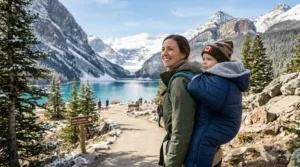
A toddler carrier Canada is essentially your secret weapon for extending the babywearing journey well beyond infancy. Unlike traditional baby carriers maxed out at 15-18 kg, these robust alternatives support children weighing 11-27 kg (25-60 lbs), making them perfect for baby carrier for 2 year old scenarios and even some preschoolers. According to Health Canada’s safety guidelines, proper carrier selection becomes even more critical as your child grows heavier, requiring enhanced lumbar support and ergonomic design.
Whether you’re navigating Toronto’s PATH system, hiking the Canadian Rockies, or simply need hands-free grocery shopping at Loblaws, today’s heavy toddler carrier options blend innovation with comfort. The Canadian market in 2026 offers everything from ultralight toddler hiking carrier backpacks to soft-structured solutions that pack into your diaper bag. With prices ranging from $35 CAD for basic slings to $450 CAD for premium hiking frames, there’s genuinely something for every family budget and adventure style.
Let’s dive into the seven best options available on Amazon.ca that’ll keep both you and your growing explorer comfortable through those “I can’t walk anymore” moments! 🥾
Quick Comparison Table: Top Toddler Carriers
| Carrier Model | Weight Limit | Price Range (CAD) | Best For | Rating |
|---|---|---|---|---|
| LILLEbaby CarryOn Airflow | 11-27 kg (25-60 lbs) | $165-$195 | Extended babywearing, daily use | ⭐⭐⭐⭐⭐ 4.8/5 |
| Ergobaby Omni Deluxe | 3-20 kg (7-45 lbs) | $185-$245 | Newborn to toddler versatility | ⭐⭐⭐⭐⭐ 4.7/5 |
| Deuter Kid Comfort Pro | 15-22 kg child | $550-$650 | Serious hiking, outdoor adventures | ⭐⭐⭐⭐⭐ 4.9/5 |
| Bebamour Hip Seat Carrier | 0-16 kg (0-36 months) | $55-$85 | Quick carries, urban parents | ⭐⭐⭐⭐ 4.5/5 |
| Tushbaby Hip Seat | Up to 20 kg (45 lbs) | $95-$125 | Older toddlers, in-and-out needs | ⭐⭐⭐⭐ 4.6/5 |
| Beco Toddler Carrier | 9-27 kg (20-60 lbs) | $175-$225 | Growing children, piggyback rides | ⭐⭐⭐⭐½ 4.7/5 |
| Infantino Flip 4-in-1 | 3-18 kg (7-40 lbs) | $35-$65 | Budget-conscious families | ⭐⭐⭐⭐ 4.4/5 |
💬 Just one click – help others make better buying decisions too! 😊
✨ Don’t Miss These Exclusive Deals!
🔍 Take your parenting adventures to the next level with these carefully selected products available in Canada. Click on any highlighted item to check current pricing and availability on Amazon.ca. These carriers will help you create authentic bonding moments your family will cherish!
Top 7 Toddler Carrier Canada Options: Expert Analysis
1. LILLEbaby CarryOn Airflow – Best Overall Heavy Toddler Carrier
When your baby graduates from infant carriers but still needs regular lifting, the LILLEbaby CarryOn Airflow becomes an absolute game-changer. This heavy toddler carrier specifically targets the 25-60 lb weight range, featuring a taller torso panel and wider seat that traditional carriers simply can’t match.
Key Specifications:
- Weight capacity: 11-27 kg (25-60 lbs)
- Three carrying positions: front-inward, hip, back
- Breathable 3D mesh construction
- Adjustable lumbar support with padded waistbelt
Price in Canada: $165-$195 CAD on Amazon.ca
Canadian parents rave about the CarryOn’s ability to distribute weight efficiently across hips and shoulders, making that 14 kg toddler feel surprisingly manageable during hour-long outings. The breathable mesh proves essential during humid Toronto summers or Vancouver’s mild winters when layering creates heat buildup.
✅ Pros:
- Exceptional weight distribution for heavier children
- Padded leg openings prevent circulation issues
- Machine washable (lifesaver for juice box disasters!)
❌ Cons:
- Bulkier than infant carriers
- Learning curve for first-time users
2. Ergobaby Omni Deluxe – Most Versatile Baby Carrier for 2 Year Old
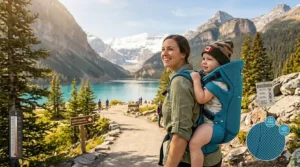
The Ergobaby Omni Deluxe represents the Swiss Army knife of baby carrier for 2 year old solutions. While technically spanning newborn through toddler stages (3-20 kg), this carrier shines brightest with the 12-18 month crowd who’ve outgrown basic wraps but aren’t quite ready for dedicated toddler models.
Key Specifications:
- All-position carrying: front-outward, front-inward, hip, back
- Enhanced lumbar support pad
- Breathable mesh panels
- Adjustable seat width
Price in Canada: $185-$245 CAD depending on fabric choice
According to customer feedback on Amazon.ca, Canadian families appreciate how the Omni adapts as children grow. The seat widens to accommodate chubby toddler thighs, while crossed shoulder straps distribute weight for parents of all builds—petite caregivers particularly praise this feature.
✅ Pros:
- Grows with your child from infancy
- Four ergonomic carrying positions
- Excellent lumbar support for extended wear
❌ Cons:
- Pricier than dedicated toddler-only options
- May feel restrictive for very tall 2-year-olds
3. Deuter Kid Comfort Pro – Premium Toddler Hiking Carrier
For families who define weekends by trail kilometres rather than screen time, the Deuter Kid Comfort Pro stands unmatched as a toddler hiking carrier. This German-engineered hiking backpack transforms Canadian backcountry adventures with features rivaling adult trekking packs.
Key Specifications:
- Vari-Flex hip belt for terrain adaptability
- Integrated sun canopy with UPF 50+ rating
- 14L cargo capacity plus hydration reservoir sleeve
- Adjustable back system (38-46 cm)
Price in Canada: $550-$650 CAD (available through MEC, SAIL, Amazon.ca)
The Kid Comfort Pro’s genius lies in its Vari-Flex technology—the hip belt articulates with your twisting movements, maintaining stability while scrambling over roots on Ontario’s Bruce Trail or navigating rocky switchbacks in Banff. Canadian hikers report comfortably carrying 18 kg toddlers for 10+ km days, though proper conditioning remains essential.
✅ Pros:
- Superior stability on uneven terrain
- Removable daypack for summit pushes
- Rain cover included (crucial for BC!)
❌ Cons:
- Significant investment ($550+)
- Overkill for urban-only use
4. Bebamour Hip Seat Carrier – Best Budget-Friendly Option
Sometimes you need a toddler carrier Canada solution that doesn’t require a second mortgage. The Bebamour Hip Seat Carrier delivers surprising functionality at a fraction of premium prices, making it perfect for grandparents’ houses or as a backup option.
Key Specifications:
- Detachable hip seat design
- 6-in-1 carrying positions
- Storage pouch for essentials
- Suitable 0-36 months (up to 16 kg)
Price in Canada: $55-$85 CAD on Amazon.ca
This carrier’s detachable hip seat proves brilliant for transitional toddlers who alternate between wanting arms and demanding independence. Montreal parents particularly appreciate how quickly it assembles for métro commutes or quick dépanneur runs. While not ideal for marathon wearing sessions, it excels at urban convenience.
✅ Pros:
- Extremely affordable
- Hip seat detaches for versatility
- Multiple storage pockets
❌ Cons:
- Less supportive for extended periods
- Lower weight limit than dedicated toddler carriers
5. Tushbaby Hip Seat – Innovative Preschooler Carrying Solutions
The Tushbaby Hip Seat revolutionizes preschooler carrying solutions with its minimalist single-shoulder design. Unlike traditional carriers wrapping your entire torso, Tushbaby sits on your hip like a supportive shelf, perfect for that awkward 3-4 year age when kids want down every thirty seconds.
Key Specifications:
- Weight capacity: up to 20 kg (45 lbs)
- One-size-fits-all waistband (66-127 cm)
- Three-point safety buckle system
- Machine washable
Price in Canada: $95-$125 CAD on Amazon.ca
Canadian reviewers highlight how Tushbaby excels during those transition phases—grocery shopping where toddlers want to “help” then suddenly don’t, zoo visits with frequent animal viewing, or farmer’s markets with multiple stops. The hands-free design lets you hold an older sibling’s hand while supporting your climber.
✅ Pros:
- Lightning-fast on/off (5 seconds!)
- Comfortable for short bursts
- Storage pocket holds phone, keys, snacks
❌ Cons:
- Not suitable for long-duration wearing
- Uneven weight distribution over time
6. Beco Toddler Carrier – Best Back Carry Toddler Carrier
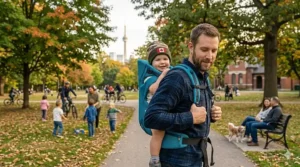
The Beco Toddler Carrier specifically targets the 20-60 lb demographic with an extra-wide seat and high back panel designed for back carry toddler carrier excellence. While offering front-carry capability, this model truly shines with back positioning—think ultimate piggyback rides with engineering.
Key Specifications:
- 3D mesh construction
- Adjustable X or H shoulder strap configurations
- Detachable clutch pouch
- Removable sun/sleep hood
Price in Canada: $175-$225 CAD through specialty retailers and Amazon.ca
Alberta hikers praise the Beco Toddler for Kananaskis day hikes, noting how the adjustable shoulder straps accommodate different torso lengths between spouses. The zippered clutch holds provincial park maps, granola bars, and that essential second sunscreen tube—crucial when your hands are technically free but actually managing trekking poles.
✅ Pros:
- Exceptional back-carry ergonomics
- Converts between X and H strap configurations
- Included accessories (hood, pouch)
❌ Cons:
- Complex initial setup
- Premium pricing
7. Infantino Flip 4-in-1 – Budget Entry-Level Choice
For families testing the extended baby wearing waters without major financial commitment, the Infantino Flip 4-in-1 provides solid basics. While maxing out at 18 kg (40 lbs), it bridges the gap between infant carriers and dedicated toddler models, particularly useful for younger two-year-olds.
Key Specifications:
- Four carrying positions
- Convertible design (structured to unstructured)
- Padded head support
- Wide, ergonomic seat
Price in Canada: $35-$65 CAD on Amazon.ca
At this price point, expectations should align with value rather than premium features. Canadian customers on Amazon.ca note it performs admirably for occasional use—running into Tim Hortons, quick park visits, or keeping hands free during apartment building elevator waits. The flip design lets you face baby inward for naps or outward for entertainment.
✅ Pros:
- Incredibly affordable ($35-65)
- Straightforward design for beginners
- Available at most Canadian retailers
❌ Cons:
- Limited padding compared to premium models
- Shorter usable lifespan (outgrown quicker)
Understanding Toddler Carriers: What Makes Them Different?
You might wonder: can’t I just keep using my infant carrier? While technically possible for smaller toddlers, dedicated toddler carrier Canada models address specific developmental and ergonomic needs that standard baby carriers overlook. According to babywearing research, proper positioning becomes increasingly critical as children grow heavier to prevent hip dysplasia and maintain healthy spine alignment.
The Weight Factor: Why It Matters
Standard baby carriers typically max out around 15-18 kg (33-40 lbs), with many designed primarily for the 3-11 kg newborn-to-infant range. A heavy toddler carrier extends capacity to 20-27 kg (45-60 lbs), but weight limit alone doesn’t tell the complete story. The distribution mechanisms—wider waistbelts, reinforced shoulder straps, enhanced lumbar supports—fundamentally differ in engineering.
Think of it like comparing a compact car to an SUV. Both transport people, but try loading camping gear for five into a sedan! Similarly, carrying a 12 kg baby in an infant-rated carrier creates pressure points, back strain, and discomfort within minutes. Purpose-built toddler carriers redistribute that same weight across skeletal structure zones designed to handle heavier loads, transforming a painful experience into sustainable comfort.
Seat Design Evolution
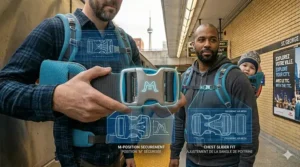
Infant carriers feature relatively narrow seats (typically 20-25 cm) appropriate for tiny thighs and compact bodies. As children approach toddlerhood, their legs lengthen, thighs thicken, and sitting bone structure widens. A baby carrier for 2 year old needs minimum 30-35 cm seat width to maintain the ergonomic “M-position” where knees sit higher than bottoms, supporting healthy hip development.
Canadian parents particularly notice this difference during winter months when bulky snowsuits add centimetres to body dimensions. That infant carrier barely closing in July becomes impossible to buckle by December!
Cognitive Development Considerations
Around 18-24 months, toddlers enter what developmental psychologists call the “autonomous exploration” phase. They want simultaneous security AND independence—cuddled close one moment, wriggling to walk the next. Modern preschooler carrying solutions accommodate this paradox with quick-release mechanisms and positions allowing more movement freedom than newborn-focused models.
Forward-facing options become popular (though ergonomically debated) for entertainment during long waits. Hip carries let curious toddlers reach out and touch market produce or pet friendly dogs. Back carries position children at adult eye level for better conversation and interaction. This versatility responds to cognitive development stages that simple “snuggle-in” infant carriers can’t address.
How to Choose the Right Toddler Carrier Canada 2026
1. Assess Your Primary Use Case
Start by honestly evaluating your lifestyle patterns. Urban parents riding the TTC might prioritize quick on-off capability and compact folding (hip seats, simple slings). Weekend hikers tackling Gatineau Park trails need robust toddler hiking carrier backpacks with weather protection. Daily dog walkers want comfortable options for 30-45 minute outings.
I learned this the hard way after purchasing a premium hiking carrier for primarily grocery store trips. Yes, it distributed weight beautifully, but wrestling that rigid frame through Costco aisles while grabbing toilet paper felt ridiculous! Match the tool to the task.
2. Consider Canadian Climate Realities
Our country spans six time zones and multiple climate zones—what works in Victoria’s mild winters fails spectacularly during Winnipeg’s -40°C February blizzards. Breathable mesh carriers (LILLEbaby CarryOn Airflow, Beco Toddler) excel during humid Maritime summers but require layering consideration for Prairie winters.
Conversely, padded cotton models perfect for Saskatchewan snowshoe expeditions become sweat factories during Toronto’s August humidity. Many Canadian families invest in two carriers: breathable mesh for May-September, insulated options for October-April. Amazon.ca’s return policies let you test options during different seasons.
3. Weight Limits vs. Reality
Manufacturers list maximum weights, but practical limits often sit 2-4 kg lower. A carrier rated to 60 lbs doesn’t mean comfortably carrying a 60 lb child for two hours through the Rideau Canal Skateway crowds! Your own fitness level, any back/joint issues, and terrain difficulty all factor into realistic capacity.
Canadian hiking forums suggest the “50% rule”—if your child exceeds 50% of YOUR body weight, even premium carriers become challenging for extended periods. A 68 kg parent might comfortably carry a 13 kg toddler for kilometres, while a 54 kg parent finds the same child exhausting after twenty minutes.
4. Test Before Committing
Many Canadian communities host babywearing groups offering carrier libraries—try before you buy! Toronto, Vancouver, Montreal, Calgary, and Ottawa all have active organizations. These groups let you test different brands with your actual child, discovering what works for YOUR body mechanics and your toddler’s temperament.
Some children loathe certain carrier styles, arching their backs in the Ergobaby but relaxing instantly in the Beco. Others fall asleep within minutes in structured carriers but fight soft wraps. Testing reveals these preferences before investing $200+ CAD.
5. Budget Realistically
Quality high weight limit carrier options range from $35 (basic models) to $650+ CAD (premium hiking systems). Consider this: how many months of use remain? A $175 carrier used daily for 18 months costs roughly 32¢ per day—less than a coffee! Conversely, a $550 hiking carrier used monthly for summer camping becomes $45 per outing.
Don’t discount second-hand markets either. Facebook Marketplace and Kijiji regularly feature gently-used carriers at 40-60% retail prices. Just inspect for wear, verify buckle integrity, and confirm it wasn’t involved in accidents (important for structured hiking backpacks).
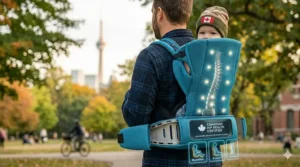
Safety Guidelines for Extended Baby Wearing in Canada
Health Canada maintains strict regulations for baby carriers sold in Canada, requiring compliance with ASTM F2907 (sling carriers) or ASTM F2236-16a (soft infant/toddler carriers) safety standards. When purchasing from Amazon.ca or Canadian retailers, verify certification labels ensuring products meet these requirements.
The T.I.C.K.S. Safety Rules
Canadian babywearing educators teach the T.I.C.K.S. acronym for safe positioning:
T – Tight: Fabric should be snug enough that baby can’t slump. Press gently on their back—minimal movement indicates proper tightness.
I – In View: Always see baby’s face. Fabric should never cover their nose or mouth.
C – Close Enough to Kiss: Tilt your head slightly forward—you should reach baby’s head for a kiss. This ensures proper positioning.
K – Keep Chin Off Chest: Ensure at least one finger fits between chin and chest, maintaining open airways.
S – Supported Back: Baby’s spine should maintain its natural curve, not curled into a C-shape pressing chin to chest.
Age-Specific Considerations
12-18 Months: Focus on hip positioning. Thighs should spread wide, knees higher than bottom, forming an “M” shape. This supports healthy hip socket development.
18-36 Months: Monitor circulation. Padded leg openings become crucial as children gain weight. Check for red marks or tingling after 20-30 minutes of wear.
3+ Years: Weight distribution matters most. Properly adjusted waistbelts carry 80% of weight on your hips, not shoulders. Reassess fit every 2-3 months as children grow.
What to Avoid
Health Canada explicitly warns against:
- Using carriers while cooking near heat sources
- Wearing children during activities with fall risks (cycling, skiing, ice skating)
- Forward-facing positions for children under 4-5 months
- Continuing use if carrier shows wear (frayed straps, bent buckles)
For more detailed safety information, consult Health Canada’s official baby carrier guidelines.
Benefits of Back Carry Toddler Carrier Positions
While front carries work wonderfully for younger babies, back carry toddler carrier positions unlock serious advantages once children gain head/neck control (typically 4-6 months, though wait longer for heavier toddlers).
Superior Weight Distribution
Physics explains this beautifully. Back carries position weight directly over your centre of gravity, similar to how backpackers carry camping gear. Front carries pull you forward, engaging abs and lower back muscles to counterbalance. After 15-20 minutes, the difference becomes dramatic—front carries create shoulder/neck tension, while back carries feel sustainable for hours.
I first noticed this during a trip to the Calgary Stampede. Front-carrying my 14 kg toddler through the morning exhibits left me exhausted by lunch. Switching to back carry for the afternoon felt transformative—I could actually enjoy the rodeo without counting down minutes until sitting!
Enhanced Mobility and Vision
Back carries free your entire front for activities. Need to bend down and tie your kindergartener’s shoes while holding your toddler? Back carry makes it possible. Cooking dinner? You can see the stove without worrying about little hands reaching toward hot surfaces. Hiking? Trekking poles become usable tools rather than awkward obstacles.
Children also benefit developmentally. Positioned at adult eye level, they observe conversations, see facial expressions, and engage with the world from your perspective. Many Canadian parents report vocabulary spurts coinciding with transitioning to back carries—apparently seeing what you’re looking at while you name objects creates powerful learning moments!
When Back Carries Work Best
- Household tasks: Vacuuming, folding laundry, loading dishwashers
- Outdoor activities: Hiking, nature walks, yard work
- Siblings management: Carrying toddler while holding preschooler’s hand
- Extended periods: Anything beyond 30-45 minutes
- Transitions: Moving sleeping toddlers without waking them
Toddler Hiking Carrier: Trail-Ready Features Explained
Canadian wilderness deserves respect, and the right toddler hiking carrier transforms family adventures from stressful to spectacular. Here’s what separates hiking-specific carriers from daily-use models.
Frame vs. Frameless Design
Framed carriers (Deuter Kid Comfort, Osprey Poco) feature aluminum or titanium frames creating a rigid structure that doesn’t compress under weight. Think of it like a hiking backpack—the frame transfers load to your hips via padded waistbelts, keeping weight off your shoulders. Essential for multi-hour treks or children over 13-15 kg.
Frameless carriers (LILLEbaby CarryOn) use structured panels and strategic stitching for support. Lighter and more packable, but weight distribution relies more on shoulder straps. Perfect for shorter hikes (under 90 minutes) or lighter toddlers.
For serious Canadian backcountry—think multi-day trips into Jasper or Algonquin portage routes—framed designs prove non-negotiable. The stability prevents swaying that causes both carrier discomfort and child motion sickness.
Sun Protection Essentials
Health Canada recommends keeping children under 6 months entirely out of direct sunlight. For toddlers, sun protection becomes crucial during summer trail time. Quality hiking carriers include integrated sun canopies with UPF 50+ rating (blocks 98% of UV rays).
The Deuter Kid Comfort Pro and Osprey Poco Plus feature adjustable canopies that angle with sun position—brilliant for all-day hikes where morning sun comes from one direction, afternoon from another. Some even include wind shields for those breezy exposed ridges common in Alberta’s foothills.
Storage Solutions
Hiking with toddlers multiplies required gear exponentially. Beyond standard backpacking needs (water, first aid, navigation), you’re packing diapers, snacks, extra layers, entertainment, and that stuffed elephant that CANNOT be forgotten. Premium hiking carriers address this with:
- Large main compartments: 10-20L capacity typical
- Hip belt pockets: Quick-access for snacks, phone, bear spray
- Hydration reservoir sleeves: 2-3L capacity with tube routing
- Diaper changing pad compartments: Because nature calls… frequently
The Deuter Kid Comfort Pro even includes a separate detachable daypack—brilliant for summit pushes where you leave the carrier at a safe spot, then continue climbing with just essentials.
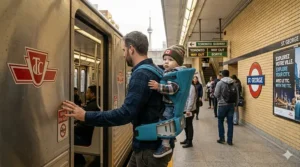
Urban vs. Outdoor: Matching Carriers to Canadian Lifestyles
City Life Scenarios
TTC/STM/SkyTrain Navigation:
Public transit riding demands compact carriers that don’t take extra seats or whack fellow passengers during turns. Hip seats (Tushbaby, Bebamour) and soft-structured carriers (Ergobaby Omni) excel here. Avoid bulky hiking frames unless you enjoy apologetic stares during rush hour!
Apartment Building Living:
When elevators break (inevitably during grocery trips), stairwell navigation with a toddler becomes Olympic-level cardio. Front-carry positions let you see steps clearly, while good lumbar support prevents the back strain common with multiple floor climbs. The Infantino Flip 4-in-1 offers surprising comfort-to-price ratio for these scenarios.
Shopping Expeditions:
Grocery stores, farmer’s markets, IKEA marathons—urban shopping challenges strollers with tight aisles and elevation changes. Carriers with storage pockets (built-in bag holders) prove invaluable. I once managed an entire Costco run with my toddler in the LILLEbaby CarryOn, loading the cart one-handed like some bizarre shopping ninja!
Outdoor Adventures
Day Hiking (2-4 hours):
Ontario’s Bruce Trail, BC’s Sea-to-Sky corridor, Quebec’s Parc national du Mont-Tremblant—these moderate trails suit soft-structured carriers for lighter toddlers or framed carriers for heavier children. Prioritize ventilation (mesh panels) and hydration compatibility.
Backcountry Camping:
Multi-day wilderness trips require framed hiking carriers with serious storage. The Deuter Kid Comfort Pro and similar models double as camp chairs via kickstands—brilliant for prairie camping where natural seating is scarce. Ensure waterproof rain covers are included (sudden storms happen everywhere in Canada!).
Winter Activities:
Snowshoeing, cross-country skiing, winter hiking—cold weather carrying demands different considerations. Bulky winter clothing reduces carrier capacity, while hypothermia risks increase if toddlers get too warm (yes, overheating happens even at -15°C!). Look for carriers with ventilation adjustability and easy access to check child’s temperature.
Preschooler Carrying Solutions: Extended Use Strategies
Conventional wisdom suggests carriers are “baby gear,” but the reality of Canadian parenting often extends babywearing well into preschool years. A tired three-year-old melting down halfway through the Toronto Zoo won’t care about age-appropriate expectations!
The 25-60 lb Sweet Spot
Most children hit 11 kg (25 lbs) around 12-15 months and 27 kg (60 lbs) around 5-6 years. The high weight limit carrier category specifically serves this extended range, acknowledging that:
- Developmental timelines vary wildly
- Occasional carrying needs don’t expire at 24 months
- Special needs children may require longer carrier use
- Transitional situations (new siblings, moving, travel) create temporary regression
When Extended Carrying Makes Sense
Medical Scenarios:
Children recovering from injuries or surgeries may temporarily lose walking endurance. Post-fracture healing, illness recovery, or managing chronic conditions sometimes necessitate carrying older children.
Special Needs Support:
Some developmental conditions affect gross motor skills or endurance. Carriers let these children participate in family activities that would otherwise exhaust them. Canadian occupational therapists sometimes specifically recommend extended babywearing as therapy support.
Travel and Transitions:
Jet lag, unfamiliar environments, overwhelming stimulation—travel creates regression even in typically independent preschoolers. Having a carrier option prevents meltdowns in Paris airports or Vancouver ferry terminals.
FAQ: Toddler Carrier Canada Questions
❓ What's the best toddler carrier for hiking in Canada?
❓ Can I use a regular baby carrier for my 2-year-old?
❓ Are hip seat carriers safe for toddlers in Canada?
❓ How much should I expect to pay for a quality toddler carrier in Canada?
❓ What's the maximum weight for toddler carriers in Canada?
Conclusion: Finding Your Perfect Toddler Carrier Canada Match
Choosing the right toddler carrier Canada solution ultimately comes down to matching gear to your genuine lifestyle rather than aspirational Pinterest boards! The parent hiking Banff weekends needs different tools than someone navigating Montreal’s métro system, and neither is wrong—just different.
Start by honestly assessing your primary use case. If 80% of carrying happens during grocery runs and park visits, that $650 hiking frame feels excessive (even if it IS gorgeously engineered). Conversely, budget carriers prove frustrating on serious trails where comfort and durability matter intensely. The sweet spot for most Canadian families sits around $165-245 CAD, balancing quality construction with reasonable pricing.
Remember that extended baby wearing isn’t competing in some parenting Olympics. Your three-year-old needing occasional carrying doesn’t indicate weakness or poor independence—it recognizes that childhood development isn’t linear, and sometimes kids need extra support. Modern carriers make that support sustainable for caregivers too, transforming what might’ve been back-straining misery into comfortable bonding time.
As you explore options on Amazon.ca, prioritize trying before buying when possible. Canadian babywearing groups exist coast-to-coast, offering library programs and education. Your body mechanics, your child’s temperament, and your specific needs create a unique equation that only real-world testing solves. That “perfect” carrier for your neighbour might torture your shoulders, while their “hated” option becomes your favourite!
The beauty of 2026’s market lies in genuine options. Soft-structured, framed backpacks, hip seats, wraps—each serves different scenarios brilliantly. Many families ultimately own two or three carriers for various situations, and that’s perfectly reasonable. Your toddler-carrying journey doesn’t need one perfect solution; it needs the RIGHT solutions for different days.
Now get out there and make some memories—Canadian parks, trails, cities, and adventures await! 🍁🥾
Recommended for You
- 7 Best Baby Carrier for Newborn Canada 2026 (Safe & Cozy!)
- 7 Best Baby Wrap for Newborns Canada 2026
- 7 Best Ergonomic Baby Carriers Canada 2026 | Hip-Healthy Guide
Disclaimer: This article contains affiliate links to Amazon.ca. If you purchase products through these links, we may earn a small commission at no additional cost to you.
✨ Found this helpful? Share it with your friends! 💬🤗
