
In This Article
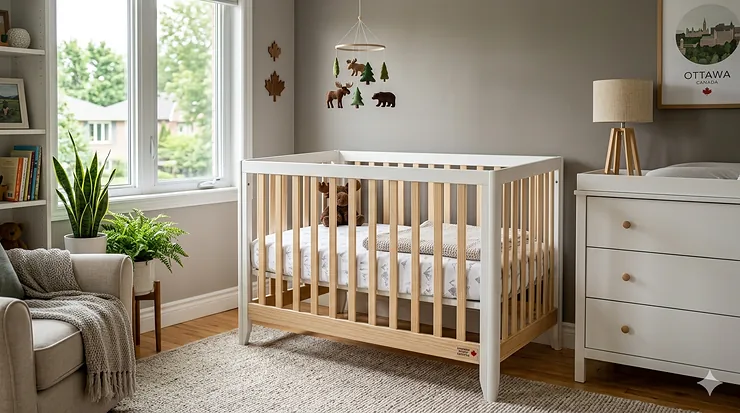
Bringing home your first baby is magical, but furnishing a nursery on a realistic budget? That’s where things get tricky. I’ve watched countless Canadian parents agonize over crib decisions, caught between wanting premium safety features and staying within a sensible budget. The good news is that finding a 3-in-1 convertible crib under $300 in Canada isn’t just possible—it’s actually a smart strategy that can save you hundreds of dollars over your child’s first few years.
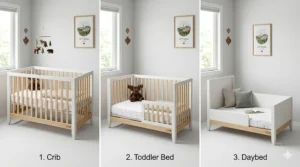
What most first-time parents don’t realize is that today’s budget convertible cribs offer the same safety certifications and longevity as models costing twice as much. The difference usually comes down to aesthetic details like hand-carved finishes or premium wood species rather than fundamental structural quality. When you’re shopping on Amazon.ca, you’ll find excellent options from trusted brands like Dream On Me, Graco, and Storkcraft that meet all Canadian safety regulations while transforming from infant crib to toddler bed and daybed—giving you three distinct furniture pieces for one upfront investment.
For Canadian families dealing with higher costs of living, especially in urban centres like Toronto, Vancouver, or Calgary, this matters more than ever. You’re not just buying a crib; you’re making a multi-year investment that needs to withstand everything from teething gnaw marks to the structural stress of an energetic toddler bouncing at 6:00 AM on a Saturday. Let’s explore which budget-friendly convertible cribs actually deliver on that promise without compromising the safety standards Health Canada demands.
Quick Comparison Table
| Crib Model | Price Range (CAD) | Conversions | GREENGUARD Gold | Best For |
|---|---|---|---|---|
| Dream On Me Synergy | $190-$240 | 5-in-1 | Yes | Maximum versatility |
| Graco Benton | $220-$280 | 5-in-1 | Yes | Built-in storage drawer |
| Storkcraft Beckett | $200-$270 | 3-in-1 | Yes | Solid wood construction |
| Dream On Me Carson | $160-$210 | 3-in-1 | Yes | Mobility (locking wheels) |
| Graco Theo | $185-$245 | 3-in-1 | Yes | Simple modern design |
| Storkcraft Pasadena | $205-$265 | 3-in-1 | Yes | Two-tone aesthetic |
| Dream On Me Aden Mini | $150-$195 | 4-in-1 | Yes | Small spaces/apartments |
💬 Just one click — help others make better buying decisions too!😊
Top 7 3-in-1 Convertible Cribs Under $300: Expert Analysis
1. Dream On Me Synergy 5-in-1 Convertible Crib
The Dream On Me Synergy stands out as my top pick for Canadian families who want maximum long-term value packed into a sub-$300 CAD investment. Unlike basic 3-in-1 models, this crib converts through five distinct stages: full-size crib, toddler bed, daybed, and full-size bed with or without footboard—essentially covering your child’s sleep needs from birth through their teenage years.
Built from sustainably sourced New Zealand pinewood with a heavy-duty metal mattress support frame, this crib handles the rigours of Canadian family life without developing the wobbles or squeaks that plague cheaper alternatives. The three adjustable mattress heights let you keep newborns at an easy-access level (crucial when you’re recovering from delivery), then lower the platform as your baby learns to pull themselves up—a safety feature mandated by Health Canada’s crib regulations. What the spec sheet won’t tell you is that this crib assembles in roughly 45 minutes with clear instructions, which matters when you’re nine months pregnant or juggling a newborn while building furniture.
Canadian parents consistently praise this model’s GREENGUARD Gold certification, which means it’s been screened for over 10,000 chemicals and VOCs—particularly important given how much time infants spend in their cribs and how Canadian building codes increasingly emphasize indoor air quality. The finish is non-toxic and meets CPSIA compliance standards, with lead and phthalate levels well below federal limits. I’ve noticed Calgary and Edmonton buyers specifically appreciate how this crib maintains stability even during harsh winter months when heating systems create significant humidity fluctuations that can warp lower-quality furniture.
Pros:
✅ Exceptional 5-in-1 versatility extends usable lifespan
✅ Sustainable pinewood construction meets Canadian environmental values
✅ Available on Amazon.ca with Prime shipping to most provinces
Cons:
❌ Conversion kits for toddler bed and full-size bed sold separately (adds $60-$120 CAD to total cost)
❌ Heavier than some alternatives at 54 lbs—challenging for single-parent assembly
Price range: Around $190-$240 CAD. At this price point, you’re getting furniture that genuinely lasts through multiple children, making it one of the smartest nursery investments available to Canadian families on a budget.
2. Graco Benton 5-in-1 Convertible Crib
The Graco Benton answers the most common complaint I hear from Canadian parents about budget cribs: “Where do I put all the bedding?” This 5-in-1 convertible includes a full-size under-crib storage drawer with two compartments and metal drawer pulls that actually look like designed furniture rather than basic baby gear. For families in Toronto or Vancouver condos where every square metre counts, this integrated storage eliminates the need for a separate dresser in the nursery.
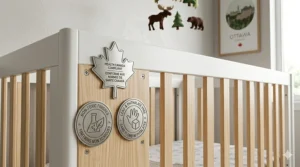
Crafted from pine wood, engineered wood, and wood composites with Euro drawer glides, the Benton offers smooth operation that doesn’t stick or jam—even during dry Canadian winters when wood furniture tends to swell and contract. The crib meets or exceeds ASTM and CPSIA safety standards and carries both GREENGUARD Gold and JPMA certifications, giving you triple verification that it’s safe for Canadian infant use. What sets this apart from cheaper storage cribs is the attention to finish quality; the applied coating has been rigorously tested and won’t chip or peel even when your toddler inevitably uses the rails as a teething surface.
The four adjustable mattress heights adapt as your baby grows from tiny newborn to standing toddler, and the conversion to toddler bed, daybed, and full-size bed means you’re covered through elementary school years. Canadian reviewers specifically mention how well this crib holds up in households with pets—the drawer stays closed against curious noses, and the finish resists scratches from overly enthusiastic family dogs. British Columbia buyers appreciate that the neutral finishes (white, grey, pebble) complement West Coast design aesthetics while remaining practical for resale value.
Pros:
✅ Built-in drawer storage maximizes small Canadian nursery spaces
✅ Premium Euro drawer glides operate smoothly in varying humidity
✅ Triple safety certifications provide extra peace of mind
Cons:
❌ Slightly higher weight (around 85 lbs assembled) makes repositioning difficult
❌ Upper end of budget range at $220-$280 CAD
Price range: In the $220-$280 CAD range. While this pushes the upper boundary of our budget category, the integrated storage drawer adds $100-$150 CAD of functional value compared to buying a separate dresser, making it cost-effective for space-constrained Canadian homes.
3. Storkcraft Beckett 3-in-1 Convertible Crib
The Storkcraft Beckett represents what happens when a manufacturer focuses on doing the basics exceptionally well rather than cramming in unnecessary features. This 3-in-1 convertible crib converts from standard crib to toddler bed and daybed with a clean, timeless design that works in any nursery style from modern minimalist to classic traditional—important for Canadian resale markets where neutral aesthetics maintain value.
Built with sustainable New Zealand pine and TSCA-compliant engineered wood, the Beckett offers genuine solid wood construction at a price point where many competitors use composite materials throughout. This matters for Canadian buyers because solid wood better withstands the temperature extremes our homes experience—going from -30°C outside to +22°C inside creates expansion and contraction cycles that can crack or warp lesser materials over time. The four adjustable mattress positions let you customize the crib height from newborn-friendly high placement down to toddler-safe low positioning as recommended by Health Canada’s safe sleep guidelines.
GREENGUARD Gold certification confirms this crib has been tested for chemical emissions and VOC levels, contributing to healthier indoor air—particularly valued by Alberta parents dealing with wildfire smoke season and Quebec families concerned about older building materials. The finish is non-toxic and lead-free, meeting strict Canadian safety standards for children’s furniture. Assembly typically takes 30-40 minutes with two people, and the included toddler guardrail means you won’t face surprise conversion kit costs when your child outgrows the crib stage.
Pros:
✅ Solid wood construction outlasts composite alternatives
✅ Toddler guardrail included (saves $40-$70 CAD later)
✅ Four mattress heights offer maximum adjustment flexibility
Cons:
❌ Only 3-in-1 conversion limits long-term versatility compared to 5-in-1 models
❌ Natural wood finish shows wear marks more visibly than painted options
Price range: Around $200-$270 CAD. This hits the sweet spot for Canadian parents who want premium materials and construction without paying for extra conversion stages they may never actually use.
4. Dream On Me Carson Classic 3-in-1 Convertible Crib
The Dream On Me Carson brings an often-overlooked feature to budget convertible cribs: locking caster wheels. For Canadian families who rearrange nursery layouts seasonally (moving the crib away from cold windows in winter, closer to natural light in summer), or who need to vacuum underneath regularly, this mobility makes practical daily life significantly easier without compromising stability once locked in place.
This 3-in-1 convertible transforms from crib to toddler bed and daybed, with four mattress height positions that accommodate growth from newborn through age three or four. The sustainable pinewood construction and non-toxic finish meet GREENGUARD Gold certification standards and Baby Safety Alliance verification—double confirmation of safety for Canadian infant use. What makes this particularly appealing for first-time parents is the classic spindle design that clearly signals “this is a crib” rather than trying to look like adult furniture, which actually helps with resale value in Canadian online marketplaces where buyers search for traditional baby gear.
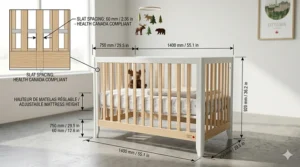
The locking wheels are rated for stability on both carpet and hardwood—important for Canadian homes where you might have area rugs over hardwood or laminate flooring. Ontario and Quebec reviewers specifically mention how helpful the mobility is when setting up for family visits or moving the crib between rooms during renovation projects. The crib meets all Health Canada safety regulations including the critical 6 cm maximum slat spacing that prevents infant head entrapment, and the four-position mattress support allows you to lower the sleeping surface as your baby becomes more mobile.
Pros:
✅ Locking wheels provide unique mobility advantage
✅ Lower price point ($160-$210 CAD) frees budget for mattress and bedding
✅ Classic design maintains strong resale value in Canadian markets
Cons:
❌ Wheels may concern some parents despite locking mechanism (purely psychological)
❌ Limited to 3-in-1 conversion reduces long-term lifespan
Price range: In the $160-$210 CAD range. This represents the most affordable entry point for a GREENGUARD Gold certified convertible crib available to Canadian buyers on Amazon.ca, making it ideal for budget-conscious families or those furnishing multiple nurseries.
5. Graco Theo 3-in-1 Convertible Crib
The Graco Theo delivers what Canadian minimalist parents have been asking for: a clean-lined, modern aesthetic without the premium price tag typically attached to Scandinavian-inspired nursery furniture. This 3-in-1 convertible transitions from crib to toddler bed and daybed with a low-profile design that suits contemporary Canadian homes while maintaining all the safety features Health Canada requires.
Built from sustainable New Zealand pine wood with engineered components and wood composites, the Theo balances affordability with structural integrity. The four adjustable mattress heights adapt as your baby grows, and GREENGUARD Gold certification confirms it’s been screened for over 10,000 chemicals and VOCs—crucial for Canadian families concerned about indoor air quality during our long winters when homes stay sealed tight. The applied finish has been tested to meet ASTM and CPSIA standards, and the crib carries JPMA certification from independent laboratory testing.
What sets the Theo apart in its price category is the attention to edge finishing and corner details—there are no sharp edges or protruding hardware to catch on clothing or scratch curious hands. British Columbia parents appreciate how the white finish brightens naturally dark Pacific Northwest nurseries, while Prairie families note that the simple design doesn’t show dust as obviously as ornate alternatives. The crib fits any standard full-size mattress (sold separately), and conversion to toddler bed requires a separately purchased guardrail kit that typically runs $35-$55 CAD.
Pros:
✅ Modern minimalist design suits contemporary Canadian homes
✅ Four mattress heights provide excellent adjustment range
✅ Lightweight construction (around 50 lbs) simplifies assembly and repositioning
Cons:
❌ Toddler guardrail sold separately adds to total cost
❌ Engineered wood components may not last through multiple children like solid wood alternatives
Price range: Around $185-$245 CAD. For Canadian parents prioritizing clean aesthetics and proper safety certifications without overspending, this hits an ideal balance between form and function.
6. Storkcraft Pasadena 3-in-1 Convertible Crib
The Storkcraft Pasadena brings two-tone design to the budget convertible crib category—specifically the popular white-with-driftwood combination that’s been trending in Canadian nursery design for the past three years. This 3-in-1 convertible transitions from crib to toddler bed and daybed while offering a more distinctive aesthetic than single-colour alternatives at similar price points.
Constructed from sustainable materials including New Zealand pine and engineered wood with a GREENGUARD Gold certification for low chemical emissions, the Pasadena meets all Canadian safety standards while delivering visual interest through its contrasting finishes. The adjustable mattress height system accommodates growth from newborn through toddler stage, and the finish has been tested to meet or exceed ASTM standards—important because that two-tone aesthetic uses different coating formulations that both need to be infant-safe.
What makes this particularly appealing for Canadian buyers is how the two-tone design disguises the inevitable wear and tear that occurs with active toddlers. Solid white cribs show every scuff mark and hand print, while solid dark colours highlight dust—the Pasadena’s combination hides both more effectively, maintaining a cleaner appearance between deep cleaning sessions. Ontario cottage owners mention using these as seasonal nursery furniture because the coastal-inspired driftwood tone fits vacation home aesthetics while meeting the same safety standards as primary residence furniture.
Pros:
✅ Two-tone design offers distinctive aesthetic at budget pricing
✅ Contrasting finishes disguise wear better than single colours
✅ GREENGUARD Gold certification ensures low VOC emissions
Cons:
❌ Two-tone finish limits colour coordination flexibility in nursery design
❌ Toddler conversion kit sold separately
Price range: Around $205-$265 CAD. This occupies the mid-range of our budget category, delivering design differentiation without the premium typically charged for multi-tone nursery furniture.
7. Dream On Me Aden 4-in-1 Mini Convertible Crib
The Dream On Me Aden solves a uniquely Canadian urban housing challenge: creating a safe nursery in spaces that simply won’t accommodate standard full-size cribs. This 4-in-1 mini convertible transforms from mini crib to mini daybed and then to twin-size bed with or without footboard, offering long-term versatility in a compact footprint that fits Toronto studio apartments, Vancouver micro-condos, and Montreal two-bedrooms where every inch matters.
Built from sustainable pinewood with three adjustable mattress heights and GREENGUARD Gold certification, the Aden delivers the same safety standards as full-size cribs while occupying roughly 30% less floor space. What surprises first-time parents is discovering that “mini” doesn’t mean “flimsy”—this crib meets or exceeds ASTM and CPSC safety standards, carries Baby Safety Alliance verification, and is CPSIA compliant with lead and phthalate levels well below federal limits. The included 1-inch mattress pad fits the mini crib’s 38″ × 24” sleep surface, which is perfect for newborns through approximately 18-24 months before transitioning to the twin bed configuration.
Canadian apartment dwellers specifically value how the Aden’s compact size allows them to keep the crib in their bedroom for those crucial first six months of room-sharing recommended by the Canadian Paediatric Society, then move it to a dedicated nursery nook when the baby is ready for independent sleeping. Prairie grandparents mention buying these as spare cribs for visiting grandchildren because they fit in guest rooms without overwhelming the space. The finish is non-toxic and designed for Canadian indoor air quality standards.
Pros:
✅ Space-saving mini design ideal for Canadian urban apartments
✅ 4-in-1 conversion extends lifespan despite smaller initial size
✅ Lowest price point in our roundup ($150-$195 CAD)
Cons:
❌ Mini crib mattress requires specific sizing (38″ × 24″) which limits bedding options
❌ Shorter usable lifespan as crib stage compared to full-size alternatives (18-24 months vs. 3-4 years)
Price range: In the $150-$195 CAD range. For Canadian families in expensive urban markets where space literally costs more per square metre than additional furniture, this mini crib delivers safety-certified sleeping solutions without requiring you to sacrifice your living room.
✨ Don’t Miss These Exclusive Deals!
🔍 Take your nursery setup to the next level with these carefully selected products. Click on any highlighted item to check current pricing and availability on Amazon.ca. These cribs will help you create a safe, comfortable sleep environment your baby will love!
How to Choose a 3-in-1 Convertible Crib for Canadian Homes
Selecting the right convertible crib for your Canadian nursery requires balancing safety regulations, space constraints, and long-term value—factors that often pull in different directions when you’re working within a $300 CAD budget. The first decision point is understanding what “3-in-1” actually means in practice. Most budget convertible cribs start as a standard infant crib, transform into a toddler bed (usually requiring a separately purchased conversion kit), and finish as a daybed. Some manufacturers stretch this to 4-in-1 or 5-in-1 by offering full-size bed conversions or variations with/without footboards, which extends the furniture’s lifespan from approximately four years to potentially ten or more years.
Canadian building codes and climate realities create unique considerations that American crib reviews often miss. Our homes experience dramatic temperature and humidity swings between seasons—going from winter heating that dries out wood to summer humidity that can cause expansion. Look for cribs constructed from sustainably sourced New Zealand pine or Canadian hardwoods rather than purely engineered composites, as solid wood better handles these environmental fluctuations without developing gaps or structural weaknesses. According to Health Canada’s crib safety guidelines available at canada.ca, all cribs sold in Canada must meet specific slat spacing requirements (maximum 6 cm apart), mattress support standards, and height restrictions to prevent entrapment injuries.
The mattress height adjustment feature directly impacts usability through different developmental stages. Four-position systems offer more flexibility than three-position alternatives—you want the highest setting for newborns (when you’re bending over constantly and possibly recovering from a C-section), mid-range settings as your baby learns to sit and pull up, and the lowest position once they’re standing and attempting to climb out. Canadian parents dealing with back problems from winter shovelling particularly appreciate cribs that maintain comfortable access heights through the newborn phase.
GREENGUARD Gold certification has become the standard rather than the exception in budget convertible cribs, but understanding what it actually tests matters for Canadian homes. This certification confirms the crib has been screened for over 10,000 chemicals and VOCs that pollute indoor air—particularly relevant during our sealed-up winter months when ventilation is minimal. Look for cribs that also carry Baby Safety Alliance (formerly JPMA) verification and meet ASTM F1169 standards, which are referenced in Canadian safety regulations. The finish should explicitly state it’s non-toxic, lead-free, and phthalate-safe—these aren’t just marketing claims but legal requirements under Canadian consumer product safety laws.
Space planning for Canadian nurseries often means accounting for radiators, baseboard heating, or forced-air vents that don’t exist in milder climates. Your crib needs at least 30 cm of clearance from heat sources to prevent overheating and maintain safe sleep temperatures. In older Canadian homes with limited electrical outlets, consider whether you’ll need space beside the crib for a nightlight or sound machine, which influences placement options. Condos and apartments in Toronto, Vancouver, and Montreal frequently have smaller bedrooms than suburban homes, making mini convertible cribs a practical choice that doesn’t sacrifice safety.
The conversion process itself deserves scrutiny before purchase. Some cribs include toddler bed conversion rails, while others sell them as $40-$70 CAD add-ons. Full-size bed conversion kits typically cost $80-$150 CAD if purchased separately. Calculate the total long-term cost including these components, not just the initial crib price, to understand whether you’re actually saving money compared to buying separate furniture pieces as your child grows.
Real-World Performance: What to Expect from Budget Convertible Cribs in Canada
Budget convertible cribs under $300 CAD have evolved dramatically over the past decade, but setting realistic performance expectations prevents disappointment when your Pinterest-perfect nursery meets the reality of daily life with an infant. The truth is that these cribs will show wear—the question is whether that wear compromises safety (unacceptable) or merely aesthetics (manageable for most families).
Teething damage appears on virtually every crib by 12-18 months when babies discover they can gnaw on rails while standing. Non-toxic finishes protect your baby’s health but won’t prevent wood compression from determined chewing. Some manufacturers now include clear teething guards on rail tops, but budget models typically don’t—you’ll find DIY solutions or aftermarket guards running $15-$30 CAD if this bothers you. The structural integrity remains sound; you’re looking at cosmetic indentations rather than safety hazards. Prairie parents specifically mention that extremely dry winter air can cause minor finish crackling on painted cribs, which doesn’t affect function but may bother perfectionists planning to resell.
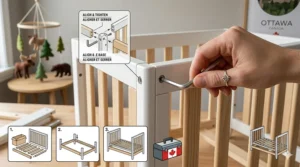
Assembly quality varies more among budget cribs than premium alternatives. Expect to spend 30-60 minutes building your crib with a partner, basic tools (usually provided), and patience for aligning bolt holes that aren’t always perfectly drilled. The included instructions range from excellent (Graco, Storkcraft) to adequate (Dream On Me)—if you struggle, YouTube typically has assembly walkthroughs from other Canadian parents. Once properly assembled and bolts are fully tightened, these cribs should not wobble, squeak, or shift during normal use. If yours does, you’ve likely missed a critical tightening step—go back through every bolt with the Allen key.
The mattress support systems in budget convertible cribs use metal grid platforms rather than solid wood slats, which actually improves airflow and reduces mold risk in Canadian climates where humidity can be problematic. These platforms support up to 50 lbs (the typical weight limit for crib stage) without sagging, but they do produce occasional metallic creaks as weight shifts—completely normal and not a safety concern. Some noise-sensitive parents add felt pads between metal contact points to minimize sound, though this isn’t necessary for structural reasons.
Conversion to toddler bed stage typically happens around age two to three when your child can climb out of the crib independently. The process involves removing one side rail and attaching a shorter guardrail (if you purchased the conversion kit) to prevent rolling out during sleep. Canadian safety standards require that toddler bed configurations maintain at least one guardrail and can’t elevate the mattress higher than certain levels—all the cribs in our roundup comply when you follow manufacturer instructions. The converted toddler bed should remain stable and wobble-free; if it doesn’t, recheck your assembly and ensure you’re using the correct hardware from your conversion kit.
Winter performance matters for Canadian cribs more than manufacturers acknowledge in their marketing materials. Solid wood construction handles temperature fluctuations better than heavily engineered composites—you may notice minor expansion and contraction with seasonal changes, but this shouldn’t affect bolt tightness or structural stability. Quebec parents in older homes with less consistent heating report that cribs positioned near exterior walls can develop slight gaps if temperature differentials are extreme; moving the crib 50 cm from the wall usually resolves this. The non-toxic finishes on certified cribs won’t off-gas more VOCs when heated (a concern with uncertified furniture), which is reassuring during our sealed-up winters.
Durability through multiple children is one of budget convertible cribs’ strongest value propositions. Properly maintained cribs from reputable manufacturers like those in our roundup routinely serve three or more children without structural compromise—you’ll see cosmetic wear, but the fundamental safety features remain intact. The metal mattress support frames are essentially indestructible under normal use, and solid pinewood rails withstand years of grabbing, shaking, and infant acrobatics. Budget cribs sacrifice aesthetic refinement and finish sophistication, not structural longevity. Just ensure you replace any cracked or damaged components immediately rather than attempting DIY repairs, which could compromise safety certifications.
Common Mistakes When Buying Convertible Cribs in Canada
The single costliest mistake Canadian parents make when shopping for convertible cribs is focusing solely on the initial purchase price without calculating total cost of ownership. A $180 CAD crib that requires $120 CAD in conversion kits plus a separately purchased mattress suddenly costs more than a $280 CAD crib bundle that includes the toddler rail and a basic mattress. Before clicking “buy” on Amazon.ca, verify what’s actually included: toddler conversion rail? Full-size bed conversion kit? Mattress? Changing table attachment? The product description should explicitly list these items—if it doesn’t, assume they’re sold separately and research those additional costs.
Another frequent error is ignoring the critical importance of mattress fit, which Health Canada specifically regulates for infant safety. The gap between crib sides and mattress must not exceed 3 cm (roughly 1-3/16 inches)—any larger and there’s entrapment risk. Budget cribs typically fit “standard full-size crib mattresses” measuring approximately 52″ × 28″, but mini cribs require specific 38″ × 24″ mattresses that cost similar amounts but offer fewer product options. Purchase your crib and mattress together, verify the dimensions match the manufacturer’s specifications, and physically test the fit when both arrive. If you can fit more than one finger in the gap, the mattress is too small and poses a safety hazard.
Canadian parents often underestimate space requirements because online product photos use clever angles that make cribs appear more compact than reality. A standard convertible crib occupies roughly 140 cm × 75 cm of floor space, but you need at least 60-90 cm of clearance on one or two sides for diaper changes, sheet replacement, and moving around a crying infant at 3:00 AM. Measure your actual nursery space before ordering, account for door swing, and remember you’ll likely add a rocking chair, dresser, or change table to the room. Urban Canadian condos and older homes with smaller bedrooms frequently force parents to return full-size cribs and purchase mini alternatives—avoid this headache by measuring first.
Assuming all cribs shipped to Canada automatically meet Canadian safety standards is dangerously incorrect. While Amazon.ca’s policies generally restrict the sale of non-compliant products, third-party sellers sometimes list cribs designed for international markets that don’t meet Health Canada requirements. Verify that product descriptions specifically mention compliance with Canadian regulations, ASTM F1169 standards, and include GREENGUARD Gold or similar certifications. Cribs manufactured before September 1986 are illegal to use in Canada and don’t meet current slat spacing or construction standards—relevant if you’re considering vintage or hand-me-down furniture. Drop-side cribs have been banned in Canada since December 29, 2016, due to entrapment deaths—never use one regardless of family sentiment.
Skipping the assembly instructions in favour of “intuitive” building is particularly problematic with convertible cribs that require specific bolt torques and hardware placement for safety certifications to remain valid. Budget cribs from different manufacturers use different assembly logic—bolts that look interchangeable may have slightly different thread pitches or lengths that matter for structural integrity. Follow the instructions exactly, use the provided tools or specified alternatives, and don’t substitute generic hardware store screws for proprietary fasteners. Improper assembly is the leading cause of crib accidents that shouldn’t have occurred according to Health Canada incident reports.
Finally, Canadian parents sometimes purchase cribs without verifying current product recalls through the official Government of Canada recalls database available at recalls.canada.ca. Even major brands occasionally discover safety issues post-release and initiate voluntary recalls for specific production runs or model years. Check this database before purchasing, and register your crib with the manufacturer so you receive recall notifications directly if issues emerge during your years of use. This five-minute step could prevent serious injury.
Understanding Canadian Crib Safety Regulations and Certifications
Canadian crib safety standards rank among the world’s most rigorous, reflecting our country’s commitment to infant protection and evidence-based regulatory policy. All cribs sold in Canada must comply with the Cribs, Cradles and Bassinets Regulations (SOR/2016-152) administered by Health Canada, which set specific requirements for slat spacing, mattress support construction, finish toxicity, and structural stability. Understanding these regulations helps you evaluate whether a budget crib truly delivers safety or cuts corners in ways that matter.
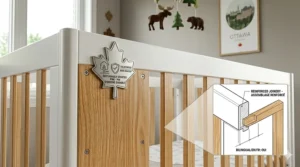
The fundamental slat spacing requirement limits gaps to a maximum of 6 cm (2-3/8 inches) between any two vertical slats to prevent infant head entrapment—a leading cause of crib-related injuries historically. This measurement applies throughout the entire crib structure, not just the obvious side rails. Corner posts cannot extend more than 1.5 mm (1/16 inch) above the end panels unless they meet specific cut-out testing requirements, preventing clothing entanglement and strangulation hazards. Mattress support platforms must attach permanently to the crib frame using specified hardware—not hooks or drop-in systems that can dislodge.
According to Health Canada’s official crib safety guidelines, the mattress thickness cannot exceed 15 cm (6 inches), and when placed at its lowest support position, the gap between the mattress top and the highest point of the crib rail must be at least 50 cm (19-3/4 inches) to prevent toddlers from climbing out. These precise measurements matter because manufacturers sometimes design cribs that meet American ASTM F1169 standards but don’t fully align with Canadian requirements—both standards share substantial overlap, but nuances exist. Look for product descriptions that explicitly mention Canadian compliance rather than assuming American certification equals Canadian approval.
GREENGUARD Gold certification, while not legally required in Canada, has become the de facto standard for chemical emissions testing in nursery furniture. This independent third-party certification confirms the crib has been tested for more than 10,000 chemicals and volatile organic compounds (VOCs) that degrade indoor air quality. Given that Canadian infants typically spend 12-16 hours daily in their cribs during the first year of life, and our homes remain sealed against outdoor air for significant portions of the year, this certification addresses legitimate health concerns beyond regulatory compliance. The certification specifically measures formaldehyde emissions from engineered wood components, which some cheaper cribs use extensively.
Baby Safety Alliance (BSA) verification, formerly known as JPMA certification, indicates that an independent laboratory has tested samples of the crib to verify compliance with all applicable mandatory and voluntary safety standards. This adds a layer of third-party verification beyond the manufacturer’s self-certification of compliance. While Canadian law doesn’t require BSA certification, its presence signals that a company is willing to invest in external validation of their safety claims—important when you’re purchasing a $200 crib rather than a $2,000 artisan piece where quality is easier to verify visually.
The finish on budget convertible cribs must be non-toxic, lead-free, and phthalate-safe under Canadian consumer product safety regulations. Most manufacturers now use water-based paints that meet or exceed these requirements while providing adequate durability against daily wear. The finish should be clearly described in product specifications as meeting ASTM and CPSIA standards—if this information is absent or vague, consider it a red flag warranting further investigation. Remember that your baby will inevitably chew on crib rails during teething months; you need absolute confidence that the finish is safe for incidental ingestion.
Long-Term Value: Total Cost of Ownership Analysis in CAD
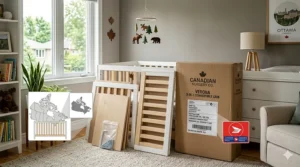
The true economic advantage of convertible cribs reveals itself when you calculate the total cost of ownership across your child’s first decade rather than focusing exclusively on the initial purchase price. Let’s break down realistic scenarios for Canadian families to demonstrate where budget convertible cribs deliver genuine savings versus where they’re merely shifting costs to future purchases.
Scenario 1: Budget Convertible Crib ($200 CAD base model)
- Initial crib purchase: $200 CAD
- Crib mattress (standard foam): $80 CAD
- Toddler conversion kit: $50 CAD (purchased at age 2.5)
- Twin mattress for bed conversion: $120 CAD (purchased at age 5)
- Total furniture cost birth to age 8: $450 CAD
Scenario 2: Non-Convertible Traditional Crib ($180 CAD)
- Initial crib purchase: $180 CAD
- Crib mattress: $80 CAD
- Toddler bed purchase: $150 CAD (age 3)
- Toddler mattress: $90 CAD
- Twin bed frame: $200 CAD (age 5)
- Twin mattress: $120 CAD
- Total furniture cost birth to age 8: $820 CAD
Scenario 3: Premium Convertible Crib ($450 CAD – outside our budget category)
- Initial crib purchase: $450 CAD
- Crib mattress (organic): $180 CAD
- Toddler conversion kit: Included
- Full-size bed conversion kit: $120 CAD (age 7)
- Full-size mattress: $300 CAD
- Total furniture cost birth to age 14: $1,050 CAD
Looking at these calculations, the budget convertible crib (Scenario 1) saves $370 CAD compared to buying separate furniture pieces at each stage, and costs $600 CAD less than a premium convertible over a similar timeframe—even though the premium crib lasts longer. For Canadian families in expensive urban markets like Toronto or Vancouver where every dollar counts toward mortgage or rent, that $370 saved during early childhood years can fund other necessities like childcare, formula, or RESP contributions.
The hidden costs that budget convertible crib buyers should anticipate include mattress replacement every 3-5 years (approximately $80-$120 CAD each time depending on size and quality), potential shipping fees if purchasing conversion kits separately (Amazon.ca typically requires $35 minimum for free shipping on non-Prime items), and occasional hardware replacement if bolts strip during repeated assembly/disassembly for moving or configuration changes ($5-$15 CAD from hardware stores).
Budget convertible cribs typically don’t include accessories like under-crib storage drawers, attached changing tables, or convertible rails—features that add $80-$200 CAD to purchase price but deliver daily convenience. You’ll need to decide whether those convenience features justify the cost difference or whether standalone alternatives (a separate changing pad on a dresser, for example) meet your needs for less money. Ontario parents dealing with smaller urban homes often find that paying extra for integrated storage actually saves money compared to purchasing additional furniture pieces that require more floor space.
Resale value enters the calculation if you plan to sell baby gear rather than keeping it for subsequent children or donating it. Budget convertible cribs in good condition with all original hardware and instructions typically resell on Canadian marketplaces (Facebook Marketplace, Kijiji) for 40-60% of original purchase price within two years of purchase. This assumes you’ve maintained the crib well, haven’t violated any recalls, and can demonstrate it meets current safety standards. Mini cribs and models with wheels tend to have stronger resale markets than standard designs because they solve specific problems for urban buyers.
FAQ
❓ Do I need to buy a separate mattress for each conversion stage of a 3-in-1 crib?
❓ Are convertible cribs available on Amazon.ca safe for Canadian winters and heating systems?
❓ Can I use a hand-me-down convertible crib from a family member or buy second-hand in Canada?
❓ How long can my baby actually sleep in a 3-in-1 convertible crib before needing the toddler bed conversion?
❓ What's the difference between GREENGUARD and GREENGUARD Gold certification for Canadian cribs?
Conclusion: Smart Shopping for Budget Convertible Cribs in Canada
Finding a safe, functional 3-in-1 convertible crib under $300 in Canada isn’t just possible in 2026—it’s actually easier than ever thanks to improved manufacturing standards, transparent safety certifications, and increased competition among budget nursery furniture brands. The cribs reviewed in this guide all meet or exceed Health Canada’s safety requirements while delivering the core conversion functionality that makes these products worth purchasing over traditional cribs.
For most Canadian families, the Dream On Me Synergy or Graco Benton represent the sweet spot of value, safety, and longevity within our budget category. Both offer 5-in-1 convertibility that extends usability well beyond early childhood, carry GREENGUARD Gold certification for chemical emissions, and consistently receive positive feedback from Canadian buyers across different provinces and living situations. If space constraints are your primary concern, the Dream On Me Aden mini crib solves urban housing challenges without sacrificing safety standards.
Remember that the cheapest crib isn’t necessarily the best value—calculate total cost including mattress, conversion kits, and long-term durability rather than optimizing solely for initial purchase price. A $200 crib that requires $150 in future conversion kits costs more than a $280 bundled package that includes those components. Similarly, investing in GREENGUARD Gold certified cribs protects indoor air quality during our long Canadian winters when homes stay sealed—a health consideration that justifies slightly higher upfront costs.
Use Amazon.ca’s Prime shipping to access free delivery on most cribs, and always verify that products specifically mention Canadian safety compliance rather than assuming American certifications automatically meet our standards. Check the Government of Canada recalls database before purchasing, and register your crib with the manufacturer to receive safety alerts if issues emerge during your years of use. With proper research and realistic expectations about budget furniture performance, you can create a safe, comfortable nursery for your baby without overspending on features that don’t enhance infant safety or parental convenience.
Recommended for You
- 7 Best Baby Cribs Canada 2026
- 7 Best 4-in-1 Convertible Cribs Canada 2026
- 7 Best Forward Facing Baby Carriers Canada 2026
Disclaimer: This article contains affiliate links. As an Amazon Associate, I earn from qualifying purchases. If you purchase products through these links, we may earn a small commission at no additional cost to you.
✨ Found this helpful? Share it with your friends! 💬🤗
