

In This Article
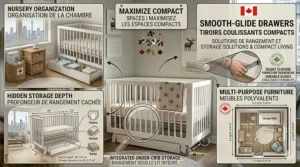
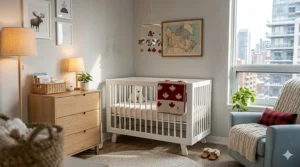
Living in a Toronto condo? Setting up a nursery in a Vancouver apartment? You’re not alone—and you definitely don’t need to sacrifice safety or style just because you’re working with limited square metres. Mini cribs for small spaces have become the go-to solution for Canadian parents navigating urban living, and for good reason. These compact nursery solutions deliver everything a full-size crib offers—safety certifications, adjustable mattress heights, convertible features—but in a footprint that actually fits through your apartment hallway.
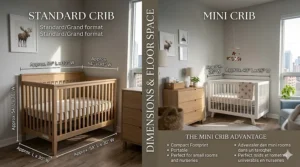
What most buyers overlook is that “mini” doesn’t mean compromised. According to Health Canada’s Cribs, Cradles and Bassinets Regulations, mini cribs must meet the exact same safety standards as their full-size counterparts: slat spacing no wider than 6 centimetres, mattress gaps under 3 centimetres, and GREENGUARD Gold certification for low chemical emissions. The difference? A standard mini crib measures roughly 99 cm × 61 cm (39″ × 24″) compared to a full-size crib’s 140 cm × 71 cm (55″ × 28″)—that’s nearly 40% less floor space while still providing a safe sleep environment until your child is around 18-24 months old.
For Canadian families specifically, the appeal goes beyond size. Our harsh winters mean you’re indoors more, making every square foot of living space precious. Condo-friendly baby cribs that convert into toddler beds offer years of value without requiring you to haul a massive piece of furniture up three flights of stairs—because let’s be honest, not every Canadian building has a service elevator. Whether you’re co-sleeping in a primary bedroom or maximizing a nursery nook, the right apartment baby crib becomes the anchor of a functional, beautiful space your little one will actually use.
Quick Comparison: Top 7 Mini Cribs at a Glance
| Product | Dimensions (L×W×H) | Price Range CAD | Key Feature | Best For |
|---|---|---|---|---|
| Dream On Me Aden 4-in-1 | 101×64×89 cm | $200-$250 | 4 convertible configurations | Long-term value seekers |
| Babyletto Origami Mini | 100×65×91 cm | $400-$500 | Foldable frame with wheels | Urban renters needing mobility |
| Delta Children Folding Portable | 95×59×84 cm | $180-$220 | Folds completely flat | Grandparents & travel |
| Dream On Me 3-in-1 Folding | 95×60×86 cm | $210-$260 | Playpen + changing station | Multi-functional spaces |
| Graco Stella 4-in-1 Mini | 98×63×88 cm | $300-$350 | Includes bonus mattress | First-time parents |
| Babyletto Gelato 4-in-1 | 101×66×89 cm | $450-$550 | Interchangeable decorative feet | Design-conscious families |
| Dream On Me Edgewood | 102×64×84 cm | $230-$280 | Classic design, 3 heights | Traditional nursery style |
💬 Just one click—help others make better buying decisions too! 😊
Top 7 Mini Cribs for Small Spaces: Expert Analysis
1. Dream On Me Aden 4-in-1 Convertible Mini Crib
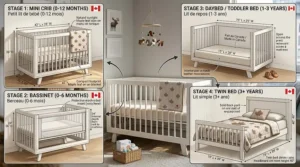
If you’re hunting for the sweet spot between budget and longevity, the Aden 4-in-1 consistently tops Amazon.ca’s mini crib rankings for a reason. Constructed from New Zealand pinewood, this compact nursery solution measures 101 cm long by 64 cm wide—small enough to fit in a shared bedroom without overwhelming the space, yet substantial enough that it doesn’t feel flimsy. The spec sheet will tell you it has three adjustable mattress heights and GREENGUARD Gold certification; what it won’t tell you is that the low-profile design means you can use this as a bedside sleeper in the highest position during those brutal first three months of night feedings, then lower it as your baby develops mobility.
Here’s the practical reality: most Canadian parents ditch their mini crib when baby hits toddlerhood because they assume that’s the end of its usefulness. The Aden converts from mini crib to mini daybed, then to a twin-size bed with optional conversion rails (sold separately for around $150-$200 CAD). That’s potentially eight years of use from a crib you can pick up in the $200-$250 range on Amazon.ca. The pinewood construction handles Canada’s dry winter heating without warping—a common complaint with cheaper particle board alternatives that can’t tolerate our 20-30% humidity swings between July and January.
Canadian reviewers consistently mention the straightforward assembly (roughly 45-60 minutes for one person) and the fact that it ships from Amazon.ca’s fulfillment centres, meaning you’re not waiting 6-8 weeks for import delays or getting dinged with surprise customs fees. The three mattress positions matter more than you’d think: start high for newborn access, drop to mid-level around 5-6 months when baby starts pushing up, then lowest setting by 8-9 months when they’re pulling to stand. This prevents the “jail break” stage where toddlers learn they can climb out if the mattress is too high.
Pros:
✅ Converts through four stages (mini crib, daybed, twin bed configurations)
✅ GREENGUARD Gold certified and exceeds ASTM/CPSC standards
✅ Three mattress heights accommodate newborn through toddler stages
Cons:
❌ Conversion kits sold separately add $150-$200 to long-term cost
❌ Requires purchase of mini crib mattress (38″ × 24″), not standard crib size
Price Verdict: Around $210-$240 CAD on Amazon.ca with Prime shipping—exceptional value for families planning to use it beyond the crib stage.
2. Babyletto Origami Mini Portable Crib
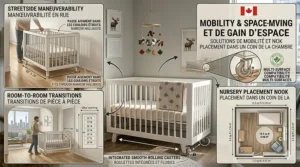
The Origami Mini from Babyletto targets a specific Canadian demographic: urban families in rental apartments who need furniture that adapts to life changes. Unlike stationary cribs, this model features a patented folding mechanism that collapses the entire frame into a 15 cm (6″) thick package you can slide under a bed or tuck into a storage locker. The four locking caster wheels aren’t just for show—they’re heavy-duty steel that actually roll smoothly over typical Canadian apartment transitions like hardwood to carpet without jamming, something cheaper plastic wheels fail at consistently.
What makes this worth the premium (typically $400-$500 CAD on Amazon.ca)? The geometric slatted design uses sustainably sourced New Zealand pine, and every component is GREENGUARD Gold certified for over 10,000 chemical emissions—critical for Canadian families where we seal our homes tight against winter cold, trapping VOCs indoors for months. The two adjustable mattress positions mean you can keep a newborn at waist height for easier lifting (saving your back post-delivery), then lower it by 4-5 months when rolling begins. The low-profile 91 cm height makes this work as a bedside sleeper without blocking adult mattress access.
Where this crib shines for Canadians: mobility during our extended winters. You can roll it from bedroom to living room for supervised naps while you’re working from home, then fold it for weekend trips to the cottage or in-laws. Compare that to full-size cribs that require disassembly (losing hardware in the process) or staying permanently anchored in one room. The included 2.5 cm (1″) mattress pad meets the requirement for firmness but most parents upgrade to a proper mini crib mattress (sold separately, around $80-$120 CAD) for better support. Canadian buyers should note that while Babyletto products are designed in California, they’re available through Amazon.ca with standard shipping, not import fees.
Pros:
✅ Folds completely flat for storage or transport (15 cm thick when folded)
✅ Locking caster wheels enable easy room-to-room mobility
✅ FSC-certified sustainable wood with GREENGUARD Gold certification
Cons:
❌ Higher price point ($400-$500 CAD) compared to basic mini cribs
❌ Included mattress pad is minimal; separate mattress purchase recommended
Price Verdict: In the $420-$480 range on Amazon.ca—worth it if you need portability and plan to move or travel frequently.
3. Delta Children Folding Portable Mini Crib
Think of the Delta Children Folding model as the “grandparent house special”—it’s the mini crib you buy specifically because it folds flat for storage, ships easily, and costs under $220 CAD on Amazon.ca. The wood construction is sturdy enough (holds up to 20 kg or 45 lbs), and the included 1.5-inch mattress means you can set it up immediately without needing to source a separate Canadian-sized mini mattress. The two-position mattress height adjustment covers you from newborn through roughly 18 months, which is the typical lifespan for mini cribs anyway before transitioning to a toddler bed.
What Delta got right: the fold mechanism is genuinely simple—no wrestling with locking pins or complicated hinges like some competitors. When collapsed, the crib measures just 16 cm (6.5”) thick and weighs 16 kg (35 lbs), light enough that one person can carry it to a car or basement storage without help. Canadian buyers love this for the cottage—you can keep it folded in a closet 10 months of the year, then have a safe sleep space ready in five minutes when family visits. The included mattress stores inside the folded frame, so you’re not hunting for pieces.
The honest reality? This isn’t the crib for your primary nursery if you’re using it daily. The fold function means the frame isn’t as rigid as a stationary crib, and the mattress support sits directly on wooden slats rather than a solid platform—fine for occasional use, but daily wear shows faster. Think of this as your secondary crib: the one at grandma’s house, the one for your own bedroom during the first eight weeks when baby needs to be close at night, or the travel crib for extended family visits. At $180-$220 CAD, it’s budget-friendly enough that having a backup makes sense, especially if you’re co-sleeping initially and plan to transition to a nursery later.
Pros:
✅ Folds completely flat (16 cm thick) for storage between uses
✅ Includes 1.5-inch mattress (no separate purchase needed)
✅ JPMA certified and GREENGUARD Gold certified for safety
Cons:
❌ Fold mechanism makes frame less rigid than stationary cribs
❌ Wheels are non-locking (fine for flat floors, not ideal for slopes)
Price Verdict: Around $190-$210 CAD on Amazon.ca—best value for secondary cribs or grandparent homes.
4. Dream On Me 3-in-1 Portable Folding Mini Crib
The 3-in-1 Portable Folding model solves a problem many Canadian apartment dwellers face: you need a crib, but you also need a changing station, and you definitely don’t have room for both as separate pieces. This multi-functional design combines a mini crib with a built-in changing table that detaches when your child outgrows diaper changes (typically around age 2-3). The patented folding system (US Patents #6817046 and #8479328 B2) means the entire unit—crib and changing table together—folds flat in under 30 seconds, making it perfect for daycare centres, nanny shares, or families who need to reclaim floor space when not in use.
Construction-wise, the New Zealand pinewood frame handles the dual-purpose stress well. Four smooth-rolling wheels (two locking, two swivel) let you move it between rooms—critical for Canadian parents during those -30°C winter days when you want to keep baby close in the main living area rather than making trips down a cold hallway to a separate nursery. The three mattress height positions accommodate newborn through toddler, and the changing table features safety straps and a 1-inch waterproof pad included. The real value emerges when you calculate the savings: separate mini cribs run $200-$300 CAD, while standalone changing tables cost $150-$250 CAD—getting both in one unit for $210-$260 saves space and money.
Here’s what most product listings don’t tell you: the changing table section is genuinely functional, not an afterthought. The surface measures 45 cm × 30 cm (18″ × 12″), large enough for newborn through 12-month changes, with a safety belt that keeps squirmy babies secure. Once your child transitions to standing diaper changes or potty training, the changing section detaches completely, leaving you with a standard mini crib. The included 1-inch mattress pad is minimal—most Canadian parents upgrade to a proper 3-inch mini crib mattress for better sleep support (adds $60-$100 CAD). GREENGUARD Gold certification means you’re not introducing VOCs into an already-sealed Canadian apartment during winter months.
Pros:
✅ Built-in changing table saves space and separate furniture cost
✅ Folds flat for storage (patented folding mechanism)
✅ Four wheels with two locking casters for mobility and stability
Cons:
❌ Changing table adds bulk when not folded (larger footprint than crib-only models)
❌ Assembly more complex than basic cribs (60-90 minute setup time)
Price Verdict: Around $225-$255 CAD on Amazon.ca—excellent value for multi-functional nursery solutions.
5. Graco Stella 4-in-1 Mini Convertible Crib
Graco’s Stella 4-in-1 enters the Canadian market with a compelling bonus: it includes a 2.75-inch thick mattress with water-resistant cover right in the box, eliminating the need to hunt down a Canadian-sized mini crib mattress separately. That bundled mattress typically adds $80-$120 in value, bringing the effective price down when you compare apples-to-apples with competitors. The crib itself converts through four stages (mini crib, daybed, toddler bed, twin bed) using optional conversion kits, giving it a lifespan that extends well into elementary school years if you invest in the add-ons.
The Stella’s design leans traditional with clean lines and a choice of white, grey, or natural wood finishes that coordinate with Graco’s other nursery furniture—a real advantage if you’re building a cohesive look in a small Canadian nursery where every piece needs to work together visually. Four adjustable mattress heights offer more granularity than the standard three-position cribs, letting you fine-tune for your baby’s specific development timeline. This matters more in practice than it sounds: that mid-high position around 4-5 months can save your back when baby is too heavy to easily lift from the lowest setting but not yet mobile enough to need full safety clearance.
What sets Graco apart in the Canadian market is their distribution network—products ship from Canadian warehouses through Amazon.ca, meaning faster delivery (often 2-3 business days with Prime) and no cross-border complications. The included mattress meets Canadian firmness guidelines (important for SIDS prevention) and the water-resistant cover handles the inevitable nighttime leaks without requiring a separate waterproof protector initially. The crib dimensions (98 cm × 63 cm) make it one of the more compact options, fitting easily in nursery corners or alongside adult beds in shared rooms. GREENGUARD Gold certification covers both the crib and the mattress, reducing total VOC load compared to buying components separately.
Pros:
✅ Includes 2.75-inch mattress with water-resistant cover (saves $80-$120 CAD)
✅ Four mattress height positions for precise adjustment
✅ Converts to toddler bed and twin bed with optional kits
Cons:
❌ Higher price point ($300-$350 CAD) than basic mini cribs
❌ Conversion kits sold separately add to long-term investment
Price Verdict: Around $315-$345 CAD on Amazon.ca—competitive when factoring in included mattress value.
6. Babyletto Gelato 4-in-1 Convertible Mini Crib
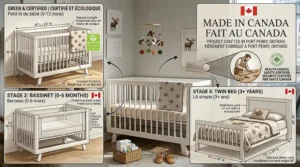
The Gelato 4-in-1 represents Babyletto’s design-forward approach to nursery furniture, featuring interchangeable feet in colours ranging from natural walnut to gold to vegan tan leather—a feature that sounds frivolous until you realize it lets you adapt the crib’s aesthetic as your decor evolves without replacing the entire unit. This matters for Canadian families investing $450-$550 CAD; you’re not locked into the honey wood finish you chose for a nursery that later becomes a toddler room with different colour schemes. The rounded post design and compact 101 cm × 66 cm footprint make it work equally well in modern condo nurseries or more traditional room setups.
Constructed from FSC-certified New Zealand pine, the Gelato converts from mini crib to twin-size bed (conversion kits sold separately for roughly $200-$250 CAD), giving it a potential 8-10 year lifespan. The build quality differentiates Babyletto from budget brands—joints are precision-cut and doweled, not just screwed together, resulting in a crib that stays rigid and quiet even after years of toddler abuse. Canadian reviewers note this crib doesn’t develop the annoying creaks and wobbles that plague cheaper models by month six. The included 1.5-inch waterproof mattress pad is adequate for the first few weeks, but most parents upgrade to Babyletto’s own Pure mini crib mattress (around $180-$220 CAD) for better support and breathability.
Where the Gelato justifies its premium pricing is in the details: non-toxic multi-step painting process, lead and phthalate-safe finishes, and GREENGUARD Gold certification covering over 10,000 chemical emissions. For sealed Canadian homes during winter, this matters—you’re not introducing VOCs that linger in recycled indoor air for months. The universal mini crib size (37″ × 23.5″) means standard mini crib sheets fit properly, unlike some brands that use slightly off dimensions requiring proprietary bedding. Available through Amazon.ca with free shipping, though stock can fluctuate—if you see your preferred colour combination, don’t hesitate, as restock can take 4-6 weeks.
Pros:
✅ Interchangeable decorative feet customize aesthetic
✅ FSC-certified sustainable wood with premium construction
✅ Converts to twin bed for 8+ years of use
Cons:
❌ Premium price ($450-$550 CAD) significantly higher than budget options
❌ Included mattress pad minimal; separate mattress recommended
Price Verdict: Around $480-$530 CAD on Amazon.ca—best for design-conscious families prioritizing aesthetics and longevity.
7. Dream On Me Edgewood 4-in-1 Convertible Mini Crib
The Edgewood closes out our list as the traditional-style option for Canadian families who want a mini crib that doesn’t scream “modern minimalist.” Its classic design with vertical slats and squared corners fits into heritage home nurseries or more formal decor schemes where contemporary cribs feel out of place. At 102 cm × 64 cm, it’s sized identically to most standard mini cribs but the visual weight feels more substantial thanks to the thicker corner posts and deeper wood stain options (cool grey, espresso, natural).
Functionally, it mirrors the Aden’s convertible approach: mini crib converts to mini daybed, then to twin bed with optional rails (sold separately, typically $170-$200 CAD). The three mattress height positions handle newborn through toddler stages, and the compact design specifically targets small Canadian spaces—think 1970s-era Toronto apartment bedrooms where floor space runs at a premium. The non-toxic water-based paint finish meets Canadian safety standards without the chemical smell that cheaper cribs emit for weeks after assembly. Setup takes 45-60 minutes solo, with clear instructions and pre-drilled holes that actually align (a frustration point with budget cribs).
What Dream On Me excels at is value engineering: you’re getting solid pinewood construction and GREENGUARD Gold certification at a $230-$280 price point that undercuts premium brands by $200-$300. The included 1-inch mattress pad is a starting point, not a solution—budget another $70-$100 for a proper 3-inch mini crib mattress for adequate support. Canadian availability through Amazon.ca means fast shipping and straightforward returns if you encounter assembly issues or damage. The Edgewood works particularly well for second children where you already have nursery infrastructure but need a crib that coordinates with existing traditional furniture.
Pros:
✅ Classic design suits traditional nursery aesthetics
✅ Converts through three stages (mini crib, daybed, twin bed)
✅ Non-toxic water-based paint finish safe for Canadian indoor air quality
Cons:
❌ Traditional styling less versatile than modern designs
❌ Mattress pad minimal (requires separate mattress purchase)
Price Verdict: Around $245-$270 CAD on Amazon.ca—solid mid-range option for traditional nurseries.
How to Maximize Your Mini Crib: Canadian Winter Setup Guide
Canadian winters mean your nursery operates in a sealed environment for 5-6 months of the year, making setup choices more critical than in milder climates. Position your mini crib away from heating vents (forced air can overheat baby and dry out wood joints) and exterior walls (cold spots near windows can create uncomfortable temperature gradients). A gap of 60-90 cm (2-3 feet) from windows is ideal—close enough to benefit from natural light during short winter days, far enough to avoid drafts from older window seals.
Winterization checklist for Canadian mini cribs:
Temperature regulation: Room temperature should sit between 18-20°C (64-68°F). Use a room thermometer, not your heating thermostat, since baby’s sleep space often runs 2-3 degrees different from where your thermostat is mounted. Dress baby in one layer more than you’re wearing—if you’re comfortable in a t-shirt, baby needs a onesie plus a sleep sack (never loose blankets for SIDS safety).
Humidity management: Canadian winter heating drops indoor humidity to 15-20%, well below the 40-50% ideal for baby’s respiratory health and preventing wood furniture from drying and cracking. A cool-mist humidifier positioned 2-3 metres from the crib (never directly beside it) maintains proper moisture levels. Check your crib’s joints monthly during heating season—if you see gaps appearing at corners, humidity is too low and wood is shrinking.
Mattress considerations: Mini crib mattresses need to maintain that critical 3 cm maximum gap from crib sides as specified by Health Canada regulations. Temperature swings cause materials to expand and contract; check the fit every 4-6 weeks during winter by sliding your hand along all four sides. If you can fit more than two fingers between mattress and frame, the mattress has shrunk and needs replacement.
Maintenance during cold months: Wood cribs benefit from quarterly checks of all bolts and screws during heating season. Temperature changes cause metal to expand/contract at different rates than wood, which can loosen hardware gradually. Keep the included hex key or Allen wrench taped inside a dresser drawer—Canadian hardware stores don’t always stock the metric sizes used in imported cribs.
Real Canadian Families: Who Needs Which Mini Crib?
The Downtown Toronto Condo Family: You’re in a 650-square-foot one-bedroom at Yonge and Eglinton, sharing your bedroom with baby for the first year. The Babyletto Origami Mini ($420-$480 CAD) earns its keep with four locking wheels that let you roll baby to different rooms throughout the day, then fold it flat for storage when grandparents visit and you need the floor space. The premium matters less when you calculate cost-per-square-foot in Toronto real estate terms.
The Budget-Conscious First-Time Parents in Winnipeg: Winter lasts seven months and you’re not hauling a full-size crib up to a third-floor walk-up. The Dream On Me Aden ($210-$240 CAD) converts through four stages, meaning you’re covered from newborn through elementary school with optional twin bed conversion. That initial $200 investment spreads across eight years of use, working out to $25 per year—less than a month of diaper costs.
The Suburban Montreal Grandparents: Your kids visit monthly with the grandchildren, but you don’t want a permanent nursery setup consuming your former home office. The Delta Children Folding ($190-$210 CAD) folds to 16 cm thick and stores in a closet 28 days a month, then sets up in five minutes when family arrives. The included mattress means you’re not tracking down Canadian-sized mini crib sheets separately.
The Vancouver Island Family Moving Frequently: Military or contract work means you’re relocating every 18-24 months. The Graco Stella ($315-$345 CAD) ships from Canadian Amazon warehouses with the mattress included, eliminating the scramble to source nursery basics during a cross-country move. The compact fold (though not as flat as Babyletto) fits in a moving truck without requiring professional disassembly.
Mini Crib vs Standard Crib: The Canadian Space Calculation
Standard full-size cribs measure 140 cm × 71 cm (55″ × 28″) with the mattress, occupying roughly 1.0 square metres of floor space. Mini cribs average 99 cm × 61 cm (39″ × 24″), using just 0.6 square metres—a 40% reduction. In Canadian real estate terms, where downtown Toronto condos cost $1,500+ per square foot, that 0.4 square metres of reclaimed space represents $600-$800 in condo value you’re not surrendering to baby furniture.
The practical benefit compounds when you factor in clearance space. Health Canada’s crib safety guidelines don’t specify room dimensions, but safe nursery practice requires 75-90 cm (30-36 inches) of clearance around the crib for adult access. A standard crib with clearance occupies 2.8-3.2 square metres total; a mini crib needs just 1.9-2.3 square metres. That extra square metre accommodates a nursing chair, a small dresser, or simply leaves room to move around without banging knees on furniture edges.
The lifespan difference matters less than manufacturers claim. Standard cribs accommodate children until roughly age 3-4 when they’re ready for a toddler bed. Mini cribs typically transition to toddler beds around age 2-2.5 when children reach 90 cm (35 inches) tall or begin climbing out. That’s a 12-18 month difference in usable lifespan—offset entirely if you choose a convertible mini crib that transforms into a twin bed through age 8-10. For Canadian families in temporary housing (students, renters, military), the shorter lifespan actually works in your favour: you’re not stuck hauling a full-size crib through multiple moves.
Cost comparison reveals interesting nuances. Budget standard cribs start around $200-$300 CAD on Amazon.ca; budget mini cribs start $180-$250. Premium standard cribs run $600-$1,200 CAD; premium mini cribs peak around $500-$600. You’re not saving dramatically on the crib itself, but you save $100-$200 on the mattress (mini crib mattresses cost $60-$120 CAD versus $150-$300 for standard crib mattresses), and you avoid the hidden costs of accommodating a full-size crib: larger bedroom needed (affecting rental prices), professional movers for stairs, storage fees if relocating.
Common Mistakes When Buying Mini Cribs in Canada
Ignoring mattress availability: Not all mini crib mattresses are created equal, and Canadian dimensions sometimes differ from US standards by 1-2 centimetres—enough to create unsafe gaps. Always verify that the specific mini crib you’re buying uses the standard 38″ × 24″ (approximately 96 cm × 61 cm) mini crib mattress size, as some imported models use metric sizing that doesn’t match Canadian retail mattress offerings. Cross-border shopping creates warranty headaches; stick with Amazon.ca purchases even if the US site shows lower pricing.
Underestimating winter performance: Wood cribs purchased in July won’t reveal their quality until December when heating season dries indoor air to 15-20% humidity. Cheap particle board cribs show joint separation and warping within one Canadian winter. Solid wood construction (New Zealand pine is the standard) handles humidity swings without structural changes. If shopping used, inspect corner joints in late winter (February-March) when heating-season stress is maximum.
Overlooking conversion kit availability: That 4-in-1 convertible crib is only cost-effective if the manufacturer still sells conversion kits 3-4 years from now when you need them. Dream On Me, Babyletto, and Graco maintain parts inventory for 5+ years; smaller brands often discontinue parts within 18 months. Before buying, search “[brand name] [model] conversion kit Canada” to verify current availability and pricing—discovering kits are unavailable or cost $300 CAD defeats the conversion purpose.
Forgetting about sheet selection: Standard mini crib sheets should fit mattresses up to 15 cm (6 inches) thick per Canadian regulations. Some budget mini cribs include thin mattresses that work fine initially but require upgrading within 6-8 months for proper support. When you upgrade to a thicker mattress, your original sheets may not fit properly. Budget $40-$80 for 2-3 sets of quality mini crib sheets with deep pockets (at least 18 cm elastic depth).
Misunderstanding GREENGUARD certification: All cribs sold in Canada must meet basic safety standards regardless of certification logos. GREENGUARD Gold certification specifically addresses chemical emissions—testing products against over 10,000 VOCs and chemicals to ensure they won’t pollute indoor air. This matters disproportionately for Canadians who seal homes against winter cold, trapping whatever VOCs the crib off-gasses for months. Certifications cost manufacturers money to obtain; if a crib is suspiciously cheap and lacks GREENGUARD certification, factor in the potential health cost of breathing formaldehyde and other emissions in a sealed nursery.
Canadian Safety Standards: What Actually Matters
The Government of Canada’s Cribs, Cradles and Bassinets Regulations updated in December 2016 with strict requirements that apply identically to mini cribs and full-size cribs. Here’s what’s legally mandated versus what’s marketing:
Mandatory by law in Canada:
- Slat spacing maximum 6 cm (2-3/8 inches) to prevent head entrapment
- Mattress gap maximum 3 cm (1-3/16 inches) on all four sides
- Corner posts no higher than 1.5 mm (1/16 inch) above rails to prevent clothing snags
- Drop-side cribs banned entirely since 2016 (illegal to sell, import, or advertise)
- Mattress support permanently attached to frame (no removable bases)
- Flame-resistant materials meeting CGSB-4.2 No. 27.5 standards
Recommended but not legally required:
- GREENGUARD Gold certification (chemical emission testing)
- ASTM/CPSC compliance beyond Canadian minimums
- Adjustable mattress heights (though practical necessity makes this nearly universal)
- Conversion capability to toddler/twin beds
The critical takeaway: any crib legally sold in Canada through Amazon.ca or Canadian retailers already meets baseline safety. Premium pricing reflects features beyond legal minimums—better materials, lower chemical emissions, longer warranties, convertible designs. You’re not buying “safer” when you spend $500 versus $200; you’re buying longevity, aesthetics, and reduced environmental impact.
One Canadian-specific consideration: bilingual labeling is legally required on products sold in Canada, but many cribs ship in English-only packaging from US warehouses. This doesn’t affect safety—the product itself meets Canadian standards—but it can impact warranty service and customer support since you may be routed to US call centers unfamiliar with Canadian regulations and import procedures. Verify before purchase that the seller offers Canadian customer service, not just US-based support.
❓ Frequently Asked Questions
❓ Can mini cribs be used from birth, or should I start with a bassinet?
❓ Will a mini crib mattress from the US fit Canadian mini cribs?
❓ How long can my baby use a mini crib before transitioning to a toddler bed?
❓ Are mini cribs safe for twins or can they share one?
❓ Do I need to buy a special mini crib mattress or will any firm mattress work?
Conclusion: Your Mini Crib Investment Strategy for 2026
Mini cribs for small spaces solve a distinctly Canadian challenge: creating safe, functional nurseries in the urban apartments and condos where 60% of young families actually live. The “best” mini crib isn’t the one with the most features or the lowest price—it’s the one that matches your specific Canadian reality. Toronto condo dwellers maximizing 600 square feet need the mobility and storage of the Babyletto Origami; Winnipeg families prioritizing long-term value over initial cost benefit from the Dream On Me Aden’s 4-in-1 conversion; Edmonton grandparents hosting monthly visits get maximum utility from the Delta Children Folding’s flat-pack storage.
The mini crib market in Canada has matured significantly since 2020, with broader selection available through Amazon.ca without the import delays and customs fees that plagued cross-border shopping. Prices in CAD remain 15-20% higher than US equivalents due to exchange rates and smaller market size, but the trade-off—Canadian warranty coverage, Health Canada compliance verification, and domestic customer service—matters when you’re dealing with safety-critical baby furniture. Budget $180-$550 CAD depending on features, with the sweet spot around $220-$300 for solid convertible models from established brands.
Three final considerations as you make your decision: First, account for the full ecosystem cost—crib plus mattress plus sheets plus conversion kits if applicable. That $200 budget crib becomes $340 once you add a quality mattress and proper bedding. Second, factor in your timeline: families planning 2-3 children should invest in convertible models with proven parts availability; one-and-done parents can optimize for the 18-24 month mini crib lifespan. Third, respect Canadian winter conditions: solid wood construction, proper humidity management, and GREENGUARD certification matter more in sealed homes heated six months per year than in milder climates.
Whether you’re furnishing your first nursery in a Vancouver apartment or updating a Calgary grandparent house, the compact nursery solutions available today deliver full safety standards without full-size footprints. Choose based on your space constraints, budget parameters, and timeline—then trust that any mini crib meeting Canadian regulations provides a safe sleep environment for your baby’s critical first years.
Recommended for You
- 3-in-1 vs 4-in-1 Convertible Crib: 7 Best Options Canada 2026
- 7 Best 3-in-1 Convertible Cribs Under $300 Canada 2026
- 7 Best Baby Cribs Canada 2026
Disclaimer: This article contains affiliate links. As an Amazon Associate, I earn from qualifying purchases. If you purchase products through these links, we may earn a small commission at no additional cost to you.
✨ Found this helpful? Share it with your friends! 💬🤗
