

In This Article
Picture this: You’re navigating Toronto Pearson with a squirming infant, two carry-ons, and approximately zero free hands. Sound familiar? I’ve been there—and I can tell you that discovering the right travel baby carrier transformed my family adventures from chaotic scrambles into actually enjoyable experiences.
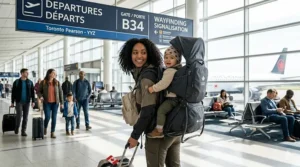
A quality travel baby carrier isn’t just another piece of baby gear collecting dust in your closet. It’s your ticket to hands-free parenting while exploring Vancouver’s Stanley Park, strolling through Montreal’s Old Port, or catching connecting flights in Calgary. Unlike bulky strollers that don’t fit down European cobblestone streets or get stuck in subway turnstiles, a compact baby carrier gives you mobility, bonding time, and the freedom to actually enjoy your destination.
According to Health Canada, proper positioning in baby carriers keeps your infant’s airway clear and supports healthy development. But with hundreds of options flooding Amazon.ca, how do you choose one that’s truly travel-worthy? After testing carriers through airport security, cramped airplane seats, and week-long vacations, I’ve narrowed down the absolute best options available to Canadian families in 2026. Whether you’re planning your first flight with baby or looking for a more packable alternative to your daily carrier, this guide covers everything you need to know.
Quick Comparison Table: Top 7 Travel Baby Carriers
| Product | Weight Range | Price (CAD) | Best For | Packability | Rating |
|---|---|---|---|---|---|
| Ergobaby Omni Breeze | 3.2-20.4 kg | $219-$259 | All-around travel | Folds flat | ⭐⭐⭐⭐⭐ 4.8/5 |
| Baby Tula Free-to-Grow | 3.2-20.4 kg | $179-$199 | Growing babies | Moderately compact | ⭐⭐⭐⭐⭐ 4.7/5 |
| Infantino Flip 4-in-1 | 3.6-14.5 kg | $45-$75 | Budget travellers | Fairly compact | ⭐⭐⭐⭐ 4.5/5 |
| BabyBjörn Mini | 3.2-11 kg | $129-$179 | Newborn flights | Ultra-compact | ⭐⭐⭐⭐⭐ 4.6/5 |
| Infantino Fold & Go | 5.4-18 kg | $55-$85 | Quick trips | Folds into waistband | ⭐⭐⭐⭐ 4.4/5 |
| Baby Tula Explore Mesh | 3.2-20.4 kg | $189-$229 | Hot destinations | Breathable mesh | ⭐⭐⭐⭐⭐ 4.7/5 |
| Ergobaby Embrace | 3.2-11.3 kg | $89-$129 | Lightweight travel | Very compact | ⭐⭐⭐⭐ 4.5/5 |
💬 Just one click – help others make better buying decisions too!😊
✨ Don’t Miss These Exclusive Deals!
🔍 Take your travel adventures to the next level with these carefully selected products available in Canada. Click on any highlighted item to check current pricing and availability on Amazon.ca. These carriers will help you create authentic bonding moments your family will cherish!
Top 7 Travel Baby Carriers – Expert Analysis
1. Ergobaby Omni Breeze – Best Overall for Canadian Travellers
If I could only recommend one carrier for travel, this would be it. The Ergobaby Omni Breeze has earned its reputation as a travel favourite for good reason—it handles everything from cramped economy seats to full-day sightseeing tours without breaking a sweat (literally, thanks to its breathable mesh).
Key Specifications:
- SoftFlex™ mesh fabric for maximum airflow
- Four carrying positions (front-in, front-out, hip, back)
- Weight capacity: 3.2-20.4 kg (7-45 lbs)
Price: $219-$259 CAD on Amazon.ca
Canadian parents consistently praise this carrier’s versatility. The breathable mesh design addresses a common complaint about traditional carriers getting too hot during summer travel. One Toronto parent mentioned using it during a two-week European trip, noting how it packed flat in their carry-on and kept both parent and baby comfortable through 30°C heat.
✅ Pros:
- Exceptional airflow prevents overheating
- Four position versatility grows with your child
- Padded lumbar support for long wearing sessions
❌ Cons:
- Higher price point than budget options
- Takes up more luggage space than ultra-compact models
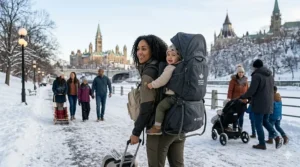
2. Baby Tula Free-to-Grow – Best for Growing Babies
The Baby Tula Free-to-Grow eliminates one of travel’s biggest headaches: bringing different carriers for different ages. Its adjustable panel system means you can skip the infant insert while still getting a snug, ergonomic fit from newborn through toddlerhood.
Key Specifications:
- 100% OEKO-TEX certified cotton
- Adjustable width (13-38 cm) and height (28-43 cm) panel
- Machine washable for easy travel cleaning
Price: $179-$199 CAD at Well.ca and select retailers
Available from Well.ca, this carrier has become a Canadian favourite. The panel adjusts in three width settings and two height settings—meaning you won’t need to pack multiple carriers as your baby grows during extended trips. Calgary parents appreciate how the carrier accommodates both petite and larger frames without needing extenders.
✅ Pros:
- No infant insert required saves packing space
- Adjusts to fit different caregivers easily
- Beautiful prints hide travel stains well
❌ Cons:
- Front carry only (no forward-facing option)
- Slight learning curve for first-time users
3. Infantino Flip 4-in-1 – Best Budget Travel Carrier
Don’t let the affordable price fool you—the Infantino Flip 4-in-1 is a legitimately good carrier that happens to cost less than a tank of gas. For Canadian families watching their travel budget, this carrier delivers surprising value.
Key Specifications:
- Four carrying positions with convertible seat
- Supportive waistband and padded straps
- Weighs only 0.68 kg
Price: $45-$75 CAD on Amazon.ca
This is Amazon.ca’s bestselling carrier for good reason. The convertible seat narrows for newborns and expands as baby grows, eliminating the need for inserts. Winnipeg parents report using this through multiple vacations, appreciating how the straightforward design means less fussing at airport security. While it’s not as plush as premium carriers, it handles weekend getaways admirably.
✅ Pros:
- Incredible value for the features offered
- Simple design means quick security checks
- Widely available across Canada
❌ Cons:
- Less breathable than mesh alternatives
- Minimal storage pockets
4. BabyBjörn Mini – Best for Newborn Flights
Taking your first flight with a newborn? The BabyBjörn Mini is specifically designed for those early months when simplicity matters most. This Swedish-made carrier excels at quick on-and-off situations like boarding planes or navigating customs.
Key Specifications:
- Designed specifically for newborns to 12 months
- Easy front-buckle system for solo use
- Weighs just 0.5 kg
Price: $129-$179 CAD at Toys R Us Canada and BabyBjörn.ca
I tested this carrier on a Vancouver-to-Halifax flight when my daughter was six weeks old, and it was perfect. The front buckles meant I could get her in and out without help—crucial when you’re solo parenting at 30,000 feet. Canadian parents love how compact it folds, taking up less space than a hardcover book in your diaper bag.
✅ Pros:
- Ultra-compact and lightweight for travel
- Incredibly easy to put on alone
- Machine washable for quick hotel sink washing
❌ Cons:
- Outgrown by 12 months typically
- No hip or back carry options
5. Infantino Fold & Go – Best for Quick Trips
The Infantino Fold & Go lives up to its name—this carrier literally folds into its own waistband, creating a compact package you can wear around your waist even when baby isn’t being carried. For day trips or uncertain weather, this design is genius.
Key Specifications:
- Folds completely into waistband for storage
- Two positions: facing-in and back carry
- For babies 5.4-18 kg (12-40 lbs)
Price: $55-$85 CAD on Amazon.ca
Ottawa parents praise this for trips to the National Gallery or Parliament Hill where you might want a carrier “just in case.” When folded, it’s invisible under a jacket. The trade-off for this packability is less padding than premium carriers, but for shorter wearing sessions (under 2 hours), it performs beautifully.
✅ Pros:
- Folds smallest of all carriers tested
- Affordable price point for occasional use
- Wears as a fanny pack when not in use
❌ Cons:
- Limited to older babies (12+ lbs minimum)
- Less padding than structured carriers
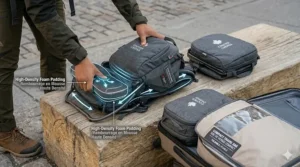
6. Baby Tula Explore Mesh – Best for Hot Destinations
Planning a Caribbean vacation or summer road trip through British Columbia? The Baby Tula Explore Mesh is engineered for hot weather with full mesh construction that promotes serious airflow.
Key Specifications:
- Full mesh panel for breathability
- Three carrying positions including forward-facing
- Multiple adjustment points for perfect fit
Price: $189-$229 CAD on Amazon.ca
This carrier adds forward-facing carry to Tula’s signature comfort—perfect for curious older babies who want to see the world. Vancouver Island parents mention using it during summer camping trips, noting how the mesh prevented the “sweaty back” problem common with cotton carriers. The multiple pockets hold essentials without adding bulk.
✅ Pros:
- Forward-facing option for active babies
- Excellent ventilation for summer travel
- Adjustable neck support for sleeping infants
❌ Cons:
- Mesh may feel less cozy in air conditioning
- Higher price than basic mesh carriers
7. Ergobaby Embrace – Best Lightweight Travel Carrier
The Ergobaby Embrace strips away extras to create a wonderfully simple, lightweight carrier perfect for parents who prioritize packability above all else. This is Ergobaby’s answer to the question: “What’s the smallest carrier that still feels premium?”
Key Specifications:
- Soft ponte knit fabric blend
- Weighs just 0.48 kg
- Front carry only for newborns to 25 lbs
Price: $89-$129 CAD on Amazon.ca
Halifax to Calgary parents report this carrier surviving dozens of flights. The stretchy fabric makes it forgiving for different body types, and it compresses into carry-on luggage beautifully. While it lacks multiple positions, for the first year when front-carry dominates, this offers unbeatable simplicity.
✅ Pros:
- Extremely lightweight and packable
- Soft fabric feels gentle on newborns
- Quick to put on without buckles
❌ Cons:
- Front carry only limits versatility
- 25 lb weight limit comes quickly
What is a Travel Baby Carrier?
A travel baby carrier is a wearable device designed to hold your infant or toddler securely against your body while keeping your hands free. Unlike everyday carriers, travel-specific models prioritize compact folding, lightweight materials, and features that shine in airports, hotels, and unfamiliar destinations. Health Canada emphasizes that proper carriers should keep baby’s face visible and kissable, with chin up off chest to maintain clear airways.
Modern travel baby carriers come in several styles: soft-structured carriers with buckles and padding, wrap-style carriers made from stretchy fabric, ring slings that adjust with metal rings, and hybrid models combining features. The best travel carriers balance comfort for extended wearing, easy packability for luggage constraints, and quick on-off capability for security checkpoints and airplane boarding.

Key Benefits of Using a Travel Baby Carrier
Hands-Free Airport Navigation
Anyone who’s juggled a car seat, diaper bag, and boarding passes while carrying a wiggly baby knows the struggle. A carrier transforms this chaos into manageable travel. You can wheel luggage, present documents, and grab snacks—all while baby sleeps peacefully against your chest.
Skips Long Security Lines
According to Travel.gc.ca, baby carriers and slings are screened separately but allow you to hold your child through security. Unlike strollers requiring full breakdowns and separate screening, carriers let you keep baby close during the security process. Most Canadian airports offer family lanes where parents with carriers move through faster than those wrestling with strollers.
Calms Fussy Babies on Flights
Cabin pressure changes hurt tiny ears. The upright position in carriers helps equalize pressure better than lying down, and the close contact with your heartbeat provides natural comfort. I’ve watched countless fussy babies settle within minutes of being placed in carriers during takeoff—it’s practically magic.
Navigates Non-Stroller-Friendly Destinations
Cobblestone streets in Quebec City? Crowded Tokyo subway platforms? Mountain hiking trails in the Rockies? Strollers become obstacles in these scenarios. Carriers give you access to destinations that would otherwise require leaving baby behind or constant lifting and carrying.
Promotes Healthy Development While Travelling
Babywearing supports hip-healthy positioning and encourages bonding even during the stress of travel. The International Hip Dysplasia Institute recognizes properly designed carriers as beneficial for development, making them a healthier choice than prolonged car seat or stroller time during trips.
How to Choose a Travel Baby Carrier in Canada
Step 1: Consider Your Baby’s Age and Weight
Newborns (0-4 months) need carriers with excellent head and neck support. Look for structured carriers with adjustable panels or stretchy wraps that hug closely. Babies 4-12 months benefit from carriers offering multiple positions as they develop more curiosity. Toddlers (12+ months) need carriers with substantial weight capacity and back-carry options.
Step 2: Evaluate Your Travel Style
Weekend road-trippers can prioritize comfort over packability. Frequent flyers need carriers that compress small and pass through security smoothly. International travellers should consider climate—mesh for tropical destinations, traditional cotton for moderate weather. Adventure seekers hiking or exploring need carriers with excellent support for extended wearing.
Step 3: Check Safety Standards
Health Canada recommends carriers meeting ASTM F2907 or ASTM F2236-16a safety standards. Verify products sold on Amazon.ca include these certifications. Avoid carriers that position baby’s chin on chest or don’t support the natural C-curve of their spine. All carriers listed in this guide meet international safety standards.
Step 4: Test Packability
A true travel carrier should fold flat or roll compact enough to fit in your carry-on without dominating space. Measure your typical luggage and compare to carrier dimensions when folded. Some carriers include carrying pouches; others fold into their own waistbands. Consider where you’ll store it during non-use portions of your trip.
Step 5: Assess Climate Compatibility
Canadian summers in Ontario feel different from coastal British Columbia or prairie Alberta. Full-mesh carriers excel in heat but might feel cold in air-conditioned spaces. Cotton carriers provide coziness but can cause overheating. Some parents pack both a lightweight and standard carrier for varied conditions during extended trips.
Step 6: Budget for Quality
Budget carriers ($40-$80 CAD) work for occasional use but may lack comfort for all-day wearing. Mid-range options ($100-$200 CAD) balance features and durability for regular travellers. Premium carriers ($200+ CAD) offer maximum comfort and last through multiple children. Remember that a well-made carrier resells strongly in Canadian parent groups, recovering some cost.
Step 7: Verify Canadian Availability
Check that products ship to your province without excessive delays or customs fees. Amazon.ca sellers should indicate “Ships from and sold by Amazon.ca” for fastest delivery. Some specialty carriers require ordering from U.S. sites with longer shipping times and potential duty charges.
Travel Baby Carrier vs Traditional Stroller: Which Wins?
| Factor | Travel Baby Carrier | Travel Stroller | Winner |
|---|---|---|---|
| Airport Navigation | Hands-free, fast security | Requires gate-checking | Carrier ✅ |
| Luggage Space | Minimal (folds flat) | Bulky even when folded | Carrier ✅ |
| Bonding & Comfort | Direct contact, calming | Baby separate from parent | Carrier ✅ |
| Long-Distance Walking | Can strain back/shoulders | Easy rolling for hours | Stroller ✅ |
| Nap Flexibility | Baby sleeps on you | Reclines for proper sleep | Stroller ✅ |
| Terrain Versatility | Works anywhere | Struggles on stairs, cobblestones | Carrier ✅ |
The honest answer? Most experienced travelling parents bring both—a compact umbrella stroller stays in the hotel for long days out, while the carrier handles airports, crowded spaces, and quick errands. If forced to choose only one, carriers win for travel under two weeks, while strollers edge ahead for longer stays when you’ll spend entire days exploring.
Essential Features for Airplane Travel
Lightweight Construction
Every gram counts when you’re already carrying diaper bags and emotional baggage. Carriers under 1 kg pack easier and won’t exhaust you during long terminal walks. The BabyBjörn Mini at just 500 grams practically disappears in your luggage.
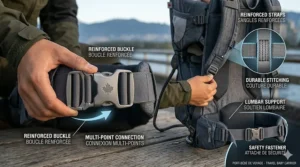
Quick-Release Buckles
You’ll put baby in and out repeatedly: security screening, diaper changes, boarding, landing. Carriers with intuitive buckle systems save time and frustration. Avoid carriers requiring complicated wrapping or tying—you don’t want to be that person holding up the security line.
Compact Fold Design
Overhead bins fill fast. Carriers that fold flat slip into seat-back pockets or under seats, keeping floor space clear for your feet. Some carriers include carrying cases making them look less chaotic when stowed.
Machine Washable Materials
Blowouts don’t respect vacation schedules. Machine washable carriers let you rinse in hotel sinks and air-dry overnight. Check care labels—some premium carriers require delicate washing that’s impractical while travelling.
Storage Pockets
Even small pockets for pacifiers, boarding passes, or your phone reduce the number of bags you’re juggling. The Infantino Carry On Multi-Pocket (though not on our main list) takes this to extremes with six pockets, but even one secure zippered pocket helps tremendously during flights.
Safety Guidelines for Travel Baby Carriers in Canada
The T.I.C.K.S. Rule
Health Canada promotes the CHECK system for safe babywearing: Chin off chest, High on your chest, Easily visible face, Close enough to kiss, Kept supported. Before every flight or outing, run through this checklist. Your baby’s face should be visible at all times, positioned high enough that you can kiss the top of their head without bending down.
Age-Appropriate Positioning
Newborns must face inward with full head support until they can hold their heads up independently (typically 4-6 months). Transport Canada does not approve carriers for use during taxi, takeoff, and landing—baby must be in your lap with a seatbelt during these phases. Forward-facing carry begins when babies show strong neck control and curiosity about their surroundings.
Avoid High-Risk Activities
Never wear baby while cooking, cycling, or during any activity where falling poses risks. In vehicles, carriers don’t replace properly installed car seats. During flights, stow the carrier and hold baby directly during turbulence.
Monitor Breathing and Temperature
Check your baby frequently, especially during flights where cabin temperature fluctuates. Watch for flushed cheeks, sweating, or rapid breathing indicating overheating. In winter, avoid covering baby’s face with your jacket—their airway must remain clear even in cold weather.
Know When to Stop Using Carriers
Once your child exceeds the manufacturer’s weight limit, stop using that carrier immediately. Most soft carriers max out at 20 kg (45 lbs), though your back may give out before that limit. If straps show wear, stitching loosens, or buckles stick, retire the carrier.
Packing Tips for Travel Baby Carriers
Compression Techniques
Roll soft carriers tightly and secure with rubber bands or pack them in compression cubes. Mesh carriers compress most effectively. Place rolled carriers along the edges of suitcases where they help maintain structure while using dead space.
Strategic Placement
Keep carriers in your personal item or top of carry-on for easy access during flights. You’ll want it immediately after landing for hands-free deplaning. Some parents wear the carrier empty through security, putting baby in afterward.
Multi-Use Strategies
Use carrier storage pockets for small items during packing—socks, chargers, toiletries. The carrier becomes a packing cube until you need it. Some carriers’ waistbands double as fanny packs when not wearing baby.
Climate-Specific Packing
Travelling to varied climates? Pack a lightweight mesh carrier and a warmer traditional carrier if luggage space permits. Otherwise, layer baby’s clothing rather than relying on carrier material for warmth.
Backup Plans
Bring backup carriers for extended trips if space allows. A compact emergency carrier (like the Ergobaby Embrace) takes minimal space but saves the day if your primary carrier breaks or gets lost. Consider shipping a backup carrier to your destination hotel ahead of time for ultimate peace of mind.
Common Mistakes to Avoid
Buying Based on Aesthetics Alone
That Instagram-pretty carrier with beautiful prints might look gorgeous but feel terrible after 20 minutes of wearing. Prioritize ergonomics over appearance. Many Canadian parent groups offer carrier lending libraries where you can test before buying.
Skipping the Learning Curve
Every carrier has optimal adjustment points that take practice to find. Spend time at home perfecting the fit before your trip. Watch manufacturer videos—most brands offer detailed tutorials. An ill-fitted carrier turns travel into torture.
Ignoring Your Own Comfort
Carriers that hurt your back or shoulders make you resent babywearing. If you have chronic pain or physical limitations, consult physiotherapists who can recommend specific carrier styles. Cross-body straps work better for some people; waist-belt support suits others.
Waiting Until the Airport
Don’t attempt your first babywearing experience at Pearson International. Practice at home, your local mall, or during neighborhood walks. Build up wearing duration gradually so your body adapts before travel demands hours of continuous carrying.
Forgetting Spouse/Partner Fit
If two caregivers will share carrying duties, ensure the carrier adjusts to fit both bodies comfortably. Some carriers accommodate wider size ranges; others work best when dedicated to one primary wearer. Test adjustment speed—switching between wearers shouldn’t require complete reconfiguration.
Best Destinations for Babywearing in Canada
Quebec City’s Old Town
Cobblestone streets and steep staircases make strollers nightmares here. A carrier lets you explore Château Frontenac, Petit Champlain, and the Citadel while baby enjoys the historic sights. Winter visits demand layers under your carrier—Quebec City gets cold!
Vancouver’s Seawall
The 28-kilometer seawall path welcomes carriers beautifully. From Stanley Park through False Creek to Kitsilano Beach, you and baby can enjoy ocean views, mountain backdrops, and the laid-back West Coast vibe. Summer visits work best with mesh carriers given Vancouver’s surprising heat.
Banff National Park
Hiking with baby in the Rockies becomes magical with a good carrier. Start with easy trails like Johnston Canyon or Lake Louise shoreline walks. As baby grows, graduate to longer treks. The mountain air and stunning scenery create unforgettable bonding moments.
Toronto’s Distillery District
This pedestrian-only neighborhood shines for babywearing. Brick-paved streets, art galleries, and restaurants spread across a compact area perfect for an afternoon stroll. Weekend visits get crowded—carriers navigate crowds better than strollers.
Niagara Falls
Mist, crowds, and uneven paths around the falls favour carriers over strollers. Baby gets front-row views of the cascades while staying dry under rain covers. Journey Behind the Falls and Hornblower boat tours become manageable with hands-free carrying.
Caring for Your Travel Baby Carrier
Regular Cleaning Schedule
Wash carriers every 2-3 weeks during heavy use, or after any diaper incidents. Use gentle detergent and cold water to preserve elastic and fabric integrity. Air-dry flat rather than hanging to prevent strap stretching—Canadian humidity means longer drying times.
Inspection Routine
Before each trip, examine all seams, buckles, and straps for wear. Check that buckles click securely and straps adjust smoothly. Frayed webbing or loose stitching means immediate retirement—don’t risk your baby’s safety.
Storage Best Practices
Store carriers in cool, dry places away from direct sunlight which degrades fabric and elastic. Avoid damp basements where mold might develop. Fold carriers loosely rather than cramming them into tiny spaces to prevent permanent creases affecting structure.
Extending Carrier Lifespan
Rotate between carriers if you own multiple to reduce wear on any single unit. Use carrier covers or rain shields in bad weather to protect materials. Address minor repairs immediately—small tears become big problems quickly.
Resale and Donation
Well-maintained carriers resell strongly on Canadian parent Facebook groups, Kijiji, or consignment shops. Clean thoroughly, include original packaging if possible, and price at 40-60% of retail for quick sales. Donation to women’s shelters or refugee support organizations provides carriers to families who need them most.

FAQ
❓ Can I use a baby carrier on a plane in Canada?
❓ What is the best travel baby carrier for newborns in Canada?
❓ How much do quality travel baby carriers cost in Canada?
❓ Are baby carriers better than strollers for travel?
❓ What age can babies start using travel carriers?
Conclusion: Finding Your Perfect Travel Companion
Choosing the right travel baby carrier transforms family adventures from stressful ordeals into cherished memories. Whether you’re taking your first domestic flight or planning an international expedition, the carriers in this guide offer proven performance for Canadian families.
For most travellers, I recommend starting with the Ergobaby Omni Breeze—its versatility, comfort, and breathability justify the investment, especially if you’re planning multiple trips. Budget-conscious families will find the Infantino Flip 4-in-1 delivers remarkable value without sacrificing essential features. And for newborn-specific travel, the BabyBjörn Mini remains unbeatable in its compact category.
Remember that the “best” carrier depends on your unique needs: your baby’s age, your body type, trip duration, and destination climate. Don’t hesitate to try multiple options—many Canadian baby stores offer trial programs, and parent communities often lend carriers for testing.
As you prepare for your next adventure, remember that safe babywearing means keeping baby visible and kissable, with chin off chest and back supported. Practice at home before your trip, check all buckles and straps before each use, and trust your instincts about baby’s comfort.
The memories you’ll create while babywearing—your little one’s first view of the mountains, peaceful naps during museum tours, or quiet bonding moments during long flights—will last far longer than any challenges faced along the way. Happy travels!
✨ Don’t Miss These Exclusive Deals!
🔍 Take your travel baby carrier to the next level with these carefully selected products available in Canada. Click on any highlighted item to check current pricing and availability on Amazon.ca. These carriers will help you create authentic adventures your family will treasure!
Recommended for You
- 7 Best Cheap Baby Wraps Canada 2026 | Under $60 CAD
- 100 in Canada 2026 (Budget-Friendly Gems!)
- 7 Best Hip Seat Baby Carriers Canada 2026 (Safety Tested)
Disclaimer: This article contains affiliate links to Amazon.ca. If you purchase products through these links, we may earn a small commission at no additional cost to you.
✨ Found this helpful? Share it with your friends! 💬🤗
