
In This Article
Finding the right booster seat for your child can feel overwhelming with so many options available. As a parent myself, I understand the anxiety that comes with making sure your little one is safe on every car ride. After researching countless models and comparing Canadian safety standards, I’ve put together this comprehensive guide to help you make an informed decision.
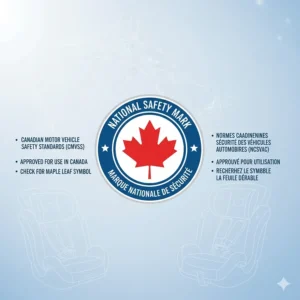
The best booster seats available in Canada today combine crash-tested safety features, comfortable design, and practical usability. Whether you’re looking for high back booster seat reviews Canada or wondering when to switch to booster seat Canada, this guide covers everything you need to know. Transport Canada requires all booster seats sold in the country to display the National Safety Mark, indicating compliance with Canadian Motor Vehicle Safety Standards (CMVSS). This gives parents peace of mind that every seat on the market meets rigorous safety requirements.
Canadian families face unique considerations when selecting car seats. Our vast geography means different climate conditions, longer road trips, and varying provincial regulations. The belt positioning booster benefits become especially important during those lengthy drives across provinces. Understanding safest booster seats Canadian standards helps you navigate these choices with confidence while keeping your child protected at every stage of their growth.
Quick Comparison Table
| Booster Seat Model | Type | Weight Range | Price Range (CAD) | IIHS Rating | Key Feature |
|---|---|---|---|---|---|
| Nuna AACE | Convertible High-Back | 18-54 kg (40-120 lbs) | $329-$379 | Not Rated | Best crash test results, rigid LATCH |
| Chicco KidFit Air Plus 2-in-1 | Convertible High-Back | 18-45 kg (40-100 lbs) | $159-$189 | Best Bet | Leg lounger, superior comfort |
| Graco TurboBooster LX | Backless | 18-45 kg (40-100 lbs) | $49-$69 | Best Bet | Most affordable, LATCH system |
| Diono Cambria 2 XL | Convertible High-Back | 18-54 kg (40-120 lbs) | $149-$179 | Best Bet | Extra room, 8-year use |
| Britax Highpoint 2-Stage | Convertible High-Back | 18-54 kg (40-120 lbs) | $199-$229 | Best Bet+ | SecureGuard clip, premium build |
| Evenflo Spectrum 2-in-1 | Convertible High-Back | 18-45 kg (40-100 lbs) | $99-$129 | Best Bet | Budget-friendly, good padding |
| Cybex Solution S2 i-Fix | High-Back | 15-50 kg (33-110 lbs) | $259-$299 | Not Rated | Adjustable recline, premium European design |
💬 Just one click – help others make better buying decisions too!😊
✨ Don’t Miss These Exclusive Deals!
🔍 Take your child’s safety to the next level with these carefully selected products available in Canada. Click on any highlighted item to check current pricing and availability on Amazon.ca. These seats will help you create authentic peace of mind your family deserves!
Top 7 Best Booster Seats in Canada: Expert Analysis
1. Nuna AACE – Premium Choice with Exceptional Crash Protection
The Nuna AACE stands out as the premium choice for Canadian families who prioritize safety above all else. In independent crash testing, this seat earned the lowest sensor data for head injury criterion (HIC) and chest clip readings in its category. That means during impact, your child experiences less force transmission to critical areas.
Key Specifications:
- High-back mode: 18-50 kg (40-110 lbs), 96-152 cm (38-60 inches)
- Backless mode: 23-54 kg (50-120 lbs), 96-152 cm (38-60 inches)
- Rigid LATCH connectors for secure installation
- Weight: 7.4 kg (16.4 lbs)
What makes the Nuna AACE special is its narrow 40 cm (16-inch) width, allowing you to fit three seats across in most mid-size vehicles. Canadian parents in Quebec, Ontario, and British Columbia particularly appreciate this feature for carpooling to hockey practice or dance class. The seat features customizable side impact protection (SIP) pods that provide an extra layer of safety during lateral collisions.
Installation takes mere minutes thanks to the rigid LATCH system that keeps the seat stable when unoccupied. The headrest and seat bottom adjust independently with 10 positions each, accommodating your growing child from preschool through pre-teen years. The eight recline positions help the seat contour to your vehicle’s backseat angle, ensuring proper belt fit regardless of your car model.
Pros:
✅ Best-in-class crash test performance
✅ Narrow profile fits three across
✅ Converts to backless for extended use
Cons:
❌ Premium price point ($329-$379 CAD)
❌ Minimal padding compared to competitors
Canadian customer Jennifer from Calgary shared that her 7-year-old found the seat comfortable for their 4-hour drive to the mountains, though she added an extra seat cushion for longer trips. The flame-retardant-free fabric meets GREENGUARD Gold certification standards, contributing to better air quality in your vehicle.
2. Chicco KidFit Air Plus 2-in-1 – Most Comfortable Option
If comfort is your top priority, the Chicco KidFit Air Plus 2-in-1 delivers exceptional ergonomic support that kids actually enjoy. This seat features a unique leg lounger that provides cushioned support for shorter legs, preventing that uncomfortable dangling feeling during long Canadian road trips.
Key Specifications:
- Weight capacity: 18-45 kg (40-100 lbs) high-back, 18-50 kg (40-110 lbs) backless
- Height range: 109-145 cm (43-57 inches)
- DuoGuard side-impact protection with 10 positions
- SuperCinch LATCH tightener
- Weight: 5.4 kg (11.8 lbs)
The Chicco KidFit Air Plus earned an IIHS Best Bet rating in both high-back and backless configurations. What sets this apart from the standard KidFit model is the Air Plus designation, referring to the enhanced breathable mesh fabric and additional leg support cushion. During hot Canadian summers, this ventilation system keeps kids cooler compared to standard vinyl seats.
The ErgoBoost seat design with double foam padding cradles your child comfortably, while integrated side wings offer head and body support with a rigid shell and EPS energy-absorbing foam. The 2-position backrest adjusts to mimic your vehicle seat position, creating a seamless fit. When your child outgrows the high-back configuration around age 8-10, simply remove the back to create a streamlined backless booster.
Pros:
✅ Exceptional comfort with leg lounger
✅ Lightweight and portable at 5.4 kg
✅ Dual cup holders with snack box
Cons:
❌ Shorter shell may be outgrown sooner
❌ Higher price than basic models ($159-$189 CAD)
Montreal parent Marc noted his daughter specifically requests her “comfy car seat” over riding in his partner’s vehicle with a different booster. The ClearTex version meets federal flammability standards without flame retardant chemicals, aligning with health-conscious Canadian parents’ preferences.
3. Graco TurboBooster LX – Best Budget Backless Option
The Graco TurboBooster LX proves you don’t need to spend a fortune for safety and quality. This backless booster consistently ranks as a top seller across Canada thanks to its affordability, ease of use, and IIHS Best Bet rating.
Key Specifications:
- Weight capacity: 18-45 kg (40-100 lbs)
- Height range: 109-145 cm (43-57 inches), minimum 4 years old
- Open-loop belt guides for easy self-buckling
- Hide-away storage compartment
- Weight: 2.7 kg (6 lbs)
For families who frequently switch vehicles or grandparents who need an affordable spare seat, the Graco TurboBooster LX is ideal. The LATCH system secures the booster when unoccupied, preventing it from becoming a projectile if you brake suddenly. This feature sets the LX version apart from the standard TurboBooster, which lacks LATCH connectivity.
The height-adjustable armrests accommodate growing children, while the machine-washable seat pad simplifies cleanup after spills. Canadian parents appreciate the thoughtful design of the open-loop belt guides that allow independent children to buckle themselves in correctly. This encourages responsibility while ensuring proper belt positioning across the shoulder and hips.
Pros:
✅ Extremely affordable ($49-$69 CAD)
✅ Lightweight for easy transfer between vehicles
✅ LATCH system adds security
Cons:
❌ No back support for sleeping children
❌ Requires vehicle headrest for proper safety
Saskatchewan customer Lisa mentioned keeping one in each vehicle for her 8-year-old twins, noting the price point made purchasing multiple seats feasible. Remember that backless booster seat age requirements Canada specify children must be mature enough to sit properly without slouching throughout the entire ride.
4. Diono Cambria 2 XL – Best for Larger Kids
The Diono Cambria 2 XL addresses a common frustration many Canadian parents face: finding a booster that actually fits larger or taller children comfortably. This seat features extended dimensions that accommodate bigger kids who aren’t quite ready for seat belts alone.
Key Specifications:
- Weight capacity: 18-54 kg (40-120 lbs)
- Height range: up to 160 cm (63 inches)
- Dual LATCH connectors
- Expandable width and depth
- 8-year lifespan from a single purchase
What makes the Diono Cambria 2 XL special is its expandable seat design. As your child grows, you can adjust not just the height but also the seat width and depth. This feature proves particularly valuable for children who hit growth spurts early or those with broader builds. The seat’s engineered design promises 8 years of use from one booster, reducing the need to purchase multiple seats as your child develops.
The high-density foam provides excellent cushioning during long drives across provinces. Dual LATCH connectors ensure a rock-solid installation that won’t shift or wiggle. The deep, contoured seat helps position children correctly, encouraging them to sit back against the vehicle seat rather than slouching forward.
Pros:
✅ Accommodates larger children up to 54 kg
✅ Expandable design grows with your child
✅ Extended 8-year useful life
Cons:
❌ Bulkier than compact models
❌ May not fit three across in smaller vehicles
Ontario parent David shared that his tall 9-year-old son finally felt comfortable in a booster, noting other seats left him cramped and complaining. The seat’s Black Storm colourway helps hide inevitable stains from Canadian winter road salt and slush.
5. Britax Highpoint 2-Stage – Premium Safety Features
Britax has long been synonymous with car seat safety in Canada, and the Britax Highpoint 2-Stage continues that tradition with advanced protection features and thoughtful engineering. This seat represents the sweet spot between premium safety and reasonable pricing.
Key Specifications:
- Weight capacity: 18-54 kg (40-120 lbs)
- Height range: 112-160 cm (44-63 inches)
- SecureGuard clip for proper belt positioning
- Three layers of side-impact protection
- Weight: 11.3 kg (25 lbs)
The Britax Highpoint features the innovative SecureGuard clip, an extra belt positioner that keeps the lap belt positioned correctly on your child’s upper thighs rather than riding up onto their abdomen. This seemingly small detail makes a significant safety difference during sudden stops or collisions, distributing crash forces across stronger skeletal structures.
Three layers of side-impact protection surround your child with energy-absorbing materials. The seat shell itself is reinforced with steel, providing structural integrity that maintains the protective space around your child even during severe impacts. This engineering approach aligns with European safety standards that often exceed North American requirements.
Pros:
✅ SecureGuard clip ensures proper belt fit
✅ Steel-reinforced frame for added strength
✅ Accommodates children up to 160 cm tall
Cons:
❌ Heavier at 11.3 kg
❌ Higher price point ($199-$229 CAD)
British Columbia parent Sarah mentioned the peace of mind was worth the investment, especially after witnessing a minor fender-bender where her daughter remained completely secure. The seat earned an IIHS Best Bet+ rating, the organization’s highest designation.
6. Evenflo Spectrum 2-in-1 – Best Mid-Range Value
The Evenflo Spectrum 2-in-1 delivers solid safety performance and comfortable features at a price point accessible to most Canadian families. This seat proves you don’t have to choose between quality and affordability.
Key Specifications:
- Weight capacity: 18-45 kg (40-100 lbs)
- Height range: 109-145 cm (43-57 inches)
- 6-position height adjustment
- Dual integrated cup holders
- IIHS Best Bet rated
What distinguishes the Evenflo Spectrum in its price category is the quality of materials and thoughtful design features typically found in more expensive models. The high-density foam padding remains comfortable even after years of use, resisting the compression that plagues cheaper seats. The 6-position height adjustment accommodates growing children, while the deep side wings provide head and torso support during naps.
Unlike some budget models, the Spectrum includes premium touches like soft-touch fabrics and smooth-operating adjustment mechanisms. The seat doesn’t use LATCH (it’s one of the few boosters that doesn’t), instead relying on the vehicle belt to secure both seat and child. This traditional approach works perfectly well when installed correctly.
Pros:
✅ Excellent value at $99-$129 CAD
✅ Good padding and comfort features
✅ Durable construction for multiple children
Cons:
❌ No LATCH system
❌ Shorter maximum height than competitors
Nova Scotia parent Michelle bought this for her middle child and found it so reliable she purchased a second for her youngest. She appreciated that the machine-washable covers held up well through two Canadian winters of tracked-in snow and salt.
7. Cybex Solution S2 i-Fix – Premium European Engineering
The Cybex Solution S2 i-Fix brings German engineering and European safety philosophy to Canadian families. This premium booster combines sophisticated design with advanced safety features that reflect different testing standards used across the Atlantic.
Key Specifications:
- Weight capacity: 15-50 kg (33-110 lbs)
- Height range: 96-150 cm (38-59 inches)
- Adjustable linear side-impact protection (L.S.P.)
- 12-position height-adjustable headrest
- Ventilated seat design
- Weight: 7 kg (15.4 lbs)
The Cybex Solution S2 features the brand’s patented Linear Side-Impact Protection system that extends outward on the side closest to the door, creating a crumple zone that absorbs impact energy before it reaches your child. This innovative approach earned top safety ratings in European crash tests that evaluate side-impact scenarios more rigorously than North American standards.
The 12-position headrest adjustment and reclining backrest create a customized fit for your child’s specific proportions. Cybex designed this seat for children starting from 15 kg (33 lbs), earlier than most boosters, though you should verify your child meets the maturity requirements for booster use regardless of weight.
Pros:
✅ Advanced European safety technology
✅ Adjustable side-impact protection
✅ Premium materials and construction
Cons:
❌ Premium pricing ($259-$299 CAD)
❌ May be oversized for compact vehicles
Toronto parent Jennifer noted the seat’s sleek design and quality materials impressed her, though she wished the price were more accessible. The seat’s sophisticated look appeals to older children who want their car seat to feel more grown-up.
Understanding Booster Seat Laws by Province Canada
Canada’s federal government sets minimum safety standards through Transport Canada, but each province and territory establishes its own specific regulations regarding when children must use booster seats. This patchwork of laws can confuse families who travel frequently or relocate between provinces.
Ontario Booster Seat Regulations
Ontario requires children to use a booster seat until they meet ONE of the following criteria: 8 years old, 36 kg (80 lbs), or 145 cm (4’9″) tall. According to the Ontario Highway Traffic Act, drivers must ensure children under 16 are properly restrained, with specific requirements for those under 8 years old.
British Columbia Requirements
BC mandates booster seat use until children reach 9 years old OR 145 cm (4’9″) tall, whichever comes first. Children must weigh at least 18 kg (40 lbs) to transition from a forward-facing harness to a booster seat.
Alberta Guidelines
While Alberta requires children under 6 years old and weighing less than 18 kg (40 lbs) to use child safety seats, booster seats aren’t legally mandated. However, Alberta strongly recommends booster use until children reach 145 cm (4’9″) tall, typically around 8-12 years old. The Alberta government provides comprehensive guidelines on child passenger safety.
Quebec Regulations
Quebec requires booster seats for children who have outgrown their car seat but don’t yet fit properly in a seat belt. Children must use a booster until they’re 145 cm (4’9″) tall or 9 years old, aligning closely with BC’s requirements.
Nova Scotia Requirements
Nova Scotia mandates booster seat use for children weighing at least 18 kg (40 lbs) until they reach 145 cm (4’9″) OR 9 years old. The province emphasizes proper belt fit as the ultimate determining factor.
Understanding the 5-Step Test
Regardless of provincial minimums, Transport Canada recommends children remain in boosters until they pass the 5-Step Test in every seating position:
- Can your child sit all the way back against the vehicle seat?
- Do their knees bend comfortably at the edge of the seat?
- Does the lap belt sit low across the hips/thighs?
- Does the shoulder belt cross the middle of the shoulder and chest?
- Can they stay positioned this way for the entire trip?
Most children don’t pass this test until around 11 years old, despite meeting legal minimums earlier.
When to Switch to Booster Seat Canada: Making the Right Transition
Knowing when to switch to booster seat Canada involves more than just checking weight limits. Your child must meet three key criteria: physical readiness, developmental maturity, and proper fit in the booster.
Physical Readiness Indicators
Children should weigh at least 18 kg (40 lbs) before transitioning to a booster, though best practice suggests keeping them in a forward-facing harness seat as long as possible. If your child has outgrown their harnessed seat by height or weight before reaching 18 kg, you need a taller harnessed seat rather than moving prematurely to a booster.
Height matters significantly for belt fit. The vehicle’s shoulder belt should cross the middle of your child’s shoulder and chest, never touching their neck or face. If the belt rests near their neck, they’re not ready for booster use, even if they meet weight requirements.
Developmental Maturity Requirements
Physical size tells only part of the story. Your child must demonstrate the maturity to sit properly for entire car rides without:
- Slouching or leaning forward
- Playing with the seat belt
- Putting the shoulder belt behind their back or under their arm
- Moving around excessively during the trip
Most children develop this level of self-control around 5-6 years old, though individual maturity varies significantly. A restless 4-year-old who meets weight requirements isn’t truly ready for booster use, even if legally permitted.
Signs Your Child Has Outgrown Their Forward-Facing Seat
Watch for these indicators that it’s time to consider a booster:
🚗 Their ears extend above the top of the seat back
🚗 Their shoulders surpass the highest harness slot position
🚗 They’ve reached the seat’s maximum weight limit
🚗 They can no longer sit comfortably without slouching
Common Transition Mistakes to Avoid
Many Canadian parents make these errors when switching to boosters:
Moving too early based solely on age or weight: Just because your province allows booster use at 18 kg doesn’t mean it’s the safest choice. Extended harnessing provides superior protection for younger children.
Choosing backless boosters prematurely: High-back boosters provide better protection and positioning for children just transitioning from harnessed seats. Save backless boosters for older children who have outgrown high-backs or for occasional use in other vehicles.
Ignoring vehicle fit: A booster that works perfectly in your sedan might not position correctly in your SUV. Always check belt fit in each specific vehicle and seating position.
Rushing the transition: Children can remain in forward-facing harness seats until they reach the seat’s limits, often 30 kg (65 lbs) or more. This extended harnessing period offers maximum protection during the vulnerable early years.

Safest Booster Seats Canadian Standards: What to Look For
Understanding safest booster seats Canadian standards helps you evaluate products beyond marketing claims. Every booster sold in Canada must display the National Safety Mark, confirming compliance with Canadian Motor Vehicle Safety Standards (CMVSS).
The National Safety Mark Requirement
Canadian regulations prohibit the import, sale, or use of any child restraint system without the National Safety Mark. This maple leaf symbol with the letters “CMVSS” or “NSVAC” guarantees the seat has passed rigorous safety testing including:
- Dynamic crash testing at specified speeds and angles
- Structural integrity assessments
- Flammability testing
- Instruction clarity and labelling requirements
- Manufacturing quality controls
Never purchase used seats from unknown sources or imported seats from other countries without this mark, even if they claim to meet other safety standards.
LATCH vs. Seat Belt Installation
Modern boosters offer two installation methods, each with advantages:
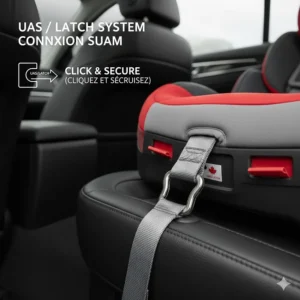
LATCH (Lower Anchors and Tethers for Children): Metal connectors attach to built-in anchors in your vehicle, securing the booster when unoccupied. This prevents the seat from becoming a projectile during sudden stops and makes it easier for children to climb in and out. LATCH doesn’t restrain your child—the vehicle belt does that job.
Vehicle Seat Belt: The traditional method works in any vehicle and adds no weight limits beyond the booster’s maximum capacity. Some parents find belt installation equally secure once mastered.
Many seats offer both options, letting you choose based on your vehicle and preferences. Neither method is inherently safer once your child is buckled in correctly.
Side-Impact Protection Features
Canadian roads see significant side-impact collisions, making lateral protection important. Look for these features:
- Deep side wings: These extend beyond your child’s head and torso, creating a protective shell that absorbs impact energy.
- Energy-absorbing foam: EPS (expanded polystyrene) foam compresses during impact, reducing forces transmitted to your child.
- Adjustable SIP pods: Some premium seats include removable or adjustable side-impact protection elements for customization.
Belt Positioning Guides
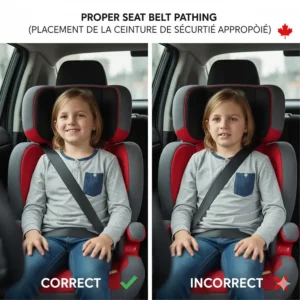
Proper belt positioning separates effective boosters from mediocre ones. Quality seats include:
- Shoulder belt guides: Help route the belt correctly across the chest and shoulder without requiring manual adjustment.
- Lap belt positioning slots: Keep the lap belt low on the hips where it can effectively restrain your child.
- Visual indicators: Some seats include color-coded or numbered guides showing correct belt routing.
Material Quality and Comfort
Your child’s willingness to use their booster correctly depends partly on comfort. Evaluate:
- Padding density: High-density foam maintains shape and comfort over years of use.
- Breathable fabrics: Mesh panels or moisture-wicking materials prevent sweaty backs during summer.
- Machine-washable covers: Removable, washable fabrics simplify cleanup after spills or outdoor adventures.
- Flame-retardant-free options: Many Canadian families prefer seats using inherently flame-resistant materials rather than chemical treatments.
Booster Seat vs Car Seat Difference: Understanding the Stages
Parents often confuse the terms “booster seat” and “car seat,” using them interchangeably when they actually refer to distinct safety devices designed for different developmental stages. Understanding the booster seat vs car seat difference helps you select appropriate restraints as your child grows.
Car Seats: Harness-Based Restraint Systems
Car seats use internal five-point harness systems that distribute crash forces across your child’s strongest skeletal points: shoulders, hips, and between the legs. These seats include:
Rear-facing infant seats: Designed for babies from birth to approximately 10-15 kg (22-33 lbs). The rear-facing position protects an infant’s developing head, neck, and spine by distributing crash forces across the entire back of the seat.
Convertible seats: Function both rear-facing and forward-facing, accommodating children from birth through toddlerhood. Best practice recommends keeping children rear-facing as long as possible, ideally until they exceed the seat’s rear-facing limits around 18-23 kg (40-50 lbs).
Forward-facing harnessed seats: Designed for toddlers and young children who have outgrown rear-facing seats. These seats use a five-point harness with top tether and LATCH or seat belt installation, protecting children up to 30 kg (65 lbs) or more.
Booster Seats: Belt-Positioning Devices
Boosters don’t have their own restraint systems. Instead, they elevate your child so the vehicle’s adult-sized seat belt fits properly. The booster positions the belt correctly across strong bones rather than soft tissues:
- Lap belt: Sits low across the hips and upper thighs, not the stomach
- Shoulder belt: Crosses the middle of the shoulder and chest, not the neck
This proper positioning prevents the common injuries that occur when children use adult seat belts before they’re tall enough: abdominal trauma from lap belts riding up during crashes, and neck/face injuries from shoulder belts positioned incorrectly.
Key Functional Differences
Restraint method: Car seats restrain children using internal harnesses. Boosters position the vehicle belt to fit correctly.
Installation: Car seats attach to the vehicle using LATCH, seat belt, or both, bearing the full force of a crash. Boosters use LATCH only to keep the seat in place when unoccupied; the vehicle belt restrains both child and booster together.
Protection level: Five-point harnesses distribute crash forces across five contact points. Vehicle belts distribute forces across three points (two shoulders, one lap). Harnesses generally provide superior protection for younger, smaller children.
Developmental requirements: Car seats work for children of any maturity level since the harness keeps them positioned correctly. Boosters require children mature enough to sit properly throughout entire trips.
The Belt Positioning Booster Benefits
Understanding belt positioning booster benefits helps parents appreciate why this intermediate step matters:
Proper belt fit: Adult seat belts don’t fit children under approximately 145 cm (4’9″) tall. Boosters raise children to the height where belts contact correct body points, significantly reducing injury risk during crashes.
Gradual independence: Boosters represent a middle ground between full-harness seats and adult belts, helping children adjust psychologically to more grown-up restraint systems.
Extended protection: High-back boosters provide head and neck support, side-impact protection, and belt guides that maintain proper positioning even when children sleep or move slightly.
Compliance with regulations: Using boosters until children meet provincial height/age requirements keeps you legal while prioritizing safety.
When Harnesses Provide Better Protection
Despite booster advantages, harnessed car seats offer superior protection in several scenarios:
- Children under 18 kg (40 lbs) or 5 years old
- Children who can’t sit properly for entire trips
- Side-impact crashes (harnesses generally perform better)
- Severe frontal impacts (five-point distribution excels)
Extended harnessing—keeping children in forward-facing car seats to their maximum limits—has become the recommended best practice. Many modern car seats now accommodate children up to 30 kg (65 lbs) in harness mode before converting to boosters, allowing families to delay the booster transition.
Choosing the Right Type: High Back vs. Backless Boosters
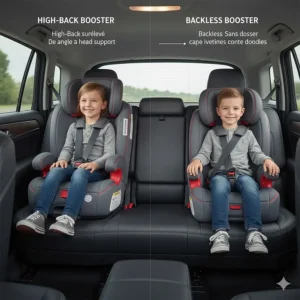
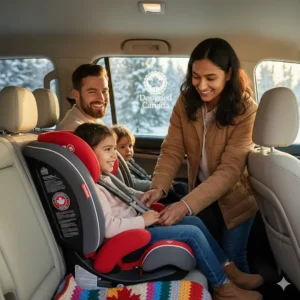
Canadian families face a fundamental choice when purchasing boosters: high-back or backless designs. Each type serves specific purposes and works better in different situations.
High Back Booster Advantages
High-back boosters include a backrest and head support that provide several benefits:
Side-impact protection: The extended sides and head wings create a protective cocoon around your child’s head and torso. During side collisions, these structures absorb impact energy before it reaches your child.
Belt positioning guides: Built-in channels and clips route the shoulder belt correctly across the chest and away from the neck. This automatic positioning reduces user error that could compromise safety.
Head and neck support: Children frequently fall asleep during car rides. High-back boosters prevent their heads from falling forward or to the side, which would misalign the shoulder belt and create injury risk.
Vehicle seat compatibility: Not all vehicle seats have adequate head support. High-backs work in any seating position, even those with low seatbacks or missing headrests.
Younger child suitability: Children transitioning from harnessed seats often adapt more easily to high-backs, which feel more substantial and secure.
When to Choose Backless Boosters
Backless boosters excel in specific situations:
Older children: Once kids outgrow high-back boosters by height (typically 8-10 years old), backless models provide continued belt positioning without feeling babyish.
Second vehicles: Keep an affordable backless booster in grandparents’ cars or other vehicles your child uses occasionally.
Travel situations: Backless boosters pack easily in luggage for vacation car rentals or taxi rides, weighing only 1-2 kg.
Vehicle compatibility: Some vehicles have high, well-positioned headrests that work perfectly with backless boosters, making the high-back redundant.
Important Backless Booster Requirements
Backless designs demand certain conditions for safe use:
✓ Vehicle must have a head restraint that extends at least to the top of your child’s ears
✓ Child must be mature enough to stay seated properly without back support
✓ Shoulder belt must cross the middle of the child’s shoulder without guidance
✓ Child typically should be 8+ years old and 40+ kg (88+ lbs)
Never use backless boosters in seating positions without adequate vehicle headrests, as this leaves your child’s head and neck unprotected during rear-end collisions.
Convertible 2-in-1 Models
Many Canadian families choose convertible boosters that start as high-backs and convert to backless for extended use. Popular models like the Chicco KidFit and Graco Affix offer this versatility, providing:
- 4-6 years of use from a single purchase
- High-back protection when children are younger
- Backless option when they outgrow the high-back by height
- Cost savings compared to buying two separate seats
These represent excellent value for most families, though dedicated high-back models sometimes offer more refined features and protection.
Installation and Safety Tips for Canadian Climate
Canadian climate conditions create unique challenges for car seat installation and safety. Our temperature extremes, road conditions, and seasonal variations demand special considerations.
Winter Installation Challenges
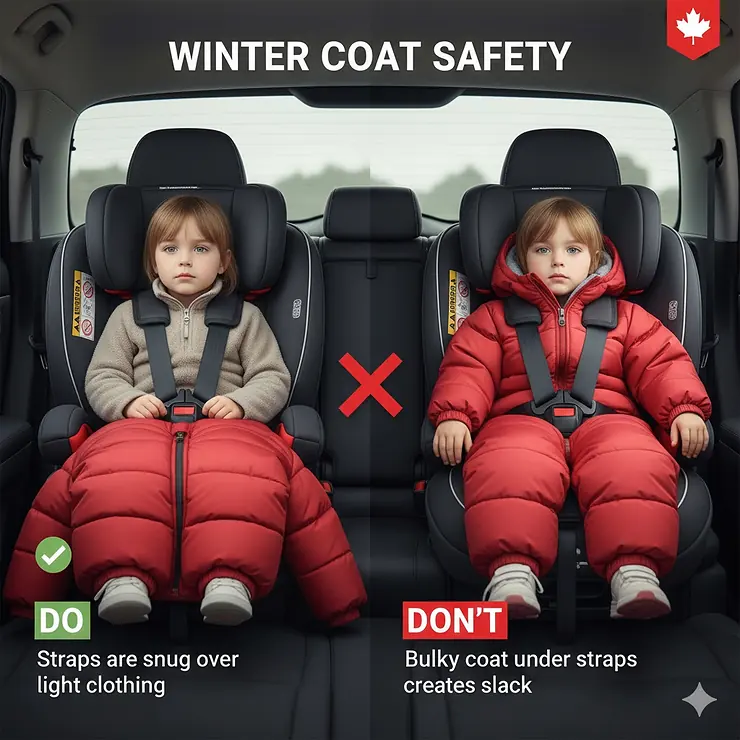
Bulky winter coats and car seats don’t mix: Puffy jackets create dangerous slack in seat belts and harnesses. During crashes, the coat compresses, allowing your child to slip through or suffer excessive movement. Instead:
- Buckle your child in regular clothing or thin fleece
- Place the coat backwards over them once secured
- Use car seat ponchos or specially designed coats with compressible insulation
- Keep blankets in the car for warmth after buckling
Cold weather belt tension: Seat belts can become stiffer in extreme cold, affecting how tightly you can install boosters using belt installation methods. Always check that your installation remains firm, with less than 2.5 cm (1 inch) of movement at the belt path.
Ice and snow on LATCH anchors: Before installing, clear any ice buildup from LATCH anchor points in your vehicle. Frozen moisture can prevent proper connection and compromise the installation’s strength.
Summer Heat Considerations
Hot seat surfaces: Metal LATCH connectors and seat belt buckles can heat to scalding temperatures during summer. Before placing your child in the seat:
- Cover the seat with a light towel when parked
- Check all metal parts before buckling your child
- Park in shade whenever possible
Fabric degradation: UV exposure through vehicle windows can degrade seat fabrics and plastics over time. Window shades protect both your child from sun exposure and the seat from accelerated aging.
Securing Seats in Canadian Vehicles
All-wheel drive and SUVs: Many Canadian families drive AWD vehicles and SUVs for winter conditions. These vehicles often have more upright rear seats than sedans, which can affect booster fit. Always check that the belt angles correctly across your child’s shoulder in your specific vehicle.
Three-across installations: Families with multiple children often need to install three car seats across one row. The Nuna AACE, Diono Cambria, and Clek Oobr are specifically engineered with narrow profiles to accommodate this configuration.
Rental vehicles and car-sharing: When using rental cars or car-sharing services, always inspect the LATCH anchors and seat belt mechanisms before installation. Verify the vehicle headrest extends adequately for backless boosters.
Regular Safety Checks
Establish a monthly routine to inspect:
✓ LATCH connector integrity and tightness
✓ Seat belt buckle functionality
✓ Booster padding condition and cleanliness
✓ Proper belt routing through guides
✓ No recalls affecting your specific seat model
Transport Canada maintains an updated recall database where you can verify your seat hasn’t been recalled. Register your booster with the manufacturer to receive direct notification of any safety issues.
Frequently Asked Questions
❓ What is the minimum weight requirement for booster seats in Canada?
❓ Can my 7-year-old use a backless booster seat in Ontario?
❓ How long do booster seats last before expiring?
❓ Do I need to use LATCH connectors with a booster seat?
❓ What's the difference between IIHS Best Bet and Best Bet+ ratings?
Conclusion: Making the Right Choice for Your Canadian Family
Selecting from the best booster seats available in Canada requires balancing safety, comfort, budget, and your child’s specific needs. The high back booster seat reviews Canada we’ve explored demonstrate that quality options exist across all price ranges, from the budget-friendly Graco TurboBooster LX at $49-$69 CAD to the premium Nuna AACE at $329-$379 CAD.
Understanding when to switch to booster seat Canada involves more than checking provincial regulations. Your child must meet weight requirements (minimum 18 kg/40 lbs), height specifications for proper belt fit, and maturity standards to sit correctly throughout trips. The safest booster seats Canadian standards require—those bearing the National Safety Mark—provide peace of mind that your chosen seat meets rigorous federal testing requirements.
The booster seat vs car seat difference centres on restraint methodology: car seats use internal five-point harnesses, while boosters position vehicle belts correctly on your child’s body. Both serve critical safety roles at different developmental stages. The belt positioning booster benefits become clear when you see how these devices protect children who have outgrown harnesses but aren’t yet tall enough for adult belts.
Provincial regulations vary, making booster seat laws by province Canada knowledge essential. Whether you’re in Ontario requiring boosters until age 8, British Columbia mandating use until age 9, or Alberta where recommendations exceed legal minimums, prioritizing safety over minimum compliance keeps your child best protected.
Remember that backless booster seat age requirements Canada extend beyond simple weight limits. Children typically need to be 8-10 years old with sufficient maturity and adequate vehicle headrests before safely using backless models.
Take time to test boosters in your vehicle before purchasing, verify belt fit meets the 5-Step Test criteria, and register your seat with the manufacturer for recall notifications. Your child’s safety during every Canadian road trip—whether commuting to school or driving cross-country—depends on making an informed choice.
✨ Don’t Miss These Exclusive Deals!
🔍 Take your child’s safety to the next level with these carefully selected products available in Canada. Click on any highlighted item to check current pricing and availability on Amazon.ca. These seats will help you create authentic peace of mind your family deserves!
Recommended for You
- 7 Best 3-in-1 Car Seats Canada 2026 – Worth It?
- 7 Best Infant Car Seats Canada 2026: Top Safety Ratings
- 7 Best Convertible Car Seats Canada 2026: Safety Expert Reviews
Disclaimer: This article contains affiliate links to Amazon.ca. If you purchase products through these links, we may earn a small commission at no additional cost to you.
✨ Found this helpful? Share it with your friends! 💬🤗
