
In This Article
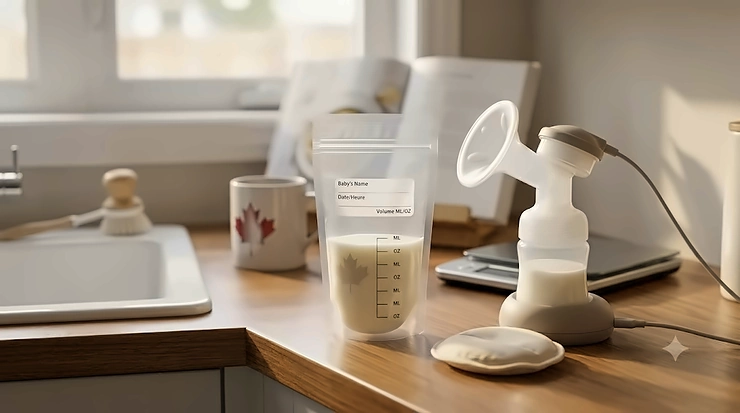
Three a.m., a fridge light humming, and a stack of little plastic pouches between you and a full night’s sleep for someone else. If that scene sounds familiar, you already know that breast milk storage bags are not exactly a glamorous purchase — but they are one of the few baby products that actually get used every single day. Choosing the right one affects your freezer space, your grocery-store-adjacent budget, and whether you spend your evenings mopping up a puddle of what nursing parents rightly call liquid gold.
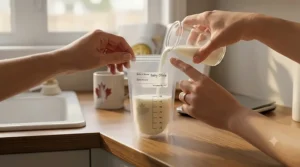
So what is a breast milk storage bag, exactly? It is a pre-sterilized, BPA-free plastic (or reusable silicone) pouch designed specifically to hold expressed breast milk safely through refrigeration, freezing, thawing, and feeding — something a regular sandwich bag or bottle liner was never engineered to do. The distinction matters more than it sounds: general household bags aren’t built for the pressure and expansion that comes with freezing liquid, and can burst or leak in ways purpose-built bags don’t.
This guide walks through seven real, currently available breast milk storage bags — from budget disposables to a reusable silicone option — with honest analysis based on published specs and aggregated reviewer sentiment, not manufactured hands-on claims. We’ll also cover how bags stack up against hard containers, how long milk actually keeps in a Canadian freezer, and how to stop losing ounces to leaks. Expect real comparisons, not a rewritten product listing.
Quick Comparison Table
| Product | Best For | Capacity | Style | Price Range (CAD) |
|---|---|---|---|---|
| Lansinoh Breastmilk Storage Bags | Best all-rounder | 6 oz | Zip-top disposable | C$18-C$24 (100 ct) |
| Medela Easy Pour Storage Bags | Space-saving pour | 7 oz / 210 mL | Zip-top disposable | C$17-C$22 (100 ct) |
| Momcozy Temp-Sensing Bags | Temperature monitoring | 6-8 oz | Zip-top disposable | C$15-C$25 (120 ct) |
| Dr. Brown’s Storage Bags | Most accurate markings | 6 oz | Zip-top disposable | C$12-C$16 (50 ct) |
| Kiinde Twist Pouches | Leak-proof premium system | 6 oz / 8 oz | Twist-cap disposable | C$18-C$26 (40 ct) |
| Nuliie Silicone Bags | Reusable / eco-friendly | 8 oz / 240 mL | Reusable silicone | C$20-C$28 (7 pk) |
| Motif Medical Storage Bags | Budget large-capacity | 6-8 oz | Zip-top disposable | C$14-C$19 (100 ct) |
Looking across the table, the split isn’t really “good vs. bad” — it’s disposable convenience versus long-term value. Lansinoh and Medela sit in the sweet spot most Canadian parents land on for everyday pumping, while Kiinde asks you to pay a premium for a fundamentally different (and more leak-resistant) sealing mechanism. If you’re pumping for the long haul and don’t mind hand-washing, Nuliie’s reusable silicone bags are the only entry here that can actually lower your cost per ounce over time.
💬 Just one click — help others make better buying decisions too!😊
💬 Already leaning toward one? Check current pricing and availability before your freezer stash runs low.
Top 7 Breast Milk Storage Bags: Expert Analysis
Building a freezer stash means trusting a thin piece of plastic (or silicone) with weeks of pumping effort, so we looked at real product specifications, manufacturer claims, and aggregated reviewer sentiment across major retailers to see which bags actually hold up. Coverage below spans budget, mid-range, and premium picks, plus one reusable alternative for parents trying to cut down on single-use plastic.
| Product | Key Spec | Standout Feature | Rating Trend |
|---|---|---|---|
| Lansinoh | Double zipper, reinforced seams | Pump-adapter compatible | Consistently high, large review volume |
| Medela | Gusseted flat-freeze shape | Clean pour spout | Strong, slightly smaller review base |
| Momcozy | Temp-sensing colour strip | No-thermometer feeding cue | Growing, newer to market |
| Dr. Brown’s | Dual zip-seal | Sharpest oz/mL markings | Solid but smaller pack sizes |
| Kiinde | Threaded twist cap | Pump-to-feed, no transfers | High loyalty among repeat buyers |
| Nuliie | Food-grade silicone | Reusable, dishwasher-safe | Favourable among eco-focused parents |
| Motif Medical | Easy-pour spout | Budget large-capacity | Fewer reviews, price-driven appeal |
This table interprets the trade-off you’ll keep bumping into throughout this guide: legacy brands like Lansinoh and Medela have the review volume to back up their reliability claims, while newer entrants such as Momcozy and Motif compete mainly on price and a specific feature (temperature sensing, easy pour) rather than track record. Kiinde and Nuliie sit apart entirely, since neither is really “just a bag” — one is a feeding system, the other a reusable investment.
1. Lansinoh Breastmilk Storage Bags — best all-rounder for daily pumping
Lansinoh’s 100-count box has become something of a default recommendation, and the standout feature is right there in the box: two free pump adapters that let you pump directly into the bag using most major breast pump brands. The bags themselves are presterilized, BPA- and BPS-free, with reinforced double seams and a double-zipper seal built to expand as milk freezes rather than split under pressure. In practice, that stretch-not-snap design is what separates a purpose-built milk bag from a kitchen freezer bag, which tends to crack along the seams once liquid inside starts expanding.
Based on the spec sheet, this is the bag to reach for if you want one reliable option and don’t want to think too hard about it — busy parents who pump multiple times a day benefit most from the pump-adapter shortcut, since it cuts out a full transfer step. Reviewers consistently point to Lansinoh’s strong track record, with the brand holding nearly 75,000 five-star ratings on one major retailer alone, and aggregated sentiment across retail sites repeatedly praises the flat-freeze design for saving freezer space and the tear-away top for staying hygienic until use. A recurring minor complaint is that the per-bag cost runs a little higher than generic alternatives, and a few reviewers mention the tear tab can be fussy with wet or slippery hands mid-pump.
Pros:
- ✅ Free pump adapters cut out a milk-transfer step
- ✅ Reinforced double seams rarely reported to leak
- ✅ Freezes flat, saving meaningful freezer space
Cons:
- ❌ Costs more per bag than generic storage bags
- ❌ Tear-away top can be fiddly with wet hands
At around C$18-C$24 for the 100-count box (check current price for exact figures), the value case holds up well for parents who pump daily and want dependable seams over novelty features.
2. Medela Easy Pour Breastmilk Storage Bags — best for clean, spill-free transfers
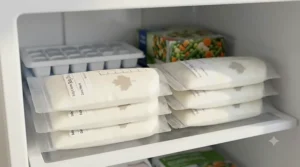
Medela’s Easy Pour bags lean hard into the one moment where most spills actually happen: pouring thawed or fresh milk into a bottle. The angled pour spout and wide opening are engineered specifically to reduce that late-night fumble, and the bags are designed to freeze flat in a gusseted shape that stacks neatly rather than rolling around loose in a freezer bin. At 7 oz (210 mL) capacity, they’re sized to hold a slightly larger single pumping session than some 6 oz competitors without needing a second bag.
What the spec sheet won’t tell you outright is that this pour-spout design particularly benefits parents who are frequently pouring one-handed while holding a baby or juggling a bottle warmer — it’s a small design choice that saves real aggravation during a feed. The bags are also recyclable, which matters to environmentally conscious buyers who’d rather not add another disposable to landfill volume. Aggregated reviewer sentiment is generally strong, with consistent praise for the leakproof seal and fast-freeze performance; a smaller number of reviewers note the plastic feels slightly thinner than Lansinoh’s, which can make some parents hesitant about long-term freezer storage.
Pros:
- ✅ Angled pour spout reduces spills during transfer
- ✅ Recyclable material appeals to eco-conscious buyers
- ✅ 210 mL capacity handles larger pumping sessions
Cons:
- ❌ Plastic feels thinner than some competitors
- ❌ Fewer bundled accessories than pump-brand ecosystems offer
Priced in the C$17-C$22 range for a 100-count box, Medela earns its spot for parents whose main frustration has been spillage rather than leaks.
3. Momcozy Breastmilk Storing Bags — best for at-a-glance temperature checks
Momcozy’s storage bags add a feature none of the legacy brands offer standard: a temperature-sensing colour strip that shifts from purple (too cold) to blue (feeding temperature) to white (too hot), removing the guesswork of testing milk on your wrist at 3 a.m. Beyond that gimmick-turned-genuinely-useful feature, the bags are self-standing, presterilized, and built with a double-zipper seal plus a side spout for pouring.
Here’s what most buyers overlook about the self-standing base: it isn’t just about looking tidy in the fridge, it means you can pump directly into an upright bag without a funnel or a second pair of hands to hold it steady, which matters a lot at 2 a.m. Reviewers report generally solid leak resistance and appreciate the generous labelling space for date, name, and volume — a small thing that becomes a big thing once you’re juggling multiple bags a day for a daycare drop-off. A recurring theme in aggregated feedback is that the side-spout tab can be a little stubborn to open one-handed, and because Momcozy is newer to this category than Lansinoh or Medela, its review base — while positive — is smaller and has less multi-year track record behind it.
Pros:
- ✅ Colour-change strip signals feeding temperature instantly
- ✅ Self-standing base simplifies solo pumping sessions
- ✅ Generous labelling area for date, name, and volume
Cons:
- ❌ Side-spout tab reported stubborn by some reviewers
- ❌ Shorter market track record than legacy brands
Expect to pay roughly C$15-C$25 for a 120-count box, positioning Momcozy as a genuinely competitive mid-range pick rather than a novelty purchase.
4. Dr. Brown’s Breastmilk Storage Bags — best for precise portioning
If you’ve ever squinted at a storage bag trying to figure out whether you pumped 3.5 or 4 ounces, Dr. Brown’s answer is sharper, higher-contrast oz/mL markings than most competitors offer. The bags use a dual zip-seal — effectively two seals stacked as a backup — along with presterilized, BPA-free construction standard across this category.
On paper, this means Dr. Brown’s is the most useful pick for parents tracking precise volumes, whether that’s for a preemie on a strict feeding schedule or simply someone who likes their freezer inventory exact rather than approximate. The dual zip-seal also gives a small extra margin of confidence over single-zip designs, since a partially misaligned outer seal doesn’t automatically mean a leak. Aggregated reviews consistently single out the measurement accuracy as the standout selling point, with fewer complaints about leaking than some newer competitors. The trade-off shows up in pack size — Dr. Brown’s ships in smaller 50-count boxes, meaning more frequent reordering for high-volume pumpers, and the brand’s size range is narrower than some competitors that offer multiple capacity options.
Pros:
- ✅ Sharpest, easiest-to-read ounce and millilitre markings
- ✅ Dual zip-seal adds a genuine backup barrier
- ✅ Presterilized straight out of the box
Cons:
- ❌ Smaller 50-count packs mean more frequent reordering
- ❌ Fewer size/capacity options than some competitors
At C$12-C$16 for 50 bags, the per-bag cost is competitive even accounting for the smaller pack size, making it a smart pick for parents who prioritize accuracy over bulk.
5. Kiinde Twist Pouches — best leak-proof, all-in-one pumping system
Kiinde takes a genuinely different approach to the leak problem that plagues zip-top bags: instead of a zipper track that has to be pressed shut perfectly every time, Twist Pouches use a threaded, screw-on cap that locks with a full 360-degree seal — the same basic principle as a leak-proof water bottle. That design eliminates the most common source of breast milk leaks, since there’s nothing to press, pinch, or misalign — you just twist until it stops. Pair that with direct-pump adapters compatible with most major pump brands, and the bags let you pump, freeze, thaw, and feed from the exact same pouch using Kiinde’s Squeeze bottle system.
Based on the spec comparison with the six other bags on this list, Kiinde is really selling a workflow, not just a container — the appeal is fewer parts to wash and dramatically fewer milk transfers, which matters most to parents who are exclusively pumping and washing bottles multiple times a day. Reviewers who commit to the full system consistently describe it as a genuine routine-changer, with reduced dishwashing and fewer spilled ounces being the two most-repeated benefits. The honest trade-offs: the pouches are bulkier than flat zip-top bags, so they eat more freezer space per ounce stored, and the per-bag cost runs noticeably higher than standard disposables — a fair price for the convenience, but a real one.
Pros:
- ✅ Twist-cap removes the #1 cause of bag leaks entirely
- ✅ Pump-to-feed workflow cuts bottle washing dramatically
- ✅ Recyclable pouches with reusable feeding accessories
Cons:
- ❌ Noticeably pricier per ounce than standard zip bags
- ❌ Bulkier shape uses more freezer space than flat bags
Pricing runs around C$18-C$26 for a 40-count box of 6 oz pouches, positioning Kiinde firmly as the premium system pick rather than a casual purchase.
6. Nuliie Reusable Silicone Breastmilk Storage Bags — best reusable, eco-friendly option
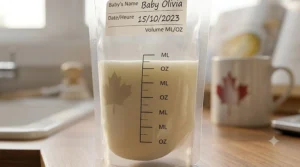
Nuliie approaches storage from the opposite direction of every disposable bag on this list: instead of single-use plastic, these are food-grade platinum silicone bags meant to be washed, sterilized, and reused for the entire pumping journey. Each bag holds 8 oz (240 mL), stands upright on its own, and is rated dishwasher-, microwave-, and freezer-safe, with a double leak-proof seal and clear ounce/mL markings for portioning.
What most buyers overlook about reusable bags generally is that the real value shows up months in, not on day one — a 7-pack replaces what would otherwise be dozens of disposable boxes over a full pumping journey, which meaningfully lowers cost-per-ounce for parents pumping long-term and reduces plastic waste with every feed. Aggregated reviewer sentiment is favourable among eco-focused parents specifically, with praise for the material feeling more durable than expected and the bags surviving repeated freeze-thaw cycles without cracking. The honest downside is maintenance: unlike a disposable bag you toss after one use, these need thorough washing and sterilizing between uses, which adds a step to an already exhausting routine, and the upfront cost per bag is higher than a box of disposables even though the long-run math favours reuse.
Pros:
- ✅ Reusable design lowers long-term cost per ounce
- ✅ Dishwasher- and microwave-safe for easy cleanup
- ✅ Clear markings simplify accurate portioning
Cons:
- ❌ Requires thorough washing and sterilizing between uses
- ❌ Higher upfront cost per bag than disposables
Expect a 7-pack in the C$20-C$28 range — a real investment upfront, but one that can pay for itself well before the freezer stash is done.
7. Motif Medical Breastmilk Storage Bags — best budget large-capacity pick
Motif Medical rounds out this list as the value play: a 100-count box with an easy-pour spout, a large write-on label strip, and a leak-proof double zipper, priced to compete directly with the bigger legacy brands without their marketing budget. Capacity options span 6-8 oz depending on the pack, giving some flexibility for parents whose pumping output varies session to session.
Here’s what the price tag doesn’t tell you: Motif is a newer name in this specific product category compared to Lansinoh or Medela, so while the spec sheet reads almost identically to the pricier options, the review pool backing those claims is smaller. That’s not necessarily a red flag — it’s simply less data to work from. Reviewers who have used the bags generally report satisfaction with the pour spout’s spill reduction and the label strip’s size, though a handful mention the plastic feels a touch thinner than Lansinoh’s under heavy freezer rotation. For budget-conscious parents building a large stash without committing to a premium system like Kiinde, Motif offers a genuinely competitive middle ground.
Pros:
- ✅ Competitive per-bag price for a 100-count box
- ✅ Easy-pour spout limits transfer spills
- ✅ Large, smudge-resistant write-on label area
Cons:
- ❌ Smaller, newer review pool than legacy brands
- ❌ Some reviewers note thinner plastic under heavy use
At C$14-C$19 for 100 bags, this is the pick for parents prioritizing budget and capacity over brand history.
Setting Up Your Freezer Stash: A Practical Usage Guide
Getting your freezer stash organized in the first 30 days sets the tone for months of smoother pumping, and it’s one of the areas Amazon listings never actually walk you through. Start by portioning small: fill bags in 2-4 oz amounts rather than one large pouch, so you thaw only what your baby will actually drink and waste less to the sink. Leave roughly an inch of headspace at the top before sealing, since breast milk expands as it freezes and an overfilled bag is a leak waiting to happen.
Labelling is where a lot of new stashes fall apart. Write the expressed date — and ideally the time — directly on the bag in permanent marker before it goes anywhere near the freezer, not after; it’s far too easy to forget which bag came first once three or four are stacked together. Storing bags at the back of the freezer, rather than in the door, keeps them away from the temperature swings that happen every time the door opens, which matters more than most parents expect for preserving milk quality over weeks of storage.
For organization, freeze bags flat in a shallow tray or a rigid container until solid, then file them upright like folders in a bin or a dedicated organizer — this turns a jumbled pile into a first-in-first-out system where the oldest milk is always grabbed first. A common first-month mistake is skipping the rigid outer container altogether; bags stacked loose are far more likely to develop small seam stress points that eventually leak. Rotate your stash roughly every few weeks, checking dates as you go, and resist the urge to top up an older bag with freshly pumped milk before it’s fully chilled — mixing warm milk into a frozen bag can partially thaw the older batch and shorten its safe storage window.
Real Parents, Real Choices: Matching Bags to Your Pumping Life
Not every pumping routine looks the same, so the “best” bag really depends on your situation. Consider three common profiles.
The exclusively pumping parent, pumping six or more times a day and washing pump parts constantly, benefits most from a system that reduces steps — this is where Kiinde’s pump-to-feed pouches earn their higher price tag, since cutting even one transfer per session adds up to real time saved across a week. The budget-conscious parent building a large stash for an extended maternity leave or a return to full-time work is usually better served by a high-count box like Lansinoh’s or Motif’s 100-pack, where the priority is reliable seams at a manageable per-bag cost rather than extra features. And the environmentally minded parent who plans to pump regularly for six months or more — and doesn’t mind an extra washing step — often finds that Nuliie’s reusable silicone bags pay for themselves well before the pumping journey ends, while also keeping dozens of disposable bags out of the trash.
A fourth profile worth naming: the daycare or shared-caregiver parent, who needs bags that travel well in a cooler bag and label clearly for someone else to read at a glance. Momcozy’s larger labelling area and Medela’s clean pour spout both suit this use case particularly well, since a caregiver unfamiliar with your system benefits from anything that reduces confusion or spill risk during a handoff.
Milk Storage Bag Leaks: Problem → Solution Guide
Leaks are, understandably, the single biggest fear around milk storage bags — here’s how to actually prevent the most common causes.
Problem: Overfilled bags splitting at the seam. Milk expands roughly 10% as it freezes, so a bag filled to the very top has nowhere to go but out. Solution: leave about an inch of headspace, and portion in smaller amounts if you’re consistently pumping more than a bag’s rated capacity per session.
Problem: Zipper not fully sealed. A partially closed zip-top is the most common cause of freezer leaks, often from a rushed seal during a hectic pump session. Solution: run a finger along the entire seal after closing, checking for a visible, continuous track, or switch to a twist-cap system like Kiinde’s that removes the alignment step entirely.
Problem: Bags stored loose and crushed by other freezer items. Loose bags shift and get compressed by whatever else lives in your freezer, stressing the seams over time. Solution: freeze bags flat in a rigid tray first, then store upright in a dedicated bin or organizer once solid.
Problem: Thin plastic tearing during transport. A handful of reviewers across brands note punctures happening in transit to daycare or work. Solution: double-bag for travel in an insulated cooler, or choose a thicker-walled option like Dr. Brown’s or Kiinde’s twist pouches for anything leaving the house.
Problem: Spout or tab tearing unevenly. Some tear-away tops and side spouts open jagged rather than clean, especially with cold, slippery hands. Solution: cut cleanly with scissors instead of tearing by hand, particularly for late-night sessions when dexterity is lowest.
✨ Tired of mopping up spilled milk? See which leak-resistant bags are in stock right now.

How to Choose Breast Milk Storage Bags
Picking the right bag comes down to a handful of criteria that matter more than flashy packaging claims. Here’s the shortlist worth actually weighing:
- Seal type. Zip-top bags are the standard and generally reliable when sealed correctly; twist-cap systems like Kiinde’s trade some freezer space for a lower structural leak risk.
- Capacity match. Choose a bag size close to your typical pumping output — consistently overfilling a smaller bag is a common, avoidable cause of leaks.
- Pump compatibility. If direct-pump adapters matter to your routine, confirm the bag brand supports your specific pump before buying in bulk.
- Labelling space. A generous, smudge-resistant label area saves real confusion once you’re rotating a multi-week stash.
- Material transparency. Confirm BPA-, BPS-, and phthalate-free claims, and check whether the bags are presterilized out of the box.
- Disposable vs. reusable. Weigh convenience against long-term cost and plastic waste — reusable silicone bags cost more upfront but less over months of use.
- Price per ounce, not per box. A cheaper box with a smaller capacity per bag can actually cost more per ounce stored than a pricier, larger-capacity option.
Working through this list before comparing individual brands tends to narrow the field fast — most parents end up choosing between two or three realistic options rather than agonizing over all seven.
Breast Milk Storage Bags vs Containers
Bags and hard containers solve the same problem differently, and each has a legitimate place in a storage routine.
| Factor | Storage Bags | Hard Containers (Glass/Plastic) |
|---|---|---|
| Freezer space | Freeze flat, stack efficiently | Bulkier, take up more shelf space |
| Reusability | Mostly single-use (except silicone) | Reusable, washable indefinitely |
| Leak risk | Depends on seal quality | Lower, if lid seals properly |
| Cost per use | Lower upfront, ongoing purchase | Higher upfront, no reorder needed |
| Best for | Freezer stashing, daycare transport | Fridge storage, daily short-term use |
The analysis here is straightforward: bags win on freezer efficiency and portability, which is exactly why most stash-building parents default to them for longer-term storage, while hard containers — glass or BPA-free hard plastic with an air-tight lid — tend to be the better everyday choice for milk that’s going into the fridge and getting used within a few days. A lot of parents end up using both: containers for the short-term fridge rotation, bags for the freezer stash that’s meant to last weeks or months.
Common Mistakes When Buying Breast Milk Storage Bags
The most expensive mistake is buying in bulk before testing a brand — a 200-count box feels efficient until you discover the seal doesn’t work for your pump or your freezer routine, and now you’re stuck with 190 unused bags. Start with a smaller box, confirm it fits your workflow, then buy in bulk.
A second common misstep is ignoring capacity mismatch — pumping consistently more than a 6 oz bag holds and squeezing it in anyway, which sets up the exact overfill-and-leak scenario covered earlier. Third, some parents skip checking pump-adapter compatibility entirely, assuming all brands are interchangeable, only to find their specific pump flange doesn’t fit the adapter they bought. Finally, price-per-box shopping without doing the per-ounce math can be deceptive — a large “value” box with smaller-capacity bags may actually cost more per ounce stored than a pricier box with larger bags.
Features That Actually Matter (And Those That Don’t)
Seal integrity, accurate capacity, and BPA-free materials genuinely matter — these directly affect whether your stored milk stays safe and intact. Labelling space matters more than it first appears, since a cramped label area leads to guessing games weeks later. Pump-adapter compatibility matters a great deal if it fits your specific routine, and barely at all if you exclusively hand-express or use a different transfer method.
What matters less than the marketing suggests: novelty shapes or colours rarely affect real-world performance, and “self-standing” design — while convenient — isn’t a safety feature so much as a mild quality-of-life upgrade. Temperature-sensing strips, like Momcozy’s, are a genuine nice-to-have rather than a necessity; a hand test on the wrist has worked for generations of parents and remains perfectly safe.
Breast Milk Storage Bags for Working & Travelling Parents
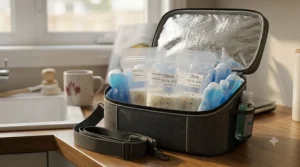
For parents returning to work or regularly transporting milk to daycare, the priorities shift slightly from freezer-stash bags toward transport durability. Fresh expressed milk should generally be transported in an insulated cooler bag with a frozen gel pack or ice, and a thicker-walled bag — Dr. Brown’s or Kiinde’s twist pouches, for example — holds up better against the jostling of a commute or daycare drop-off than a thinner budget bag. Clear, generous labelling becomes non-negotiable here too, since a caregiver who isn’t you needs to read the date and name at a glance, often in a hurry.
A practical habit worth building: pack one or two extra empty bags in your pump bag for unexpected extra sessions, and double-bag anything going into a shared daycare fridge to limit the damage if a seal does fail in transit.
Breast Milk Storage Guidelines: How Long Can Breast Milk Be Stored in the Freezer
Storage bag quality only matters within the context of safe storage timelines, so here’s the practical breakdown Canadian parents actually need. Freshly expressed milk kept in a refrigerator at 4°C is generally good for up to four days, and milk kept in a standard freezer compartment attached to a fridge, at 0°F (-18°C), stays safe for up to six months. In a separate deep freezer or chest freezer maintained at a steady -18°C to -20°C, storage time extends further, with many Canadian health resources citing up to twelve months as an acceptable — though not ideal — outer limit for quality.
Once frozen milk is thawed in the refrigerator, it should be used within 24 hours and should never be refrozen, so thaw only what you realistically expect to use in a day. Milk should always be stored toward the back of the fridge or freezer rather than in the door, where temperature swings from opening and closing are smallest. For a deeper dive into the full time-and-temperature chart, the MyHealth Alberta storage guide breaks down each storage location clearly.
None of these windows change based on which brand of bag you use — a Lansinoh bag and a Kiinde pouch follow the same safe-storage clock — so the bag choice is really about leak prevention and convenience, not extending shelf life beyond what proper temperature control already allows.
Long-Term Cost & Maintenance: Are Reusable Bags Worth It?
| Approach | Approx. Cost per Ounce* | Maintenance | Break-Even Point |
|---|---|---|---|
| Disposable bags (Lansinoh/Medela-type) | Low per box, recurring | None — single use | N/A, ongoing cost |
| Premium system (Kiinde) | Higher per box, recurring | Light — recycle pouch, wash accessories | N/A, ongoing cost |
| Reusable silicone (Nuliie-type) | Highest upfront, near-zero after | Wash/sterilize between uses | Roughly 3-4 months of regular pumping** |
*Actual cost varies by pump volume and retailer pricing at time of purchase. **Estimate based on typical daily pumping frequency; individual results vary.
The value analysis is fairly clear-cut once you look past the sticker price: disposables cost less upfront but keep costing indefinitely, since every box empties and needs replacing. A reusable option like Nuliie’s silicone bags costs more on day one, but for parents pumping consistently for several months or longer, the total spend typically crosses over to become cheaper than repeatedly restocking disposable boxes — while also cutting down on plastic waste with every wash-and-reuse cycle. The trade-off is time: reusable bags add a genuine washing and sterilizing step to an already full routine, which is a real cost even if it isn’t a financial one.
✨ Ready to build (or upgrade) your stash? Compare current prices on today’s top picks below.
Frequently Asked Questions
❓ Can I reuse disposable breast milk storage bags?
❓ How long can breast milk sit out before it needs to be refrigerated?
❓ Can I mix fresh and frozen breast milk in the same storage bag?
❓ Do breast milk storage bags fit all breast pumps?
❓ Why did my frozen breast milk turn out smelling different after thawing?
Conclusion
There’s no single “best” breast milk storage bag — there’s the bag that fits your pump, your freezer layout, and how much patience you have left for washing extra parts at midnight. Lansinoh remains the safest default for most parents building a straightforward freezer stash, Kiinde earns its premium price for exclusively pumping parents drowning in bottle-washing, and Nuliie’s reusable silicone bags reward anyone committed to a longer pumping journey with real savings down the line. Dr. Brown’s, Medela, Momcozy, and Motif each solve a narrower problem well — precise measurement, clean pouring, temperature checks, or plain budget-friendly bulk — so the right pick really comes down to which of those problems you’re actually trying to solve.
Whichever bag you land on, the fundamentals matter more than the brand: leave headspace, label immediately, store at the back of the freezer, and respect the same storage-time limits regardless of which pouch you’re using. Get those habits right, and even a budget box of bags will protect a freezer stash you worked hard to build.
✨ Found the right bag for your stash? Check today’s price and grab a box before your next pumping session! 💬🤗
Recommended for You
- Best Nursing Pillow Canada 2026: 7 Top Picks for New Moms
- Best Wearable Breast Pump Canada 2026: 7 Top Picks Reviewed
- Best Manual Breast Pump in Canada 2026
Disclaimer: This article contains affiliate links. As an Amazon Associate, I earn from qualifying purchases. If you purchase products through these links, we may earn a small commission at no additional cost to you.
✨ Found this helpful? Share it with your friends! 💬🤗
