
In This Article
Somewhere between the tenth load of bottle parts in your dishwasher and the fortieth Google search at 11 p.m., you start wondering if the best sippy cup is a myth invented by marketing departments. It isn’t. It’s just buried under a wall of nearly identical plastic cups promising “100% leak-proof” performance that, in practice, means “leak-proof until your toddler figures out the trick.” We dug through real product specs, aggregated review patterns, and Canadian paediatric guidance to sort out which cups genuinely earn their spot in your cupboard.
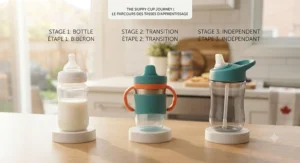
This guide covers seven real, currently available cups spanning budget to premium, plus the transition timeline, the straw-versus-360 debate, and the mistakes that turn a C$15 cup into a C$15 mistake. If you’re six months into parenthood and just want a straight answer, you’re in the right place — no fluff, no invented five-star reviews, just what the specs and the aggregated feedback actually say.
Quick Comparison Table
Before diving into the full breakdown, here’s the shortlist. Each of these seven made the cut for a specific reason — budget value, straw mechanics, or genuinely better spill control than the pack.
| Cup | Type | Best For | Price Range (CAD) |
|---|---|---|---|
| Munchkin Miracle 360 | Rimless/360 | Overall pick, teeth-friendly sipping | C$13-18 |
| NUK Learner Cup | Soft spout | First cup at 6 months | C$10-14 |
| Dr. Brown’s Milestones Baby’s First Straw Cup | Weighted straw | Best straw cup for a 6 month old | C$15-20 |
| Philips Avent My Easy Sippy | Soft spout | Families already using Avent bottles | C$12-16 |
| Tommee Tippee Sporty Bottle | Spout with valve | Daycare and travel bag | C$14-18 |
| b.box Sippy Cup | Weighted straw | Any-angle drinking, older toddlers | C$18-24 |
| Nuby No-Spill Cup | Soft spout | Tightest budget | C$7-11 |
Looking at the spread, the Munchkin Miracle 360 and Dr. Brown’s Milestones Baby’s First Straw Cup sit at the top for different reasons — one prioritizes oral development, the other prioritizes early straw skills. Budget-conscious parents shouldn’t dismiss the Nuby No-Spill Cup either, since its core mechanism performs a similar job to pricier competitors for roughly half the cost. The real differentiator across this table isn’t brand prestige, it’s whether the cup uses a valve (more spill-proof, more bottle-like sucking) or a rimless/open design (messier at first, better for the mouth long-term).
💬 Just one click — help others make better buying decisions too!😊
Top 7 Best Sippy Cups: Expert Analysis
We picked these seven to cover the real range a Canadian parent shops in: a couple of true budget options, a few dependable mid-range workhorses, and two premium picks for families who want the best straw cup money can reasonably justify. Every cup here is a real, currently sold product — no invented models, no filler.
1. Munchkin Miracle 360 — no spout to chew or lose
The headline feature is right there in the name: a 360-degree drinking edge instead of a spout, so your toddler can tip it from literally any angle and still get a controlled sip rather than a gush.
On paper, the rimless design means there’s no small spout piece for your baby to gnaw off and choke on, and no valve to clog with dried formula — the seal simply closes itself against the lip pressure when your child stops drinking. The three-part construction (lid, valve ring, cup body) is dishwasher-safe on the top rack, though that valve ring is notoriously easy to misplace during a quick hand-wash.
Based on the spec comparison with soft-spout alternatives, this is the cup speech-language pathologists tend to favour, since drinking from a rim more closely mimics an open cup than sucking from a spout does — a meaningful distinction if you’re trying to avoid prolonging bottle-like sucking patterns past 12 months. It’s best suited to babies around 7-9 months who’ve already shown some cup interest, less ideal as a true first cup for a baby who’s never seen anything but a nipple.
Reviewers consistently report that the learning curve involves a wet week or two before kids master the seal-and-sip motion, and a recurring complaint centres on that small silicone ring collecting gunk if it isn’t fully disassembled for cleaning. A common compliment is how well it survives being dropped, thrown, and generally toddler-tested.
Pros:
- ✅ No spout piece to chew, crack, or choke on
- ✅ Mimics open-cup drinking for better oral development
- ✅ Genuinely durable through drop-testing by toddlers
Cons:
- ❌ Learning curve means early spills are common
- ❌ Small valve ring is easy to lose or under-clean
Priced around C$13-18 depending on the pack size, the Munchkin Miracle 360 is solid value for a cup that can realistically stay in rotation from 7 months through the toddler years.
2. NUK Learner Cup — gentlest first-cup spout
The soft, flexible silicone spout on this one is designed to feel closer to a bottle nipple than hard plastic, which matters if you’re introducing a cup to a baby who’s never sipped from anything but breast or bottle.
The spout uses a one-piece valve, and the two-handle design gives babies with still-developing grip strength something stable to hold onto with both hands — a small detail that saves you a lot of floor-cleanup in the first few weeks. NUK also sells compatible replacement valves separately, which extends the cup’s usable life well past the point where cheaper cups just get tossed.
What most buyers overlook about this model is that the softness cuts both ways: it’s gentler on a reluctant first-timer’s gums, but it also means slightly more effort is needed to actually pull liquid through compared with a firmer spout. For a baby just starting cup exploration around 6 months, that gentleness is usually the right trade-off, but toddlers who are already confident drinkers may find it feels babyish by 14-15 months.
Aggregated review sentiment points to strong satisfaction with the anti-colic valve keeping air out during drinking, with the most common complaint being that the valve occasionally sticks shut if not rinsed immediately after use.
Pros:
- ✅ Soft spout eases the very first bottle-to-cup transition
- ✅ Two-handed grip design suits smaller hands
- ✅ Replacement valves sold separately extend cup life
Cons:
- ❌ Requires slightly more suction effort than firmer spouts
- ❌ Valve can stick if not rinsed promptly
At around C$10-14, this is a dependable, low-risk starting point if your baby has shown zero interest in cups so far.
3. Dr. Brown’s Milestones Baby’s First Straw Cup — the best straw cup for a 6 month old
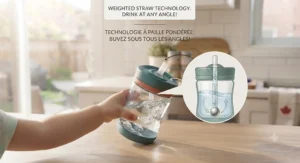
This cup’s whole design centres on a weighted straw that follows gravity inside the cup, so liquid reaches the straw tip no matter which way the cup is tilted — a genuinely clever solve for babies who haven’t yet learned to hold a cup upright.
The narrow, soft silicone straw is intentionally sized for a 6-9 month mouth, smaller than the straws found on cups marketed to older toddlers, and the two silicone handles are shaped to sit naturally in tiny palms. Because Dr. Brown’s built its reputation on anti-colic bottle venting, the straw cup borrows some of that internal-vent thinking to reduce air intake during sipping.
Here’s what the spec sheet won’t tell you outright: straw drinking uses a different muscle pattern than spout sucking, and several paediatric feeding specialists specifically recommend introducing a straw cup this early precisely because it exercises lip and cheek muscles useful for both speech and eating development. If you’ve been searching for the best straw cup for a 6 month old specifically, this is the one most consistently recommended in that exact age bracket, ahead of straw cups built for 12-month-plus toddlers.
User reports commonly praise how quickly babies “get it” compared with spout cups, likely because the motion resembles nursing more closely than sucking on rigid plastic does. The recurring criticism is that the narrow straw, while age-appropriate, needs a dedicated cleaning brush to avoid milk residue building up inside it.
Pros:
- ✅ Weighted straw works at any tilt angle
- ✅ Straw sized specifically for 6-9 month mouths
- ✅ Encourages muscle patterns useful for speech development
Cons:
- ❌ Narrow straw needs a dedicated cleaning brush
- ❌ Small parts mean more pieces to track at cleanup
In the C$15-20 range, it costs more than a basic spout cup, but if straw skills are your goal this early, the age-specific engineering justifies the premium.
4. Philips Avent My Easy Sippy — best fit for existing Avent families
The standout here isn’t a flashy mechanism — it’s compatibility. The spout screws onto the same bottle body as Philips Avent’s Natural bottle line, so parents already invested in that ecosystem can reuse bottles instead of buying an entirely separate cup.
The soft silicone spout has a built-in one-piece valve, and the cup body has subtle ripple detailing that gives small hands more grip than a perfectly smooth surface would. Sold typically as a two-pack, it’s dishwasher-safe and BPA-free, matching the baseline safety standard you’d expect from any reputable Canadian retailer’s baby aisle.
Based on the spec comparison with the Munchkin and NUK entries above, the practical case for this cup is almost entirely about reducing the number of different systems in your kitchen rather than a mechanical advantage — the valve-and-spout approach here isn’t meaningfully different from competitors. It’s a smart pick if you’re already Avent-loyal; it’s a less compelling reason to switch brands from scratch.
Reviewers consistently flag that while the spout swap is convenient, this model isn’t as leak-proof as its “no-spill” marketing suggests once a toddler starts experimenting with squeezing or throwing it — a pattern common enough across many “no-spill” cups that it’s worth setting expectations early rather than treating it as a design flaw unique to this cup.
Pros:
- ✅ Compatible with existing Avent bottle bodies
- ✅ Ripple grip texture suits smaller hands
- ✅ Widely available at major Canadian retailers
Cons:
- ❌ Leak resistance weakens under rough handling
- ❌ Little functional advantage if you don’t already own Avent bottles
At C$12-16 for a two-pack, the value proposition rises sharply if you’re already buying Avent — and drops if you’re starting fresh.
5. Tommee Tippee Sporty Bottle — grab-and-go for daycare bags
This one leans into portability: a sports-bottle-style spout with a two-piece valve system engineered specifically to resist spills when the cup gets tossed sideways into a diaper bag.
The bite-resistant spout is firmer than the NUK’s silicone but still flexible enough to survive teething chomps, and the insulated version keeps cold drinks cool for a few extra hours — genuinely useful for a summer daycare pickup or a long car ride. It’s sold in multi-packs, which matters more than it sounds, since sippy cups have a way of vanishing into strollers, car seats, and daycare cubbies never to be seen again.
What most buyers overlook is that this cup’s strength — a firm, snap-shut valve — is also its main limitation for oral development purposes. Because the valve requires real suction to release liquid, it functions closer to a bottle than a rimless or straw design does, which is exactly why paediatric dental guidance recommends limiting how long any child stays on valve-based cups. Treat this one as the durable travel option, not the cup you lean on to teach independent sipping.
Aggregated feedback is largely positive on durability and leak resistance in bags, with the most common complaint being that the valve mechanism eventually wears out and starts leaking after several months of daily dishwasher cycles.
Pros:
- ✅ Genuinely resists leaking inside a diaper bag
- ✅ Bite-resistant spout holds up to teething
- ✅ Insulated version keeps drinks cold longer
Cons:
- ❌ Valve suction mimics bottle-sucking rather than sipping
- ❌ Valve wears out with heavy dishwasher use over months
At C$14-18 for a multi-pack, this earns its keep as the cup you throw in the daycare bag, not necessarily the one you use to teach cup skills.
6. b.box Sippy Cup with Weighted Straw — drink from any angle, any age past 6 months
Like the Dr. Brown’s entry above, this cup uses a weighted straw for any-angle drinking, but it’s built with a wider straw and sturdier housing aimed at toddlers who’ll be using it well past the newborn-cup stage.
The straw’s flexibility is genuinely notable here — it bends without kinking or blocking flow, which solves a common complaint with rigid straw cups where the tube crimps shut if a toddler bites down mid-sip. The one-piece silicone valve at the base is designed to be leak-proof when the cup is upright and only lightly resistant when tilted, striking a middle ground between the “too easy to spill” and “too hard to drink from” extremes.
On paper, this is the cup built for toddlers who’ve already mastered basic straw drinking and need something that survives daily abuse — dropped from high chairs, left in hot cars, tossed across playrooms — without cracking or losing its seal. It’s less suited as a true first cup; the wider straw and firmer housing are a step up in difficulty from something like the Dr. Brown’s Milestones cup.
User reports are notably consistent on one point: the bendable straw rarely needs replacing compared with rigid alternatives, and several reviewers specifically mention it surviving being run over by a toy car or stepped on without cracking.
Pros:
- ✅ Bendable straw resists kinking under bite pressure
- ✅ Sturdy housing survives daily toddler abuse
- ✅ Balanced valve resistance avoids over-spilling
Cons:
- ❌ Steeper learning curve than a basic spout cup
- ❌ Pricier than most straw cups in this category
Sitting at C$18-24, it’s the most expensive entry on this list, but the durability numbers reported by users suggest it may need replacing less often — worth factoring into a cost-per-use comparison later in this guide.
7. Nuby No-Spill Cup — best value on a tight budget
There’s nothing flashy about this cup, and that’s rather the point: a simple soft spout, a snap-on lid, and a snug-fitting valve seal that, when properly reassembled, keeps spills genuinely contained.
The spout is on the firmer side compared with NUK’s offering, giving slightly more resistance to teething damage, and the whole assembly disassembles into just a few pieces for easy hand-washing — a real advantage if you don’t have a dishwasher or are travelling. It comes in multiple colourways and sizes, and Nuby sells several near-identical variants, so double-check the exact model before buying if you’re trying to match a specific size.
Based on the spec comparison against premium options on this list, the honest take is that this cup does roughly 80% of what the pricier straw cups do, at less than half the price — the trade-off being a slightly steeper “getting the seal right” learning curve for parents, not babies. It’s a smart pick for a second or third cup once you already know your child tolerates a basic spout, rather than as an experimental first purchase.
Reviewers consistently note that leak resistance depends heavily on reassembling the valve correctly after washing — a legitimate design quirk rather than a manufacturing flaw, but one worth knowing before you blame the cup for a diaper bag disaster.
Pros:
- ✅ Lowest price point on this list by a wide margin
- ✅ Simple, easy-to-hand-wash construction
- ✅ Firm spout resists teething damage well
Cons:
- ❌ Leak resistance depends on correct valve reassembly
- ❌ Multiple similar Nuby variants can cause sizing confusion
At roughly C$7-11, it’s genuinely hard to beat for stocking up on backups without blowing the budget.
How to Introduce a Sippy Cup: Setup and the First 30 Days
Getting a new cup out of the packaging is the easy part; getting a baby to actually use it without treating it as a chew toy takes a bit of strategy. Start by washing every piece before first use, even though most of these cups arrive “ready to use” — factory packaging picks up dust in transit more often than you’d think. For the first week, fill the cup with whatever your baby already drinks (breast milk or formula), not water, since a totally unfamiliar taste on top of an unfamiliar cup is often what triggers outright refusal.
Offer the cup at the start of a meal, while your baby is calm and mildly hungry rather than starving and frustrated — a screaming, ravenous baby has zero patience for figuring out a new mechanism. Expect the first few sessions to be exploratory: mouthing, banging, maybe outright rejection. That’s normal, not a sign you bought the wrong cup. By roughly week two, most babies start connecting the cup to the reward of liquid; by week three or four, the motion typically becomes more deliberate.
A common early mistake is over-cleaning between every single sip attempt, which resets the “familiar object” association you’re trying to build. Instead, keep one cup as the dedicated “practice” cup during the day and wash it at normal mealtime intervals like any other dish. If you’re using a straw cup like the Dr. Brown’s Milestones Baby’s First Straw Cup, gently squeezing a small amount up the straw on the first try can help your baby understand what’s supposed to happen before they’re expected to generate suction on their own.
Which Sippy Cup Fits Your Family? Real-World Scenarios
If you’re a first-time parent with a 6-month-old who’s just started solids and has never touched anything but a bottle, start gentle: something like the NUK Learner Cup or the Dr. Brown’s Milestones Baby’s First Straw Cup minimizes the shock of an unfamiliar mechanism while still building genuine skills. Budget C$10-20 and expect a few weeks of trial and error before real progress shows.
If you’re managing a toddler in daycare who needs a cup that survives being tossed in a bag, dropped on a tile floor, and left in a hot car for an afternoon, durability trumps developmental nuance — the Tommee Tippee Sporty Bottle or the b.box Sippy Cup are built for exactly that kind of daily abuse, and the insulated Tommee Tippee option specifically helps on warm days.
If you’re a parent trying to actively wean off bottle-like sucking before your child’s 18-month checkup, lean toward rimless or straw designs over valve-heavy spout cups — the Munchkin Miracle 360 in particular is the one most often recommended for that specific transition, since it forces a genuine sipping motion rather than a suck-and-swallow pattern.
Common Sippy Cup Problems (And How to Actually Fix Them)
Problem: Constant leaking, even when the box says “spill-proof.” In most cases this comes down to a misaligned valve after washing, not a defective cup. Reassemble slowly, checking that the valve seats fully flush before snapping the lid on — this single step resolves the majority of leak complaints across nearly every valve-based cup on this list, including the Philips Avent My Easy Sippy and Nuby No-Spill Cup.
Problem: Baby refuses the cup entirely. Rather than switching brands immediately, try switching liquids first — offer breast milk or formula instead of water for the first two weeks, and offer the cup when your baby is calm, not overtired or starving.
Problem: Mould or mystery smell inside the straw or valve. This is almost always incomplete drying. Disassemble every piece completely after each wash and air-dry fully before reassembling; a straw cup like the b.box Sippy Cup or Dr. Brown’s Milestones model needs its dedicated cleaning brush run through the straw daily, not just a quick rinse.
Problem: Toddler is 20 months old and still sucking, not sipping. This usually signals it’s time to move off valve-based spout cups entirely and toward a rimless design or a straw cup, both of which require a genuine sip-and-swallow motion instead of suction.
Problem: Cup pieces keep disappearing. Buy at least two identical cups from the start — the Nuby No-Spill Cup‘s low price point makes this an easy backup strategy without significant extra cost.
What Is the Best Sippy Cup for Your Baby?
The best sippy cup is a spill-resistant training cup that bridges the gap between bottle or breastfeeding and drinking from an open cup, typically introduced between 6 and 9 months and phased out by around age 2. The strongest options minimize prolonged sucking motions, support proper oral muscle development, and hold up to genuine daily toddler handling without leaking or breaking down.
According to Canadian nutrition guidance from Health Canada and the Canadian Paediatric Society, caregivers should encourage use of an open cup starting around 6 months, initially with help — a reminder that sippy cups are meant to be a bridge, not a permanent replacement for real cup skills.
How to Choose the Best Sippy Cup
- Match the mechanism to your baby’s age and skill level. A 6-month-old just starting solids needs a soft spout or gentle straw, not a firm-valve sports bottle designed for a confident 2-year-old.
- Decide whether oral development or convenience matters more right now. Rimless and straw designs support better mouth muscle patterns; valve spout cups are more spill-proof but closer to bottle-sucking.
- Count the parts before buying. Fewer pieces mean less to lose, less to clean, and fewer chances for a valve to seat incorrectly and leak.
- Check for a dedicated cleaning brush requirement. Narrow straws, like those on the Dr. Brown’s Milestones and b.box cups, need one; skipping it invites mould buildup.
- Buy at least two of whatever you land on. One will inevitably end up lost, and having a backup avoids an emergency store run mid-meltdown.
- Weigh price against realistic lifespan. A C$20 cup that survives a year beats a C$8 cup replaced five times.
- Watch how your baby actually uses it, not how the packaging says they will. Adjust after a genuine two-week trial rather than switching cups after one bad afternoon.
Best Straw Cup for a 6 Month Old: What Actually Matters
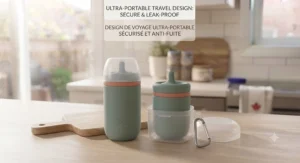
Not every straw cup is appropriate at 6 months, even though plenty of packaging suggests otherwise. The key spec to check is straw diameter and rigidity — a cup built for a 12-month-plus toddler often has a wider, stiffer straw that a 6-month-old simply doesn’t have the oral strength to draw from yet. The Dr. Brown’s Milestones Baby’s First Straw Cup stands out here precisely because its straw was engineered narrower and softer for this exact age bracket, with a weighted tip so gravity does most of the work instead of pure suction strength.
Reviewers consistently note that babies introduced to an age-appropriate straw cup this early adapt faster than expected, often within one to two weeks, likely because straw drinking uses lip-seal muscles closer to nursing than a rigid spout does. If your 6-month-old is showing frustration with a straw cup after a genuine two-week trial, it’s worth checking that you haven’t accidentally started with a straw sized for an older child.
Transitioning From Bottle to Sippy Cup: Tips That Actually Work
Most paediatric guidance points to starting the transition around 6 months and aiming to be mostly off the bottle by 12 to 18 months, according to HealthLink BC’s guidance on infant weaning. The mistake most parents make isn’t timing — it’s going cold turkey. A gradual swap, replacing one bottle feeding at a time with a cup feeding over several weeks, produces far less resistance than an abrupt switch.
Start the very first cup attempts with a liquid your baby already loves (breast milk or formula), reserve the bottle for the feedings your baby is most emotionally attached to (often the bedtime one) for last, and expect the final bottle-to-cup swap to be the hardest one regardless of which cup you’re using. Here’s what most guides won’t tell you plainly: regression is common. A baby who accepted the cup happily for a week may suddenly refuse it during a growth spurt or teething flare-up — that’s a temporary setback, not evidence the transition has failed.
Spill-Proof Straw Cup for Toddlers: How Leak-Proof Claims Actually Hold Up
“Spill-proof” on packaging almost always means “spill-resistant under normal handling,” not “leak-proof under a determined toddler’s inspection.” Reviewers across nearly every brand on this list — including premium options like the b.box Sippy Cup — report that a toddler who deliberately squeezes, shakes, or bites the cup can eventually defeat the valve seal. That’s a physics problem more than a design flaw: any cup with an opening large enough for a straw or spout will leak under enough pressure.
What genuinely differs between cups is how they perform under normal, non-adversarial handling — being carried around, tipped in a stroller cupholder, tossed gently into a bag. On that measure, weighted-straw designs like the Dr. Brown’s Milestones and b.box cups tend to outperform basic soft-spout cups, since the internal weight keeps the straw submerged and reduces air gulping regardless of the angle the cup is held at.
Open Cup Training for Baby: Why Dentists and Speech Therapists Push It
Open cups — actual small cups with no valve, spout, or straw — aren’t just a nostalgic throwback; they’re the format most consistently recommended by dental and speech professionals for long-term oral development. The Canadian Dental Association’s guidance, summarized by HealthLink BC, specifically recommends introducing a lidless cup between 6 and 9 months of age, well before most parents assume a baby is “ready.”
The logic is straightforward: open-cup drinking requires the same lip, tongue, and jaw coordination your child will use for the rest of their life, while spout and straw cups — however useful as intermediate tools — delay that skill-building. Practically, open cup training means short, supervised sessions with a small amount of water in a proper cup, not a full mealtime attempt. Most parents pair this with one of the seven sippy cups above for daily use while reserving five-minute open-cup practice sessions once or twice a day.
360 Cup vs Straw Cup: Which One Wins?
Neither format is universally “better” — they solve slightly different problems, and the right pick genuinely depends on your child’s stage and your priorities.
| Factor | 360/Rimless Cup | Straw Cup |
|---|---|---|
| Closest to | Open cup drinking | Nursing/bottle motion |
| Best for | Oral development milestones | Early straw skill-building |
| Mess level | Higher during learning phase | Lower once mastered |
| Example | Munchkin Miracle 360 | Dr. Brown’s Milestones |
The Munchkin Miracle 360 wins on long-term oral development because the drinking motion is genuinely closer to an open cup, but it demands more patience during the learning phase. The Dr. Brown’s Milestones straw cup wins on early ease-of-use, particularly for babies who took to nursing easily, since the sucking motion feels more familiar. Neither beats the other outright — many families end up owning one of each and rotating based on the situation.
Weaning From Bottle to Cup: A Realistic Timeline
Most guidance, including the joint Health Canada and Canadian Paediatric Society nutrition statement, points to a general arc rather than a single deadline: cup introduction around 6 months, significant bottle reduction by 12 months, and full weaning by roughly 18 to 24 months. That’s a wide window on purpose — babies vary enormously in readiness, and rigid deadlines create more stress than they solve.
A realistic phased plan looks like this: months 6-9, introduce a cup alongside continued bottle feeding, no pressure to replace anything yet; months 9-12, start swapping daytime bottle feedings for cup feedings one at a time; months 12-18, work toward dropping all but the emotionally significant feedings (often nap and bedtime); months 18-24, tackle the final holdout feedings, usually the hardest part of the whole process. Dental professionals specifically flag prolonged bottle use — well past 18 months — as a contributing factor in early childhood tooth decay, as reported by CBC News on a dental association study linking extended sippy and bottle use with cavity risk in young children.
Common Mistakes When Buying a Sippy Cup
The most frequent mistake is buying a single cup and expecting it to work for the next 18 months straight — babies’ needs shift fast, and the gentle spout that worked at 6 months often feels babyish or under-challenging by 14 months. A close second is chasing “100% spill-proof” marketing claims at face value; as covered above, no cup is truly immune to a determined toddler, and prioritizing that claim over developmental fit often means buying a cup that’s actually working against your weaning goals. Parents also commonly underestimate part count — a cup with five tiny components sounds impressive on the shelf but becomes a genuine chore during a 9 p.m. cleanup. Finally, skipping the dedicated cleaning brush for narrow-straw cups is a mistake that shows up weeks later as a mouldy smell nobody can locate.
Long-Term Cost and Maintenance
Sippy cups aren’t a one-time purchase — factor in replacement valves, lost lids, and the eventual crack that ends a cup’s useful life. A basic cup like the Nuby No-Spill Cup costs less upfront but tends to need replacing more often, based on aggregated durability complaints; a sturdier build like the b.box Sippy Cup costs more per unit but reviewers report meaningfully longer service life, which can make the true cost-per-month roughly comparable across tiers. Budget for at least two to three cup replacements or valve refreshes over an 18-month weaning window, and factor dishwasher wear specifically — daily high-heat cycles degrade silicone valves faster than hand-washing, regardless of brand.
Frequently Asked Questions
❓ What age should a baby start using a sippy cup?
❓ Are straw cups better than spout cups for babies?
❓ How long should a toddler use a sippy cup?
❓ Why does my baby's sippy cup keep leaking?
❓ What's the difference between a 360 cup and a regular sippy cup?
Conclusion
There’s no single best sippy cup for every family — there’s a best sippy cup for your baby’s current stage, and that changes faster than most parents expect. A 6-month-old just starting solids needs something closer to the NUK Learner Cup or Dr. Brown’s Milestones Baby’s First Straw Cup, while a toddler heading toward full weaning benefits more from a rimless design like the Munchkin Miracle 360 or a durable straw cup like the b.box Sippy Cup. Budget shouldn’t be the deciding factor either — the Nuby No-Spill Cup proves a lower price tag doesn’t automatically mean lower performance for basic daily use.
What matters most is watching how your own child actually responds rather than chasing the highest star rating online. Give any new cup a genuine two-week trial, expect some mess along the way, and remember that the end goal isn’t a perfect cup — it’s a confident, independent drinker who eventually won’t need any of these at all.
✨ Don’t Miss These Exclusive Deals!
🔍 Ready to make the switch? Check current pricing on any of the seven cups above, and pick the one that actually matches where your baby is right now — not where the marketing says they should be. Every one of these picks can help take the daily mess (and the guesswork) out of feeding time.
Recommended for You
- 7 Best Baby Utensils in 2026: Self-Feeding Spoons Parents Trust
- Divided Plates for Toddlers: 7 Best Picks for Picky Eaters in 2026
- 7 Suction Plates for Babies That Actually Stay Put (2026 Guide)
Disclaimer: This article contains affiliate links. As an Amazon Associate, I earn from qualifying purchases. If you purchase products through these links, we may earn a small commission at no additional cost to you.
✨ Found this helpful? Share it with your friends! 💬🤗
