
In This Article
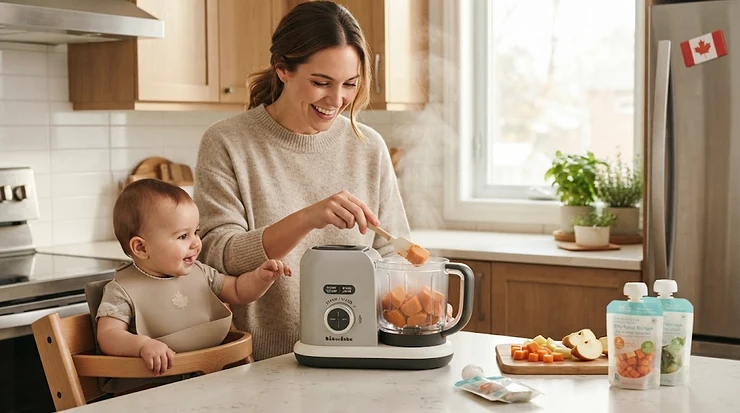
Somewhere around month five, every new parent falls down the same rabbit hole: fourteen browser tabs, a half-eaten sandwich, and the sudden, urgent question of whether a baby food maker is actually worth the counter space it demands. Short answer — for a lot of families, yes. A baby food maker is a countertop appliance that steams and purées fruit, vegetables, and protein into baby-appropriate textures in one vessel, cutting out the pot-then-blender shuffle that makes homemade baby food feel like a second job. It won’t replace good judgment or a paediatrician’s advice, but it will save you time, plastic waste, and a fair amount of money over the first year of solids.
This guide breaks down seven real, currently available baby food makers sold through amazon.ca, from budget blender-based systems under C$100 to the four-in-one machines that do everything but burp the baby. We leaned on Health Canada’s infant nutrition guidance, cross-referenced real specs, and pulled aggregated review sentiment rather than inventing a single glowing testimonial. If you’ve been comparing a baby food processor vs blender, wondering whether a homemade baby food maker steamer blender combo beats your regular Vitamix, or just trying to figure out where to start with starting solids purée recipes, you’re in the right spot.
Quick Comparison Table: Baby Food Makers at a Glance
| Product | Type | Capacity | Price Range (CAD) | Best For |
|---|---|---|---|---|
| BEABA Babycook Solo | Steam + blend, 4-in-1 | 1.1 L / 4.5 cups | C$180-C$230 range | Best overall all-in-one |
| Baby Brezza One Step Baby Food Maker Deluxe | Steam + blend, one-button | 3.5 cups | C$200-C$260 range | Easiest to operate |
| NutriBullet Baby Complete Food-Making System | Blender only | 12 oz cup | C$100-C$140 range | Best accessory kit |
| Grownsy Baby Food Maker | Steam + blend, dual basket | 20 oz | C$110-C$150 range | Best seller / batch cooking |
| Momcozy AutoMeal Baby Food Maker | Steam + blend, auto cycle | 15 oz | C$100-C$140 range | Fastest cycle time |
| Nuby Mighty Blender | Blender + steaming basket | 20 oz | C$50-C$80 range | Best budget with accessories |
| HEYVALUE Baby Food Processor | Glass blender + freezer tray | 20 oz | C$55-C$85 range | Best value glass bowl |
Look at the spread here for a second: you’re paying roughly four times as much for the BEABA Babycook Solo as you would for the HEYVALUE Baby Food Processor, and the gap isn’t arbitrary — it maps almost exactly onto how much manual labour the machine takes off your hands. Blender-only units like the NutriBullet Baby Complete Food-Making System and Nuby Mighty Blender ask you to steam or boil ingredients separately first, while the steam-and-blend combos handle the whole job in one vessel with less cleanup. If your kitchen already has a reliable steamer basket, the cheaper blender-only route makes a lot of sense; if you want fewer dishes at 6 p.m., pay up for the combo.
💬 Just one click — help other Canadian parents make better buying decisions too! 😊
Top 7 Baby Food Makers: Expert Analysis
We picked these seven to cover every realistic budget and use case a Canadian parent might have — from someone testing the waters with a single jar of sweet potato to a household batch-cooking a week of meals every Sunday night. Every product below is real, currently sold, and cross-checked against manufacturer specs and aggregated review data rather than a single cherry-picked source.
1. BEABA Babycook Solo — best all-in-one for daily batch cooking
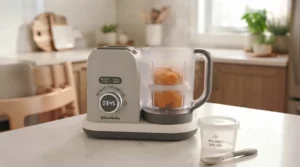
The French-engineered BEABA Babycook Solo has been the reference point for this category for years, and its 1.1-litre bowl explains why: it’s built to turn a week’s worth of raw vegetables into finished purée in a single 15-to-20-minute cycle. The steam basket and blending bowl share the same vessel, so there’s no hot-food handoff between two separate containers, and the auto shut-off beeps three times when a steam cycle finishes so you’re not standing over it. The unit is certified BPA, lead, and phthalate free, and verified safe for food contact by the FDA, Health Canada, the EU, and NSF International — a meaningful detail for parents specifically shopping in the Canadian market, since it means the certification isn’t just a US-only claim bolted onto the packaging.
Based on the spec comparison, this is the machine for parents who plan to make homemade food the default rather than the exception — one-handed operation matters when you’re holding a squirmy six-month-old on your hip while sweet potato steams two feet away. Reviewers consistently note that the blending cycle runs in short five-second bursts rather than one continuous pulse, which some find mildly tedious compared to a standard blender but which the manufacturer designed specifically to prevent motor burnout over years of near-daily use. Aggregated feedback also flags the machine’s larger footprint as a drawback for compact kitchens, and a small number of buyers note the plastic bowl shows scratches after months of steel-utensil use — something a silicone spatula avoids entirely.
Pros:
- ✅ True 4-in-1 function: steam, blend, defrost, reheat
- ✅ Health Canada-listed food-contact safety certification
- ✅ One-handed operation frees up your other arm
Cons:
- ❌ Larger counter footprint than blender-only models
- ❌ Pulsed blending cycle feels slower than a standalone blender
At around C$180-C$230 (check current price on amazon.ca, as pricing fluctuates), the BEABA Babycook Solo sits at the premium end of this list, but for families committed to homemade food past the first few months, the time saved per batch adds up fast enough to justify the spend.
2. Baby Brezza One Step Baby Food Maker Deluxe — easiest single-button operation
If the appeal of a baby food maker is doing less thinking at 6 a.m., the Baby Brezza One Step Baby Food Maker Deluxe earns its name honestly. Load the bowl, press one button, and the machine steams then automatically transitions into blending without you touching a second control — the full cycle finishes in roughly 10 minutes and yields up to 3.5 cups of purée per batch. That capacity matters in practice: 3.5 cups is enough for two to three days of single-ingredient servings for a baby just starting solids, which cuts down how often you’re running the machine at all.
What most buyers overlook about this model is the LCD panel’s mode selector — you can run steam-only or blend-only cycles independently, which means it doubles as a simple food processor for family meals once your baby graduates past purées. Reviewers consistently point to the dishwasher-safe bowl and blade as the standout convenience feature, since baby food residue dries fast and hand-washing narrow appliance parts gets old within a week. The main recurring criticism in aggregated feedback is that the automatic cycle sometimes under- or over-cooks denser vegetables like carrots or squash relative to leafier or softer ingredients, so a quick consistency check before serving is still worth the ten extra seconds.
Pros:
- ✅ Genuinely one-button operation start to finish
- ✅ Dishwasher-safe bowl and blade
- ✅ Independent steam-only and blend-only modes
Cons:
- ❌ Auto cycle can misjudge dense vegetables
- ❌ Premium price relative to blender-only alternatives
Priced in the C$200-C$260 range (prices may vary — check current price before buying), this is the pick for parents who want the least possible decision-making involved in dinner prep.
3. NutriBullet Baby Complete Food-Making System — best accessory kit for the price
The NutriBullet Baby Complete Food-Making System skips the steaming function entirely and focuses on doing one thing extremely well: blending. That’s a trade-off, not a flaw — you’ll need a stovetop steamer basket or microwave-safe steaming dish alongside it — but what you get in return is a compact system built around the trusted NutriBullet motor base, plus an accessory kit that includes a freezer tray with a lid, several storage cups, a short cup, and a recipe book.
Here’s what the spec sheet won’t tell you outright: because this is fundamentally a small-batch blender rather than a combo appliance, cleanup is simpler and the counter footprint is smaller than any steam-and-blend unit on this list, which matters if your kitchen is already crowded with a coffee maker, a kettle, and a bottle-drying rack. Reviewers consistently describe the blending performance as noticeably stronger than off-brand alternatives at a similar price, crediting the established NutriBullet motor design. The trade-off shows up in workflow — you’re managing two separate steps (steam, then blend) rather than one, which adds a few minutes and a second dirty dish to every session compared to an all-in-one machine.
Pros:
- ✅ Strong, reliable blending performance for the price
- ✅ Comes with freezer tray, storage cups, and recipe book
- ✅ Compact footprint, easy to store in a small kitchen
Cons:
- ❌ No built-in steaming function
- ❌ Two-step workflow takes longer than combo units
Expect to pay somewhere in the C$100-C$140 range on amazon.ca (check current price, as this is a frequently discounted item) — solid value if you already have a steaming method sorted out.
4. Grownsy Baby Food Maker — best seller with dual-layer steaming
The Grownsy Baby Food Maker has held the #1 Best Seller position on Amazon in the baby food mills category for six consecutive months, and the dual-layer steam basket is a big part of why. It lets you cook two ingredients at different densities — say, chicken on the bottom layer and softer squash on top — in a single cycle instead of running the machine twice, which is a genuinely practical time-saver once you move past single-ingredient purées.
Based on the spec comparison, the dual-basket design is the feature that separates this from most single-layer competitors in its price tier, and it’s the reason batch-cooking parents gravitate toward it specifically. Aggregated review sentiment highlights the self-cleaning cycle as a standout convenience — running hot water through the machine after use knocks out most of the manual scrubbing that steam-and-blend units usually require. On the flip side, a recurring theme in feedback is that the blending blade struggles slightly with fibrous vegetables like celery or unpeeled carrots, so pre-chopping matters more here than on some pricier competitors.
Pros:
- ✅ Dual-layer basket cooks two ingredients at once
- ✅ Self-cleaning cycle cuts manual scrubbing
- ✅ Consistently high sales volume and review base
Cons:
- ❌ Struggles with fibrous, unchopped vegetables
- ❌ Steam basket capacity smaller than premium combo units
At around C$110-C$150 (prices fluctuate — check current listing), the Grownsy Baby Food Maker lands squarely in the sweet spot between budget blenders and premium four-in-ones.
5. Momcozy AutoMeal Baby Food Maker — fastest full cycle on this list
Time is the currency every new parent is short on, and the Momcozy AutoMeal Baby Food Maker is built around shaving minutes off the process wherever possible — the full steam-and-blend cycle completes in roughly 18 to 25 minutes, with active prep time closer to three minutes once ingredients are chopped and loaded. The six-blade cyclone system is designed to handle a range of textures, from silky stage-one purées through coarser textures suited to baby-led weaning experimentation.
What most buyers overlook here is the texture-mode selector: rather than one generic blend setting, you can choose smooth, medium, or coarse depending on where your baby is in the solids journey, which extends the machine’s useful life well past the puréed-food stage. Reviewers consistently praise the shorter overall cycle time compared to similarly priced competitors, though aggregated feedback also notes the 15-ounce capacity runs on the smaller side for parents trying to batch-cook a full week of meals in one go — you’ll likely be running it more often than a larger-capacity machine.
Pros:
- ✅ Fast full cycle, roughly 18-25 minutes total
- ✅ Three texture modes extend usefulness past purées
- ✅ Compact and straightforward for daily use
Cons:
- ❌ Smaller 15 oz capacity limits batch size
- ❌ Newer to market, smaller review history than established brands
Pricing sits in the C$100-C$140 range (check current price on amazon.ca), competitive with the NutriBullet Baby Complete Food-Making System but with steaming built in.
6. Nuby Mighty Blender — best budget pick with a full accessory bundle
The Nuby Mighty Blender proves you don’t need a four-figure feature list to get started with homemade baby food. It ships with a steaming basket, two interchangeable blade types, a soft-tip spatula, food storage cups, a freezer tray, and spoons — essentially a starter kit for the entire solids journey in one box, at a price point that makes it an easy first purchase rather than a big commitment.
Honestly, the value math here is straightforward: for a fraction of what the premium combo units cost, you get most of the accessories those machines charge extra for, bundled with a functional blender and steaming basket. The trade-off is that this is not a one-touch automated system — you’re steaming manually, then transferring to the blender bowl yourself, which asks more hands-on effort than the Baby Brezza or Grownsy models above. Aggregated review sentiment is generally positive on value for money, with the accessory bundle cited repeatedly as the deciding factor for budget-conscious buyers, though some reviewers note the blender motor feels underpowered against fibrous or fully frozen ingredients.
Pros:
- ✅ Full accessory bundle included at a low price
- ✅ Includes a cookbook and nutritional guide
- ✅ Low commitment for first-time solids parents
Cons:
- ❌ Manual, multi-step workflow (no auto steam-blend)
- ❌ Motor underpowered on fibrous or frozen ingredients
At roughly C$50-C$80 (prices may vary — always check the current amazon.ca listing), this is a sensible entry point if you’re not yet sure how committed you’ll be to homemade purées long-term.
7. HEYVALUE Baby Food Processor — best value glass bowl option
Plastic-bowl fatigue is real, and the HEYVALUE Baby Food Processor answers it with a glass blending jar paired with a 20-ounce capacity, a freezer tray, and silicone spoons and spatula included in the box. Glass doesn’t absorb odours or stain the way some plastics do after repeated beet or squash purées, and it holds up better to years of dishwasher cycles without clouding.
Here’s the honest trade-off: like the Nuby Mighty Blender, this is a blend-focused system rather than a full steam-and-blend combo, so you’re cooking ingredients separately before pureeing. Based on the spec comparison against similarly priced glass-bowl blenders, the 20-ounce capacity is generous enough for a proper batch-cooking session, and the freezer tray means you’re not buying separate storage. Reviewers consistently flag the glass bowl’s durability as the standout, while a recurring complaint in aggregated feedback is that the lid seal can loosen with heavy use, occasionally leaking during transport from counter to fridge.
Pros:
- ✅ Glass bowl resists staining and odour retention
- ✅ Generous 20 oz capacity for batch cooking
- ✅ Includes freezer tray, spoons, and spatula
Cons:
- ❌ No built-in steaming function
- ❌ Lid seal can loosen with heavy, prolonged use
Expect a price range around C$55-C$85 (check current price, as this fluctuates with promotions) — a strong pick if a glass bowl is a non-negotiable for you.
Top 7 Baby Food Makers: Full Spec Comparison
| Product | Steam Function | Capacity | Cleanup | Price Range (CAD) | Best For |
|---|---|---|---|---|---|
| BEABA Babycook Solo | Yes, auto | 1.1 L | Dishwasher-safe parts | C$180-C$230 | Daily use, all-in-one |
| Baby Brezza One Step Baby Food Maker Deluxe | Yes, auto | 3.5 cups | Dishwasher-safe bowl/blade | C$200-C$260 | Hands-off convenience |
| NutriBullet Baby Complete Food-Making System | No | 12 oz | Hand-wash recommended | C$100-C$140 | Blending only, small kitchens |
| Grownsy Baby Food Maker | Yes, dual-layer | 20 oz | Self-cleaning cycle | C$110-C$150 | Batch cooking two foods at once |
| Momcozy AutoMeal Baby Food Maker | Yes, auto | 15 oz | Dishwasher-safe parts | C$100-C$140 | Speed, texture flexibility |
| Nuby Mighty Blender | Manual basket | 20 oz | Hand-wash recommended | C$50-C$80 | First-time buyers, budget |
| HEYVALUE Baby Food Processor | No | 20 oz | Dishwasher-safe glass bowl | C$55-C$85 | Glass-bowl preference |
The steam-versus-no-steam split is the clearest dividing line in this table, and it should be the first filter you apply. Machines like the BEABA Babycook Solo, Baby Brezza One Step Baby Food Maker Deluxe, Grownsy Baby Food Maker, and Momcozy AutoMeal Baby Food Maker cook and purée in one vessel, while the NutriBullet Baby Complete Food-Making System, Nuby Mighty Blender, and HEYVALUE Baby Food Processor assume you already have a steaming method. If counter space and dishes-per-session are your biggest pain points, pay the premium for a combo unit; if you’re comfortable steaming on the stove or in the microwave, a blender-only system saves you real money without sacrificing much.
✨ Don’t Miss These Exclusive Deals!
🔍 Take your homemade baby food routine to the next level with these carefully selected machines. Click through to check current pricing and availability on amazon.ca. These tools help you create genuinely healthy, additive-free meals your baby will actually enjoy!
Starting Solids: Simple Purée Recipes to Try First
Once the machine is unboxed, the next question is always “okay, but what do I actually make first?” Health Canada recommends starting with iron-rich foods offered a few times each day, including meats such as beef, lamb, poultry, and fish, along with alternatives like eggs, tofu, and legumes, so your very first batches don’t need to be exotic — they need to be iron-forward and smooth enough for a beginner eater.
A practical starting sequence: single-ingredient iron-fortified infant cereal mixed with breast milk or formula to a thin, runny texture; puréed cooked lentils or well-mashed tofu blended smooth with a little water or broth; finely puréed cooked chicken or beef thinned with cooking liquid until it loses any stringy texture; and classic single-vegetable purées like sweet potato, carrot, or squash, all steamed until fork-tender before blending. Foods that are hard, small and round, or smooth and sticky should be avoided due to choking risk, and honey shouldn’t be offered before 12 months due to infant botulism risk — a detail spelled out clearly in Canada’s official recommendations for feeding infants aged six to 24 months, worth keeping in mind even at the purée stage.
Once your baby tolerates single ingredients well, combination purées extend variety without much extra effort: apple and pear steamed together, sweet potato blended with a spoonful of plain yogurt for creaminess, or peas and mint for a slightly more grown-up flavour profile. Batch-cook on a weekend, freeze in ice-cube-tray-sized portions using the freezer trays most of these machines include, and you’ve got two to three weeks of variety ready to thaw on demand.
Real-World Scenarios: Which Baby Food Maker Fits Your Family
Abstract feature lists only get you so far — here’s how three different household situations map onto the products above.
The condo-dwelling first-timer. Small kitchen, no dishwasher, baby just turned six months. This household doesn’t need a large-capacity combo machine taking up counter space it doesn’t have. The Nuby Mighty Blender or HEYVALUE Baby Food Processor make more sense here — compact, budget-friendly, and low-commitment while they figure out whether homemade food is going to stick as a habit.
The batch-cooking dual-income household. Both parents work, weekends are the only real cooking window, and the goal is one big Sunday session that covers the whole week. The Grownsy Baby Food Maker‘s dual-layer steam basket and self-cleaning cycle, or the larger-capacity BEABA Babycook Solo, both suit this rhythm — fewer, bigger batches beat frequent small ones when time is the scarce resource.
The budget-conscious family with a toddler already in the house. Money is tighter, and they’ve already got some kitchen gear (a steamer basket, a decent blender) but want something purpose-built for smaller portions. The NutriBullet Baby Complete Food-Making System or Momcozy AutoMeal Baby Food Maker fit well — lower upfront cost, and in NutriBullet’s case, an accessory kit that gets reused as the baby transitions off purées entirely.
Practical Usage Guide: Getting the Most From Your Baby Food Maker
The first 30 days with a new baby food maker are where most of the avoidable mistakes happen, so a bit of upfront setup discipline pays off. Wash all removable parts before first use, even if the packaging says “food-contact safe out of the box” — manufacturing residue happens. Run one or two trial batches with a familiar vegetable like carrot or sweet potato before committing to a big batch-cooking session, so you learn the machine’s actual timing rather than trusting the manual’s estimate blindly.
For steam-and-blend combo units, chop ingredients into roughly uniform, small pieces — the auto-cycle timing is calibrated around a certain density and size, and irregular chunks are the most common cause of underdone centres. For blender-only systems, pre-cook ingredients until genuinely fork-tender before blending; underdone vegetables strain the motor and produce grainy, unpleasant textures no amount of blending time fixes. Maintenance-wise, descale steam-function machines every few weeks if you have hard water, since mineral buildup in the steam reservoir is the leading cause of reduced performance over the first year. Store blades separately from bowls when not in use to avoid dulling, and always confirm serving temperature by testing a small amount yourself before offering it to your baby — auto-cycles are consistent, not infallible.
Baby Food Processor vs Blender Comparison: What’s Actually Different
“Processor” and “blender” get used almost interchangeably in baby-gear marketing, but the mechanics differ in ways that matter for texture control. A food processor, in the traditional sense, uses interchangeable blades and a wider, shallower bowl designed for chopping, shredding, and coarser purées — better suited to the chunkier textures used once your baby moves toward baby-led weaning or table food. A blender, by contrast, uses a narrower jar and a single high-speed blade optimized for smooth, liquid-adjacent textures — ideal for the silky stage-one purées most babies start with.
In practice, most products marketed as “baby food makers” — including everything on this list — are closer to compact blenders than true food processors, just packaged with steaming capability and baby-specific accessories. What most buyers overlook is that texture range matters more than the processor-versus-blender label: the Momcozy AutoMeal Baby Food Maker‘s multiple texture settings and the BEABA Babycook Solo‘s cyclone blade both bridge into coarser textures reasonably well, while a pure high-speed blender can struggle to produce anything but smooth purée regardless of blend time. If your family plans to lean into baby-led weaning early, prioritize a machine with genuine texture control rather than one optimized purely for smoothness.
Baby Food Maker vs Regular Blender: Do You Really Need a Dedicated Machine?
This is the question that stops a lot of parents at the checkout page: can’t the blender already sitting on the counter just do this job? Sometimes, yes. A powerful standard blender can absolutely purée cooked fruits and vegetables to a smooth, baby-appropriate texture, and if you already own one, buying a dedicated unit purely for blending duplicates a tool you have.
Where a dedicated baby food maker earns its keep is in the details a general-purpose blender wasn’t built around: smaller batch sizes that don’t get lost swirling around a full-sized jar, built-in steaming that removes a pot from the equation entirely, and portion-appropriate accessories like freezer trays and small storage cups. A full-sized countertop blender is also harder to run safely one-handed while holding a baby, and its jar is often too large to clean efficiently for a two-tablespoon batch of pear purée. On the other hand, if budget is genuinely tight and your existing blender purées smoothly, steaming vegetables on the stove and blending in your current appliance is a completely legitimate path — the dedicated machine buys convenience, not a nutritional advantage.
The Real Benefits of Homemade Baby Food
The case for homemade baby food isn’t just about avoiding processed pouches for the sake of it — there are concrete, practical reasons families make the switch. Full ingredient control tops the list: you decide exactly what goes in, with no added sugar, salt, or fillers, and you can adjust texture and flavour combinations to match your baby’s specific developmental stage rather than a generic jar size. Cost is another real factor — homemade purées typically run C$0.25 to C$0.50 per serving compared with roughly C$1.50 to C$2.50 for commercial pouches, a gap that adds up meaningfully across dozens of servings a week.
There’s also a flavour and variety argument that’s easy to underrate: homemade purées let you introduce genuinely diverse ingredients — lentils, fish, unusual vegetable combinations — well beyond what most commercial pouch lines stock, which some paediatric nutrition guidance links to broader food acceptance later in toddlerhood. That said, homemade food isn’t automatically superior in every dimension — commercial pouches are convenient for travel, have a longer shelf life, and remove the batch-cooking time commitment entirely, so plenty of families reasonably use both approaches side by side rather than treating it as all-or-nothing.
How to Choose a Baby Food Maker
Cutting through the marketing noise, here’s the short version of what actually matters when comparing models:
- Steam-and-blend vs blend-only — decide whether you want cooking built in or you’re comfortable steaming separately; this is the single biggest price and convenience driver.
- Capacity — smaller cups suit occasional single-ingredient purées, while larger 1-litre-plus bowls suit weekly batch cooking.
- Cleanup method — dishwasher-safe parts save real time; hand-wash-only components add friction that adds up over months of daily use.
- Texture range — if you’re planning to move into baby-led weaning, prioritize models with adjustable texture settings over pure-smooth blenders.
- Material — glass resists staining and odour but is heavier and less impact-resistant than BPA-free plastic; weigh durability against convenience.
- Included accessories — freezer trays, storage cups, and recipe guides reduce your total spend on separate baby-food storage products.
- Certification and safety — look for BPA-free, lead-free, and phthalate-free claims backed by recognized certifying bodies rather than marketing language alone.
Common Mistakes When Buying a Baby Food Maker
The most common misstep is buying capacity you don’t need — a household with one baby making single-ingredient purées rarely needs a 1.1-litre bowl running full-tilt every session, and a smaller, cheaper unit would have done the job just as well. The reverse mistake also happens: buying an undersized blender-only unit, then discovering weekly batch cooking takes three times as long as expected because you’re running six small batches instead of one large one.
Another frequent error is ignoring cleanup requirements until after purchase — a machine with narrow, hand-wash-only crevices becomes a chore fast when you’re running it daily, and that friction is often what causes an expensive baby food maker to end up unused in a cupboard by month four. Finally, some parents assume steam-and-blend combo machines eliminate the need to check texture and temperature before serving; auto-cycles are consistent, not perfect, and skipping that quick manual check is a real, avoidable safety gap.
Safety, Regulations & Compliance Guide for Canadian Parents
Food-contact safety certification matters more than it might seem on a spec sheet. Products verified safe for food contact by Health Canada, alongside the FDA, EU, and NSF International, meet a recognized regulatory bar rather than relying on a manufacturer’s self-declared “BPA-free” claim alone — worth checking for explicitly before buying any baby food maker, not just the ones on this list.
On the feeding side, a widely cited CBC News report on baby-led weaning research found infants following a baby-led approach with proper choking-prevention guidance were not more likely to choke than infants who were spoon-fed purées, which is useful context if you’re deciding between purées, finger foods, or a mixed approach as your baby’s skills develop. Whichever method you choose, always supervise feeding closely, avoid hard, small, round, or sticky foods that pose genuine choking risk, and introduce new single ingredients a few days apart so you can identify any reaction. None of the appliances on this list are medical devices or regulated feeding tools — they’re kitchen appliances, and food safety practices (thorough cooking, proper cooling, refrigeration within two hours) remain entirely the parent’s responsibility regardless of which machine does the blending.
Long-Term Cost & Maintenance
Sticker price only tells part of the story. A C$50 blender-only unit with a short warranty and no dishwasher-safe parts can end up costing more in replacement purchases and hand-washing time over two years than a C$200 combo machine with a longer track record and full dishwasher compatibility. Homemade purées running C$0.25 to C$0.50 per serving versus C$1.50 to C$2.50 for commercial pouches means most of these machines pay for their own purchase price back within one to three months of regular use, regardless of which tier you buy into — the real long-term cost differentiator is durability and how often you actually use it, not the sticker price itself.
Maintenance costs stay low across this category generally: replacement blades or seals, when needed, typically run a small fraction of the original purchase price, and none of these machines require ongoing subscriptions or proprietary consumables the way some infant-formula-adjacent products do. The main long-term cost to watch is motor burnout from consistently underdone or overly fibrous ingredients — a habit that shortens the lifespan of blender-only units faster than it does steam-and-blend combos designed around tender, pre-cooked food.
Frequently Asked Questions
❓ Is a baby food maker worth it compared to just steaming and blending manually?
❓ What's the difference between a baby food maker and a baby food processor?
❓ How long does homemade baby food last in the freezer?
❓ Can I use a regular blender instead of a baby food maker?
❓ When should I start introducing solids with a baby food maker?
Conclusion
There’s no single “correct” baby food maker — there’s the one that matches how your household actually cooks. If you want the least hands-on involvement possible and don’t mind paying for it, the Baby Brezza One Step Baby Food Maker Deluxe or BEABA Babycook Solo earn their premium price tags through genuine convenience and long-established safety certification. If you’re testing the waters or working with a tighter budget, the Nuby Mighty Blender and HEYVALUE Baby Food Processor get you fully equipped without a big financial commitment, while the Grownsy Baby Food Maker and Momcozy AutoMeal Baby Food Maker sit comfortably in the middle for families who want steam-and-blend convenience without the premium price. And if you already own a solid blender, the NutriBullet Baby Complete Food-Making System shows that a dedicated purée machine doesn’t have to mean starting from zero.
Whichever model you land on, the fundamentals stay the same: start with iron-rich single ingredients, introduce new foods a few days apart (see HealthLink BC’s guide to baby’s first foods for a solid province-level reference), prioritize food-contact safety certification, and always double-check texture and temperature before that first spoonful heads toward your baby’s mouth. Homemade baby food isn’t about doing everything perfectly — it’s about having a system simple enough that you’ll actually keep using it past week three.
✨ Ready to Start Your Homemade Baby Food Journey?
🍼 Compare current prices on any of these seven baby food makers on amazon.ca and pick the one that matches your kitchen, your budget, and your baby’s next few months of eating. Fresh, additive-free meals are closer than you think!
Recommended for You
- Best Sippy Cup 2026: 7 Top Picks Canadian Parents Trust
- 7 Best Baby Utensils in 2026: Self-Feeding Spoons Parents Trust
- Divided Plates for Toddlers: 7 Best Picks for Picky Eaters in 2026
Disclaimer: This article contains affiliate links. As an Amazon Associate, I earn from qualifying purchases. If you purchase products through these links, we may earn a small commission at no additional cost to you.
✨ Found this helpful? Share it with your friends! 💬🤗
