In This Article
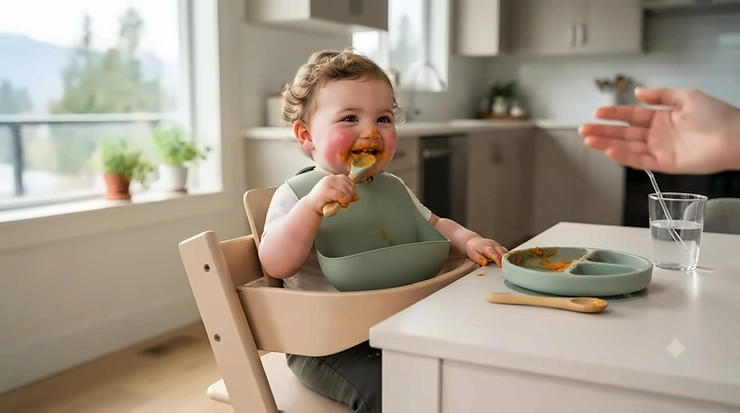
Somewhere between the first spoonful of purée and the twentieth flung sweet potato cube, every parent has the same realization: bibs are not optional, they’re survival gear. A baby bib is a wearable barrier — cloth, silicone, or coated fabric — designed to catch food, drool, and spit-up before it lands on your baby’s outfit (and yours). That’s the short version. The longer version is that not all bibs are built for the same job, and picking the wrong one means more laundry, not less.
This guide breaks down the best baby bibs for 2026 by material, use case, and feeding stage, with honest analysis pulled from real product specs and aggregated review sentiment rather than manufacturer marketing copy. Whether you’re gearing up for baby led weaning, hunting for something that survives a dishwasher cycle, or just tired of scrubbing dried oatmeal off a onesie, there’s a practical answer here. We’ll also lean on Health Canada’s guidance on introducing solid foods to infants, since feeding safety and feeding gear go hand in hand.
Before diving into individual products, it helps to see how the main contenders stack up side by side — that’s next.
Quick Comparison Table: Best Baby Bibs at a Glance
| Product | Material | Best For | Price Range (CAD) |
|---|---|---|---|
| Bumkins SuperBib | Waterproof laminated fabric | All-around daily wear | C$20-C$25 (2-pack) |
| OXO Tot Waterproof Silicone Roll Up Bib | Food-grade silicone | Baby led weaning messes | C$15-C$20 |
| Happy Healthy Parent EZ-Clean Silicone Bib | Food-grade silicone | Budget-friendly daily use | under C$20 |
| Tommee Tippee Easi-Roll Bib | Silicone | Travel and on-the-go feeding | C$20-C$25 (2-pack) |
| BabyBjörn Baby Bib | Soft coated plastic | Durability and shape retention | C$30-C$40 (2-pack) |
| Copper Pearl Premium Burp Cloths | 3-layer cotton | Newborn spit-up and drool | C$25-C$30 (3-pack) |
| Comfy Cubs Muslin Burp Cloths | 6-layer muslin cotton | Bulk newborn essentials | under C$25 (10-pack) |
Looking at this table, the split is really between “wipe it and move on” (the silicone group) and “toss it in the wash” (the cloth and muslin group), and your choice mostly comes down to how messy your baby’s feeding stage currently is. Families deep in baby led weaning tend to gravitate toward OXO Tot Waterproof Silicone Roll Up Bib or Happy Healthy Parent EZ-Clean Silicone Bib because purée and diced avocado wipe off silicone in seconds, while newborn households leaning on milk feeds lean on Comfy Cubs Muslin Burp Cloths and Copper Pearl Premium Burp Cloths for drool and spit-up. Neither category is objectively better — they’re solving different problems, and most homes end up needing at least one from each column.
💬 Just one click — help others make better buying decisions too!😊
Top 7 Best Baby Bibs & Burp Cloths: Expert Analysis
1. Bumkins SuperBib — the everyday all-rounder that actually stays clean
The Bumkins SuperBib built its reputation on one simple idea: a bib doesn’t need to be silicone to be waterproof. Its laminated polyester shell is backed by a soft, absorbent underside, and the three-position adjustable snap closure means it fits comfortably from around 3 months through the toddler years without needing a size change every few months. That adjustability alone eliminates the “buy three sizes” trap a lot of cloth bibs fall into.
Based on the spec comparison, the wide crumb-catcher pocket is the real workhorse here — it’s deep enough to hold dropped pasta and rice without the food sliding straight to the floor, which matters more once your baby starts self-feeding. Reviewers consistently note that the fabric doesn’t crack or peel the way cheaper vinyl bibs do after repeated washing, and it’s genuinely machine washable rather than “wipe-clean only,” which is a meaningful difference for parents doing daily laundry loads anyway. It’s best suited to families who want one bib style that works across purées, finger foods, and messy toddler snacks without owning five different products.
Pros:
- ✅ Adjustable snaps fit a wide age range without resizing
- ✅ Deep pocket catches more than flat bib styles
- ✅ Machine washable without cracking over time
Cons:
- ❌ Bulkier under the chin than slim silicone styles
- ❌ Snaps can be fiddly with a squirming baby
Sitting around C$20-C$25 for a two-pack, the Bumkins SuperBib lands as one of the better value picks in this roundup — check current price and availability before buying, since Amazon listings shift often.
2. OXO Tot Waterproof Silicone Roll Up Bib — best for baby led weaning chaos
The OXO Tot Waterproof Silicone Roll Up Bib is purpose-built for the exact stage where meals turn into a full-contact sport: baby led weaning. Its one-piece silicone construction means there are no seams for smashed blueberries to hide in, and the wide, structured pocket holds its shape even when it’s catching a genuine avalanche of dropped food.
What most buyers overlook about this style is how much time it saves at cleanup — a quick rinse or a run through the top rack of the dishwasher, and it’s ready for the next meal, no soaking required. The adjustable neckline uses a soft strap rather than a hard clasp, which reviewers frequently mention as more comfortable for babies who resist having anything near their neck. It’s the clear pick for parents committed to letting their baby self-feed with minimal supervision-induced anxiety about the aftermath.
Pros:
- ✅ Seamless silicone traps zero hidden food residue
- ✅ Rolls flat for compact diaper-bag storage
- ✅ Dishwasher-safe for genuinely fast cleanup
Cons:
- ❌ Silicone smell noticeable straight out of the packaging
- ❌ Stiffer than fabric bibs for very young infants
At around C$15-C$20 per bib, it’s a reasonable investment for households mid-way through baby led weaning — always check current price before ordering since silicone product costs fluctuate.
3. Happy Healthy Parent EZ-Clean Silicone Bib — best budget silicone pick
The Happy Healthy Parent EZ-Clean Silicone Bib covers the same core job as pricier silicone competitors — food-grade, BPA-free material with a built-in catch pocket — at a noticeably friendlier price point. The material is softer and more pliable than some rigid silicone bibs, which several reviewers say makes it more comfortable for babies who typically fight bib time.
Here’s what to weigh: because it’s thinner than premium silicone options, it may not hold its pocket shape quite as rigidly under a large volume of dropped food, but for typical purée and finger-food messes it performs on par with bibs costing considerably more. Aggregated review sentiment frequently praises the adjustable strap for actually staying put through a full meal, a common complaint about cheaper competitors being that straps slip or pop open mid-feed. This is the practical choice for budget-conscious parents who still want the wipe-and-go convenience of silicone.
Pros:
- ✅ Soft, pliable silicone comfortable for sensitive necks
- ✅ Strap holds position through an entire meal
- ✅ Priced well below comparable silicone competitors
Cons:
- ❌ Pocket less rigid than firmer silicone rivals
- ❌ Limited colour selection compared to bigger brands
Priced under C$20, this is one of the better value-for-money entries in the silicone category — as always, confirm the current price at the time of purchase.
4. Tommee Tippee Easi-Roll Bib — best for travel and on-the-go feeding
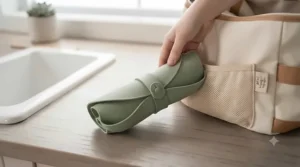
The Tommee Tippee Easi-Roll Bib is built around portability first. Its flexible silicone rolls into a compact cylinder that clips or tucks easily into a diaper bag side pocket, which matters more than it sounds once you’re feeding a baby at a restaurant, a relative’s house, or the back seat of a car.
Based on the spec comparison, the wide, flexible neckline is designed to slip over a baby’s head without needing snaps or velcro at all, which speeds up the process considerably when you’re feeding on the move and don’t have a free hand to fuss with a clasp. Reviewers commonly note the catch pocket performs well for typical snack-time messes, though it’s slightly shallower than the OXO Tot equivalent, so it’s better suited to lighter feeding sessions than a full self-feeding free-for-all. Parents who eat out often or travel with young children tend to rate this one highest for convenience over raw mess-catching capacity.
Pros:
- ✅ Rolls compactly for diaper bags and travel kits
- ✅ No-clasp neckline speeds up on-the-go feeding
- ✅ Wipes clean in seconds after light messes
Cons:
- ❌ Shallower pocket than dedicated BLW-focused silicone bibs
- ❌ Less structured, so it can flop during heavy messes
At around C$20-C$25 for a two-pack, it’s a solid pick for families prioritizing convenience over maximum mess containment — verify pricing before you buy since packs vary by retailer.
5. BabyBjörn Baby Bib — best for long-term durability
The BabyBjörn Baby Bib takes a different material approach entirely — a soft, coated plastic rather than silicone — and it shows in how the bib holds its shape meal after meal, year after year. The rigid pocket rim doesn’t sag or collapse the way softer materials can, which reviewers highlight as the standout reason this bib remains popular despite the higher price tag.
What the spec sheet won’t tell you, but long-term owners note, is that this material resists staining and odour retention noticeably better than cheaper vinyl alternatives, meaning the bib still looks presentable after months of regular use rather than yellowing or smelling faintly of old milk. The snap closure is sturdy rather than flexible, so it’s a slightly firmer fit around the neck — worth knowing if your baby dislikes snug closures. This is the pick for parents who’d rather pay more once than replace a cracked bib every few months.
Pros:
- ✅ Rigid pocket holds shape through heavy use
- ✅ Resists staining and odour better than vinyl rivals
- ✅ Genuinely dishwasher-safe without warping over time
Cons:
- ❌ Premium price relative to silicone competitors
- ❌ Firmer closure feels snugger around the neck
Expect to pay in the C$30-C$40 range for a two-pack, making this the premium option in this roundup — check current pricing, as European-manufactured baby gear can see more price movement than domestic brands.
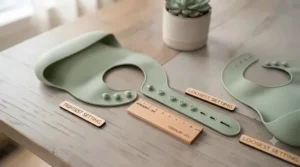
6. Copper Pearl Premium Baby Burp Cloths — best burp cloths for newborns
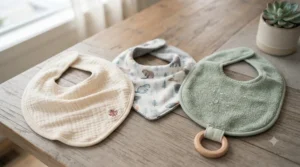
Shifting from bibs to burp cloths, the Copper Pearl Premium Baby Burp Cloths are one of the most consistently recommended options among the best burp cloths for newborns, and the three-layer cotton construction explains why. The middle layer is specifically designed for absorbency, while the outer layers stay soft against a newborn’s sensitive skin and a parent’s shoulder alike.
Based on the spec comparison, the 21-by-10-inch size is noticeably larger than the generic burp cloths bundled into many baby-shower gift sets, which matters because newborn spit-up rarely stays contained to a small square of fabric. Reviewers frequently mention that the layered design absorbs a full spit-up event without soaking through to your shirt, a common complaint about thinner single-layer cloths. For newborn households doing frequent burping sessions around the clock, the extra coverage and absorbency genuinely reduce the number of outfit changes per day.
Pros:
- ✅ Three-layer design absorbs without soaking through
- ✅ Larger size covers more of shoulder and clothing
- ✅ Soft cotton gentle on newborn skin
Cons:
- ❌ Smaller three-pack means more frequent laundry
- ❌ Higher per-cloth cost than bulk muslin packs
Priced around C$25-C$30 for three cloths, it’s a reasonable investment for the newborn stage specifically — check the current price, as pack sizes and designs rotate seasonally.
7. Comfy Cubs Muslin Burp Cloths — best bulk value for newborn essentials
The Comfy Cubs Muslin Burp Cloths solve a different problem than the Copper Pearl option above: sheer quantity. With six layers of muslin cotton per cloth and packs typically running six to ten cloths, this is the practical choice for parents who’d rather do laundry twice a week instead of twice a day.
What most buyers overlook about six-layer muslin specifically is that it’s more breathable than terry cloth or single-layer cotton, which matters in warmer months when a newborn is already prone to overheating during feeds. Aggregated review sentiment points to strong absorbency for typical spit-up volumes, though a few reviewers note the muslin can feel slightly thinner initially before it’s been washed a few times and the layers settle. Given the low per-unit cost, having a larger rotation on hand tends to matter more for day-to-day sanity than any single cloth’s individual performance.
Pros:
- ✅ Six-layer muslin absorbs well while staying breathable
- ✅ Bulk pack size reduces daily laundry pressure
- ✅ Machine washable without significant shrinkage
Cons:
- ❌ Feels thinner than terry cloth before initial washes
- ❌ Solid colours show staining more visibly than patterns
At under C$25 for a ten-pack, this is one of the best cost-per-cloth values in the entire roundup — as always, confirm current pricing before ordering.
Baby Feeding Mess Tips: Your Room-by-Room Survival Plan
Even the best bib in the world won’t stop every drip, so a few practical baby feeding mess tips go a long way toward protecting your floors, walls, and sanity. Start with the floor: a simple splash mat or an old shower curtain under the high chair catches the food that misses the bib entirely, and it wipes clean in seconds rather than requiring you to scrub grout lines after every meal.
For the high chair itself, wipe down the tray immediately after each session rather than letting purée dry into the crevices — dried food is exponentially harder to remove than fresh food, and a warm damp cloth right after mealtime saves real time later. If you’re using a fabric bib, keep a stain-treatment spray near the laundry hamper and treat spots before they set rather than tossing the bib straight into a pile; tomato-based foods and berries are the worst offenders and set into fabric within hours. And if your baby is deep in baby led weaning, consider a short-sleeve smock over a standard bib during particularly messy meals like spaghetti or curry — the extra sleeve coverage prevents the “clean bib, ruined sleeves” scenario that catches a lot of parents off guard the first time.
Real-World Scenarios: Matching Bibs to Your Baby’s Stage
Picture a newborn who’s mostly bottle or breastfeeding with the occasional spit-up between burps — this family doesn’t need a heavy-duty pocket bib at all. A stack of Comfy Cubs Muslin Burp Cloths draped over the shoulder during and after feeds covers this stage completely, and the low cost per cloth means losing one in the laundry rotation isn’t a crisis.
Now picture a six-month-old just starting baby led weaning, hands-first into mashed sweet potato and steamed broccoli spears. This is exactly where the OXO Tot Waterproof Silicone Roll Up Bib earns its keep — the deep pocket and wipeable surface are built for this specific chaos, and the seamless design means nothing gets trapped and forgotten until bath time. Finally, consider a busy family with a toddler who eats out frequently and needs something compact for grandma’s house or a restaurant high chair — the Tommee Tippee Easi-Roll Bib rolls small enough to live permanently in the diaper bag without adding bulk, solving the “I forgot the bib” problem that plagues most families at least once.
Problem-Solving Guide: Fixing the Most Common Bib Frustrations
Problem: the bib keeps sliding off or popping open mid-meal. This usually comes down to closure type — snap closures that are too loose for your baby’s neck size will pop open under movement. Sizing down or switching to an adjustable-strap style like the Happy Healthy Parent EZ-Clean Silicone Bib solves this in most cases.
Problem: the pocket doesn’t actually catch anything. Flat bibs without a structured pocket rim were never designed to catch dropped food in the first place — they’re meant for drool and drips, not baby led weaning debris. Swapping to a rigid-pocket style like BabyBjörn Baby Bib or OXO Tot Waterproof Silicone Roll Up Bib fixes this directly.
Problem: cloth bibs stay damp and start to smell. This is typically a drying issue rather than a quality issue — thick, layered fabric needs to fully air dry, not just cycle through the dryer once, or moisture gets trapped in the inner layers. Problem: silicone bibs feel stiff and uncomfortable on a newborn’s neck. Softer, more pliable silicone designed for younger babies, rather than firmer toddler-oriented silicone, solves this — check the manufacturer’s recommended age range before assuming all silicone bibs feel the same.
How to Choose the Best Baby Bibs
Picking the right bib comes down to a handful of practical decision points rather than brand loyalty:
- Match the material to your baby’s stage. Newborns mostly need absorbent cloth for drool and spit-up; babies starting solids need a wipeable, structured pocket.
- Check the closure type for comfort and security. Soft adjustable straps generally suit younger babies better than firm snap closures.
- Look at pocket depth, not just presence. A shallow pocket barely outperforms no pocket at all once real BLW mess enters the picture.
- Consider cleanup method realistically. If you’re not going to hand-wash something daily, prioritize dishwasher-safe or machine-washable options.
- Factor in portability if you’re often out. Roll-up or foldable designs matter more than mess-catching depth for families who eat out frequently.
- Don’t overlook sizing and age range. A bib that fits for only two months isn’t the value it appears to be at first glance.
- Buy in the quantity your laundry schedule can support. A single premium bib means daily washing; a larger multi-pack buys you breathing room.
Silicone Bib vs Cloth Bib for Baby Led Weaning
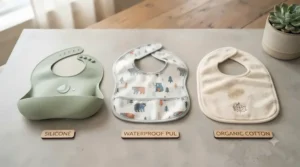
The silicone bib vs cloth bib for baby led weaning debate isn’t really about which material is “better” in the abstract — it’s about which trade-off suits your household. Silicone bibs, like the OXO Tot Waterproof Silicone Roll Up Bib, wipe clean in seconds and hold a structured pocket shape that actually catches dropped food, which is the exact scenario baby led weaning creates multiple times per meal. The trade-off is a firmer, sometimes stiffer feel against the skin, and a noticeable “new silicone” smell for the first few uses that a small number of reviewers mention taking a wash or two to fade.
Cloth bibs, including waterproof laminated options like the Bumkins SuperBib, tend to feel softer against a baby’s neck and are simpler to machine wash alongside regular laundry rather than requiring a separate rinse routine. According to Dietitians of Canada’s guidance on baby-led weaning as an approach that lets babies feed themselves rather than being spoon-fed purées, the method inherently produces more hands-on mess than traditional spoon-feeding — which tips the practical balance toward silicone for most families actively doing BLW, while cloth remains perfectly adequate for babies still transitioning from purées. If your baby is newly starting solids with mostly smooth purées, cloth is fine; once finger foods and self-feeding ramp up, silicone earns its keep.
Muslin vs Terry Cloth Burp Cloth: Which Wins for Newborns
The muslin vs terry cloth burp cloth question comes down to breathability versus raw absorbency. Muslin, like the fabric used in the Comfy Cubs Muslin Burp Cloths, is a lightweight, loosely woven cotton that becomes more absorbent as layers are stacked — typically four to six layers in a quality burp cloth — while staying breathable enough not to trap heat against a newborn’s chest during a long feeding session.
Terry cloth, by contrast, is a looped weave (the same fabric used in bath towels) that tends to hold more liquid per single layer, making it marginally more absorbent for one big spit-up event, but it’s bulkier, less breathable, and can feel rougher against extremely sensitive newborn skin. Reviewers consistently favour multi-layer muslin for the newborn stage specifically because of the softness factor, reserving terry cloth more for older babies or heavier-duty cleanup jobs like bath time rather than close, repeated skin contact. For most newborn households, a mixed rotation — a few premium three-layer cloths like the Copper Pearl Premium Baby Burp Cloths for going out, and a bulk muslin pack like Comfy Cubs Muslin Burp Cloths for home — covers both needs without overspending on either.
Features That Actually Matter (And Those That Don’t)
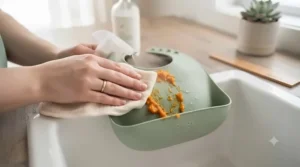
A waterproof bib with pocket for BLW needs exactly a few things to actually work: a pocket rim stiff enough to stay open under the weight of dropped food, a wipeable surface that doesn’t absorb liquid into the material itself, and a closure that stays put through an active meal. Beyond that, extra features like decorative embroidery, novelty shapes, or branded packaging add cost without adding function — they’re nice, not necessary.
Easy-clean baby bib material is really about surface porosity more than brand reputation. Silicone and laminated polyester both resist staining because liquid sits on top of the material rather than soaking in, which is why both the OXO Tot Waterproof Silicone Roll Up Bib and Bumkins SuperBib wipe clean quickly despite being made from completely different substances. Untreated cotton or thin vinyl, by comparison, either absorbs staining pigments directly or cracks and peels after repeated washing, losing its water resistance over time. If minimal cleanup effort is your top priority, prioritize any bib explicitly marketed as food-grade silicone or laminated fabric over generic “waterproof” cotton claims, which don’t always hold up to real testing.
Baby Bibs for Different Ages and Feeding Stages
Newborns (0-4 months) are mostly dealing with drool and milk spit-up rather than food mess, so soft, absorbent cloth options like burp cloths do most of the heavy lifting during this stage, with an occasional light bib for particularly drooly babies. Babies starting solids (around 6 months, per Health Canada’s recommendation to introduce complementary foods at about six months of age) benefit most from a structured pocket bib, whether cloth or silicone, since purées and early finger foods both create genuine mess for the first time.
Toddlers deep into self-feeding (12 months and up) generally do best with full-coverage or long-sleeve smock-style bibs during particularly messy meals, since their independence has outpaced their aim. And for older toddlers who resist wearing a bib at all, a simpler wipeable placemat paired with a smaller catch-pocket bib often gets more cooperation than forcing a full smock every single meal — sometimes the best bib is the one your toddler will actually tolerate wearing.
Common Mistakes When Buying Baby Bibs
One of the most common mistakes is buying based on cute prints rather than closure type and pocket depth — a beautifully patterned bib with a flimsy pocket won’t outperform a plain one that’s actually structured to catch food. Another frequent misstep is buying only one size or style and expecting it to last from newborn through toddlerhood; feeding mess evolves dramatically as babies grow, and the gear should evolve with it.
Parents also commonly underestimate quantity needs, buying a single bib and hand-washing it daily rather than a small rotation that survives a normal laundry cycle — which usually leads to reaching for whatever’s clean rather than what’s actually right for the meal. Finally, some parents assume “waterproof” claims are equivalent across brands, when in practice materials like laminated polyester and silicone perform very differently from thin vinyl coatings that crack within a few months of regular washing.
Safety, Regulations & Compliance for Baby Feeding Gear
Baby feeding gear in Canada is generally regulated under consumer product safety rules enforced by Health Canada, and it’s worth paying attention to product safety news even for something as simple as a bib. Health Canada has recalled baby products over safety concerns in the past, and staying aware of active recalls is a reasonable habit for any parent buying feeding gear online. More specifically relevant to feeding equipment, Health Canada has warned that certain infant self-feeding devices sold online pose choking and aspiration hazards and are banned in Canada — a reminder that any product marketed as letting a baby feed unsupervised, bib or otherwise, deserves extra scrutiny.
For bibs specifically, look for food-grade silicone that’s explicitly labelled BPA-free, and check that fabric bibs use non-toxic, phthalate-free coatings — reputable brands typically disclose this on the product listing itself. Regardless of bib quality, never leave a baby unattended while eating, since a bib is a mess-management tool, not a safety device, and supervision remains the actual line of defence against choking during any feeding stage.
Frequently Asked Questions
❓ What's the best material for a baby bib?
❓ How many bibs does a newborn actually need?
❓ Are silicone bibs safe for babies?
❓ Can baby bibs go in the dishwasher?
❓ What's the difference between a bib and a burp cloth?
Conclusion
There’s no single best baby bibs pick that fits every household — the right choice depends entirely on your baby’s feeding stage, how messy your specific mealtimes get, and how much laundry you’re realistically willing to do. Newborn households lean on absorbent burp cloths like Comfy Cubs Muslin Burp Cloths and Copper Pearl Premium Baby Burp Cloths; baby led weaning families get the most mileage out of structured silicone options like the OXO Tot Waterproof Silicone Roll Up Bib or budget-friendly Happy Healthy Parent EZ-Clean Silicone Bib; and families wanting one durable, long-term option often land on BabyBjörn Baby Bib or the endlessly practical Bumkins SuperBib.
Whatever you choose, remember that gear is only half the equation — a few smart baby feeding mess tips and a bit of supervision do more for your sanity (and your laundry pile) than any single product ever will. Start with the stage you’re actually in right now, not the one you’re planning for six months from now, and adjust as your baby’s feeding style evolves.
✨ Don’t Miss These Exclusive Deals!
🔍 Take your feeding routine to the next level with these carefully selected picks. Click on any highlighted item to check current pricing and availability on amazon.ca. These bibs and burp cloths will help you handle mealtime messes your whole family will appreciate!
Recommended for You
- Best baby food maker 2026: 7 Picks Canadian Parents Actually Trust
- Best Sippy Cup 2026: 7 Top Picks Canadian Parents Trust
- 7 Best Baby Utensils in 2026: Self-Feeding Spoons Parents Trust
Disclaimer: This article contains affiliate links. As an Amazon Associate, I earn from qualifying purchases. If you purchase products through these links, we may earn a small commission at no additional cost to you.
✨ Found this helpful? Share it with your friends! 💬🤗
