In This Article
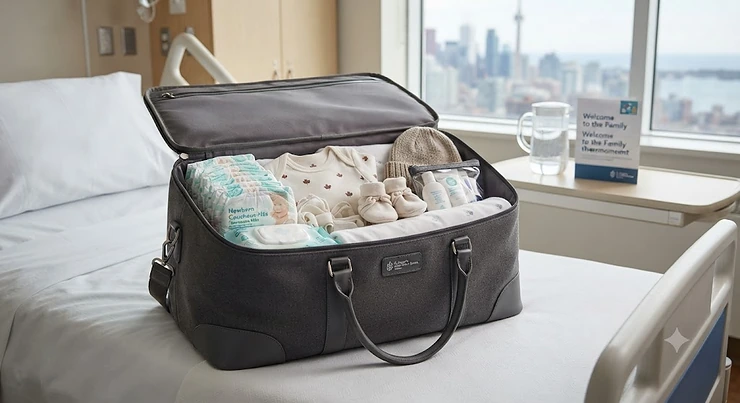
Somewhere between the 34-week appointment and the “is this actually happening” phone call to your partner, most Canadian parents realize they have no idea which newborn diapers for hospital bag packing actually make sense. It’s a fair confusion. Diaper aisles are a wall of cartoon animals and marketing promises, and your baby hasn’t even told you their birth weight yet. What is a newborn diaper for a hospital bag? It’s a diaper sized specifically for babies under roughly 4.5 kg (10 lbs), typically featuring a cutout or contoured front that keeps pressure off the healing umbilical cord stump — distinct from the diapers most Canadian hospitals stock for your stay. Most hospitals do supply a few diapers, but they’re often a single generic brand, and if your baby arrives smaller (or bigger) than expected, having your own pack on hand saves a 2 a.m. scramble. This guide walks through seven real, purchasable options, breaks down newborn diaper sizing guide logic by weight, and covers the umbilical cord cutout diapers question that trips up almost every first-time parent. We’ll also get into honest packing strategy, common mistakes, and the cost side of things so you’re not blindsided by your first Costco run. None of this is about brand loyalty — it’s about matching a diaper’s real specs to what a newborn’s first weeks actually look like.
Quick Comparison Table: Newborn Diapers for Hospital Bag at a Glance
| Diaper | Weight Range | Umbilical Cutout | Price Range (CAD) | Best For |
|---|---|---|---|---|
| Pampers Swaddlers | Up to 4.5 kg (10 lbs) | Yes (notched design) | Around C$15–C$25 | Best all-round hospital pick |
| Huggies Little Snugglers | Up to 4.5 kg (10 lbs) | Yes, explicit cutout | Around C$15–C$24 | Best wetness indicator |
| Honest Company Clean Conscious | Newborn range | Yes, belly button cutout | C$18–C$28 range | Best plant-based option |
| Bambo Nature Premium | 2–4.5 kg (4–9 lbs) | Contoured fit | C$20–C$32 range | Best eco-certified premium |
Scanning this table, a pattern jumps out fast: nearly every reputable newborn line now builds in some form of umbilical protection, so cutout availability isn’t really the differentiator it used to be five years ago. What separates these four is fit precision and skin-contact material — the Bambo Nature Premium line trades a higher price range for Nordic Swan-certified materials, while Pampers Swaddlers and Huggies Little Snugglers compete mostly on absorbency claims and wide retail availability. If your baby is expected on the smaller side, weight range matters more than brand name, which is exactly why the sizing section further down deserves real attention before you buy in bulk.
💬 Just one click — help others make better buying decisions too!😊
Top 7 Newborn Diapers for Hospital Bag: Expert Analysis
Hospitals stock diapers, but they’re rationed and rarely your first choice for sensitive newborn skin. Below are seven real, currently available options spanning budget drugstore staples to premium eco-certified picks, each assessed on fit, materials, and what aggregated reviewer sentiment actually says — not marketing copy.
1. Pampers Swaddlers — best all-rounder for hospital and first weeks home
Pampers Swaddlers in the Newborn size (up to roughly 4.5 kg / 10 lbs) is the diaper most Canadian hospitals default to, and there’s a practical reason for that: Pampers builds a notched front specifically so parents can keep the diaper below a healing umbilical cord without cutting or folding anything themselves. The absorbent core uses a quilted liner designed to pull moisture away quickly, which matters in the first days when newborns can wet a diaper every hour or two. Based on the spec comparison against other mainstream brands, Pampers Swaddlers leans toward a snugger leg-cuff fit than some competitors, which reduces blowout risk but can run slightly narrow on babies with fuller thighs. Reviewers consistently report strong satisfaction with the overnight dryness and softness, and the brand’s own newborn-specific line has become something of a default registry item across Canada. What most buyers overlook is that the “Newborn” size still needs re-evaluating around the two-week mark — a baby gaining weight quickly can outgrow it faster than the box count suggests.
Pros:
- ✅ Notched design keeps pressure off the umbilical cord
- ✅ Widely available at Canadian pharmacies and Amazon.ca
- ✅ Strong absorbency reputation among reviewers
Cons:
- ❌ Runs narrow on babies with a fuller build
- ❌ Contains fragrance-free but not fully plant-based materials
Price sits in the C$15–C$25 range for a standard newborn pack, and given the brand’s consistency and hospital familiarity, it’s a reasonable default for anyone who wants one less decision on their plate.
2. Huggies Little Snugglers — best for wetness-indicator convenience
Huggies Little Snugglers, sized for babies up to about 4.5 kg (10 lbs), is the other diaper Canadian hospitals commonly stock, and it distinguishes itself with an explicit umbilical cord cutout plus a wetness indicator strip that changes colour when it’s time for a change. For sleep-deprived parents, that colour cue genuinely reduces guesswork during the newborn stage, when output can be unpredictable. The pocketed back waistband is engineered specifically to contain the runnier, more frequent newborn stool that catches a lot of first-time parents off guard. On paper this means fewer up-the-back blowouts compared with diapers that rely purely on standard leg cuffs. Reviewers frequently note the diaper’s softness against sensitive skin, though a subset flag that the fit runs slightly looser around the waist than Pampers Swaddlers, which can matter for smaller preemie-adjacent babies. What the spec sheet won’t tell you, but user reports suggest, is that sizing up isn’t automatic just because a baby feels “big” — the printed weight range is a better guide than instinct in the first month.
Pros:
- ✅ Wetness indicator strip simplifies change timing
- ✅ Pocketed waistband reduces back blowouts
- ✅ Explicit umbilical cutout for both preemie and newborn sizes
Cons:
- ❌ Waist fit runs looser than some competitors
- ❌ Limited print/design variety compared to boutique brands
Expect a price in the C$15–C$24 range, positioning it as a near-identical value trade-off to Pampers Swaddlers — the choice mostly comes down to whether the wetness indicator or the notch design matters more to you.
3. Honest Company Clean Conscious Diapers — best plant-based mainstream pick
Honest Company Clean Conscious Diapers in the Newborn size ship with what the brand calls a belly button cutout, purpose-built to keep the diaper’s front panel clear of a healing umbilical stump. The backsheet is made from plant-based materials, and the core uses sustainably sourced, totally chlorine-free fluff pulp, which appeals to parents trying to minimize skin contact with processed materials in the first fragile weeks. Based on the spec comparison, this line sits in a middle tier — more consciously sourced than Pampers Swaddlers or Huggies Little Snugglers, but not as heavily eco-certified as Bambo Nature. Reviewers consistently note the soft texture and the appeal of the seasonal print designs, though some parents report the diaper feels slightly thinner than mainstream competitors, which can translate to more frequent changes for heavy overnight wetters. Aggregated sentiment also flags a wetness indicator as a helpful, expected feature at this price point. Here’s what to weigh: if avoiding certain processed additives is a priority for your family, the plant-based backsheet is a genuine differentiator, not just marketing language.
Pros:
- ✅ Plant-based backsheet and chlorine-free core materials
- ✅ Wetness indicator included at every size
- ✅ Fun, sensory-friendly print designs for newborn stage
Cons:
- ❌ Feels thinner than some mainstream competitors
- ❌ Availability can be inconsistent across Canadian retailers
Price typically falls in the C$18–C$28 range depending on pack size, a reasonable premium for parents prioritizing ingredient transparency without jumping to a fully boutique brand.
4. Seventh Generation Free & Clear Newborn — best for sensitive-skin reassurance
Seventh Generation Free & Clear Newborn diapers are built around a straightforward promise: 0% chlorine bleaching, no added lotions, and no fragrance, with an unbleached cotton-quilted liner specifically in the Newborn through Size 2 range. That liner detail matters because it’s a deliberate design choice aimed at the smallest, most sensitive skin stage — larger sizes drop the unbleached liner once skin tends to toughen up. The absorbent fluff pulp is FSC-certified, meaning it’s sourced from managed forests rather than unregulated logging, which is a genuine sustainability claim rather than vague “eco-friendly” branding. Reviewers consistently highlight the softness of that unbleached liner and describe fewer rash flare-ups compared with scented or heavily processed alternatives, though a common complaint in user reviews is that the tabs feel less sturdy under repeated re-fastening, something new parents do constantly while checking a fussy newborn. What most buyers overlook is that “Free & Clear” doesn’t mean lower absorbency — the core is still rated for extended wear, just without the additive load some competitors include.
Pros:
- ✅ Unbleached cotton liner exclusive to smallest sizes
- ✅ Zero fragrance, lotion, or chlorine bleaching
- ✅ FSC-certified sustainably sourced fluff pulp
Cons:
- ❌ Fastening tabs feel less durable with repeated adjustment
- ❌ Fewer print/design options than mainstream brands
Price generally lands in the C$17–C$27 range, making it a reasonable mid-tier pick for families managing eczema-prone skin or a family history of diaper sensitivity.
5. Bambo Nature Premium Baby Diapers — best eco-certified premium option
Bambo Nature Premium Baby Diapers, sized for babies in the 2–4.5 kg (4–9 lb) newborn range, carries some of the most rigorous third-party certifications in the category: the Nordic Swan Ecolabel and Danish Asthma and Allergy Association approval, alongside FSC certification for its fluff pulp sourcing. The three-layer absorbent core is engineered to withstand multiple wettings without compromising overnight comfort, and the backsheet is fully breathable, which reduces the trapped-heat feeling that can aggravate newborn skin irritation. Based on the spec comparison, Bambo Nature sits at the top of this list for verified allergen-free claims — its certifications are independently audited rather than self-reported, a distinction worth knowing given how loosely “hypoallergenic” gets used industry-wide. Aggregated reviewer sentiment describes the fit as reliable and the wetness indicator as accurate, with some parents specifically switching to this line after rash issues with other brands. A common complaint in user reviews is availability: pack sizes on Amazon.ca can run smaller than competitors’, pushing the effective per-diaper cost higher. What the spec sheet won’t tell you, but reviewers note, is that the diaper’s slim profile fits well under tight newborn clothing, a small but real convenience during frequent hospital-stay outfit changes.
Pros:
- ✅ Nordic Swan and allergy-association certifications
- ✅ Fully breathable backsheet reduces skin irritation
- ✅ Accurate wetness indicator per reviewer reports
Cons:
- ❌ Higher cost-per-diaper than mainstream brands
- ❌ Smaller pack sizes common on Amazon.ca
Expect a price range of roughly C$20–C$32 depending on pack count, positioning Bambo Nature as the premium pick for parents prioritizing certified materials over raw cost-per-change.
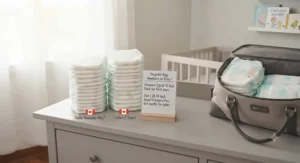
6. Andy Pandy Premium Bamboo Disposable Diapers — lightest eco-friendly alternative
Andy Pandy Premium Bamboo Disposable Diapers, available in a Newborn size for babies roughly 2.3–4.5 kg (5–10 lbs), is a lesser-known but genuinely interesting option: a bamboo-viscose top and back sheet paired with an FSC-certified, totally chlorine-free wood pulp core. It’s one of the few newborn diaper lines sold specifically through Amazon.ca as a dedicated Canadian storefront rather than a cross-border listing, which simplifies shipping and availability for Canadian parents. The bamboo viscose material is naturally moisture-wicking and breathable, and the brand also includes an aloe-infused liner in some packs aimed at reducing friction irritation. On paper this means a softer surface-feel than standard synthetic top sheets, which reviewers consistently mention as the standout quality versus mainstream competitors. What most buyers overlook is that bamboo-based diapers, while marketed as biodegradable, still require standard disposal — the material composts faster in ideal industrial conditions than in a typical Canadian landfill, so the environmental benefit is real but shouldn’t be overstated. A common complaint in user reviews centres on inconsistent stock availability, since the brand is smaller than the Pampers or Huggies supply chain.
Pros:
- ✅ Bamboo viscose top sheet feels notably softer
- ✅ Chlorine-free, FSC-certified absorbent core
- ✅ Dedicated Canadian Amazon.ca availability
Cons:
- ❌ Stock availability less consistent than major brands
- ❌ Biodegradability claims are conditional on disposal method
Price typically falls in the C$16–C$26 range, making it a reasonably priced eco alternative for parents who want a bamboo-based option without the premium pricing of some boutique competitors.
7. Coterie Baby Diapers — best premium, ultra-thin option for sensitive newborns
Coterie Baby Diapers, offered in a Newborn size bundled in kit form with wipes on Amazon.ca, positions itself at the top of the market with plant-based fibers, a hypoallergenic design, and clean-ingredient claims backed by third-party testing. The diaper’s construction leans toward an ultra-thin profile compared to every other product on this list, which appeals to parents dressing newborns in snug going-home outfits or navigating hospital-issued swaddles. Based on the spec comparison, Coterie trades bulk absorbency capacity for surface comfort and slimness — a reasonable trade during the newborn stage when diaper changes happen roughly every two hours regardless of brand. Reviewers consistently describe the diaper as noticeably softer and less crinkly than drugstore alternatives, with several specifically citing reduced redness on sensitive-skinned babies after switching. What the spec sheet won’t tell you, but reviewers note, is that the higher price reflects genuine material differences, not just premium branding — clean-ingredient claims here are independently tested rather than self-certified. The trade-off is straightforward: this is the most expensive option on the list, and budget-focused families may find the cost difficult to sustain past the newborn stage.
Pros:
- ✅ Ultra-thin profile fits snugly under newborn outfits
- ✅ Independently tested clean-ingredient claims
- ✅ Reviewers report reduced irritation on sensitive skin
Cons:
- ❌ Highest price point among the seven options
- ❌ Bundle-style packaging limits standalone flexibility
Price for Coterie generally sits in the C$28–C$40 range for a comparable newborn pack, making it best suited to parents prioritizing skin comfort over cost-per-change.
Practical Usage Guide: Packing and Using Newborn Diapers in Your Hospital Bag
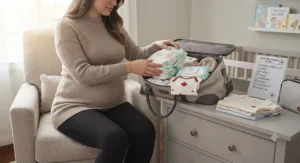
Packing diapers for a hospital bag isn’t just “grab a pack and go.” Start with quantity: newborns can go through 10–12 diaper changes daily in the first week, so packing a minimum of one small newborn pack (roughly 20–30 diapers) covers a typical one-to-three-day stay with buffer room, whether it’s a vaginal delivery or you’re preparing a c-section-specific bag with a slightly longer expected stay. Choose a size based on estimated birth weight from your prenatal ultrasounds, but pack loosely — if your provider suspects a larger or smaller baby, bring a few diapers in the adjacent size too, since hospital-provided stock may not match your baby’s actual measurements on day one. Once home, the first 30 days come with a predictable learning curve: expect frequent size-checks, since a properly fitted diaper should sit below the belly button with the umbilical cutout (or a folded-down front) clear of the stump, and the leg cuffs snug but not leaving red marks. A common early mistake is over-tightening the diaper to prevent leaks, which instead creates chafing; the fix is usually sizing up rather than fastening tighter. Maintenance-wise, store your hospital bag pack somewhere temperature-stable — heat and humidity can degrade the elastic in leg cuffs over the weeks before your due date arrives.
Real-World Scenarios: Matching Newborn Diapers to Your Hospital Bag Plan
Consider a first-time parent packing for a scheduled induction at 39 weeks with a known estimated birth weight around 3.4 kg. In this case, a standard Newborn-size pack of Huggies Little Snugglers or Pampers Swaddlers covers the likely hospital stay comfortably, and the wetness indicator on the Huggies option can ease the learning curve during exhausted overnight feeds. Now picture a parent expecting a smaller baby, perhaps due to a growth-restriction flag noted at a late ultrasound — here, checking that a chosen diaper’s weight range extends low enough (like Andy Pandy’s 2.3 kg starting point or Bambo Nature’s 2 kg minimum) avoids a mismatch that leaves a newborn swimming in a diaper meant for a 4 kg baby. Finally, consider a parent managing a family history of eczema or reactive skin, planning a longer postpartum stay after a c-section. That scenario favours Seventh Generation Free & Clear or Coterie, where the reduced additive load and softer materials lower the odds of irritation compounding an already tender recovery period. None of these scenarios require guessing — matching the diaper’s actual spec sheet to your specific delivery plan and baby’s expected size takes the emotion out of a decision that often gets made in a rushed hospital-bag-packing session.
Problem → Solution: Common Newborn Diapering Issues
Problem: The diaper leaks constantly during the first week. This is almost always a sizing issue, not a brand-quality issue — newborn output volume surprises most parents, and even a well-reviewed diaper like Pampers Swaddlers will leak if the weight range has been outgrown. Solution: size up one increment before assuming the brand is at fault.
Problem: Redness or irritation around the umbilical cord area. Solution: confirm the diaper’s cutout or contour is actually clearing the stump rather than resting against it, and switch to a plant-based option like Honest Company Clean Conscious if scented or heavily processed materials seem to be a factor.
Problem: Blowouts up the back. Solution: prioritize diapers with a pocketed or reinforced back waistband, such as Huggies Little Snugglers, and double-check the leg cuffs are fully unfolded rather than tucked inward during changes.
Problem: Diaper feels bulky under going-home or hospital photo outfits. Solution: an ultra-thin option like Coterie solves this specific cosmetic concern without sacrificing core absorbency.
Problem: Concern about chemical exposure on newly healed skin. Solution: choose a certified line like Bambo Nature, whose Nordic Swan and allergy-association certifications are independently audited rather than self-reported marketing claims.
How to Choose Newborn Diapers for Your Hospital Bag
- Confirm the weight range against your due-date estimate. Ultrasounds aren’t exact, so check that your chosen diaper’s range comfortably brackets your baby’s projected birth weight, not just the midpoint.
- Check for an umbilical cutout or contoured front. Nearly every reputable newborn line includes one now, but confirm it explicitly rather than assuming — some “Size 1” diapers skip this feature entirely.
- Match materials to your skin-sensitivity risk. Family history of eczema or reactive skin points toward unscented, chlorine-free options like Seventh Generation or Honest Company.
- Decide on budget tier before falling for packaging. Premium options like Coterie and Bambo Nature cost meaningfully more per change; know your comfort zone before you’re standing in a store aisle at 38 weeks pregnant.
- Pack a backup size. Bringing a small pack in the next size up hedges against a bigger-than-expected baby without needing a hospital-run at 2 a.m.
- Prioritize wetness indicators if you’re anxious about change timing. Both Huggies Little Snugglers and Honest Company include this feature, which reduces first-week guesswork.
- Research current Amazon.ca stock and price ranges before your due date, since smaller brands like Andy Pandy can have inconsistent availability compared to major retailers.
Newborn Diaper Sizing Guide: Weight-Based Sizing Explained
Newborn diaper sizing is built entirely around weight, not age, which surprises a lot of first-time parents expecting a straightforward “0-3 months” label. Most Canadian-available Newborn sizes top out around 4.5 kg (10 lbs), while some brands — Bambo Nature and Andy Pandy among them — start their lowest size closer to 2 kg (4–5 lbs), which matters for babies born early or on the smaller end of full-term. Newborn weight-based sizing exists because a diaper’s leg cuffs, waistband elastic, and absorbent core are all calibrated to a specific weight band; a diaper too large leaves gaps where leaks escape, while one too small creates pressure marks and reduced absorbency capacity. The Canadian Paediatric Society and provincial health resources generally note that healthy full-term newborns lose up to 7–10% of birth weight in the first few days before regaining it by around two weeks, which is exactly why many babies temporarily need a snugger fit shortly after birth than their birth-weight label suggests. Practically, this means checking fit weekly during the first month rather than assuming the box size holds steady — a baby born at 3.6 kg might comfortably wear Newborn-size diapers for two to four weeks before graduating to Size 1, depending on individual growth pace and the specific brand’s cut.
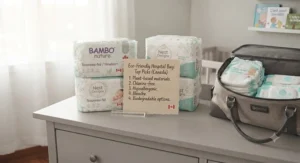
Umbilical Cord Cutout Diapers: Why They Matter
Umbilical cord cutout diapers exist to solve one specific problem: a healing umbilical stump is sensitive tissue, and constant pressure or friction from a diaper’s front panel can irritate it, slow healing, or increase infection risk. According to guidance from MyHealth Alberta, keeping the stump area clean, dry, and exposed to air is central to helping it detach naturally, typically within one to three weeks of birth. A dedicated cutout — as seen on Pampers Swaddlers, Huggies Little Snugglers, Honest Company, and most other newborn-specific lines on this list — achieves that by leaving a semicircular gap in the front waistband, so the diaper sits below the stump rather than across it. If a chosen diaper lacks this feature, the practical workaround is folding the front panel down before fastening, which most provincial health resources also recommend as an acceptable alternative. What most buyers overlook is that the cutout isn’t just a comfort feature — it directly supports the “keep it dry” guidance that health professionals emphasize, since urine trapped against a healing stump is a common, preventable irritation source in the first two weeks.
Common Mistakes When Buying Newborn Diapers for Your Hospital Bag
The most frequent mistake is overbuying a single size before birth. Babies’ actual weights can differ meaningfully from prenatal estimates, and a closet full of Newborn-size diapers becomes a problem if your baby arrives at 4.2 kg and outgrows them within days. A second common error is assuming all “newborn” labeling means the same weight range — as this comparison shows, ranges genuinely differ by several hundred grams between brands, so cross-checking the actual printed range matters more than the size label alone. Third, some parents skip checking for the umbilical cutout entirely, assuming every diaper includes one; a handful of budget or private-label lines still don’t. Fourth, buying the cheapest bulk option without considering skin sensitivity can backfire if a baby turns out to have reactive skin, leading to a rushed, more expensive brand swap during an already exhausting first week. Finally, many parents forget that hospital-bag diapers don’t need to be a lifetime supply — packing a modest amount for the stay itself, then reassessing brand and size once home and able to observe real fit and skin response, avoids both waste and unnecessary stress.
Newborn Diapers vs Regular Size 1 Diapers
The core difference between a true newborn diaper and a Size 1 diaper comes down to calibration, not just size labeling. Newborn diapers are engineered around a narrower weight band — typically up to 4.5 kg — with a proportionally smaller absorbent core, tighter leg-cuff elastic, and, critically, the umbilical cutout most Size 1 diapers drop entirely. Size 1 diapers, covering roughly 3.6–6.4 kg depending on brand, assume a healed umbilical area and a slightly more mobile baby, so they prioritize broader absorbency capacity over the precision fit newborn sizes offer. Feature-by-feature, this means a baby still within the newborn weight range wearing a Size 1 diaper risks gapping at the legs and losing the umbilical protection, while a baby who’s outgrown the newborn range but stuck in that size risks compressed absorbency and pressure marks. From a value standpoint, buying a small newborn pack for the transitional weeks rather than skipping straight to Size 1 avoids both problems, even though it technically means an extra purchase — the cost difference is minor compared to dealing with leaks, rashes, or a slowed-healing umbilical stump.
| Feature | Newborn Size | Size 1 |
|---|---|---|
| Typical weight range | Up to 4.5 kg (10 lbs) | 3.6–6.4 kg (8–14 lbs) |
| Umbilical cutout | Standard on most brands | Rarely included |
| Absorbent core size | Smaller, precision-fit | Larger capacity |
| Best For | First 2–4 weeks, hospital stay | Weeks 3 onward, post-healing |
The overlap in weight ranges above explains why some babies transition between sizes within the same week — reading your specific brand’s printed range matters more than assuming a clean four-week newborn phase across the board.
✨ Ready to finalize your hospital bag list? Compare current options and lock in your pick before your due date.
Umbilical Cord Care Basics for New Parents
Beyond the diaper itself, umbilical cord care follows a small set of consistent, evidence-based steps that most Canadian provincial health resources agree on. The central principle is “dry cord care” — keeping the stump clean and exposed to air rather than covering it with ointments, alcohol, or excessive bandaging, a shift from older practices some grandparents may still recommend. Sponge baths, rather than full immersion, are typically advised until the stump falls off naturally, usually within one to three weeks. If the diaper doesn’t have a cutout, folding the front panel down (or trimming a small notch with scissors, sealing the edge with tape) achieves the same air-exposure goal. Watch for warning signs: redness spreading from the base, a foul odour, pus, or a baby who cries when the area is touched are reasons to contact a healthcare provider promptly, as these can indicate an infection requiring treatment, though such infections are genuinely uncommon in Canada given routine dry-cord-care practices. A small amount of blood-tinged discharge right around the time the stump detaches is normal and not typically a cause for concern on its own.
Hospital Bag Baby Essentials Checklist
A newborn diapers for hospital bag decision is really just one line item in a broader hospital bag baby essentials checklist, and it helps to see the fuller picture before your due date arrives. Beyond diapers and a travel pack of fragrance-free wipes, most Canadian hospitals expect parents to supply their baby’s going-home outfit, a couple of onesies or sleepers in adjacent sizes (since newborn clothing sizing is notoriously unpredictable), a hat, mittens if born in colder months, and a properly installed infant car seat before discharge. A hospital bag checklist built around a typical one-to-three-day stay should also include swaddle blankets, burp cloths, and your pediatrician’s contact information, which most hospitals will request directly. According to Sunnybrook Health Sciences Centre’s guidance for expecting parents, many Canadian hospitals do provide baseline postpartum supplies for parents and basic baby blankets, but personal preferences around diaper brand, skin sensitivity, and clothing sizing are left entirely to what you bring. Packing this bag around 36 weeks, rather than waiting for labour to start, removes one more variable from an already unpredictable week.
Long-Term Cost & Diaper Budgeting for Canadian Families
Newborn diapers are a small slice of a much larger first-year cost picture, but they add up faster than most parents expect. A newborn going through 10–12 changes daily can burn through a 30-count pack in under three days, meaning even a modest C$20 pack translates to real recurring spend within the first month alone. Comparing cost-per-diaper across this list, mainstream options like Pampers Swaddlers and Huggies Little Snugglers typically land lowest per unit, while premium picks like Coterie and Bambo Nature cost noticeably more per change in exchange for certified materials or ultra-thin comfort. For families budgeting carefully, buying in slightly larger packs once a comfortable size and brand are confirmed — rather than the smallest hospital-bag-sized pack — usually lowers the per-diaper cost meaningfully. It’s also worth noting that federal supports exist specifically to help offset costs like these: the Canada Child Benefit provides monthly tax-free payments to eligible families, which many parents apply directly toward recurring newborn expenses including diapers. Total cost of ownership over the newborn stage (roughly the first month) generally ranges from C$60 to C$150 depending on brand tier and how quickly your baby transitions out of the size — a manageable range once you’ve picked a diaper that fits both your baby and your budget without needing a mid-stay brand switch.
Frequently Asked Questions
❓ How many newborn diapers should I pack in my hospital bag?
❓ Do all newborn diapers have an umbilical cord cutout?
❓ What weight range fits newborn size diapers?
❓ When should I switch from newborn to Size 1 diapers?
❓ Are eco-friendly newborn diapers as absorbent as mainstream brands?
Conclusion
Choosing newborn diapers for a hospital bag doesn’t need to be an overwhelming decision buried under thirty browser tabs. The seven options here — from budget-friendly Pampers Swaddlers and Huggies Little Snugglers to certified premium picks like Bambo Nature and Coterie — cover the realistic range of what Canadian parents actually need: reliable umbilical protection, an accurate weight-range fit, and materials that match your family’s sensitivity concerns and budget. The sizing guide and umbilical cord cutout breakdown above should take most of the guesswork out of a purchase that, frankly, most parents make in a hurry during an already exhausting final trimester. Pack a modest amount for the hospital stay itself, keep your options flexible around size, and reassess once you can actually see how your baby’s skin and growth respond in the first couple of weeks. None of these seven brands is objectively “wrong” — the right pick depends entirely on your baby’s expected size, your skin-sensitivity risk tolerance, and how much you’re comfortable spending per change during a stage that, however intense, passes faster than it feels in the moment.
Recommended for You
- Overnight Diapers for Heavy Wetters: 7 Real Picks (2026)
- Diapers for Sensitive Skin: 7 Trusted Picks for Canadian Babies (2026)
- Disposable vs Cloth Diapers Cost: 7 Picks to Save Big in 2026
Disclaimer: This article contains affiliate links. As an Amazon Associate, I earn from qualifying purchases. If you purchase products through these links, we may earn a small commission at no additional cost to you.
✨ Found this helpful? Share it with your friends! 💬🤗
