In This Article
Somewhere between the crawling stage and the “I refuse to lie still for a diaper change” stage, your toddler outgrows their old diapers and you’re standing in an aisle squinting at boxes, trying to figure out which size 4 diapers for toddlers will actually survive daycare, nap time, and the daily chaos of a kid who treats gravity as a suggestion. Size 4 diapers for toddlers are disposable diapers built for the 22-37 lb (10-17 kg) range, roughly 18 months to 3 years, with a stretchier waistband and more absorbent core designed for kids who are walking, running, and generally testing the structural limits of whatever they’re wearing.
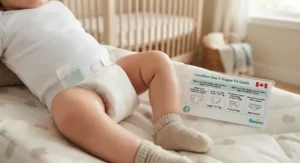
This is also the stage where diaper choice stops being simple. Your toddler is more mobile, sleeping longer stretches, and possibly starting daycare — all of which change what “the right diaper” even means. Reviewers across Canadian retailers consistently flag leg-gap blowouts and overnight leaks as the two biggest complaints at this size, which tells you a lot about what actually matters here: fit and absorbency, not just brand loyalty from the newborn days.
We dug into real specs, real weight ranges, and real aggregated review sentiment from seven genuine products sold in Canada — from Costco’s bulk-buy Kirkland Signature line to eco-labelled European imports — so you can stop guessing and start comparing. According to the Canadian Paediatric Society, most babies experience diaper rash at least once, and fit plays a bigger role in that than most parents realize. Let’s get into it.
Quick Comparison: Size 4 Diaper Packs at a Glance
If you’re short on time, here’s the fast version. All seven products below fit the standard size 4 weight range, though the exact upper and lower limits shift slightly by brand — something we’ll unpack in the weight chart section further down.
| Diaper | Standout Strength | Price Range (CAD) | Best For |
|---|---|---|---|
| Pampers Cruisers 360 | Pull-on 360° stretch waistband | C$45-C$60 for 130+ ct | Active toddlers who hate lying down for changes |
| Huggies Little Movers | Double Grip Strips + SizeUp indicator | C$35-C$45 for 100+ ct | Daytime play and daycare drop-off packs |
| Kirkland Signature Diapers | Bulk value, secondary fasteners | Around C$50 for 180-198 ct | Budget-conscious, high-volume households |
| Seventh Generation Free & Clear | Chlorine-free, fragrance-free core | C$40-C$55 for 20-25 ct | Sensitive skin and eco-conscious families |
| Bambo Nature | Nordic Swan Ecolabel, latex-free cuffs | C$50-C$70 for 25-30 ct | Overnight leak protection with eco credentials |
| Andy Pandy Premium Bamboo | Compostable bamboo shell | C$25-C$35 for 25-28 ct | Cloth-diaper households wanting an occasional disposable |
| The Honest Company Clean Conscious | Quilted Bubble Liner, print variety | C$45-C$65 for 100+ ct club box | Daycare bags that need to look cute and stretch far |
Looking at this table, the split really comes down to volume versus values. Kirkland Signature Diapers wins on raw cost-per-diaper if you have Costco access, while Bambo Nature and Seventh Generation Free & Clear cost noticeably more per unit but lean on chlorine-free, dermatologically screened materials that matter for kids prone to rashes. If your household burns through eight or more diapers a day, that price gap adds up fast — which is exactly why we’ve broken down long-term cost further down this article.
💬 Just one click — help others make better buying decisions too!😊
Top 7 Size 4 Diapers for Toddlers: Expert Analysis
We picked these seven because they cover the real spread of what’s actually available to Canadian parents right now — big-box bulk buys, drugstore staples, and the eco-labelled imports that keep showing up in sensitive-skin recommendations. Every product below is a genuine, currently sold item; none of this is invented.
1. Pampers Cruisers 360 — best pull-on fit for kids who won’t lie still
The standout feature here is right in the name: a 360-degree stretchy waistband that wraps the whole way around instead of just the front panel, which matters enormously once your toddler starts treating diaper changes like a wrestling match. The size 4 range covers 22-37 lbs (10-17 kg), and the diaper pulls on and off like underwear rather than needing to be taped, with EZ-off tabs at the sides for a quicker exit when things get messy. Dual Leak-Guard barriers and a “Blowout Barrier” strip along the back panel are built specifically to catch the kind of overnight explosion that ruins a good night’s sleep for everyone involved.
Based on the spec comparison, this is the diaper to reach for once your toddler is standing, cruising along furniture, or full-on walking — the pull-on format genuinely does make standing changes faster, which matters more than most spec sheets let on. Reviewers consistently report strong leak protection during active daytime wear, though a recurring theme in aggregated feedback is that the stretchy waist can run slightly loose on leaner toddlers, so sizing down or watching for gaps at the hips is worth doing early.
Pros:
- ✅ Pull-on design speeds up standing changes
- ✅ 360° waistband reduces back-gap leaks
- ✅ EZ-off tabs simplify quick disposal
Cons:
- ❌ Can run loose on slimmer toddlers
- ❌ Pull-on style makes sizing exchanges trickier mid-pack
At around C$45-C$60 for a 130-plus count box (prices vary by retailer and pack size, so check current pricing before buying), this sits in the mid-range and delivers solid value for households prioritizing ease of changing over rock-bottom cost per diaper.

2. Huggies Little Movers — best daytime comfort for active play
Huggies Little Movers leans on its Double Grip Strips, small textured panels along the sides that keep the diaper anchored during squats, crawling, and toddler acrobatics without needing an ultra-tight fit. The size 4 range runs 22-37 lbs (10-17 kg), and the DryTouch liner is designed to pull moisture away from skin on contact, paired with a SizeUp indicator that changes appearance to flag when your toddler’s ready to graduate to size 5.
What most buyers overlook about this model is that the “wetness indicator” feature isn’t just a gimmick for newborns — at the toddler stage, it’s genuinely useful for daycare staff or grandparents doing a quick visual check without an unnecessary diaper opening. Aggregated reviewer sentiment from Canadian retailers points to strong daytime leak resistance and a contoured fit that reduces the red-mark chafing some cheaper diapers cause around the legs, though a subset of reviewers note the diaper can feel bulkier under fitted pants compared to slimmer competitors.
Pros:
- ✅ Double Grip Strips hold shape during active play
- ✅ SizeUp indicator flags when to size up
- ✅ Contoured fit reduces leg-line chafing
Cons:
- ❌ Bulkier profile under snug-fitting clothing
- ❌ Wetness indicator less useful once toilet training starts
Real Canadian retail listings put jumbo packs (around 100-120 count) in the C$35-C$45 range, making this one of the more accessible mid-tier options for daily daycare rotation.
3. Kirkland Signature Diapers — best bulk value for high-volume households
Costco’s in-house brand is the budget anchor of this list, and the standout feature is straightforward: secondary fasteners on each tab, meaning if the first adhesive strip loses grip mid-change (which happens more than diaper marketing ever admits), there’s a backup instead of a full diaper replacement. Costco’s own product listing shows this size 4 pack landing around C$0.23-C$0.28 per diaper depending on the exact bundle, which undercuts nearly every name-brand competitor on this list by a wide margin.
Here’s what the spec sheet won’t tell you, but reviewer patterns suggest: store-brand diapers like this one tend to have thinner absorbent cores than premium brands, which is a fair trade for the price but does mean more frequent changes matter more here than with, say, an overnight-rated diaper. This is the pick for parents doing simple math — a toddler burns through roughly 2,000+ diapers a year at this stage, and every cent per diaper compounds fast.
Pros:
- ✅ Lowest cost per diaper on this list
- ✅ Secondary fasteners back up the main tabs
- ✅ Pocketed waistband helps contain blowouts
Cons:
- ❌ Thinner core than premium overnight options
- ❌ Requires a Costco membership to access in-store pricing
Expect to pay around C$50 for a 180-198 count mega box — a price point that makes this the clear budget champion, provided you have Costco access or don’t mind ordering online.
4. Seventh Generation Free & Clear — best for sensitive skin and eco-conscious homes
Seventh Generation Free & Clear builds its entire pitch around what it leaves out: zero chlorine bleaching, zero added lotions, and zero fragrance in the core materials, which matters directly for toddlers prone to redness or rash. The size 4 range here runs slightly narrower than some competitors, roughly 20-32 lbs, so it’s worth double-checking your toddler’s current weight against the package before stocking up. The FreshAir breathable layer is designed to release humidity rather than trap it against skin, and the fluff pulp is FSC-certified, meaning it’s sourced from sustainably managed forests.
On paper this means less chemical exposure for skin that’s already irritated, and reviewer feedback aggregated from multiple retailers backs that up — a recurring theme is fewer rashes reported after switching from a fragranced mainstream brand, alongside praise for a “cloth-like” softer texture. The trade-off is availability and price: this isn’t a diaper you’ll find in every corner store, and pack sizes tend to run smaller than the mega-boxes from Pampers or Huggies.
Pros:
- ✅ Zero fragrance, lotions, or chlorine bleaching
- ✅ FSC-certified sustainably sourced pulp
- ✅ Reviewers report fewer rash flare-ups after switching
Cons:
- ❌ Narrower weight range (20-32 lbs) than most size 4 diapers
- ❌ Smaller pack sizes mean more frequent reordering
Pricing typically falls in the C$40-C$55 range for smaller counts (around 20-25 diapers), reflecting the premium that comes with chlorine-free, dermatologist-tested materials.
5. Bambo Nature — best eco-certified pick for overnight protection
This Danish import carries the Nordic Swan Ecolabel, a genuinely rigorous eco-certification that covers the full production chain, not just the final product’s ingredient list, and Bambo Nature was reportedly the first diaper brand to earn it. The size 4 fit here runs 15-31 lbs — notably lower than most competitors on this list, which is a detail parents with leaner or petite toddlers should flag immediately, since it may mean sizing down sooner than expected on other brands. The three-layer absorbent core and latex-free leg cuffs are engineered specifically to handle multiple wettings, including overnight use, without the core collapsing into a soggy mess by 3am.
What most buyers overlook about this model is the manufacturing detail: the production facility runs on wind power, which is a legitimate sustainability claim rather than vague greenwashing language. Reviewer sentiment consistently praises overnight absorbency and softness, with the main criticism being cost and the fact that it’s often sold in smaller boxes than domestic competitors, meaning more frequent online reorders for households not near a specialty retailer.
Pros:
- ✅ Nordic Swan Ecolabel certification
- ✅ Strong overnight absorbency from a three-layer core
- ✅ Latex-free, hypoallergenic-tested materials
Cons:
- ❌ Lower weight range (15-31 lbs) may mean earlier sizing
- ❌ Premium pricing with smaller pack counts
Expect a C$50-C$70 range for boxes in the 25-30 count territory, positioning this firmly as a premium pick for parents who prioritize certified sustainability and overnight performance over cost per diaper.
6. Andy Pandy Premium Bamboo — best compostable option for cloth-diaper households
Andy Pandy Premium Bamboo diapers lean into bamboo fibre as the standout material, marketed as naturally hypoallergenic and antibacterial, with a commercially compostable shell — meaning it can break down at a facility equipped to handle it, though it will not compost in a regular backyard bin and still needs to go in household trash without access to that infrastructure. This is a niche pick compared to the rest of this list, generally sold in smaller batches and harder to find on shelf than the major retail brands.
Here’s the honest trade-off: independent reviewers who’ve compared this directly to Bambo Nature and similar eco brands note that Andy Pandy tends to cost more for a comparable product, and the softness and eco-story are the main draw rather than dramatically superior leak protection. What most buyers overlook is that this diaper suits a specific household — one already using cloth diapers most of the time and wanting an occasional, lower-guilt disposable for travel or daycare days, rather than a full-time size 4 solution for a high-volume household.
Pros:
- ✅ Bamboo-based, commercially compostable materials
- ✅ Naturally hypoallergenic and soft texture
- ✅ Chlorine-free, latex-free core
Cons:
- ❌ Higher per-diaper cost than comparable eco brands
- ❌ Limited availability compared to major retailers
Small packs (around 25-28 count) generally land in the C$25-C$35 range, which sounds affordable until you calculate the cost per diaper against a 180-count Kirkland box — this is a supplemental pick, not a primary one, for most families.
7. The Honest Company Clean Conscious — best for daycare bags and print variety
The standout feature on this one is the Quilted Bubble Liner, a textured inner layer designed to pull moisture away from skin faster than a flat liner, paired with Quick Absorb Channels that distribute wetness across the core instead of pooling it in one spot. Size 4 covers the standard 22-37 lb range, and the diapers come in rotating seasonal prints — a small detail, but genuinely useful for daycare providers juggling multiple kids’ diaper bags who need a quick visual identifier.
Based on the spec comparison, the stretchy side panels and plant-based fluff pulp put this in similar territory to Seventh Generation on the “gentler materials” front, while the print variety and club-box bulk options make it more daycare-practical than some competitors. Reviewers consistently note the diapers are OEKO-TEX Standard 100 certified and screened for over 300 chemicals, though a recurring complaint in aggregated feedback involves occasional fit inconsistency between print runs, with some parents reporting the need to size up compared to the brand’s own previous batches.
Pros:
- ✅ Quilted Bubble Liner speeds moisture absorption
- ✅ OEKO-TEX certified, screened for 300+ chemicals
- ✅ Rotating prints simplify daycare bag identification
Cons:
- ❌ Reported fit inconsistency between print batches
- ❌ Premium pricing compared to mainstream brands
Club boxes (100-plus count) typically run in the C$45-C$65 range, putting this squarely in the upper-mid tier — a reasonable pick if print variety and certified materials matter more to you than shaving pennies off each diaper.
Practical Usage Guide: Getting Size 4 Diapers Right From Day One
Switching to size 4 isn’t just “buy a bigger box.” A few practical habits make the transition smoother, especially in the first month.
First, don’t buy in bulk immediately. Grab a small pack of whatever brand you’re trying and run it through a few full days, including one overnight, before committing to a 150-count box. Fit varies enough between brands — as you saw with Bambo Nature’s lower weight ceiling versus Pampers’ higher one — that what worked at size 3 might not translate directly.
Second, check the leg cuffs during every few changes in the first week. The inner elastic cuff should sit snugly against the thigh crease without leaving deep red lines; a gap there is the most common cause of side leaks at this stage, more so than the diaper simply being “too small.” Third, rotate positioning of the diaper slightly forward or backward relative to the belly button if you’re seeing consistent leaks in one direction — most parents default to centering it and never adjust, but a slightly higher back panel catches more for toddlers who sleep on their stomachs.
Finally, set a maintenance rhythm: check for size-up indicators (most brands on this list include one) every couple of weeks once your toddler crosses 30 lbs, since staying in an undersized diaper too long is one of the most common — and easily avoided — causes of leaks and rashes in this age group.
Daycare Diaper Supply Requirements in Canada: What to Send and How Much
If your toddler is heading into licensed care, diaper supply rules aren’t just a suggestion from your provider — they’re often tied to actual provincial licensing regulations. In British Columbia, for example, licensed facilities are required to maintain a dedicated diaper-changing surface separate from food preparation areas, under the BC Child Care Licensing Regulation, which shapes how centres manage supply storage and staff handwashing protocols around every change.
In practice, most Canadian daycares ask parents to supply their own labelled diaper stock rather than providing diapers centre-wide, partly for fit consistency and partly to avoid allergic reactions to unfamiliar brands. A reasonable starting point: send a pack of at least 20-25 diapers per week for a full-time toddler attending five days, since most kids at this stage go through 4-6 changes during a typical daycare day. Label every individual diaper, not just the outer bag — bags get emptied into shared bins at many centres, and unlabelled loose diapers are a common source of mix-ups.
If you’re weighing whether to send a budget bulk brand like Kirkland Signature Diapers or a gentler option like Seventh Generation Free & Clear, consider that daycare environments involve longer stretches between changes than most parents manage at home, simply due to staff-to-child ratios — which makes absorbency and fit reliability more important than at-home convenience features like pull-on tabs. Providers in provinces navigating the newer federal child care funding framework, outlined by the Government of Canada’s guide to starting a daycare in Ontario, are also seeing rising enrollment, meaning busier rooms and, anecdotally, less individual attention per diaper change — another reason a forgiving, high-absorbency diaper matters for the daycare bag specifically.
Real-World Scenarios: Matching Size 4 Diapers to Your Toddler’s Life
The daycare commuter. If you’re dropping off a 2-year-old at daycare five days a week with a caregiver-to-child ratio that means changes happen roughly every 3-4 hours instead of on-demand, prioritize absorbency and fit forgiveness over convenience features. Huggies Little Movers or The Honest Company Clean Conscious both handle longer stretches well, and the labelled-print advantage on the latter genuinely helps busy daycare staff.
The budget-stretched household with two kids in diapers. When you’re burning through diapers for both a toddler and an infant simultaneously, cost per diaper becomes the deciding factor fast. Kirkland Signature Diapers, bought in bulk from Costco, will save real money over a year compared to name-brand mid-tier options — the math genuinely favours bulk-buying here even accounting for occasional exchanges.
The sensitive-skin toddler prone to rashes. If diaper rash has been a recurring issue, the Canadian Paediatric Society notes that prolonged contact with urine or stool is the primary driver — meaning both frequent changes and a chlorine-free, fragrance-free core matter more than any other feature. Seventh Generation Free & Clear or Bambo Nature are the two strongest fits here, both built specifically around minimizing added irritants.
Diaper Size Weight Charts: How to Know When It’s Time for Size 4
What weight range fits size 4 diapers? Most size 4 diapers fit toddlers between 22-37 lbs (10-17 kg), though exact ranges vary slightly by brand, with some eco brands running lower and pull-on styles running slightly higher on the upper end.
| Size | Weight (lbs) | Weight (kg) |
|---|---|---|
| Size 3 | 16-28 lbs | 7-13 kg |
| Size 4 | 22-37 lbs | 10-17 kg |
| Size 5 | 27+ lbs | 12+ kg |
| Size 6 | 35+ lbs | 16+ kg |
Looking at this chart, the overlap between sizes 3, 4, and 5 is deliberate — diaper brands build in a buffer zone so you’re not forced to switch the exact week your toddler crosses a specific number on the scale. That said, weight alone doesn’t tell the full story: a toddler at the very top of the size 4 range who’s showing red marks at the waist or visible gapping at the legs is often ready to size up regardless of what the scale says, since body shape and mobility level affect fit as much as raw weight does.
Toddler Diaper Fit Guide: How to Get a Leak-Free Seal Every Time
- Check the waistband position. It should sit at or just below the belly button, snug enough to slide two fingers underneath without much resistance — tighter than that risks red marks, looser invites leaks.
- Inspect the leg cuffs for full contact. Both inner elastic cuffs need to sit flush against the thigh crease; a folded-under cuff is one of the most common, and most overlooked, causes of side leaks.
- Confirm even front-to-back coverage. The back panel should extend slightly higher than the front for toddlers who sleep on their stomachs, since that’s the direction gravity pulls wetness overnight.
- Watch for red lines after removal. Faint pressure marks that fade in a minute or two are normal; deep, lingering red lines mean it’s time to size up even if the weight chart says you’re still in range.
- Reassess every two to three weeks. Toddlers in this age bracket gain weight unevenly, and a diaper that fit perfectly a month ago can suddenly be undersized.
- Test overnight fit separately from daytime fit. A diaper that handles a 12-hour daytime stretch fine may still leak overnight simply due to sleeping position and longer wear time between changes.

Toddler Diaper Leak Prevention: Fixing the Most Common Overnight and Daytime Blowouts
Leaks at the size 4 stage tend to cluster around three specific causes, and each has a specific fix rather than a generic “try a bigger size” answer.
Leg gap leaks. This is almost always a cuff issue rather than a sizing issue — check that both inner leg cuffs are pulled fully out and not tucked under themselves before fastening. Pampers Cruisers 360‘s stretch waistband helps here specifically because the pull-on design makes it easier to visually check cuff placement before your toddler starts moving.
Overnight back-panel leaks. These usually come down to absorbency running out before the diaper is changed, especially once toddlers start sleeping longer stretches. Bambo Nature‘s three-layer core and Seventh Generation‘s breathable layer are both built with this scenario in mind, and either is a reasonable swap if you’re currently using a daytime-focused diaper for overnight duty.
Waist gap leaks during active play. If leaks happen mainly during the day while your toddler is crawling, climbing, or generally in motion, the issue is usually a waistband that’s stretched out or positioned too low. Huggies Little Movers‘ Double Grip Strips address this directly by anchoring the sides during movement rather than relying solely on elastic tension.
If you’ve tried all three fixes and leaks persist across multiple brands, it’s worth checking whether your toddler has simply outgrown the size range entirely — a diaper at the very top of its rated weight range will underperform no matter how well it’s put on.
Common Mistakes When Buying Size 4 Diapers
A surprising number of size 4 diaper problems trace back to purchasing habits rather than the diapers themselves. The first mistake is buying a mega-box of a brand you’ve never tried before switching sizes — fit varies enough between manufacturers that a 180-count box of an unfamiliar brand is a real financial risk if it turns out to gap at the legs.
The second is ignoring the weight range printed on the package in favour of the size number alone. As the weight chart above shows, “size 4” means different things across brands — Bambo Nature’s ceiling is notably lower than Pampers Cruisers 360’s — so a toddler who fits comfortably in one size 4 might already be crowding out of another.
The third mistake is prioritizing price per diaper without accounting for change frequency. A cheaper diaper that needs changing more often to avoid leaks may not actually save money once you factor in the added diaper count and the laundry costs from leak-related outfit changes. Finally, many parents skip reading aggregated review sentiment specifically for the size 4 range, relying instead on a brand’s newborn-stage reputation — but absorbency needs, fit engineering, and even material formulations sometimes shift meaningfully between the newborn and toddler sizes within the same product line.
Size 4 Diapers vs Cloth Diapers for Toddlers
| Factor | Disposable Size 4 | Cloth Diapers |
|---|---|---|
| Upfront cost | Low per purchase, ongoing | Higher upfront, lower ongoing |
| Time investment | Minimal | Regular washing required |
| Leak protection | Engineered absorbent cores | Varies by insert and brand |
| Daycare acceptance | Universally accepted | Some centres restrict or charge extra |
| Environmental footprint | Landfill waste per change | Water/energy use for washing |
Looking at this comparison, the honest answer is that neither option is universally “better” — it depends heavily on your daycare’s policy and your household’s time budget. Many licensed Canadian daycares either restrict cloth diapers or require parents to supply extra laundering supplies, which pushes a lot of full-time working families toward disposables like the seven featured above purely for logistical simplicity. Households doing a hybrid approach — cloth at home, disposables like Andy Pandy Premium Bamboo or The Honest Company Clean Conscious for daycare and travel — get some of the cost savings without the daycare friction.
🌿 Ready to make the switch easier on your wallet and the planet? Check current prices on the eco-friendly picks above and see what fits your routine.
Long-Term Cost & Maintenance: What a Year of Size 4 Diapers Really Costs
A toddler in size 4 typically needs 4-6 changes daily, which works out to roughly 1,500-2,200 diapers over a full year at this size before graduating upward. Running that math against the price ranges above, a household using Kirkland Signature Diapers at roughly C$0.25 per diaper lands around C$375-C$550 annually, while a household on a premium eco brand averaging closer to C$1.00-C$1.50 per diaper could spend C$1,500-C$3,000 over the same period — a genuinely significant gap for a family budget.
That said, cost-per-diaper isn’t the whole picture. Fewer leaks mean fewer ruined outfits and less laundry, which has its own hidden cost, and reduced rash incidents mean less spending on diaper creams and, occasionally, fewer paediatrician visits. For most households, a hybrid approach — bulk budget diapers for home, a gentler brand reserved for overnight or sensitive periods — captures most of the savings without fully sacrificing the comfort upgrades.
Features That Actually Matter (And Those That Don’t)
Wetness indicators, size-up indicators, and stretchy waistbands genuinely affect day-to-day usability — they save time and catch sizing issues before they become leak problems. Chlorine-free, fragrance-free cores matter meaningfully for toddlers with sensitive or rash-prone skin, backed by real dermatological screening in brands like Seventh Generation and The Honest Company.
What matters far less than the marketing suggests: specific cartoon prints (cute, but irrelevant to performance), “hypoallergenic” claims without any accompanying certification (a term with no regulated legal definition in Canada), and diaper count alone without considering fit — a 200-count box of a diaper that leaks constantly isn’t a bargain, it’s 200 problems.
Safety, Certifications & Canadian Regulations for Toddler Diapers
Diapers sold in Canada fall under Health Canada’s consumer product safety oversight, which covers flammability and choking-hazard requirements for packaging, though there’s no single mandatory “diaper safety certification” the way there is for car seats or cribs. Instead, look for voluntary third-party certifications that signal a manufacturer went beyond the legal minimum: OEKO-TEX Standard 100 (chemical screening, seen on The Honest Company’s line), FSC certification for sustainably sourced pulp (Seventh Generation and Bambo Nature both carry this), and the Nordic Swan Ecolabel (Bambo Nature specifically, covering the full production chain rather than just materials).
For daycare settings specifically, licensing regulations like the BC Child Care Licensing Regulation govern how facilities must handle diaper changing hygienically — separate surfaces from food prep, mandatory handwashing before and after each change — which indirectly affects which diapers work best in that setting, since a well-fitting, high-absorbency diaper reduces the number of changes staff need to manage across a full room of toddlers.

Frequently Asked Questions
❓ What's the difference between size 4 and size 5 diapers for toddlers?
❓ How many size 4 diapers does a toddler use per day?
❓ Are eco-friendly size 4 diapers as absorbent as regular diapers?
❓ When should a toddler move from size 4 to size 5 diapers?
❓ Do daycares in Canada require parents to supply their own diapers?
Conclusion
Choosing size 4 diapers for toddlers really comes down to matching the diaper to your actual daily routine rather than chasing the “best” brand in the abstract. If your household runs on volume and budget, Kirkland Signature Diapers is hard to beat on cost per change. If sensitive skin or rash history is the bigger concern, Seventh Generation Free & Clear and Bambo Nature both bring genuine chlorine-free, dermatologically screened credentials to back up the claims. And if daycare logistics or active toddler movement are the daily headache, Huggies Little Movers and Pampers Cruisers 360 are built around exactly those pain points.
None of these are wrong choices — they’re trade-offs, and now you’ve got the real specs, honest pros and cons, and fit guidance to make the call that fits your toddler and your budget. Whichever you land on, keep an eye on that weight chart and those leg cuffs, because fit — not brand loyalty — is what actually prevents the 2am leak.
✨ Don’t Miss These Exclusive Deals!
🔍 Take diaper shopping off your mental load with these carefully selected size 4 picks. Click on any highlighted product above to check current pricing and availability. The right fit means fewer leaks, fewer rashes, and a lot more sleep for the whole family!
Recommended for You
- Newborn Diapers for Hospital Bag: 7 Best Picks for 2026
- Overnight Diapers for Heavy Wetters: 7 Real Picks (2026)
- Diapers for Sensitive Skin: 7 Trusted Picks for Canadian Babies (2026)
Disclaimer: This article contains affiliate links. As an Amazon Associate, I earn from qualifying purchases. If you purchase products through these links, we may earn a small commission at no additional cost to you.
✨ Found this helpful? Share it with your friends! 💬🤗
