In This Article
Somewhere between the ultrasound photo and the first blowout diaper, most new parents in Canada start Googling “how do I not spend a small fortune on this baby’s bum.” A prefold diapers and covers starter kit is usually where that search ends. It is the oldest, cheapest, and — once you get the hang of the folding — arguably the most forgiving way into cloth diapering, and it has been quietly making a comeback among Canadian families who are tired of watching money disappear into the diaper bin every week.
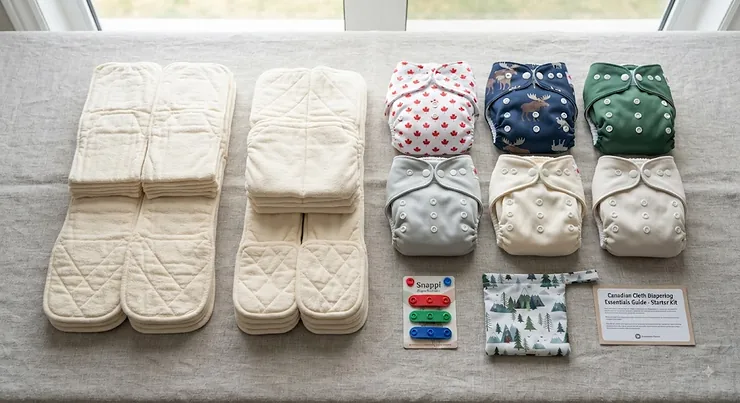
So what is a prefold diapers and covers starter kit? It is a bundle of rectangular, multi-layer cotton (or bamboo-blend) diapers — the prefolds — paired with a set of waterproof covers, plus a fastener like a Snappi or diaper pins to hold everything snug. Together they form the classic two-part cloth diapering system that predates every pocket diaper on the market.
We researched real, currently available products so you are not guessing between a dozen nearly identical Amazon.ca listings. This is not a rewritten spec sheet — it is commentary on what the specs actually mean once you are standing over a changing table at 2 a.m. Prices below are shown as ranges in Canadian dollars, since Amazon.ca prices shift too often to quote exactly; always check the current listing before you buy. And yes, this article contains affiliate links, disclosed in full at the bottom.
Cloth diapering has drifted in and out of fashion in Canada as parents weigh cost and environmental impact against convenience, and prefolds are the format that keeps pulling families back in, generation after generation, because the fabric technology genuinely has not needed reinventing.
Quick Comparison Table
Before the deep dive, here is the shape of the decision you are actually making. Most Canadian parents land in one of three tiers, and knowing which one you are shopping for will save you an evening of tab-hoarding.
| Kit Tier | Typical Contents | Best For | Price Range (CAD) |
|---|---|---|---|
| Budget Starter | 12 unbleached prefolds + 2 basic covers + fasteners | Cost-first families, back-up stash | Roughly C$60–C$90 |
| Mid-Range Starter | 6–12 bamboo-blend or DSQ prefolds + 3 name-brand covers + Snappis | Full-time cloth diapering from newborn | Roughly C$110–C$170 |
| Premium Starter | Multiple sizes of premium prefolds + 4+ adjustable covers + spare fasteners | Long-haul use through potty training, resale value | Roughly C$180–C$260 |
Reading this table, the honest takeaway is that the jump from budget to mid-range buys you softer fabric and covers that fit longer, not a fundamentally different diaper — the OsoCozy Better Fit Prefolds and the Kanga Care Prefolds absorb liquid in essentially the same way. Where the money actually earns its keep is in the covers: a well-adjusted Thirsties Duo Wrap or Bummis Super Whisper Wrap will outlast three cheap ones. If your budget is genuinely tight, the smartest move is spending on covers first and prefolds second, since prefolds are the part you can supplement cheaply later with flour-sack towels or bar mops in a pinch.
💬 Just one click — help others make better buying decisions too!😊
Top 7 Prefold Diapers and Covers Products: Expert Analysis
We combed Amazon.ca listings, manufacturer spec sheets, and aggregated review sentiment to land on seven real products spanning newborn to toddler, budget to premium. Every one of these is something you can actually order this week — no fictional “eco-brand” filler.
1. OsoCozy Better Fit Unbleached Prefolds — Size 1 — the budget-stash workhorse
If there is a “default” prefold in North America, it is this one. The standout feature is simple: unbleached, gauze-weave 100% cotton, built with a 4x8x4 layer structure sized for tri-folding.
That layer count matters more than it sounds — the extra plies run through the centre panel, which is exactly where a newborn actually wets, so you are not paying for absorbency you don’t need on the sides. Sized for babies roughly 6–16 lb, this is squarely a newborn-stage diaper, which means most families will size up within a couple of months. Based on the spec comparison against pricier bamboo blends, unbleached cotton like this dries noticeably faster on the line and in the dryer, which matters a lot when you are doing laundry every second day.
Reviewers consistently note that OsoCozy prefolds are the ones cloth diaper services themselves use, which says something about how they hold up to industrial-strength washing — a decent proxy for how they’ll survive your washer on repeat. The unbleached cotton also means no processing residue sitting against newborn skin, something several parents flag as a reason they chose this over bleached alternatives.
Pros:
- ✅ Diaper-service-grade cotton at a genuinely low price point
- ✅ Unbleached fabric, gentler on newborn skin
- ✅ Sold by the dozen, ideal for building a full-time stash fast
Cons:
- ❌ Size 1 only fits the newborn window before a re-buy
- ❌ Needs a fastener or careful folding since it has no snaps
At around C$25–C$35 per dozen, this is the cheapest reliable entry point into the whole system, and the value verdict is straightforward: buy two dozen and you rarely run short on wash day.
2. Kanga Care Prefolds — softest fabric blend for sensitive skin
The standout here is the fabric itself: a 70% bamboo-derived viscose and 30% cotton blend, which is noticeably softer against skin than pure cotton straight out of the package.
Bamboo-viscose blends absorb faster than cotton on first contact, which in practice means fewer of those seconds-long “is that going to leak” moments right after your baby wets. The trade-off, and it is a real one, is that bamboo-blend fabric holds more moisture in the wash and takes longer to dry — something worth weighing if you do not have a dryer. What most buyers overlook about this model is that the softer hand-feel also makes it slightly more prone to compression over time, so it benefits from a hot wash every few loads to keep the fibres lofted and absorbent.
Aggregated customer sentiment for bamboo-blend prefolds in this category tends to praise the softness immediately out of the pack, with a smaller but consistent thread of feedback about longer drying times compared to straight cotton — exactly what the fibre science would predict.
Pros:
- ✅ Noticeably softer against newborn skin than plain cotton
- ✅ Faster initial absorption on first wetting
- ✅ Available in a manageable 6-pack for trial-size stashes
Cons:
- ❌ Longer dryer time than cotton-only prefolds
- ❌ Costs more per diaper than budget cotton options
Expect to pay in the C$35–C$45 range for a 6-pack — the value verdict is that this is worth the premium specifically for skin-sensitive babies, less so if drying speed is your bottleneck.
3. Fasoar Prefold Cloth Diapers — best bulk buy for a deep budget stash
Fasoar’s standout is straightforward volume: 100% unbleached, 3-ply premium cotton sold in packs as large as a dozen, sized to fit 10–35 lb, which is a wider range than most Size 1 prefolds.
Because the 3-ply construction is a bit thinner than the 4x8x4 layering on premium brands, these trend flatter and less bulky under a cover — useful once your baby starts wearing pants over the diaper and every centimetre of bulk becomes a fit issue. Here’s what to weigh: thinner plies mean somewhat lower absorbency per diaper, so plan on slightly more frequent changes or add a doubler for nap and overnight use. For a family assembling a large stash on a tight timeline before baby arrives, buying in bulk from an alternative brand like this is often the fastest way to hit “enough diapers to skip a day of laundry.”
Reviewers commonly describe Fasoar prefolds as a solid budget alternative to the more established diaper-service brands, with the main recurring caveat being that first-wash absorbency is lower until the cotton has been through several hot-wash cycles — a normal cotton “prep” issue, not a defect.
Pros:
- ✅ Covers a wide 10–35 lb weight range in one product
- ✅ Available in large bulk packs for fast stash-building
- ✅ Genuinely low cost per diaper at bulk quantities
Cons:
- ❌ Thinner ply count means less absorbency than premium prefolds
- ❌ Needs multiple hot washes before reaching full absorbency
Priced roughly C$20–C$30 for a dozen depending on pack size, the value here is in raw quantity — ideal as a second-tier stash to supplement pricier prefolds, not necessarily your only diaper.
4. Thirsties Duo Wrap — the trim-fit cover for daily rotation
The standout feature of the Duo Wrap is its adjustable rise combined with adjustable waist, which together mean one cover realistically spans birth to potty training in just two sizes.
That adjustability is not just a marketing line — the rise snaps let you shrink the torso length for a newborn and then let it back out as your baby grows, so the same C$20 cover that fit a 10 lb newborn can still be covering a 16 kg toddler eighteen months later. The trim fit is specifically engineered for prefolds and trim inserts rather than bulky pocket diapers, so it sits closer to the body under regular clothing. On paper, the ability to wipe the inside clean between changes and reuse the same cover three to four times before a wash is what actually makes the “one cover per several diapers” ratio math work out.
Reviewers who use these over prefolds tend to describe the fit as noticeably slimmer than competing covers, with the leg gussets called out repeatedly as the feature that stops blowouts at the thigh — historically the weakest point in cover design.
Pros:
- ✅ Adjustable rise fits from newborn through potty training
- ✅ Trim cut, low bulk under regular baby clothing
- ✅ Wipeable interior extends time between cover washes
Cons:
- ❌ Snap-only or hook-and-loop only — no mixed-closure option per unit
- ❌ Runs slimmer, so it can feel snug over doubled-up overnight prefolds
At about C$20–C$26 each, the value verdict favours buying three to four of these as your daytime rotation before spending extra on a larger, roomier cover for nighttime bulk.
5. Bummis Super Whisper Wrap — the generous-fit Canadian-made cover
Manufactured in Montreal, the Super Whisper Wrap’s standout is its notably roomier cut compared to trim covers, making it the pick for bulkier prefold folds or doubled-up nighttime setups.
The waterproof laminate is sandwiched between two layers of soft polyester so nothing plasticky touches the skin directly, and the hook-and-loop (Aplix) closure uses an overlap design meant to keep a custom fit even on a squirming toddler. What most buyers overlook about generously cut covers like this is that the extra room is precisely what lets you stack a booster or a second prefold inside for overnight without the cover gapping at the legs — a common failure point on trimmer designs. Made in Canada with materials guaranteed free of lead, phthalates, and BPA, it is also one of the few covers in this category with a manufacturing footprint inside the country you are buying it in.
Aggregated reviews are somewhat split: many parents praise the durable elastic and strong Aplix closure that survives repeated hot washes, while a smaller group notes the hook-and-loop tabs can wear out faster than snap closures on heavy rotation — a fairly typical velcro-versus-snap trade-off.
Pros:
- ✅ Roomier cut fits bulkier folds and doublers
- ✅ Manufactured in Canada with lead- and BPA-free materials
- ✅ Durable elastic rated for repeated commercial-style washing
Cons:
- ❌ Aplix (hook-and-loop) tabs can wear faster than snaps over time
- ❌ Looser fit is not ideal for very thin babies without extra bulk inside
Priced in the C$20–C$25 range, this is the value pick for anyone who wants a Canadian-manufactured cover and doesn’t mind a slightly bulkier daytime silhouette.

6. Snappi Cloth Diaper Fastener (5-Pack) — the pinless way to secure a prefold
The Snappi’s whole standout feature is right there in the name: it replaces metal diaper pins with a stretchy, T-shaped fastener that hooks onto the fabric instead of piercing it.
Mechanically, it works by stretching from a “T” into a “Y” shape across the folded prefold, with three grippy hooks catching the fabric at each point — no sharp edges anywhere near your baby. Here’s what to weigh: because it relies on elastic tension rather than a locking pin, the grip does weaten slightly with age and heavy stretching, which is exactly why this is sold as a multi-pack rather than a single unit. For a beginner, the practical benefit over pins is huge — there is essentially no risk of an accidental prick during a squirmy diaper change, and the learning curve is about one afternoon.
Reviewers overwhelmingly describe the Snappi as the accessory that finally made prefolds feel manageable, with the most common piece of advice being to stretch a brand-new Snappi a few times before first use so the elastic isn’t overly stiff.
Pros:
- ✅ No sharp pins anywhere near baby during changes
- ✅ Faster to use than folding and pinning by hand
- ✅ Works across cloth prefolds and flat diapers alike
Cons:
- ❌ Elastic grip loosens gradually with heavy, repeated use
- ❌ Not usable on every fold style without some practice
Sold at roughly C$12–C$18 for a 5-pack, the value case is easy: at this price, keeping a spare pack on hand so a stretched-out Snappi is never your only option is a trivial expense against the alternative of fumbling with pins.
7. Babygoal Cloth Diaper Covers (6-Pack with Wet Bag) — best bundle value for covers
The standout here is sheer bundle efficiency — six adjustable covers with double leg gussets plus a wet bag, aimed squarely at families who want a full cover rotation without buying one brand-name wrap at a time.
Double gussets at the leg openings are the feature that matters most in practice, since a single gusset line is where most cheaper covers start leaking once a prefold is fully saturated. The adjustable snap sizing covers a wide weight range in one unit, similar in spirit to the Thirsties system, though the fabric and hardware are noticeably less refined at this price point. What the spec sheet won’t tell you, but budget-conscious reviewers note, is that a 6-pack bundle like this is genuinely useful as a “get through the newborn stage without panicking” purchase while you decide whether to invest in premium brand covers later.
Aggregated feedback on multi-pack budget covers in this category tends to be positive on value and mixed on longevity, with elastic and hook-and-loop components typically the first parts to show wear after several months of daily washing.
Pros:
- ✅ Six covers plus a wet bag in a single bundle purchase
- ✅ Double gussets reduce leg-hole leaks
- ✅ Lowest cost-per-cover of any option on this list
Cons:
- ❌ Hardware and fabric feel less durable than name-brand covers
- ❌ Elastic tends to fatigue sooner under daily heavy rotation
Typically priced around C$35–C$45 for the full bundle with wet bag included, this is the value pick if your goal is simply having enough covers on hand without a big upfront brand-name spend.
| Product | Type | Price Range (CAD) | Best For |
|---|---|---|---|
| OsoCozy Better Fit Prefolds | Prefold | C$25–C$35/dozen | Budget newborn stash |
| Kanga Care Prefolds | Prefold | C$35–C$45/6-pack | Sensitive skin |
| Fasoar Prefold Cloth Diapers | Prefold | C$20–C$30/dozen | Bulk budget stash |
| Thirsties Duo Wrap | Cover | C$20–C$26 each | Trim daytime fit |
| Bummis Super Whisper Wrap | Cover | C$20–C$25 each | Bulky folds, overnight |
| Snappi Fastener (5-Pack) | Fastener | C$12–C$18 | Pinless fastening |
| Babygoal Covers (6-Pack + bag) | Cover bundle | C$35–C$45 | Cover rotation on a budget |
Looking at the table as a whole, no single product wins every category — the smartest starter kits mix a budget prefold like Fasoar with one or two premium covers like the Thirsties Duo Wrap, since covers see more wear-and-tear pressure per dollar than prefolds do. Families prioritizing skin sensitivity should lean toward Kanga Care, while anyone assembling a kit purely to survive the newborn haze on a tight budget will get the most diapers per dollar from OsoCozy or Fasoar paired with the Babygoal cover bundle.
Cloth Diaper Folding Techniques: Prefold Basics Explained
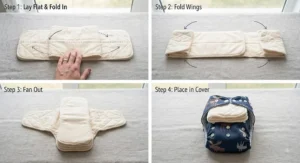
What is the easiest way to fold a prefold diaper? The trifold is the simplest method: fold the diaper into thirds lengthwise so it forms a long rectangle, lay it inside the cover, and you’re done — no fastener needed for daytime changes on a newborn.
Beyond the trifold, three folds cover almost every situation a Canadian parent will run into:
- Trifold — folded into thirds, laid flat in the cover. Fastest option, best for quick daytime changes.
- Angel wing fold — the sides fold down diagonally to create extra bulk down the centre. Best for boys, since it concentrates absorbency where it’s needed most.
- Jelly roll fold — the prefold is rolled tightly along its length before being laid in the cover, concentrating absorbency in a narrower band. Useful for petite babies where a flat trifold is too wide.
A quick honest note: none of these folds are “correct” in any universal sense — they’re starting points. Based on the spec comparison of how prefolds are constructed, the fold that stops leaks fastest is usually whichever one puts the thickest layer directly under the wetting zone, and that shifts slightly for every baby’s shape. Expect your first week of folding to feel clumsy and your second week to feel automatic; this is one of the few skills in parenting with a genuinely short learning curve.
Snappi Fasteners: The Pinless Way to Secure a Prefold
Once you’ve settled on a fold, the next decision is whether to fasten it at all. For daytime changes where the cover itself holds everything in place, plenty of parents skip fasteners entirely and simply lay the folded prefold inside the cover. For overnight use, or for a wiggly toddler who treats every diaper change like a wrestling match, snappi fasteners earn their keep.
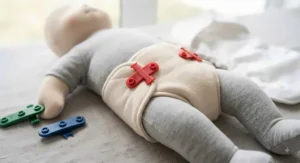
To use one correctly: stretch the Snappi a few times before first use to loosen the elastic, hook the left grip into the fabric, stretch across the diaper and hook the right grip, then stretch down to hook the centre grip last. Done properly, the Snappi should form a “Y” shape under light tension — not stretched so tight it pinches skin, not so loose it slips free during a diaper change.
A safety note worth taking seriously: like any small elastic accessory, a Snappi should be removed and stored out of reach the moment the diaper comes off, since the same grip hooks that make it useful on fabric are not designed to be mouthed by a curious toddler. Reviewers who’ve used both pins and Snappis consistently describe the switch as one of the few upgrades in cloth diapering that has zero downside — faster, safer, and no risk of an accidental prick during a change.
Real-World Scenarios: Matching a Starter Kit to Your Family
The budget-first newborn household. If you’re bringing home a first baby and want to test cloth diapering without a big upfront bet, two dozen OsoCozy or Fasoar prefolds paired with three Babygoal covers gets you through the newborn stage for well under C$150, with room to switch strategies later if cloth turns out not to be for you.
The full-time cloth family with a dryer-averse budget. If you’re committing to cloth as your everyday system and want fabric that dries fast between wash days, cotton prefolds paired with Thirsties Duo Wraps for their quick-dry, trim design is the more sensible combination than bamboo blends, which take noticeably longer in the dryer.
The sensitive-skin toddler working toward potty training. For an older baby prone to rashes, Kanga Care’s bamboo-cotton blend against the skin, paired with the roomier Bummis Super Whisper Wrap for overnight bulk, balances comfort with the extra absorbency an active toddler needs between longer stretches without a change.
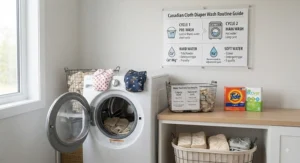
Cloth Diaper Laundering Routine: Solving the Most Common Washing Headaches
A workable cloth diaper laundering routine solves five recurring problems, and almost every “cloth diapering didn’t work for us” story traces back to one of them.
Problem: ammonia smell building up between washes. Solution: pre-rinse or run a cold rinse cycle before the main hot wash, since letting soiled prefolds sit dry in a pail lets ammonia concentrate in the fabric.
Problem: detergent buildup reducing absorbency over time. Solution: use a cloth-diaper-safe detergent without fabric softener or optical brighteners, and periodically run an extra hot rinse cycle to strip residue.
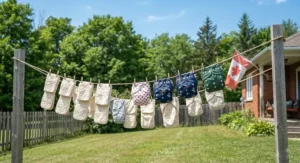
Problem: staining on unbleached cotton. Solution: sun-drying prefolds, even for an hour, fades most staining naturally without bleach, which can degrade cotton fibres over repeated use.
Problem: covers losing waterproofing. Solution: air-dry covers instead of putting them through a hot dryer cycle, since heat is the primary thing that breaks down laminate and elastic over time.
Problem: musty smell even after washing. Solution: this usually means the wash isn’t using enough water or heat to fully rinse detergent and bacteria out — running a full hot cycle with a slightly reduced detergent load, rather than a quick cycle, generally resolves it.
Cloth diapering’s overall environmental case is genuinely more complicated than “reusable equals better” once laundering is factored in, since hot-water cycles and dryer time carry their own resource cost — which is exactly why a sensible laundering routine, not just the diapers themselves, is where a lot of the real environmental and cost trade-off gets decided.
How to Choose a Prefold Diapers and Covers Starter Kit
Picking the right starter kit comes down to seven decision points, roughly in order of importance:
- Size for your baby’s current weight — prefolds are sized by weight range, not age, so check the actual pound range against your baby’s growth curve, not their birth date.
- Fabric type — cotton dries faster and costs less; bamboo blends are softer and more absorbent but slower to dry.
- Cover fit system — adjustable-rise covers like the Duo Wrap grow with your baby; fixed-size covers need replacing more often.
- Closure type — snaps resist wear better over time; hook-and-loop is faster to use but degrades sooner.
- Fastener preference — decide early whether you’re a Snappi household or a lay-in-cover household, since it changes how many diapers you fold ahead of time.
- Stash size — most full-time cloth families need 20–24 prefolds and 4–6 covers to comfortably go two to three days between diaper laundry.
- Budget ceiling — decide your total spend before browsing, since it’s easy to drift from a C$90 budget kit to a C$250 premium one one add-on at a time.
Working through these in order, most Canadian parents land somewhere in the mid-range tier from our comparison table above — enough quality to avoid early replacement, without paying premium prices for features a newborn won’t notice.
Diaper Covers for Prefolds: Matching Wraps to Your Stash
Not every cover suits every prefold fold or every stage. A trim cover like the Thirsties Duo Wrap is built for a standard trifolded prefold and starts to look strained the moment you double up fabric for overnight. A roomier cover like the Bummis Super Whisper Wrap handles that bulk without gapping at the legs, but it will feel loose and prone to shifting on a very thin newborn.
Closure type matters more than most first-time buyers expect. Snap closures resist the wear-and-tear of a toddler who has learned to rip open hook-and-loop tabs mid-nap, while hook-and-loop closures are genuinely faster for a parent managing a squirming baby solo. Budget bundle covers like Babygoal’s 6-pack solve the “I need enough covers” problem cheaply but tend to show fabric and elastic wear sooner — a reasonable trade if you’re planning to upgrade to name-brand covers as your baby grows into a longer-term size anyway.
A practical rule of thumb: buy one cover for every three to four prefolds you own, since covers can be wiped and reused between changes as long as they haven’t been soiled, while prefolds go straight into the wash pail every time.
Budget Cloth Diapering: Long-Term Cost & Maintenance
The financial case for a prefold diapers and covers starter kit is where the honest numbers matter more than marketing copy. Disposable diapers cost Canadian parents around $850 a year on average, and that figure repeats for every child unless you’re using hand-me-down disposables, which don’t exist. A prefold-and-cover system, purchased once for roughly C$150–C$200 depending on tier, can realistically be reused across multiple children with basic care.
| Cost Factor | Disposable Diapers | Prefold + Cover System |
|---|---|---|
| Upfront cost | Near zero | C$60–C$260 depending on tier |
| Annual cost (one child) | Roughly C$850/year | Near zero after initial purchase |
| Reusable for a second child | No | Yes, with proper laundering |
| Ongoing cost | Continuous purchase | Water, detergent, electricity |
Reading this table, the break-even point for most families lands somewhere around month four to six of full-time cloth use — after that, every additional month is functionally free diapering aside from utility costs. Some Canadian municipalities have leaned into this math directly: Montreal, for instance, runs a program reimbursing 50% of the purchase price of washable diapers, up to a set maximum, through its cloth diaper grant program — worth checking whether your own municipality offers something similar before you buy.
Maintenance costs are real but modest: budget for a replacement Snappi or two per year, expect covers to need replacing roughly every 12–18 months of daily use, and factor in slightly higher water and electricity bills from the extra laundry loads.
Prefolds vs Pocket Diapers and All-in-Ones
The prefold-and-cover system is the oldest format in modern cloth diapering, but it’s not the only one, and it’s worth being honest about where it wins and where it doesn’t.
| Feature | Prefold + Cover | Pocket Diaper | All-in-One |
|---|---|---|---|
| Upfront cost per diaper | Lowest | Mid-range | Highest |
| Drying time | Fastest (thin layers) | Slower (stuffed insert) | Slowest (sewn-in layers) |
| Ease of use for beginners | Requires folding practice | Simple, stuff-and-go | Simplest, no assembly |
| Longevity | Prefolds outlast most formats | Elastic and PUL wear over time | Elastic and PUL wear over time |
| Best for | Budget-focused, full-time cloth | Daycare, caregivers unfamiliar with folding | Grandparents, travel, simplicity |
Interpreting this table, prefolds win decisively on cost and drying speed, which is exactly why budget-conscious and full-time cloth diapering families gravitate toward them, while pocket diapers and all-in-ones win on convenience for anyone who won’t be the one doing the folding — daycare staff, in particular, generally prefer stuff-and-go formats. If you’re sending your baby to daycare, it’s worth asking upfront whether staff are comfortable with prefolds and covers, since some facilities have policies requiring simpler formats.
Common Mistakes When Buying a Prefold Starter Kit
Even with good research, first-time buyers tend to repeat the same handful of errors:
- Buying only one size. Prefolds are sized by weight, and a Size 1 kit will be outgrown within a couple of months — budget for at least one size-up purchase in the first year.
- Underbuying covers. New parents often buy plenty of prefolds but only two or three covers, not realizing covers need their own rotation to dry fully between uses.
- Skipping the fastener entirely. Daytime lay-in folding works, but overnight or with an active toddler, skipping a Snappi or pins invites leaks from shifting fabric.
- Choosing fabric based on price alone. The cheapest cotton prefold and the softest bamboo blend serve different needs — pick based on your baby’s skin sensitivity and your drying setup, not just the lowest number.
- Not prepping cotton before first use. New cotton prefolds need three to five hot washes before reaching full absorbency; using them straight out of the package on day one is a common source of early leaks.
What to Expect: Real-World Performance With Prefolds
Specs on a page translate into daily experience in ways that are easy to underestimate. A 4x8x4 layer prefold that reads as “highly absorbent” on paper still needs changing roughly every two to three hours for a newborn — cloth is not lower-maintenance in terms of change frequency, it’s lower-maintenance in terms of long-term cost.
Bulk is the other thing that surprises new cloth parents: even a trim cover over a well-folded prefold adds noticeably more bulk than a disposable, which means sizing up in pants and onesies earlier than you would with disposables. Drying performance also varies more than expected by season — line-drying prefolds outdoors in a Canadian summer can take under two hours, while the same load in a damp basement in February might need a full dryer cycle plus touch-up time.
Leak performance, in practice, comes down less to the diaper brand and more to fold technique and change frequency — a well-fitted budget prefold changed on time consistently outperforms a premium prefold left on too long.
Safety, Labelling & Regulations Guide for Cloth Diapering in Canada
Cloth diapers and covers sold in Canada fall under general consumer textile rules rather than a diaper-specific regulation. The Textile Labelling Act requires accurate fibre-content labelling on textile products sold here, which is why a legitimate prefold or cover listing will specify its exact cotton, bamboo, or polyester content rather than vague marketing terms — a small but useful way to spot a questionable listing before you buy.
Beyond labelling, a few practical safety habits matter more than any regulation: always remove Snappis and diaper pins immediately after a diaper change rather than leaving them within a baby’s reach, inspect elastic and closures periodically for fraying that could create a choking hazard, and avoid fabric softeners, which can coat fibres in a way that reduces both absorbency and breathability over time. None of the products in this article are marketed as sleepwear, so children’s sleepwear flammability rules do not apply here — but general product safety common sense, particularly around small fastener components, absolutely does.
FAQ
❓ Is a prefold diapers and covers starter kit cheaper than disposables long-term?
❓ How many prefolds and covers do I actually need to start?
❓ Do prefold diaper covers need to match a specific brand of prefold?
❓ What's the difference between diaper pins and snappi fasteners?
❓ How often should I wash cloth prefolds and covers?
Conclusion
A prefold diapers and covers starter kit isn’t the flashiest option on the cloth diapering shelf, but it’s the format that has survived decades of parents voting with their laundry machines. Across the seven products here, the pattern holds: budget cotton prefolds like OsoCozy and Fasoar deliver reliable absorbency for a fraction of the cost of newer formats, softer bamboo blends like Kanga Care earn their premium on sensitive skin, and covers — whether the trim Thirsties Duo Wrap, the roomier Bummis Super Whisper Wrap, or the budget-bundle Babygoal set — are where fit and closure type genuinely change your day-to-day experience. Add a pack of Snappi fasteners and you have a complete, field-tested system that Canadian families have leaned on for generations, updated with better fabric blends and smarter cover engineering than the originals ever had.
Whichever tier you land on, the folding technique and laundering routine matter as much as the products themselves — a modest prefold, folded well and washed on a sensible schedule, will consistently outperform a premium one treated carelessly.
✨ Ready to Build Your Starter Kit?
🔍 Compare current prices on any of the seven picks above, check today’s availability, and start your prefold stash with confidence. These are the exact products real Canadian cloth-diapering families are choosing in 2026.
Recommended for You
- Size 4 Diapers for Toddlers: 7 Top Picks for 2026 (Canada Guide)
- Newborn Diapers for Hospital Bag: 7 Best Picks for 2026
- Overnight Diapers for Heavy Wetters: 7 Real Picks (2026)
Disclaimer: This article contains affiliate links. As an Amazon Associate, I earn from qualifying purchases. If you purchase products through these links, we may earn a small commission at no additional cost to you.
✨ Found this helpful? Share it with your friends! 💬🤗
