In This Article
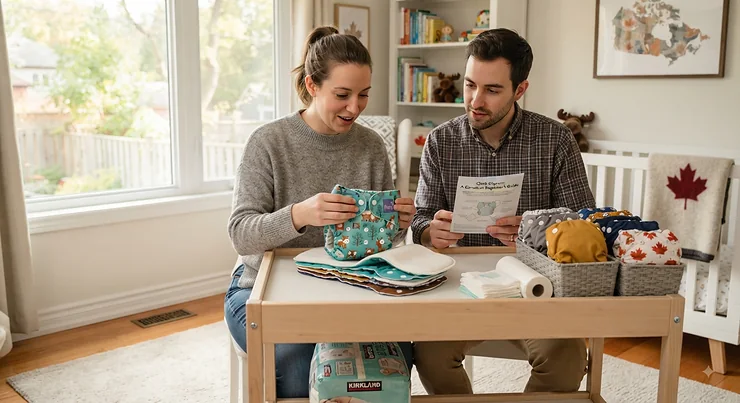
Somewhere between the third blowout of the week and the fourth trip to the store for another box of disposables, most new parents start Googling the same phrase at 2 a.m.: is there an easier way to do this? All-in-one cloth diapers for beginners exist for exactly that moment. An all-in-one is a cloth diaper where the waterproof shell and the absorbent layers are sewn together as a single unit — no stuffing pockets, no separate liners to hunt down mid-blowout. You put it on, you take it off, you wash it, and that’s the whole system.

That simplicity is precisely why all-in-ones (often shortened to AIOs) have become the default recommendation for parents who want the cost savings and environmental upside of cloth without a steep learning curve. According to a McGill University researcher’s analysis reported by CBC, Canadians send roughly 4 million diapers into landfills every single day, and that number is a big part of why so many families are reconsidering their diaper drawer in 2026. This guide covers seven real, currently available all-in-one options — from budget six-packs to natural-fibre premium picks — plus the wash routine, daycare logistics, and adjustable-snap mechanics that make one-size cloth diapers actually work.
We’re not going to pretend every AIO is interchangeable, either. Fit, fabric, and snap systems vary enough between brands that the “easiest cloth diapers for beginners” label really only applies to a handful of them — the rest just look easy in a product photo. Let’s get into what separates a diaper that’ll survive your first month from one that ends up back in the box by week two.
Quick Comparison Table
| Diaper | Best For | Price Range (CAD) | Closure Type |
|---|---|---|---|
| Thirsties Natural One Size All-In-One | Sensitive skin, natural fibres | C$40-C$50 | Snaps |
| bumGenius Freetime All-In-One | True beginners, sewn-in absorbency | C$38-C$46 | Snaps or hook & loop |
| GroVia O.N.E. | Growing with baby, hybrid flexibility | C$36-C$44 | Snaps |
| Charlie Banana 2-in-1 One Size | Heavy wetters, dual-insert boosting | C$28-C$36 | Snaps or hook & loop |
| Mama Koala 2.0 One Size | Budget mid-range, print variety | C$18-C$26 | Snaps |
| ALVABABY One Size AIO 6-Pack | Tightest starter budget | Around C$70-C$90 for 6 | Snaps |
| KaWaii Baby One Size HD2 | Daycare hook-and-loop speed | Around C$75-C$95 for 6 | Hook & loop |
Looking at the spread here, the pattern is pretty clear: hook-and-loop (Velcro-style) closures show up on the diapers built for speed — daycare drop-offs, sleepy 3 a.m. changes — while snap closures dominate the picks meant to last through a toddler’s escape-artist phase. Price doesn’t track neatly with quality, either; the Mama Koala 2.0 undercuts several premium options while still using a proper stay-dry inner layer, which tells you brand markup, not just materials, is driving a chunk of that price gap.
💬 Just one click — help others make better buying decisions too!😊
Top 7 All-In-One Cloth Diapers: Expert Analysis
1. Thirsties Natural One Size All-In-One — best natural-fibre pick for sensitive skin
The Thirsties Natural One Size All-In-One swaps the usual microfiber core for an organic cotton and hemp blend, which is the detail that actually matters if your baby’s skin flares up around synthetic fabrics. The soaker is sewn in as three layers reaching from front to back, with a waterproof TPU shell on the outside and a stay-dry layer against the skin — so despite using natural fibres, baby isn’t sitting in dampness the way old-school cotton prefolds used to leave them. Rise snaps adjust the diaper across roughly three size settings, taking a baby from around 5.4 kg up through toddlerhood without buying a second size.
Based on the spec comparison against synthetic AIOs, natural-fibre cores trade a bit of drying speed for meaningfully better breathability, which is exactly why dermatologist-recommended cloth options tend to lean this direction for babies with eczema or general sensitivity. Reviewers consistently report that the natural fibres need a longer prewash break-in period — often 4 to 6 washes — before absorbency hits its peak, which catches first-time buyers off guard if nobody warns them. Once broken in, aggregated feedback describes solid overnight performance for younger babies, though heavier overnight wetters may need a booster added by around 8 or 9 months.
Pros:
- ✅ Organic cotton-hemp blend suits sensitive or eczema-prone skin
- ✅ Three-way rise snaps fit a wide weight range
- ✅ Stay-dry layer keeps moisture off skin despite natural fibres
Cons:
- ❌ Needs multiple prewashes before full absorbency kicks in
- ❌ Slower to dry than microfiber-core alternatives
Expect to pay around C$40-C$50 per diaper at the time of research, which lands this on the premium end of the lineup — but if skin sensitivity is your deciding factor, the fabric choice alone justifies the gap over synthetic competitors.
2. bumGenius Freetime All-In-One — easiest true all-in-one for total beginners
The bumGenius Freetime All-In-One earns its “easiest” reputation from one design choice: the double soaker is stitched permanently into the shell at both the top and bottom seams, so there’s genuinely nothing to stuff, tuck, or reassemble after washing. That single detail is what separates a true beginner-friendly AIO from diapers that market themselves as “all-in-one” but still need some fiddling after every wash cycle. The elasticized casing around the legs and back panel is generous enough to contain blowouts without needing a perfect fit on day one, which forgives a lot of new-parent trial and error.
What most buyers overlook about this model is the snap-and-hook-and-loop hybrid option: the standard version uses snaps, but a hook-and-loop variant exists specifically for caregivers who need speed over durability, like grandparents or occasional babysitters. Aggregated review sentiment across major retailers points to strong satisfaction with the fit through the 3.6 kg to 16 kg range, with the most common complaint centring on drying time, since the sewn-in soakers take longer in the dryer than removable inserts would.
Pros:
- ✅ Fully sewn-in soaker means zero assembly after washing
- ✅ Hook-and-loop variant available for fast changes
- ✅ Wide 3.6-16 kg fit range on one diaper
Cons:
- ❌ Longer dryer time than pocket-style alternatives
- ❌ Sewn-in soaker can’t be swapped for a thinner one
Priced around C$38-C$46 each at the time of research, this is arguably the benchmark “easiest cloth diapers for beginners” pick in this whole roundup — it’s the one we’d hand a first-time cloth parent without much explanation needed.
3. GroVia O.N.E. — best hybrid flexibility as your baby grows
The GroVia O.N.E. stands apart because it isn’t locked into being purely an all-in-one — the soaker snaps in rather than being permanently sewn, so it functions as a true AIO for daily use but converts into a stay-dry pocket-style diaper when you want to customize absorbency for overnights. That flexibility is the entire selling point: newborns rarely need the same absorbency as a two-year-old, and this diaper lets you scale up without buying a whole new system. The shell itself uses a soft, brushed exterior rather than the glossy TPU look most competitors go with, which a lot of parents find less “medical” looking in photos.
Here’s what to weigh before buying: because the soaker snaps in rather than sewing in, there’s a genuine assembly step after each wash — closer to a pocket diaper than a pure AIO — so buyers expecting zero-fuss simplicity should know this trades a little convenience for adjustability. Reviewers frequently mention the snap-in soaker occasionally shifts during very active wear, particularly once a baby starts crawling, though most describe this as a minor and infrequent issue rather than a dealbreaker.
Pros:
- ✅ Snap-in soaker adjusts absorbency by age or use case
- ✅ Brushed shell exterior feels less clinical than TPU
- ✅ Converts between AIO and pocket-style function
Cons:
- ❌ Requires reassembly after each wash, unlike pure AIOs
- ❌ Soaker can shift slightly during active crawling
At around C$36-C$44 per diaper, the GroVia O.N.E. suits parents who want room to grow into a more customized system without abandoning the beginner-friendly all-in-one format entirely.
4. Charlie Banana 2-in-1 Reusable One Size — best dual-insert system for heavy wetters
The Charlie Banana 2-in-1 Reusable One Size ships with two insert types — a hemp-blend heavy insert and a lighter microfiber one — that snap into fixed points inside the shell rather than tucking loosely into a pocket, which keeps them from bunching or migrating during wear. That “2-in-1” naming refers to the ability to layer both inserts together for overnight or long-stretch coverage, then drop down to just the lighter one for shorter daytime intervals. It’s a smart middle ground between a true fixed-soaker AIO and a fully customizable pocket diaper.
On paper, the dual-insert approach solves the single biggest complaint beginners have with basic AIOs: not enough absorbency for a heavy wetter without buying a separate overnight diaper. Aggregated customer feedback backs this up, with reviewers frequently praising the combined-insert setup for stretching wear time between changes, particularly for babies who sleep 10-12 hours overnight. The recurring critique is that the snap points holding the inserts in place can loosen slightly after a year or more of heavy washing, which is a fair trade-off given the price point.
Pros:
- ✅ Dual inserts layer for adjustable overnight absorbency
- ✅ Snap-in insert points prevent bunching during wear
- ✅ Strong value relative to premium AIO competitors
Cons:
- ❌ Insert snap points can loosen after heavy long-term use
- ❌ Slightly bulkier fit with both inserts layered in
Sitting around C$28-C$36 per diaper at the time of research, this is one of the strongest value picks here for families anticipating a heavy-wetting toddler phase.
5. Mama Koala 2.0 One Size — best print variety on a mid budget
The Mama Koala 2.0 One Size built its following on two things: an enormous rotating catalogue of prints and patterns, and a genuinely competitive price for a pocket-style AIO with a stay-dry microsuede inner. The 2.0 update reworked the elastic placement around the legs and back to reduce the red-mark issue some parents reported with the original version, and reviewers note the improvement is noticeable, especially on chunkier-thighed babies.
What the spec sheet won’t tell you, but reviewer patterns make clear, is that this diaper’s real strength is in the middle stretch of the size range — roughly 6 to 16 kg — where fit and absorbency both peak; newborns and larger toddlers get comparatively less consistent performance. Reviewers regularly describe the four-layer microfiber insert as sufficient for daytime use but recommend doubling up for overnight, a pattern consistent across most budget microfiber-based AIOs in this category rather than a flaw unique to this brand.
Pros:
- ✅ Wide print selection appeals to style-conscious parents
- ✅ Reworked 2.0 elastic reduces leg-mark complaints
- ✅ Strong fit and value in the mid-size range
Cons:
- ❌ Less consistent fit for newborns and larger toddlers
- ❌ Stock insert needs doubling up for overnight use
At around C$18-C$26 per diaper, the Mama Koala 2.0 is one of the most accessible entry points into name-brand cloth diapering without dropping to unbranded budget territory.
6. ALVABABY One Size AIO 6-Pack — best full starter kit for stretching your budget
The ALVABABY One Size AIO 6-Pack is built around volume: six shells plus twelve inserts arrive together, which means a beginner can go from zero to a functional starter stash in a single purchase rather than piecing one together diaper by diaper. The TPU outer shell and adjustable rise snaps mirror the fit mechanics of pricier brands, covering roughly 3 kg to 15 kg on the same shell.
Based on the spec comparison, this kit’s real advantage isn’t any single feature outperforming premium brands — it’s the cost-per-diaper math. Splitting the bundle price across six shells and twelve inserts brings the effective per-unit cost meaningfully below almost everything else in this roundup, which matters enormously for a family testing whether cloth diapering will actually stick before investing further. Aggregated reviews are consistently positive on value and describe the fit as comparable to name-brand options, though a recurring theme is that the TPU shells show wear (mainly at the elastic) faster than higher-end competitors after a year of daily rotation.
Pros:
- ✅ Six shells and twelve inserts create an instant starter stash
- ✅ Adjustable snaps fit 3-15 kg on one shell
- ✅ Lowest effective cost-per-diaper in this lineup
Cons:
- ❌ Elastic and shell wear faster than premium brands over time
- ❌ Print and colour consistency varies batch to batch
At around C$70-C$90 for the full six-pack at the time of research, this is the clearest “test the waters” option for parents who aren’t ready to commit to a premium stash before knowing whether cloth diapering fits their routine.
7. KaWaii Baby One Size HD2 — best hook-and-loop pick daycare providers approve
The KaWaii Baby One Size HD2 swaps the usual snap closure for a large hook-and-loop tab, which is specifically why daycare providers tend to prefer it — hook-and-loop closes and adjusts nearly as fast as a disposable tab, and staff juggling multiple kids don’t need to learn a snap system under time pressure. The shell uses a heavier 32-thread-count TPU fabric than several budget competitors claim to use, and the fit range covers roughly 3.6 kg to 16 kg on adjustable rise settings.
Here’s what most buyers overlook: hook-and-loop closures are genuinely the fastest system for a caregiver who isn’t the primary user, but they wear out faster than snaps over the long haul as the loop fabric picks up lint and loses grip — which is exactly why this diaper makes more sense as a dedicated “daycare bag” diaper rather than your only stash. Reviewer feedback consistently flags the speed advantage during changes as the standout benefit, while durability complaints cluster specifically around the hook-and-loop tabs after roughly a year of regular use rather than around the shell or inserts themselves.
Pros:
- ✅ Hook-and-loop closure changes as fast as a disposable
- ✅ Heavier 32-thread TPU shell than many budget rivals
- ✅ Well suited to daycare or non-primary caregivers
Cons:
- ❌ Hook-and-loop tabs lose grip faster than snap closures
- ❌ Less toddler-proof once kids learn to unfasten Velcro
At around C$75-C$95 for a six-pack with inserts at the time of research, this earns its spot as the pick to send in the daycare bag even if it’s not your everyday-at-home diaper.
Your First 30 Days With All-In-One Cloth Diapers
The single biggest mistake new cloth parents make isn’t choosing the wrong diaper — it’s skipping the prewash. Every AIO, whether the core is cotton, hemp, or microfiber, needs at least 2-3 wash-and-dry cycles before it reaches full absorbency, because natural oils and manufacturing residue coat the fibres straight out of the packaging. Skip this step and your baby’s first week in cloth will feel like a leak-prone disaster that has nothing to do with the diaper’s actual quality.
Once you’re past prewashing, the first real skill to nail is the fit check: a properly fitted AIO should sit at the belly button or below, with no gaps at the legs and the rise snaps set so the diaper doesn’t bunch excessively in the crotch. Most beginners size down the rise snaps too aggressively trying to “grow into” the diaper, which actually causes more leaks than a snugger fit would. Give yourself permission to adjust snaps weekly for the first month rather than setting and forgetting.
Build your rotation before day one, not during it — a realistic stash for full-time cloth diapering is 20-24 diapers, which lets you wash every other day instead of scrambling nightly. And don’t judge absorbency in week one; fibres, especially natural ones like the Thirsties Natural One Size All-In-One, genuinely improve over the first month of regular washing.
Real-World Scenarios: Matching All-In-Ones to Your Family
The daycare-dependent parent. If your baby spends 8-10 hours a day with a provider who’s juggling five other kids, prioritize speed over anything else. This is exactly the scenario the KaWaii Baby One Size HD2 was built for — its hook-and-loop closure means a rushed staff member can change your baby correctly on the first try, no snap-counting required.
The budget-conscious first-timer. If you’re not fully convinced cloth diapering will stick and don’t want to sink C$300+ into a premium stash before finding out, start with the ALVABABY One Size AIO 6-Pack. Six diapers won’t cover full-time use on their own, but they’re enough to test your wash routine and your patience before committing further.
The heavy overnight sleeper. Once your baby hits the 10-12 hour overnight stretch (often somewhere around 6-9 months), standard daytime inserts stop cutting it. The Charlie Banana 2-in-1 Reusable One Size, with its layerable hemp and microfiber inserts, is purpose-built for exactly this stretch of parenting, buying you real sleep without a 4 a.m. leak wake-up call.
Troubleshooting: Solving the 5 Most Common All-In-One Problems
Leaking around the legs is almost always a fit issue, not a product defect — check that the leg elastic sits snugly against the thigh with no visible gap, and that you haven’t oversized the rise snaps. Ammonia smell between washes usually means your wash routine isn’t using enough detergent or hot water to fully rinse waste out of the fibres; increasing detergent slightly and adding a hot rinse typically resolves it within a cycle or two.
Repelling — where liquid beads up on the fabric instead of absorbing — signals detergent buildup, often from fabric softener or a detergent with additives that coat the fibres; a hot wash with a stripping-safe detergent and no additives usually restores absorbency. Stiff, crunchy diapers after line-drying aren’t a defect either; a few minutes in the dryer on low, or simply working the fabric by hand, softens them back up. Finally, if snaps are popping open during wear, particularly on an active crawler, it’s usually the diaper riding too loose — sizing down one snap setting on the waist typically fixes it.
How to Choose All-In-One Cloth Diapers for Beginners
Choosing the right all-in-one cloth diaper for beginners comes down to matching the diaper’s design to how — and who — will actually be using it day to day. Here’s the decision process that matters most:
- Decide on closure type first. Snaps last longer and resist toddler escape attempts; hook-and-loop is faster for non-primary caregivers like daycare staff.
- Check the true fit range against your baby’s current weight, not just the marketed range — most one-size diapers fit best in the middle of their stated range.
- Match fabric to skin sensitivity. Natural fibres like cotton or hemp suit sensitive skin but need more prewashing; microfiber absorbs faster with less prep.
- Estimate your wash frequency tolerance. Fewer diapers means washing every day; a 20-24 diaper stash allows every-other-day washing.
- Budget for a mixed stash rather than one brand. Pairing a budget starter kit with two or three premium diapers often outperforms an all-premium or all-budget approach.
- Prioritize sewn-in soakers if simplicity matters most — pure AIOs like the bumGenius Freetime All-In-One need zero reassembly after washing.
- Plan for overnight separately. Very few daytime AIOs handle a full night without a booster insert added around 6+ months.
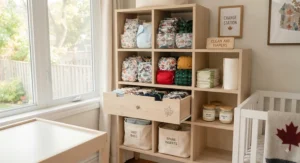
One-Size Cloth Diapers: How the Adjustable Snap System Grows With Baby
“One-size” is doing a lot of marketing work, and it’s worth understanding what it actually means before you buy. One-size cloth diapers use a set of rise snaps — typically three or four rows on the front panel — that let you shorten or lengthen the diaper’s rise to match your baby’s torso length, roughly covering newborn-adjacent weights through toddlerhood on a single shell. It’s not infinite flexibility, though: most one-size diapers genuinely fit best from around 4.5 kg to 16 kg, meaning very small newborns often still need dedicated newborn-sized diapers for the first month or two.
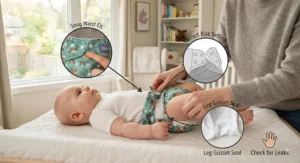
The adjustable snaps themselves come in two flavours worth knowing about: rise snaps (which change the length) and waist snaps (which change the circumference). A properly adjusted diaper uses both — rise snaps set first based on torso length, then waist snaps tightened until there’s no gap but no red marks either. Reviewers across nearly every brand in this roundup mention the same learning curve: the first week of snap-adjusting feels fiddly, and by week three it’s essentially automatic. If a diaper is leaking or bunching oddly, the rise-and-waist snap combination is almost always the first thing to re-check before assuming the diaper itself is at fault.
All-In-One vs Pocket Diapers: Which Beginner System Wins?
The core difference is assembly: an all-in-one has its absorbent layers sewn permanently into the shell, while a pocket diaper has a separate shell with an opening you stuff a removable insert into. That single distinction cascades into almost every practical trade-off between the two systems. All-in-ones win decisively on convenience — there’s nothing to stuff after washing, which matters enormously in the sleep-deprived first months. Pocket diapers win on customization and dry time, since removable inserts dry faster in the dryer than a sewn-in soaker ever will, and you can swap in a thinner or thicker insert depending on the day.
For true beginners, all-in-ones like the bumGenius Freetime All-In-One are the easier on-ramp precisely because there’s one less step to mess up. Once a family is comfortable with cloth diapering fundamentals — usually somewhere around month two or three — many parents naturally start mixing in a few pocket diapers like the Mama Koala 2.0 One Size for the customization, while keeping AIOs in rotation for grandma’s diaper bag or daycare. It’s rarely an either-or decision long-term; it’s a sequencing decision for where to start.
All-In-One Cloth Diapers for Daycare: What Providers Actually Accept
Daycare cloth diaper acceptance in Canada varies significantly by province and by individual centre, so the first real step is a direct conversation with your provider before buying anything daycare-specific. That said, patterns show up consistently across parent communities: centres are far more likely to accept cloth diapers when the closure system requires no special training, which is exactly why hook-and-loop options like the KaWaii Baby One Size HD2 see higher daycare acceptance rates than snap-only diapers in practice.
Beyond closure type, most centres that accept cloth ask for a few standard accommodations: a labelled wet bag for soiled diapers to go home in, diapers that don’t require the provider to touch soiled inserts directly (which rules out most true pocket diapers for daycare use), and a stash large enough that staff aren’t scrambling mid-shift. Sending 4-6 diapers per day, pre-stuffed or ready-to-wear, tends to smooth the handoff considerably. If your provider is hesitant, offering a brief written care card — snap settings, closure type, wash-at-home policy — often resolves the hesitation faster than a verbal explanation alone.
The Cloth Diaper Wash Routine That Actually Works
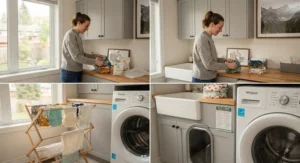
A cloth diaper wash routine doesn’t need to be complicated, but skipping steps is exactly what causes the ammonia smell, repelling, and rash complaints beginners run into. The routine that consistently works across fabric types looks like this: a cold or short rinse cycle first to knock down waste without setting stains, followed by a full hot wash cycle (60°C/140°F where your machine and diaper care instructions allow) using a cloth-diaper-safe detergent without fabric softener or optical brighteners, and finally either a second rinse or an extra rinse cycle to fully clear detergent residue from the fibres.
Detergent amount matters more than most beginners expect — under-dosing is actually the more common mistake, since heavily soiled loads need a full regular dose, not the “sensitive skin” reduced amount marketed for baby laundry. Drying varies by fabric: microfiber inserts tolerate dryer heat well and dry quickly, while TPU shells and hook-and-loop tabs should be air-dried or tumbled on low to avoid degrading the waterproof laminate over time. Stick to this routine consistently and most of the troubleshooting issues covered earlier simply never come up in the first place.
✨ Don’t Miss These Exclusive Deals!
🔍 Take Your Cloth Diaper Stash to the Next Level! Ready to build a stash that actually works for your family? Click on any highlighted pick above to check current pricing and availability, and start with a mixed stash that covers daytime, overnight, and daycare needs from week one. 🍼
Common Mistakes When Buying All-In-One Cloth Diapers
The single most common mistake is buying an entire stash from one brand before trying anything. Fit varies enough between brands — even within the “one-size” category — that a diaper that fits perfectly on one baby leaks constantly on another with a similar build. Buying two or three diapers from three or four different brands before committing to a full stash saves both money and frustration.
The second mistake is underestimating stash size, buying 8-10 diapers expecting that to cover full-time use, then discovering that means washing every single day without fail. A third recurring error is ignoring the closure type mismatch between home and daycare use — sending a snap-closure diaper to a provider who’s asked for hook-and-loop (or vice versa) is one of the fastest ways to get cloth diapering quietly phased out at daycare. Finally, many parents skip reading the specific wash-care instructions for TPU versus PUL shells, and aggressive detergent or heat can shorten a shell’s usable life considerably faster than proper care would.
Long-Term Cost & Maintenance: Is the Upfront Price Worth It?
The upfront sticker shock of cloth diapering is real — a full 20-24 diaper stash mixing budget and mid-range options can run somewhere in the C$400-C$700 range depending on brand mix, which feels steep compared to a single pack of disposables. But the math flips fast: that same stash, with reasonable care, typically lasts through potty training for one child and often a second, while disposables run an ongoing cost for the entire diapering period with nothing left over afterward. A city councillor promoting cloth diaper subsidies in one Canadian borough put it plainly, noting that fewer disposable diapers being thrown out means less weight trucked to landfills, while parents save money over the long run — a dynamic that’s led several Quebec municipalities to offer cloth diaper subsidies specifically to offset that initial cost.
Maintenance costs are modest but real: extra water and detergent for wash loads, occasional elastic replacement on well-loved diapers, and the eventual retirement of shells once TPU or PUL laminate starts to degrade (usually somewhere past the two-year mark of regular use). Budget-tier diapers like the ALVABABY One Size AIO 6-Pack tend to need replacement sooner than premium options like the Thirsties Natural One Size All-In-One, so total cost of ownership isn’t purely about the sticker price — it’s sticker price divided by expected lifespan, and that math often favours spending a bit more upfront on at least part of your stash.
Safety, Certification & Regulations for Cloth Diapers in Canada
Cloth diapers sold in Canada fall under textile safety rules rather than a diaper-specific regulation, which surprises a lot of new parents. Children’s diapers made of textile fibres are subject to Canada’s Textile Flammability Regulations for textile products, the same framework covering other garments worn close to the skin, administered by Health Canada under the Canada Consumer Product Safety Act. In practice, this means reputable brands — everything featured in this roundup — are manufactured to meet flammability and chemical-safety standards before they’re legally sold here, though it’s still worth checking for OEKO-TEX certification on natural-fibre inserts specifically, since that standard adds an extra layer of assurance around dye and chemical residue.
Beyond flammability, the practical safety consideration most parents actually care about is skin contact: look for shells and inserts free of chlorine bleach processing and, where possible, dye-free or low-dye options for babies with reactive skin. None of the seven diapers featured here raised chemical-safety red flags in available product documentation, but as with any baby product, patch-testing a new fabric on a small area for 24-48 hours is reasonable caution for babies with a known sensitivity history.
FAQ
❓ What is the easiest cloth diaper for a beginner?
❓ Are all-in-one cloth diapers worth it?
❓ Do daycares accept cloth diapers in Canada?
❓ How many all-in-one cloth diapers do I need?
❓ How often should you wash cloth diapers?
Conclusion
Choosing among all-in-one cloth diapers for beginners really comes down to matching the diaper to your actual routine rather than chasing the “best” diaper in the abstract. A family sending a baby to daycare five days a week has genuinely different priorities than one cloth diapering full-time at home overnight, and the seven diapers covered here — from the natural-fibre Thirsties Natural One Size All-In-One to the daycare-friendly KaWaii Baby One Size HD2 — reflect that range on purpose.
The honest takeaway from the research: no single brand wins every category, and most experienced cloth-diapering families end up with a mixed stash rather than twenty of the same diaper. Start smaller than you think you need, test fit and absorbency on your specific baby, and expand from there. Given that Canadians divert roughly 4 million diapers from landfills a day just by the cloth diapering that already happens, every stash — even a modest one — adds up to something real.
Recommended for You
- Prefold Diapers and Covers Starter Kit: 7 Picks That Work in 2026
- Size 4 Diapers for Toddlers: 7 Top Picks for 2026 (Canada Guide)
- Newborn Diapers for Hospital Bag: 7 Best Picks for 2026
Disclaimer: This article contains affiliate links. As an Amazon Associate, I earn from qualifying purchases. If you purchase products through these links, we may earn a small commission at no additional cost to you.
✨ Found this helpful? Share it with your friends! 💬🤗
