

In This Article
Somewhere around the third 4 a.m. sheet change, every cloth-diapering parent asks the same question: are pocket diapers for overnight use actually a thing, or is that just wishful thinking from someone who’s never met your particular tiny water cannon? Here’s the honest, unglamorous answer: pocket diapers for overnight use are simply standard pocket-style cloth diapers — a waterproof shell with an inner pocket you stuff with an absorbent insert — built or boosted with heavier, slower-releasing materials so they can survive 10 to 12 hours instead of the usual two or three. The diaper shell itself rarely changes between day and night; what changes is what you shove inside it.
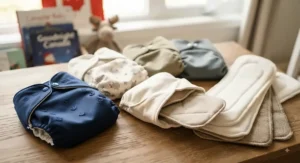
That distinction matters, because it means you probably don’t need a whole separate “night diaper” category. You need the right insert stack, the right stuffing technique, and a shell with enough room to hold it all without leaking out the leg elastic at 5 a.m. Below, we’ve pulled together seven real, currently available pocket diapers, broken down what materials actually hold up overnight, and worked through the common causes of diaper rash and skin irritation that heavy overnight wear can aggravate if you’re not managing moisture properly. Whether you’re brand new to cloth or just trying to fix a leaky overnight routine, this guide covers the real trade-offs — not the marketing copy.
Quick Comparison: Pocket Diapers vs. Other Overnight Systems
Before diving into specific products, it helps to see where pocket diapers actually sit relative to the other overnight cloth options — all-in-ones (AIOs), fitted diapers with a separate cover, and hybrid disposable inserts.
| System | Overnight Capacity | Ease of Use | Dry Time | Best For |
|---|---|---|---|---|
| Pocket diaper (stuffed with bamboo/hemp) | High, customizable | Moderate (requires stuffing) | Fast (insert and shell dry separately) | Parents who want to fine-tune absorbency by wetter type |
| All-in-one (AIO) | Moderate, fixed | Easiest | Slow (sewn-in insert) | Caregivers, daycare, grandparents |
| Fitted diaper + cover | Very high | Moderate | Fast | Heaviest wetters, toddlers |
| Hybrid with disposable insert | Moderate | Easy | N/A | Travel, backup nights |
Pocket diapers land in a genuinely useful middle spot: they dry faster than an AIO because the insert isn’t sewn in, but they let you stack materials in a way a fitted-and-cover system can’t easily match without extra pieces. The trade-off is stuffing time, which sounds trivial until you’re doing it at 11 p.m. with one eye closed. For families who wash every other day and want a system that adapts as their baby’s wetting habits change, a well-stuffed pocket diaper is usually the most practical overnight compromise — not the single best option in isolation, but the best average across cost, dry time, and adjustability.
💬 Just one click — help others make better buying decisions too!😊
Top 7 Pocket Diapers for Overnight Use: Expert Analysis
We looked at real, currently sold pocket diapers spanning budget, mid-range, and premium tiers, plus a couple of overnight-specific and natural-fibre options. Every product below includes real specs, an honest analytical take on who it suits, and aggregated review sentiment — clearly labelled as such, never invented.
1. AlvaBaby One Size Pocket Diaper — lowest entry cost for building a full stash
The standout here isn’t performance, it’s math: AlvaBaby One Size Pocket Diaper shells are cheap enough that you can build a 20-diaper stash for roughly what a few boxes of premium disposables cost. Each shell is a one-size pocket with a sueded inner lining, double leg gussets, and a front-loading pocket, paired with a basic microfiber insert.
On paper, the shell construction is the real value here — the outer PUL and elastic hold up to daily washing, and AlvaBaby One Size Pocket Diaper shells commonly ship with a one-year manufacturer warranty, which is unusual at this price tier. What the spec sheet doesn’t tell you is that the included microfiber insert alone won’t survive a full night; it’s a two-to-three-hour daytime insert dressed up as a night solution. Based on the spec comparison with natural-fibre inserts later in this guide, budget buyers should plan to add a hemp or bamboo booster from day one rather than treating the included insert as overnight-ready.
Reviewers consistently report that the shells fit well and wash reliably over hundreds of cycles, while a common complaint in user reviews is that the stock microfiber inserts lose absorbency and start to feel “crunchy” faster than pricier alternatives. This is a shell-first purchase, not an insert-first one.
Pros:
- ✅ Lowest per-unit cost of any pocket diaper on this list
- ✅ Rare one-year warranty on shells at this price point
- ✅ Huge range of prints for parents who want variety
Cons:
- ❌ Stock microfiber insert underperforms for a full night
- ❌ Sizing runs large on newborns under roughly 8 lbs
Price sits around C$8-C$12 per diaper, or roughly C$70-C$90 for a six-pack — genuinely the cheapest way into overnight cloth if you budget separately for a natural-fibre booster.
2. Mama Koala 2.0 One Size Pocket Diaper — best budget upgrade with adjustable inserts
Where Mama Koala 2.0 One Size Pocket Diaper pulls ahead of cheaper shells is the insert itself: a snap-adjustable microfleece insert that shrinks or grows with the diaper’s rise settings, rather than a flat rectangle that bunches up on a smaller baby.
The shell uses a polyester liner over double gussets, and the insert’s adjustability means less bulk in the crotch on younger babies — a small detail that matters a lot at 2 a.m. when a poorly seated insert is the actual leak culprit, not the diaper’s total absorbency. What most buyers overlook about this model is that the improved insert design, not raw material volume, is doing most of the heavy lifting compared with flat microfiber competitors.
Aggregated review sentiment across cloth-diapering forums and retailer pages consistently favours Mama Koala 2.0 One Size Pocket Diaper over similarly priced shells for absorbency, though several reviewers note the diaper runs snug around 20+ lbs and works best paired with a hemp doubler once your baby is drinking large volumes before bed.
Pros:
- ✅ Adjustable microfleece insert reduces bulk and bunching
- ✅ Better baseline absorbency than flat microfiber shells
- ✅ Wide print selection with consistent stock availability
Cons:
- ❌ Runs tight in the leg openings past roughly 20 lbs
- ❌ Insert alone still benefits from a hemp or bamboo boost overnight
Expect a price in the mid-C$10s to around C$18 per diaper — a small step up from AlvaBaby that buys you a noticeably better stock insert.
3. Charlie Banana 2-in-1 One Size Pocket Diaper — best for hybrid disposable-or-reusable flexibility
Charlie Banana 2-in-1 One Size Pocket Diaper takes a different approach to the pocket format entirely: the opening sits at the front rather than the back, and the diaper ships with two reusable inserts (a smaller newborn-sized piece and a larger medium/large piece) that can be worn stacked, separately, or swapped for a disposable insert on travel days.
The front-loading pocket is a genuinely practical overnight feature — after a messy overnight blowout, you’re reaching for the front of the diaper rather than digging around near the back where mess tends to collect. Here’s what to weigh: the bra-strap-style sliding elastic adjustment is more precise than snap-down rise systems, but it also takes longer to fit correctly, which matters if you’re changing a squirming toddler at midnight rather than a compliant newborn.
Reviewers who’ve used the diaper over multiple years report the shells hold their shape and elastic well past the one-year mark, while a recurring theme in feedback is that the included inserts, while thick, are on the thinner side relative to dedicated hemp inserts and often need a bamboo or hemp add-in for babies who drink right before bed.
Pros:
- ✅ Front-opening pocket keeps mess away from the back seam
- ✅ Precise bra-strap elastic adjustment for a custom fit
- ✅ Hybrid design accepts disposable inserts for travel nights
Cons:
- ❌ Slower to fit than snap-down rise systems
- ❌ Included inserts thinner than dedicated overnight boosters
Pricing lands in the C$28-C$34 range per diaper, positioning it as a mid-tier pick that’s genuinely built for families who want one system for both cloth and occasional disposable-insert nights.
4. Thirsties Natural One Size Pocket Diaper — best natural-fibre stock insert
Most pocket diapers ship with microfiber and expect you to buy natural fibre separately. Thirsties Natural One Size Pocket Diaper flips that by including a hemp-and-organic-cotton insert as standard, which is the single biggest factor separating it from budget competitors on this list.
The shell itself uses a triple-rise snap system and additional leg gussets, sized generously from roughly 8 to 40 lbs, so it genuinely spans newborn through toddler without buying a second size. Based on the spec comparison, the built-in hemp-cotton blend absorbs more slowly than microfiber but retains substantially more total liquid without releasing it back onto the skin under overnight compression — precisely the failure mode that ruins cheaper inserts around hour six.
A common theme in aggregated reviews is that the combination of a fast-absorbing microfiber top layer with the hemp-cotton base layer underneath works well specifically because the two materials play different roles — speed versus capacity — rather than doing the same job twice. Reviewers who use it for heavy overnight wetters note it rarely needs more than one extra hemp doubler even at the 12-hour mark.
Pros:
- ✅ Ships standard with a hemp-cotton insert, not just microfiber
- ✅ Generous 8-40 lb size range spans newborn to toddler
- ✅ Natural fibre base resists overnight compression leaks
Cons:
- ❌ Slower initial absorption speed than pure microfiber
- ❌ Premium pricing relative to microfiber-only competitors
Budget around C$24-C$30 per diaper — a reasonable premium given you’re skipping a separate insert purchase most other shells on this list require.
5. bumGenius 5.0 One-Size Pocket Diaper — best all-rounder for daytime-to-night stash consistency
If you want one diaper style that works identically day and night with only the insert changing, bumGenius 5.0 One-Size Pocket Diaper is the pick most cloth-diapering communities gravitate toward, largely because of its stretchy waist tabs and snap-down rise adjustment.
The elastic tabs are the standout feature worth expanding on: unlike rigid hook-and-loop or fixed snap tabs, the stretch allows a more forgiving fit across growth spurts, which reduces the leg-gap leaks that show up as babies move between sizes. Reviewers consistently note the shells dry quickly and resist staining better than many competitors, a practical detail when you’re washing every day or two and need diapers back in rotation fast.
What the spec sheet won’t tell you is that the stock microfiber insert, while adequate for daytime, is genuinely the weak point overnight — most experienced cloth-diapering parents pair this shell with an aftermarket hemp or bamboo insert rather than relying on what ships in the box, which is a cost worth budgeting for separately.
Pros:
- ✅ Stretchy waist tabs give a forgiving, leak-resistant fit
- ✅ Fast dry time and strong stain resistance over repeated washes
- ✅ Consistent shell across an entire stash simplifies laundry
Cons:
- ❌ Stock microfiber insert underperforms for full overnight wear
- ❌ Snap-down rise is less forgiving than stretch-elastic systems on some builds
Expect roughly C$26-C$32 per diaper — a mainstream mid-to-premium price that reflects the brand’s long track record rather than any single standout spec.

6. Rumparooz G2 One-Size Pocket Diaper — best for containment on heavy or explosive wetters
Rumparooz G2 One-Size Pocket Diaper is built around one specific problem: leaks around the legs and up the back, which is exactly where overnight accidents tend to happen when a baby sleeps on their stomach or side for eight-plus hours.
The double inner gusset is the feature that matters most here — a second row of elastic sitting inside the main leg elastic creates a physical barrier that catches liquid before it reaches the outer leg opening, which on paper should meaningfully reduce the classic overnight leg-leak. The included 6r soaker system ships as two microfiber inserts that snap together for full capacity or separate for a trimmer daytime fit, covering babies from roughly 8 to 40 lbs on one shell.
Aggregated review sentiment describes the pocket opening as unusually roomy and easy to stuff even with two inserts stacked, and several long-term reviewers report using the same diapers across multiple children with minimal wear. A recurring critique is that the price sits at the higher end for a pocket diaper, and a handful of reviewers note occasional wicking at the tab material after extended overnight wear on heavier wetters.
Pros:
- ✅ Double inner gusset targets overnight leg and back leaks
- ✅ Roomy pocket accepts a stacked two-insert overnight setup
- ✅ Durable construction reported across multiple children
Cons:
- ❌ Among the pricier pocket diapers in this comparison
- ❌ Occasional tab-area wicking reported on very heavy wetters
Pricing typically runs C$30-C$36 per diaper, positioning it as a premium pick best justified if leg and back leaks are your specific, repeated problem.
7. Kanga Care Goodnight Heavy Wetter Pocket Diaper — purpose-built for the 10-12 hour stretch
Unlike the other six shells, Kanga Care Goodnight Heavy Wetter Pocket Diaper isn’t a daytime diaper adapted for night — it’s designed from the outset as an overnight-specific system, with a taller rise and a wider pocket opening built to accommodate a stacked microfiber-plus-hemp insert combination without excess bulk pushing the diaper open at the waist.
The extra rise height is the standout: on paper it exists to contain the higher liquid volume that pools lower on a sleeping baby than an active, upright daytime one, and reviewers who pair it with a hemp doubler report it handling 12-hour stretches on genuinely heavy overnight wetters without external leaking. This is a diaper built around one job, and it shows in the fit — it runs noticeably bulkier than the other six shells here, which is a real trade-off for daytime wear under fitted clothing.
A common thread in aggregated feedback is that this shell rarely leaks when properly stuffed but is intentionally not marketed as a slim, all-day diaper, and a smaller number of reviewers note that the extra bulk can make pants sizing awkward for toddlers.
Pros:
- ✅ Purpose-built taller rise for overnight liquid volume
- ✅ Wide pocket handles a stacked microfiber-plus-hemp setup
- ✅ Strong reported performance on heavy 10-12 hour wetters
Cons:
- ❌ Noticeably bulkier than daytime-oriented pocket shells
- ❌ Less ideal as an everyday, all-purpose diaper
Price sits around C$26-C$32 per diaper — reasonable given it’s solving a specific, expensive-to-fix problem rather than trying to be a general-purpose shell.
✨ Don’t Miss These Overnight-Ready Picks!
🌙 Build out your overnight stash with confidence — click any highlighted pick above to check current pricing and availability on amazon.ca. A couple of extra hemp inserts tonight could mean a dry crib sheet tomorrow morning.
Top 7 Products: Specs & Value at a Glance
| Product | Stock Insert | Size Range | Standout Feature | Price Range (CAD) | Best For |
|---|---|---|---|---|---|
| AlvaBaby One Size Pocket Diaper | Microfiber | ~8-35 lbs | One-year shell warranty | C$8-C$12 | Building a stash on a tight budget |
| Mama Koala 2.0 One Size Pocket Diaper | Adjustable microfleece | ~8-35 lbs | Snap-adjustable insert | C$14-C$18 | Budget buyers wanting less bulk |
| Charlie Banana 2-in-1 One Size Pocket Diaper | Dual microfiber + disposable option | ~7-40 lbs | Front-loading pocket | C$28-C$34 | Hybrid cloth-and-disposable families |
| Thirsties Natural One Size Pocket Diaper | Hemp-cotton blend | ~8-40 lbs | Natural fibre stock insert | C$24-C$30 | Parents avoiding microfiber altogether |
| bumGenius 5.0 One-Size Pocket Diaper | Microfiber | ~7-35 lbs | Stretchy waist tabs | C$26-C$32 | One consistent shell for the whole stash |
| Rumparooz G2 One-Size Pocket Diaper | Dual microfiber (6r soaker) | ~8-40 lbs | Double inner gusset | C$30-C$36 | Heavy wetters with leg or back leaks |
| Kanga Care Goodnight Heavy Wetter Pocket Diaper | Microfiber (stack with hemp) | ~8-40+ lbs | Overnight-specific tall rise | C$26-C$32 | Genuinely heavy 10-12 hour wetters |
Looking at the table above, AlvaBaby One Size Pocket Diaper and Mama Koala 2.0 One Size Pocket Diaper dominate on entry price but both need a hemp or bamboo insert purchased separately to be truly overnight-ready, which narrows the real gap with mid-tier shells once that cost is added in. If leg and back leaks are your specific problem, Rumparooz G2 One-Size Pocket Diaper‘s double gusset justifies its higher price over the flatter-fitting bumGenius 5.0 One-Size Pocket Diaper. For families who want one purpose-built overnight shell rather than adapting a daytime diaper, Kanga Care Goodnight Heavy Wetter Pocket Diaper is the only option here designed around that single job from the start.
Pocket Diapers vs. Overnight Disposables: Where Each One Wins
| Factor | Pocket Diapers (with inserts) | Overnight Disposables |
|---|---|---|
| Upfront cost | Higher (C$150-C$400 for a full stash) | Low per-purchase, recurring |
| Cost over 2.5 years | Lower overall | Higher overall |
| Landfill waste | Minimal | Roughly one diaper per night, every night |
| Customization | High — swap inserts by wetter type | None — fixed absorbency |
| Effort | Requires washing and stuffing | Zero maintenance |
A single borough-level pilot program in Montreal found that cloth diapering produces roughly 27 kilograms of solid waste over a diapering lifespan compared with around 200 kilograms for disposables, and separate municipal estimates put the long-run family savings at well over C$1,000 once a stash is built. The honest trade-off is effort, not performance — a well-stuffed pocket diaper can match or beat a disposable’s overnight capacity, but it demands a washing routine that disposables simply don’t. Families who travel frequently or share overnight care with a daycare often keep a small stock of disposables on hand specifically for those situations rather than treating it as an all-or-nothing decision.
How to Stuff Pocket Diapers for Maximum Overnight Absorbency
Stuffing pocket diapers with inserts sounds simple until your baby starts drinking more before bed and last month’s stuffing routine stops holding up. The order and orientation of your inserts genuinely changes performance, not just the total layer count.
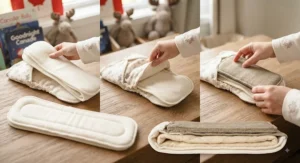
Start with your fastest-absorbing layer closest to the baby’s skin — typically microfiber or bamboo — and place your slowest, highest-capacity layer (hemp) underneath, tucked further into the pocket. This isn’t arbitrary: a fast top layer intercepts the initial flood of urine before it has time to pool, while the hemp layer underneath handles the total volume across the night without releasing it back under weight or movement. Stuffing hemp on top and microfiber underneath tends to produce more compression leaks, because the slower hemp hasn’t caught the initial surge before the faster layer beneath it is already saturated.
For most moderate overnight wetters, a stock microfiber insert plus one hemp insert is sufficient for 8-10 hours. Heavier wetters typically need two stacked layers — commonly a hemp insert plus a bamboo booster — to reach the 10-12 hour range without external leaking. Avoid stuffing the pocket so tightly that the elastic gusset can’t sit flush against the leg; an over-stuffed diaper often leaks not from lack of absorbency but from a gap the extra bulk creates at the leg opening. Pre-wash new hemp and bamboo inserts three to five times before their first overnight use — both materials reach only a fraction of their rated absorbency straight out of the packaging.
Real-World Scenarios: Matching Inserts to Your Baby’s Wetting Habits
Not every baby needs the same overnight setup, and matching your insert stack to actual wetting patterns saves money and laundry. Consider three common situations.
If your baby is a newborn under three months who feeds every few hours overnight, moderate absorbency matters more than maximum capacity, since you’re likely changing them at least once during the night regardless. A single hemp insert inside a smaller-rise pocket diaper is usually sufficient, and prioritizing a trim, adjustable shell like Mama Koala 2.0 One Size Pocket Diaper matters more here than raw overnight capacity.
If your toddler has started drinking a full cup of water or milk before bed and sleeping a solid 11-12 hours, you’re dealing with genuinely high overnight volume. This is the scenario where a purpose-built shell like Kanga Care Goodnight Heavy Wetter Pocket Diaper, stuffed with a stacked hemp-and-bamboo combination, earns its bulk — a lighter setup will likely leak by early morning.
If you have a side- or stomach-sleeper who consistently leaks at the legs or up the back rather than through the front, the problem usually isn’t total absorbency at all — it’s containment. In that case, a diaper with reinforced gussets such as Rumparooz G2 One-Size Pocket Diaper solves a different problem than simply adding more inserts would.
Solving Overnight Leaks: A Problem-Solution Guide
Overnight cloth diaper compression is the leak mechanism most parents never learn the name of, but it’s usually the actual culprit when a diaper “should” have been absorbent enough and wasn’t.
Problem: The diaper feels saturated but soaked-through at the surface by morning. This is a classic compression leak — usually microfiber that reached capacity around hour five or six and released moisture back outward under the weight of a sleeping baby. Solution: replace or supplement the top layer with hemp or bamboo, both of which lock in liquid far more effectively under pressure than microfiber alone.
Problem: Leaking specifically at the leg openings, not the front or back. This points to a fit or gusset issue rather than an absorbency one. Solution: check that the insert isn’t bunched wide enough to push the leg elastic away from the skin, and consider a double-gusset shell if the issue persists across multiple diapers.
Problem: The diaper leaks only on nights your baby drinks a large amount before bed. This is a straightforward volume mismatch. Solution: add a second hemp or bamboo doubler specifically on high-intake nights rather than permanently over-stuffing every diaper, which can create its own fit problems.
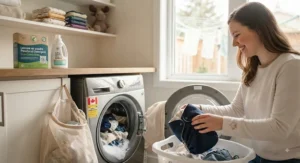
Problem: Ammonia smell builds up in overnight inserts even though they don’t leak. This is a washing routine issue, not an insert problem. Solution: ensure a proper pre-wash cycle before the main wash, and avoid fabric softener, which coats fibres and reduces absorbency over time.
How to Choose Pocket Diapers with Inserts for Overnight Use
- Start with your baby’s actual overnight wetting volume, not the marketing claims on any single insert — a light sleeper who wakes for feeds needs less capacity than a 12-hour toddler sleeper.
- Prioritize shells with a wide, easy-access pocket opening if you plan to stack two inserts; a narrow pocket makes stuffing genuinely harder at night.
- Budget for natural fibre inserts separately if choosing a budget shell, since most low-cost pockets ship with microfiber that underperforms overnight on its own.
- Check the size range against your baby’s growth timeline — a diaper rated to 40 lbs saves money over a stash you’ll outgrow in a year.
- Weigh gusset design against your baby’s sleep position — side and stomach sleepers benefit more from double-gusset shells than back sleepers.
- Factor in dry time if you wash every other day, since separable insert-and-shell pocket systems dry faster than sewn-in all-in-ones.
- Don’t assume premium price equals overnight performance — some of the biggest overnight gains come from a C$10 hemp insert, not a C$36 shell.
Bamboo Insert Pocket Diapers vs. Microfiber: The Overnight Absorbency Showdown
The microfiber-versus-bamboo debate isn’t really about which material is “better” — it’s about which job each one is suited to, and overnight use exposes that difference clearly.
Microfiber absorbs quickly, which makes it excellent for daytime changes every two to three hours, but it has comparatively low total capacity and, critically, releases moisture back out when compressed under a sleeping baby’s weight. Bamboo insert pocket diapers behave almost opposite: bamboo absorbs more slowly, but holds substantially more total liquid and resists releasing it under pressure, which is exactly the property overnight use demands. On paper, this makes bamboo the stronger standalone overnight material, but its slower absorption speed means a fast top layer still helps intercept the initial wetting before it has time to pool against the skin.
| Insert Material | Absorption Speed | Total Capacity | Compression Resistance | Best Use |
|---|---|---|---|---|
| Microfiber | Fastest | Lowest | Poor | Daytime, top layer only |
| Bamboo | Moderate | High | Good | Overnight middle layer or standalone |
| Hemp | Slowest | Highest | Excellent | Overnight base layer, heavy wetters |
Based on the spec comparison, the most effective overnight stack for most families pairs a thin microfiber or bamboo layer on top with hemp underneath, rather than relying on any single material alone. Reviewers testing inserts across dozens of wash cycles consistently note that hemp and bamboo both require several pre-washes to reach full rated absorbency, which is an easy detail to miss on a first overnight attempt.
Common Mistakes When Buying Overnight Cloth Diaper Inserts
The most common mistake is buying based on layer count alone — a “6-layer” microfiber insert can hold less total liquid than a 4-layer hemp insert, because material matters more than layer number. A second frequent error is skipping the pre-wash cycle; both hemp and bamboo need three to five washes before they hit full absorbency, and a disappointing first overnight test is often a prep problem, not a product problem.
Parents also commonly under-budget for overnight-specific purchases, assuming the stock insert that ships with a shell will handle both day and night use — as the waste and cost data from Canadian municipal cloth-diaper programs makes clear, most families end up spending on supplemental inserts as part of the real, total cost of a cloth stash. Finally, a subtler mistake is over-stuffing a diaper to “solve” leaks that are actually a fit problem — extra bulk can push the leg elastic away from the skin and create the exact gap it was meant to prevent.
What to Expect: Real-World Overnight Performance
Specs on a package rarely translate directly into a dry crib sheet, so it’s worth setting realistic expectations. A well-stuffed pocket diaper with a hemp-and-microfiber or hemp-and-bamboo combination typically handles 10-12 hours for moderate-to-heavy wetters once inserts are fully broken in through repeated washing — usually somewhere between wash three and wash five. In the first week or two of use, expect some trial and error: most parents adjust their stuffing combination at least once as they learn their baby’s actual overnight volume, rather than getting it right on the first attempt.
Expect a noticeably bulkier fit overnight than during the day — this is normal and, for genuinely heavy wetters, a sign the diaper is doing its job rather than a design flaw. It’s also worth expecting a longer wash routine on inserts specifically, since hemp and bamboo generally need a longer pre-wash cycle than microfiber to fully rinse out natural oils that initially limit absorbency.
Long-Term Cost & Maintenance of Pocket Diapers for Overnight Use
A full overnight-ready stash of six to eight pocket diapers, plus supplemental hemp and bamboo inserts, typically runs C$200-C$400 depending on which shells you choose from this list and how many extra boosters you add. That figure looks steep next to a single pack of overnight disposables, but the comparison shifts quickly over time: municipal programs across Montreal boroughs offering cloth diaper subsidies have cited total family savings well over C$1,000 across a typical diapering period once the upfront stash cost is amortized.
Maintenance is the recurring cost that’s easy to underestimate: expect an extra load of laundry every two to three days, and budget for insert replacement roughly every 12-18 months as hemp and microfiber both lose some absorbency capacity through hundreds of wash cycles. Shells generally outlast inserts by a wide margin — a well-made pocket shell can realistically serve two or more children if elastic and PUL are cared for properly, which is where most of the long-run savings actually come from.
Safety, Fit & Regulations for Canadian Families
Health and safety around overnight cloth diapering in Canada centres mostly on fit and skin care rather than formal regulation, since reusable cloth diapers aren’t subject to the same federal product rules as, say, car seats or cribs. That said, several Canadian municipalities — including Greater Sudbury’s cloth diaper rebate program — require proof that diapers meet basic quality standards before issuing subsidies, which is a reasonable proxy for choosing shells from established, traceable manufacturers rather than unverified sellers.
The bigger practical safety consideration overnight is prolonged skin contact: a well-stuffed diaper worn 10-12 hours means significantly longer exposure to moisture than a daytime three-hour change, which raises the stakes on both insert material and fit. Never lay microfiber directly against skin outside of a pocket lining — it’s absorbent enough to actually dry out skin and contribute to rash. If redness or irritation persists despite frequent changes and barrier cream, that’s a sign to check fit and material choice rather than push through with the same setup.

FAQ
❓ Can any pocket diaper be used overnight, or do I need a special one?
❓ How many inserts do I need to stuff a pocket diaper for overnight use?
❓ Do bamboo inserts really outperform microfiber overnight?
❓ Why does my pocket diaper leak overnight even with extra inserts?
❓ How long do pocket diaper inserts take to reach full overnight absorbency?
Conclusion
Pocket diapers for overnight use don’t require a specialized, expensive category of product — they require the right insert stack, matched honestly to how much your specific baby wets overnight, stuffed correctly, and broken in through a handful of washes before you judge whether they’re working. Budget shells like AlvaBaby One Size Pocket Diaper and Mama Koala 2.0 One Size Pocket Diaper can perform just as well overnight as premium options once paired with proper hemp or bamboo boosters, while purpose-built picks like Kanga Care Goodnight Heavy Wetter Pocket Diaper and containment-focused designs like Rumparooz G2 One-Size Pocket Diaper solve more specific problems — high volume and leg leaks, respectively — that not every family actually has.
The real skill in overnight cloth diapering isn’t picking the single “best” product; it’s diagnosing which failure mode you’re actually dealing with — capacity, compression, or containment — and matching your insert stack and shell choice to that specific problem. Start with one solid shell, add a hemp insert, and adjust from real overnight results rather than guessing upfront.
🛒 Ready to Banish the 3 a.m. Diaper Change?
👉 Check current pricing on today’s picks on amazon.ca and start building an overnight stash your whole household — washing machine included — can actually live with.
Recommended for You
- All-In-One Cloth Diapers for Beginners: 7 Easy Picks for 2026
- Prefold Diapers and Covers Starter Kit: 7 Picks That Work in 2026
- Size 4 Diapers for Toddlers: 7 Top Picks for 2026 (Canada Guide)
Disclaimer: This article contains affiliate links. As an Amazon Associate, I earn from qualifying purchases. If you purchase products through these links, we may earn a small commission at no additional cost to you.
✨ Found this helpful? Share it with another sleep-deprived parent! 💬🤗
