In This Article
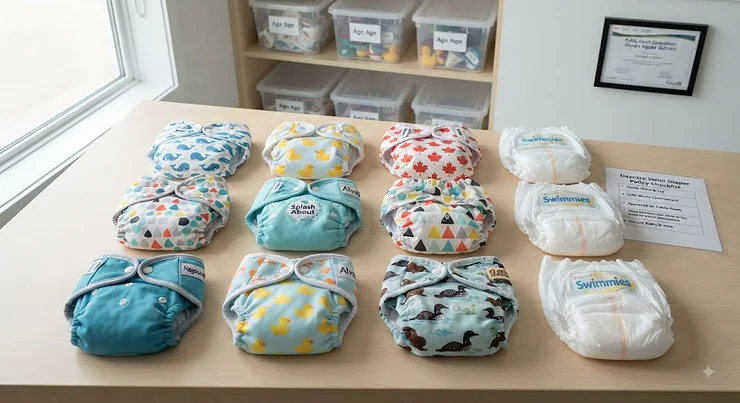
Somewhere between “sure, we do water play on Fridays” and the actual Friday, most parents realize they have no idea what their daycare will and won’t accept in the pool. Swim diapers for daycare are a different animal from the diaper in your changing table drawer, and centres are surprisingly particular about which kind makes the cut. What is a swim diaper? In short, it is a snug-fitting garment — disposable or reusable — designed to contain solid waste in water without absorbing liquid and swelling up, unlike a regular diaper, which will bloat, leak, and get a pool shut down fast.
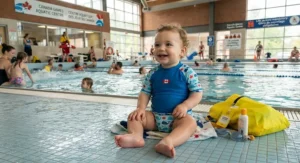
That distinction is exactly why daycares, splash pads, and public pools have written policies about it, and why “just grab whatever’s at the grocery store” can backfire on picture day. Some centres want disposables only for hygiene reasons. Others insist on a reusable outer layer over a disposable liner. A few, frustratingly, won’t tell you until your child is standing poolside in the wrong gear. This guide cuts through that uncertainty with seven real, Canada-available products — a mix of daycare-approved swim diapers, reusable swim diapers, and disposable swim diapers — plus the actual rules Canadian pools and swim schools enforce, so you’re not guessing on drop-off morning.
We’ll also get into public pool diaper policies province by province, what swim lesson requirements actually demand from toddlers who are mid-potty-training, and which leak-proof swim gear features are worth paying for versus which ones are just marketing gloss. By the end, you’ll know exactly which diaper goes in the swim bag and why.
Quick Comparison Table
| Product | Type | Best For | Price Range (CAD) |
|---|---|---|---|
| Huggies Little Swimmers | Disposable | Grab-and-go daycare drop-offs | C$12–C$16 |
| Pampers Splashers | Disposable | Easiest tear-away removal | C$13–C$18 |
| i play. by Green Sprouts Reusable Swim Diaper | Reusable | Everyday swim lessons | C$20–C$26 |
| Charlie Banana Reusable Swim Diaper | Reusable | Frequent swimmers, long-term value | C$28–C$38 |
| Splash About Happy Nappy | Reusable (double-layer) | Programs requiring extra containment | C$30–C$42 |
| Kushies Waterproof Reusable Swim Diaper | Reusable | Budget-conscious families | C$18–C$24 |
| Beau and Belle Nageuret Reusable Swim Diaper | Reusable | Adjustable fit as baby grows | C$35–C$45 |
Glance at that table and a pattern jumps out fast: disposables win on convenience for the odd pool day, while reusables pull ahead the moment “swim day” becomes a weekly line item on the daycare calendar. Huggies Little Swimmers and Pampers Splashers solve the same problem — a one-and-done outing where you don’t want to deal with laundry — but the reusable options like Charlie Banana Reusable Swim Diaper and Kushies Waterproof Reusable Swim Diaper start paying for themselves after roughly a dozen wears. If your centre has told you flat-out that it requires a double layer, Splash About Happy Nappy is the one purpose-built for exactly that rule.
💬 Just one click — help other daycare parents skip the guesswork too!😊
Top 7 Swim Diapers for Daycare: Expert Analysis
1. Huggies Little Swimmers — daycare-friendly disposable staple
The reason Huggies Little Swimmers shows up on almost every centre’s approved list isn’t marketing — it’s that the design solves the specific problem daycares care about: containment without bulk. The stretchy waistband and tear-away sides mean a caregiver juggling four toddlers post-splash-time can get a soiled diaper off in seconds, without wrestling with snaps or adhesive tabs that have gone soggy. Sizing runs from small (up to roughly 7 kg) through large (over 18 kg), and the fit is snug enough at the leg that most parents don’t need a second layer.
Based on the spec comparison against other disposables in this category, Huggies Little Swimmers sits in the middle on price but wins on availability — it’s stocked at nearly every Canadian pharmacy and grocery store, which matters when you realize at 7 a.m. that the swim bag is empty. Reviewers consistently report solid leak containment for solids during short daycare pool sessions (30–45 minutes), though a handful note the fit runs slightly loose on very slim-legged infants. This is the pick for parents who want zero laundry and maximum daycare-approval certainty.
Pros:
- ✅ Accepted by nearly every Canadian daycare and pool
- ✅ Tear-away sides speed up quick changes
- ✅ Fragrance-free, no elemental chlorine bleaching
Cons:
- ❌ Single-use adds up in cost for frequent swimmers
- ❌ Fit can run loose on slim-legged babies
Priced around C$12–C$16 per pack at the time of research, Huggies Little Swimmers delivers strong value for occasional use, though the per-wear cost climbs fast if your daycare does water play more than once a week.
2. Pampers Splashers — easiest tear-away removal
What most buyers overlook about Pampers Splashers is how much the removal mechanism matters when you’re the one crouched on a wet pool deck with a squirming, dripping toddler. The dual leak-guard barriers sit at both the waist and legs, and the 360-degree stretch panel is genuinely snug without leaving red marks — a small design detail that separates the good disposables from the merely adequate ones.
On paper this means comparable containment to Huggies Little Swimmers, but reviewers consistently point out that Pampers Splashers rip apart more cleanly on the sides, which is a bigger deal than it sounds when your daycare pickup window is five minutes and your kid has decided today is the day they refuse to stand still. Sizing runs small to extra-large, covering roughly 7 kg to over 16 kg. This is a strong pick for daycares that report frequent accidents needing fast diaper swaps between activities.
Pros:
- ✅ Clean, easy tear-away sides even when wet
- ✅ Dual leak-guard barriers at waist and legs
- ✅ Wide size range for growing toddlers
Cons:
- ❌ Still single-use, so costs accumulate
- ❌ Limited print/colour options compared to competitors
Expect to pay in the C$13–C$18 range depending on pack size, putting Pampers Splashers roughly on par with Huggies Little Swimmers — the choice between the two often comes down to which one is easier to grab off your usual store’s shelf.
3. i play. by Green Sprouts Reusable Swim Diaper — best all-around reusable for lessons
Here’s what the spec sheet won’t tell you, but daycare and swim-instructor reports do: i play. by Green Sprouts Reusable Swim Diaper shows up constantly on swim school “approved gear” lists because the built-in UPF 50+ liner and snap closure hold their shape wash after wash, which matters when a child is in the same diaper three days a week for a whole season. The snug leg gussets do the actual containment work, while the outer layer is just water-resistant fabric — not absorbent — so it won’t get heavy or sag mid-lesson.
Based on the spec comparison with other reusables, this one earns its reputation as the “safe default” recommendation: it’s machine washable, holds up over multiple swim seasons, and the snap sizing adjusts as your toddler grows through a size range. Aggregated review sentiment is strongly positive on durability, with several parents noting theirs lasted two full summers of weekly wear; the more common complaint is that the print selection is fairly plain compared to flashier competitors.
Pros:
- ✅ UPF 50+ liner adds sun protection bonus
- ✅ Holds shape and elasticity after repeated washing
- ✅ Snap sizing adjusts as your toddler grows
Cons:
- ❌ Limited, fairly plain print options
- ❌ Needs a rinse-and-wash routine after every use
At roughly C$20–C$26, i play. by Green Sprouts Reusable Swim Diaper lands in the sweet spot between the budget reusables and the premium ones, and for families doing weekly lessons, it likely pays for itself within a single swim term.
4. Charlie Banana Reusable Swim Diaper — best for frequent swimmers
Charlie Banana Reusable Swim Diaper has been in the cloth-diaper space for well over a decade, and that longevity shows in the fit engineering: adjustable snap rows let one diaper cover a genuinely wide weight range, roughly 6 to 40 lbs (about 2.7 to 18 kg), so a lot of families buy exactly one size and ride it out through toddlerhood. The side-snap closure is also a practical win — you can get it on or off a wet, uncooperative toddler far faster than a diaper that pulls on over the head.
What most buyers overlook is the value math here: at a cost-per-use level, one Charlie Banana Reusable Swim Diaper that survives 100+ washes works out cheaper than a season of disposables, and it produces meaningfully less landfill waste — a point Amazon listings rarely mention but parents managing a weekly daycare swim schedule care about a lot. Reviewers consistently praise the containment for solids and the snap durability; the recurring complaint is that hand-rinsing before a machine wash is basically mandatory to avoid staining.
Pros:
- ✅ Adjustable snaps fit one child for years
- ✅ Strong containment even for messier accidents
- ✅ Lower long-term cost than repeat disposables
Cons:
- ❌ Requires a rinse step before washing
- ❌ Higher upfront cost than a single disposable pack
Priced around C$28–C$38, Charlie Banana Reusable Swim Diaper asks for more money upfront, but for a family swimming weekly, the value verdict tips clearly in its favour over a season of restocking disposables.
5. Splash About Happy Nappy — best for double-layer program requirements
If your daycare or swim school has specifically told you they require a reusable outer layer over a disposable, Splash About Happy Nappy is very likely the product they mean — it’s become something of an industry default for that exact rule, with extended leg and waist coverage designed to be worn on top of a standard disposable swim diaper rather than instead of one. The neoprene-style waistband sits higher and grips tighter than most competitors, which is precisely why some programs mandate it specifically.
Based on the spec comparison, this is a niche pick rather than an everyday one: it’s bulkier than a standalone reusable, and it’s genuinely meant to be paired, not worn solo. Aggregated review sentiment notes that parents whose centres require double-layering find it far less of a hassle once they stop fighting the requirement and just buy the product built for it. A common complaint in user reviews is that the fit runs slightly large in the smallest sizes, so sizing down is often recommended.
Pros:
- ✅ Purpose-built for double-layer program requirements
- ✅ Extended waist and leg coverage for extra security
- ✅ Higher-grip waistband reduces gapping
Cons:
- ❌ Bulkier fit than a standalone reusable
- ❌ Smallest sizes tend to run large
Expect to pay roughly C$30–C$42 for Splash About Happy Nappy, and note that you’ll still need a disposable or second reusable underneath, so factor that into your total swim-bag cost.

6. Kushies Waterproof Reusable Swim Diaper — best budget reusable
Kushies Waterproof Reusable Swim Diaper is a Canadian-made option, and for budget-conscious families it’s the reusable that gets the basics right without the premium price tag. The design is simpler than Charlie Banana Reusable Swim Diaper — fewer size increments, a straightforward snap closure — but the waterproof shell and snug elastic legs do the core job of solid-waste containment competently.
Here’s what the spec sheet doesn’t emphasize: because the sizing is broader (small, medium, large rather than fully adjustable), you may need to size up once during toddlerhood, but the trade-off is a noticeably lower price point that makes it easy to own two or three for laundry rotation. Reviewers consistently describe it as “no-frills but reliable,” with the most common complaint being fewer print/colour choices than the U.S.-made competitors. For families new to reusables and unsure if they’ll stick with it, this is the low-commitment entry point.
Pros:
- ✅ Lower price makes owning a rotation affordable
- ✅ Waterproof shell with snug elastic leg fit
- ✅ Canadian brand, widely stocked domestically
Cons:
- ❌ Fewer size increments than adjustable competitors
- ❌ Limited print and colour selection
At around C$18–C$24, Kushies Waterproof Reusable Swim Diaper is the best value entry point into reusables for families who want to test the waters, so to speak, before committing to a pricier adjustable model.
7. Beau and Belle Nageuret Reusable Swim Diaper — best adjustable fit as baby grows
Beau and Belle Nageuret Reusable Swim Diaper is the premium pick on this list, and the adjustable, multi-snap design explains why: it’s built to fit a single child from roughly 8 to 36 lbs (about 3.6 to 16 kg), which for most families spans the entire swim-diaper phase of early childhood. The soft mesh liner and sturdy snap rows keep the fit tight through repeated washing, and the fabric doesn’t sag or lose elasticity the way cheaper reusables sometimes do by the second summer.
Based on the spec comparison, the case for paying more here is straightforward: one diaper, multiple years, no repurchasing as your child grows — a genuine cost-per-use advantage over both disposables and single-size reusables. Aggregated review sentiment is notably strong, with several parents describing it as one of their better parenting purchases specifically because it eliminated the “which size do I need now” guesswork. The trade-off, unsurprisingly, is the higher sticker price relative to budget reusables.
Pros:
- ✅ Adjustable design fits one child for years
- ✅ Soft mesh liner stays snug after many washes
- ✅ Wide range of colourful, kid-friendly designs
Cons:
- ❌ Higher price point than most reusables
- ❌ Wide adjustability means less precise fit at extremes
At roughly C$35–C$45, Beau and Belle Nageuret Reusable Swim Diaper costs the most upfront of the seven, but for families committed to reusables long-term, the multi-year fit range makes the value case hold up.
Practical Usage Guide: Getting Daycare Swim Days Right
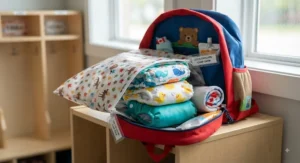
Buying the right swim diaper is only half the job — using it correctly is what actually keeps your daycare happy and your kid dry-adjacent. Start with fit, not size chart guesses: on both disposables and reusables, you want no gap you can fit more than a finger through at the leg or waist, but nothing leaving red pressure marks either. Bring a labelled wet bag every swim day; most daycares will hand back a soiled diaper in whatever you sent, and an unlabelled plastic grocery bag tends to go missing in the shuffle.
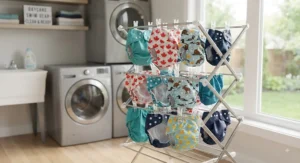
For reusable users, the maintenance routine matters more than people expect. Rinse solids into the toilet immediately after pickup, then either machine wash on a gentle cycle or hand-wash with a mild detergent — fabric softener actually degrades the waterproof liner over time, so skip it. Common first-30-days mistakes: sending a reusable that hasn’t fully dried between uses (mildew smell sets in fast), assuming one size lasts a full year without checking fit monthly, and forgetting that some daycares require the swim diaper to be sent home for washing rather than laundered on-site. If your centre requires the Splash About Happy Nappy double-layer approach, pack both pieces together in the same bag so nothing gets left behind on a rushed morning.
✨ Don’t Miss These Exclusive Deals!
🔍 Take your daycare swim routine to the next level with gear that actually holds up. Click on any highlighted product to check current pricing and availability — the right swim diaper today saves you a frantic 7 a.m. search tomorrow!
Real-World Scenarios: Which Swim Diaper Fits Your Family
Picture three different households, because “best swim diaper” genuinely depends on which one you are. First, the daily-daycare toddler: 18 months old, water play three times a week, parents juggling two jobs and zero patience for laundry sorting. For this family, a reusable like Charlie Banana Reusable Swim Diaper or i play. by Green Sprouts Reusable Swim Diaper makes financial sense fast — at three uses a week, the cost-per-wear on disposables would outpace a reusable within about six weeks.
Second, the occasional swimmer: a family that hits the community pool maybe once a month in summer, with no standing daycare swim schedule. Here, Huggies Little Swimmers or Pampers Splashers are the more sensible call — buying a reusable for infrequent use just means it sits in a drawer most of the year, and the upfront cost never fully pays back. Third, the swim-lesson family navigating a program with strict double-layer rules: this is exactly the scenario Splash About Happy Nappy was built for, worn over a disposable base layer, because the instructor won’t budge on the requirement and arguing poolside helps no one.
How to Choose Swim Diapers for Daycare
Picking the right one comes down to a handful of concrete factors, not gut instinct:
- Check your daycare’s written policy first. Some centres accept only disposables for hygiene reasons; others mandate a reusable-plus-disposable combo. Email and ask before buying.
- Match frequency to type. Water play more than once a week tips the math toward reusables; occasional outings favour disposables for zero laundry hassle.
- Get the fit right, not just the size. Weight ranges on packaging are a starting point — check for gapping at the legs after your child sits down in the tub.
- Consider closure style. Snaps are faster for squirming toddlers than pull-up styles; tear-away sides matter most for disposables during rushed changes.
- Factor in total cost over a season, not just the sticker price — a C$35 reusable beats six C$15 disposable packs over a summer of weekly swim days.
- Check for chlorine-safe materials if your daycare’s pool is heavily treated, since some fabrics degrade faster under repeated chlorine exposure.
- Keep a backup in the bag. Accidents happen mid-lesson; a spare disposable in the swim bag avoids an early pickup call.
Daycare-Approved Swim Diapers: What Centres Actually Require
Daycare-approved swim diapers aren’t a single standardized category — what one centre accepts, another rejects outright. Most Canadian licensed daycares that offer pool or water-play programming follow guidance similar to public pool operators: no standard absorbent diapers, ever, because the gel-forming material inside swells in water and can release into the pool. Beyond that baseline, policies diverge. Some centres, especially those bussing kids to a municipal pool, simply defer to whatever that facility requires. Others set their own house rules for splash-pad or wading-pool days on-site.
The safest approach is boringly practical: ask for the policy in writing at enrollment, not on the first swim day. If the centre doesn’t specify brand, a disposable like Huggies Little Swimmers or Pampers Splashers satisfies nearly every policy in the country, since both are explicitly designed and marketed for pool use rather than general wear. If the centre requires a reusable outer layer, confirm whether they mean any snug swim garment or specifically something like Splash About Happy Nappy — some programs are stricter about brand than parents expect.
Reusable Swim Diapers vs Disposable Swim Diapers
The reusable-versus-disposable debate isn’t really about which one works better — both contain solid waste effectively when properly fitted. It’s about which trade-offs fit your family’s routine.
| Factor | Reusable Swim Diapers | Disposable Swim Diapers |
|---|---|---|
| Upfront cost | C$18–C$45 per diaper | C$12–C$18 per pack |
| Cost over a swim season (weekly use) | Lower — pays back within weeks | Higher — repeat purchases add up |
| Convenience | Requires rinsing and washing | Zero laundry, toss and go |
| Environmental impact | Lower, produces landfill waste only from packaging | Higher, single-use each time |
| Best for | Frequent swimmers, daycare with regular water days | Occasional outings, travel, backup |
Looking at the comparison above, frequent swimmers come out ahead financially and environmentally with reusables like Kushies Waterproof Reusable Swim Diaper or Charlie Banana Reusable Swim Diaper, but that advantage assumes you’ll actually do the rinse-and-wash routine consistently. Families who swim rarely, or who are travelling and don’t want to pack a wet diaper home, are genuinely better served by disposables like Pampers Splashers — the “better” option here depends entirely on your swim frequency, not on any inherent quality gap between the two formats.
Public Pool Diaper Policies Across Canada
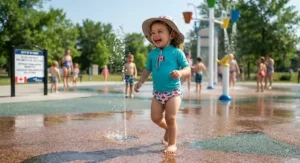
Public pool diaper policies vary by province and even by municipality, which catches a lot of parents off guard when a policy that worked at one facility gets rejected at another. The consistent thread nationwide: standard absorbent diapers are banned everywhere, cloth or disposable, full stop.
| Region / Facility Type | Typical Rule |
|---|---|
| British Columbia (per BC Guidelines for Pool Operations) | Requires swim diapers and/or elastic swim pants for infants and toddlers |
| Manitoba municipal pools (e.g., Winnipeg) | Disposable swim diapers acceptable; cloth diapers need waterproof rubber pants plus a swim garment over top |
| Ontario municipal pools (e.g., Hamilton) | Approved swim diaper/brief required; standard diapers explicitly banned |
| Most Canadian swim schools and daycares | Follow whichever municipal pool’s rules apply, or set an equal-or-stricter house policy |
A pattern worth noting: BC’s rule leans toward allowing either a purpose-made swim diaper or elastic swim pants, while several Prairie and Ontario municipalities are stricter about cloth diapers needing a waterproof outer layer on top. If you’re travelling between provinces for lessons or visiting family, it’s worth double-checking the local facility’s page rather than assuming last month’s rules still apply — as the City of Winnipeg’s pool rules make clear, enforcement is taken seriously enough that a fecal accident can shut a pool down for hours of mandatory disinfection.
Swim Lesson Requirements: What Red Cross and Lifesaving Society Programs Expect
Swim lesson requirements around diapering are fairly consistent across Canada’s two major program families — Canadian Red Cross Swim and the Lifesaving Society’s Swim for Life — even though their skill levels aren’t directly equivalent to each other, as noted in Wikipedia’s overview of swimming lessons. Both organizations, and most facilities running their programs, require any child who isn’t fully toilet-trained to wear a swim diaper for every single lesson, no exceptions for “he’s basically potty trained now.”
That last point trips up a lot of parents. According to a University of Toronto Kinesiology program page for its Parent-and-Tot swim lessons, children who aren’t toilet-trained must wear swim diapers regardless of age or progress, because toddlers lose bladder and bowel control more easily in warm pool water than on dry land — pool immersion itself can trigger accidents even in kids who haven’t had one at home in weeks. Practically, that means packing a swim diaper for every lesson through at least age three, and sometimes longer, until your instructor gives the explicit green light to skip it.
Leak-Proof Swim Gear: Features That Actually Matter (And Ones That Don’t)
Not every feature printed on swim diaper packaging translates into real-world performance, so here’s an honest filter. Snug leg gussets and a genuinely elastic waistband matter enormously — they’re the actual mechanism containing solid waste, and a loose fit defeats the entire product regardless of brand reputation. Closure style matters too: snaps generally outperform pull-up designs for wet, wriggly toddlers, which is part of why Charlie Banana Reusable Swim Diaper and i play. by Green Sprouts Reusable Swim Diaper both lean on snap closures rather than stretch-on designs.
What matters less than the marketing suggests: exact fabric brand names, since most reusable swim diapers use broadly similar water-resistant synthetic blends, and cute prints, which add zero functional value however much your toddler campaigns for the dinosaur pattern. UPF sun protection, as seen on i play. by Green Sprouts Reusable Swim Diaper, is a genuine bonus rather than a gimmick — but it’s a nice-to-have, not the deciding factor, since you’ll likely still need separate sunscreen and a rash guard for real coverage.
FAQ
❓ Are swim diapers required for daycare pool days in Canada?
❓ Can I use a reusable swim diaper without a disposable underneath?
❓ How many swim diapers should I pack for daycare?
❓ Do swim diapers absorb urine like regular diapers?
❓ What size swim diaper does my toddler need?
Conclusion
Swim diapers for daycare aren’t a one-size-fits-all purchase, and honestly, that’s kind of the point — a family swimming three times a week has completely different math than one hitting the splash pad twice a summer. Disposables like Huggies Little Swimmers and Pampers Splashers win on convenience and near-universal daycare acceptance, while reusables like Charlie Banana Reusable Swim Diaper, Kushies Waterproof Reusable Swim Diaper, and Beau and Belle Nageuret Reusable Swim Diaper pull ahead on long-term value and waste reduction once water play becomes a weekly fixture. If your centre has a specific double-layer rule, Splash About Happy Nappy was quite literally built for that requirement, and i play. by Green Sprouts Reusable Swim Diaper remains the dependable middle-ground pick most swim schools quietly recommend.
Whatever you choose, the real work happens before drop-off: confirm your daycare’s actual written policy, check the fit at the legs and waist rather than trusting the size chart blindly, and keep a backup in the bag. Do that, and swim day stops being a source of morning stress and just becomes, well, swim day.
Recommended for You
- Pocket Diapers for Overnight Use: 7 Best Picks (2026)
- All-In-One Cloth Diapers for Beginners: 7 Easy Picks for 2026
- Prefold Diapers and Covers Starter Kit: 7 Picks That Work in 2026
Disclaimer: This article contains affiliate links. As an Amazon Associate, I earn from qualifying purchases. If you purchase products through these links, we may earn a small commission at no additional cost to you.
✨ Found this helpful? Share it with your friends! 💬🤗
