In This Article
Somewhere between the third overnight leak and the fourth Google search at 2 a.m., every cloth diapering parent lands on the same worry: is this rash cream about to undo six months of careful laundry routine? It’s a fair worry, and a common one. Diaper rash cream for cloth diapers isn’t just a gentler version of whatever’s sitting in your medicine cabinet — it’s its own category, built around one non-negotiable rule. It has to calm angry skin without leaving your fabric coated in something your washing machine can’t touch.

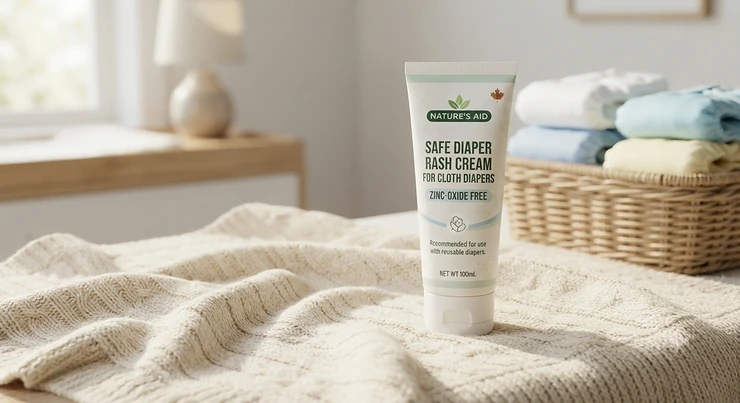
So, what is diaper rash cream for cloth diapers, exactly? It’s a barrier balm or ointment formulated without petroleum jelly or heavy zinc oxide paste, so it rinses cleanly out of natural and synthetic diaper fibres instead of building up and causing repelling, leaks, or reduced absorbency. Irritant diaper dermatitis — the clinical name for the redness every parent dreads — shows up at roughly the same rate in cloth and disposable households, so this isn’t a problem cloth families invented for themselves.
That’s a small relief, but it also means the right cream has to solve two problems at once: soothe the skin first, protect the stash second. Get the order backwards and you’ll end up with a baby who’s comfortable but diapers that repel every wee like a raincoat, or diapers that stay pristine while a rash festers underneath. Neither is acceptable, and thankfully neither is necessary.
Canadian parents shopping amazon.ca have a genuinely good spread of options this year, from Canadian-made herbal balms to zinc-oxide creams designed to pair with a liner. Below, we’ve dug into seven real, currently available products spanning budget, mid-range, and premium price points, with honest analysis of what the spec sheets and aggregated review sentiment actually tell you — not marketing copy dressed up as insight.
Quick Comparison: Diaper Rash Cream for Cloth Diapers at a Glance
| Product | Formula Type | Liner Needed? | Price Range (CAD) | Best For |
|---|---|---|---|---|
| Souris Verte Boo Boo Cream | Zinc-free, olive oil & herbal | No (may stain) | Around C$12–16 | Budget-conscious, Canadian-made preference |
| Grandma El’s Diaper Rash Ointment | Zinc-free, lightweight barrier | No | Around C$14–19 | Mess-free daily application |
| Motherlove Diaper Balm | Zinc-free, organic herbal salve | No | Around C$14–28 | Stubborn, inflamed rash |
| CJ’s BUTTer | Zinc-free, shea butter multi-use | No | Around C$16–26 | Whole-family skin balm |
| Earth Mama Diaper Balm | Zinc-free, organic herbal | No | Around C$20–30 | Sensitive newborn skin |
| Esembly Everyday Balm | Zinc-free, coconut oil & shea | No | Around C$28–38 | Daily prevention, eco-conscious systems |
| Weleda Calendula Diaper Cream | 12% zinc oxide + lanolin | Yes, recommended | Around C$16–23 | Active rash needing stronger protection |
Looking at the lineup, there’s a clear split between the zinc-free balms that go straight onto cloth without a second thought and the one zinc-oxide option, Weleda Calendula Diaper Cream, that trades a little extra convenience for noticeably stronger barrier protection. Budget shoppers gravitate toward Souris Verte Boo Boo Cream and Grandma El’s Diaper Rash Ointment, while families chasing an all-in-one eco-diapering system tend to land on Esembly Everyday Balm because it’s sold by the same company as their cloth inserts. None of these are exact-price guarantees — always check current price at checkout, since Amazon pricing shifts constantly.
Just one click — help others make better buying decisions too!😊
Top 7 Diaper Rash Creams for Cloth Diapers: Expert Analysis
Coverage below spans budget to premium, zinc-free herbal balms to a stronger zinc-oxide option, and includes a Canadian-made pick alongside well-known imported brands. Each entry blends real specs with honest, sourced analysis — not a rewritten product listing.
1. Souris Verte Boo Boo Healing & Diaper Rash Cream — best Canadian-made budget pick
Made in Canada and licensed under Health Canada’s Natural Product Number system, Souris Verte Boo Boo Cream leans on organic olive oil, beeswax, plantain, calendula, and comfrey rather than zinc oxide or petroleum. That NPN registration matters more than it sounds: it means Health Canada has actually reviewed the formulation for safety and labelling accuracy, which not every “natural” diaper cream on Amazon can claim. The olive-oil base gives it a thick, almost green-tinted texture that spreads easily over irritated skin without tugging.
Who should reach for this one? Parents dealing with mild, everyday chafing rather than a raging, weepy rash — the herbal blend is soothing but not as clinically potent as a zinc-oxide barrier. Reviewers on the manufacturer’s own site and third-party retailers consistently describe it as gentle and effective for prevention, with several specifically noting it works well layered under cloth diapers without repelling issues. The brand itself is upfront that the green tint can stain lighter-coloured cloth, which is honest disclosure worth respecting rather than glossing over.
Pros:
- ✅ Health Canada NPN-licensed formulation
- ✅ Zinc-free, so it rinses out without a liner
- ✅ Multi-purpose — doubles as a minor-cut and scrape salve
Cons:
- ❌ Green tint can stain light-coloured cloth diapers
- ❌ Milder barrier strength than zinc-oxide options
Priced around C$12–16 for the standard tube, it’s one of the most affordable cloth-safe options in this roundup, and the value holds up well for everyday prevention rather than acute rash treatment.
2. Grandma El’s Diaper Rash Ointment — best for mess-free, no-residue application
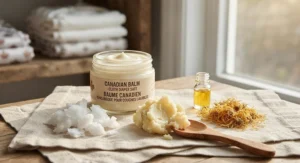
Grandma El’s Diaper Rash Ointment has been a mainstay in cloth diapering circles for well over a decade, largely because it applies thin and smooth instead of sitting on the skin like a paste. The formula skips zinc oxide entirely, relying instead on a blend of skin-conditioning oils and vitamin E, which is why it’s marketed specifically as compatible with both cloth and disposable diapers without a special application routine.
What most buyers overlook about a lightweight formula like this is the trade-off it makes: less mess and easier rub-in comes at the cost of a slightly shorter-lasting barrier compared to thicker zinc pastes, so it may need reapplying more often during an active flare-up. Aggregated reviews across retail sites frequently mention noticeable improvement within one or two diaper changes for mild-to-moderate irritation, and several long-time cloth diapering parents specifically cite it as one of the few creams they trust without a liner.
Pros:
- ✅ Smooth, low-residue texture for quick application
- ✅ No liner required for most cloth diaper types
- ✅ Pediatrician-tested formula with a long track record
Cons:
- ❌ May need more frequent reapplication than thicker pastes
- ❌ Less effective on severe, weepy rash without added barrier support
At around C$14–19 for the standard jar, it sits comfortably in the budget-to-mid range, and the value proposition is strong for parents who prioritize an easy, no-fuss routine over maximum barrier strength.
3. Motherlove Diaper Balm — best organic herbal formula for stubborn rash
Motherlove Diaper Balm (formerly sold as Diaper Rash & Thrush Salve) is built around extra virgin olive oil, beeswax, Oregon grape root, myrrh gum, yarrow, and calendula — a 96% certified organic blend with no zinc oxide, petroleum, or lanolin. The Oregon grape root and myrrh gum are the standout ingredients here: both have recognized antifungal and antibacterial properties, which is exactly why the brand also markets this balm for yeast-related diaper rash, not just garden-variety chafing.
Based on the ingredient profile, this is the pick for parents dealing with a rash that’s been hanging around for more than a couple of days, especially if a yeast component is suspected — though a true yeast infection still warrants a pediatrician’s confirmation rather than guesswork. Aggregated customer sentiment is notably strong on ingredient transparency and lack of scent, with reviewers describing it as effective without any detectable fragrance; the recurring complaint, fairly consistently, is price per ounce compared to bulkier competitors.
Pros:
- ✅ Antifungal and antibacterial herbs for stubborn rash
- ✅ 96% certified organic, zinc- and petroleum-free
- ✅ Doubles as a nursing nipple balm without washing off
Cons:
- ❌ Higher cost per ounce than most competitors
- ❌ Smaller jar sizes mean more frequent repurchasing
Available in travel-friendly and larger sizes, expect to pay roughly C$14–28 CAD depending on size, and the value case is strongest for persistent or yeast-suspected rash rather than daily maintenance.
4. CJ’s BUTTer Original Shea Butter Balm — best multi-use family balm
CJ’s BUTTer was originally developed by a cloth diapering parent frustrated with the lack of cloth-safe options on the market, and that origin story shows up in the formula: organic shea butter, coconut oil, olive oil, cocoa butter, beeswax, and a touch of lanolin oil, with zero zinc oxide. The lanolin is worth flagging — it’s a wool-derived moisturizer, not the mineral-based barrier found in zinc creams, and it’s generally considered cloth-compatible in the small amounts used here.
What stands out in the spec sheet is versatility rather than raw barrier strength: the brand and its retailers list dozens of secondary uses, from eczema to chapped hands to cradle cap, which suggests a formula optimized for broad skin-conditioning rather than maximum rash-fighting power. Reviewers consistently frame it as a “one tub does everything” staple for cloth diapering households, with repeat purchases and multi-generational use showing up often in aggregated feedback; a smaller number note the scent (in scented versions) isn’t for everyone, which is why an unscented option exists.
Pros:
- ✅ Multi-purpose formula usable well beyond diapering
- ✅ Rich, deeply moisturizing shea and cocoa butter base
- ✅ Available in tub sizes that stretch the per-use cost down
Cons:
- ❌ Contains lanolin, a consideration for wool-allergy households
- ❌ Thicker texture takes a bit more rubbing to absorb
Priced roughly C$16–26 depending on tub size, the value improves significantly with the larger 12-ounce tub, since the cost per application drops the more you use it across the whole family.
5. Earth Mama Organic Diaper Balm — best for sensitive newborn skin
Earth Mama Diaper Balm, formerly branded Angel Baby Bottom Balm, is USDA Certified Organic and built from organic olive oil, shea butter, beeswax, jojoba, and a blend of antibacterial, antifungal herbs including St. John’s wort, plantain, chickweed, and calendula. It’s the only product in this roundup specifically noted as chosen by hospital NICUs, which is a meaningful signal — NICU formularies tend to favour genuinely hypoallergenic, fragrance-conservative formulas over ones that merely claim to be gentle.
Here’s what that hospital adoption actually tells a shopping parent: the formula has cleared a higher bar for skin compatibility on the most fragile skin there is, premature newborn skin, which is a reasonable proxy for how it’ll perform on a healthy but rash-prone toddler. Aggregated review sentiment leans heavily positive on texture (absorbs without greasiness) and scent (mild, herbal, not overwhelming), with the occasional reviewer noting the price feels steep for the smaller 2-ounce jar — a fair trade-off given the organic certification and sourcing transparency.
Pros:
- ✅ USDA Certified Organic with NICU-level formulation standards
- ✅ Absorbs quickly without a greasy after-feel
- ✅ Multi-use for cradle cap, minor scrapes, and dry skin
Cons:
- ❌ Premium pricing relative to jar size
- ❌ Contains essential oils, worth patch-testing for very sensitive skin
Expect around C$20–30 CAD depending on the 2- or 4-ounce size, and the value case is strongest for parents prioritizing certified-organic sourcing over stretching every dollar.
6. Esembly Everyday Balm — best for full eco cloth diapering systems
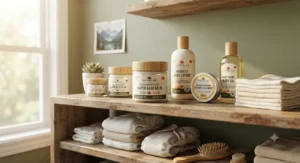
Esembly Everyday Balm comes from a company that also sells organic cotton cloth diaper inserts and waterproof covers, so it’s engineered from the ground up to wash cleanly out of a specific ecosystem of fabrics — a genuinely different design brief than a general-purpose rash cream retrofitted for cloth compatibility. The formula blends organic coconut oil with olive oil, shea nut oil, sunflower oil, beeswax, and vitamin E, deliberately balanced so it doesn’t turn rock-hard in a cold nursery or liquefy in a warm one, a real problem with straight coconut oil.
The spec sheet’s real story is temperature stability, which sounds minor until you’re fumbling with a solidified balm at 3 a.m. What most buyers overlook here is that this is positioned as a daily preventive balm rather than an acute-rash treatment — the brand markets it for use at every change, not just when redness appears. Reviewers who use the full Esembly diapering system report it washes out cleanly alongside their inserts, though a few note it’s a genuinely premium price point compared to drugstore alternatives.
Pros:
- ✅ Formulated specifically for reusable cloth diaper compatibility
- ✅ Temperature-stable texture that stays workable year-round
- ✅ Organic, petroleum-free, fragrance-free ingredient list
Cons:
- ❌ Highest price point in this roundup
- ❌ Best value realized alongside the brand’s own diaper system
At roughly C$28–38 for the 4-ounce jar, this is the premium pick, and the value math works best for households already invested in — or planning to invest in — a coordinated cloth diapering system.
7. Weleda Calendula Diaper Cream — best zinc-oxide option with a liner
Weleda Calendula Diaper Cream is the one entry here that isn’t zinc-free — it contains 12% zinc oxide alongside lanolin, calendula flower extract, chamomile, and sweet almond oil, and it carries a Health Canada Natural Product Number confirming its regulatory review. Zinc oxide remains one of the most clinically established diaper rash ingredients precisely because it forms a physical barrier that actively blocks moisture, which is a meaningfully different mechanism than the plant-oil barriers used in the six zinc-free products above.
On paper, this means stronger, faster protection during an active flare-up, but it comes with a real trade-off: zinc oxide and lanolin residues can build up on synthetic diaper fabrics over repeated washes, which is why the manufacturer itself recommends testing a small amount on your cloth diapers first, or using a disposable liner as insurance. Aggregated reviews are strongly positive on rash-clearing speed, with several long-time users specifically pairing it with a fleece or bamboo liner rather than skipping that step, which lines up with the honest safety note on the label.
Pros:
- ✅ 12% zinc oxide for a stronger active barrier
- ✅ Health Canada NPN-registered and dermatologically tested
- ✅ Fast-acting on visibly inflamed, weepy rash
Cons:
- ❌ Zinc oxide and lanolin can build up on cloth without a liner
- ❌ Not the first choice for everyday, rash-free prevention
Priced around C$16–23 CAD, it’s mid-range, and the value is excellent specifically as a “break glass in case of rash emergency” cream rather than a daily go-to.
Top 7 Comparison Table: Specs, Price Range & Ratings
| Product | Key Ingredient | Aggregated Sentiment | Price Range (CAD) | Best For |
|---|---|---|---|---|
| Souris Verte Boo Boo Cream | Organic olive oil & plantain | Strongly positive, prevention-focused | C$12–16 | Everyday budget use |
| Grandma El’s Diaper Rash Ointment | Vitamin E blend | Positive, praised for low mess | C$14–19 | Quick, mess-free changes |
| Motherlove Diaper Balm | Oregon grape root & myrrh | Positive, praised for potency | C$14–28 | Stubborn or yeast-suspected rash |
| CJ’s BUTTer | Organic shea & cocoa butter | Strongly positive, multi-use praise | C$16–26 | Whole-family versatility |
| Earth Mama Diaper Balm | Organic calendula & St. John’s wort | Positive, praised for gentleness | C$20–30 | Sensitive newborn skin |
| Esembly Everyday Balm | Organic coconut oil | Positive among system users | C$28–38 | Eco cloth diapering systems |
| Weleda Calendula Diaper Cream | 12% zinc oxide | Strongly positive on rash-clearing | C$16–23 | Active flare-ups with a liner |
Read side by side, the pattern is clear: the six zinc-free balms compete mostly on texture, scent, and price per ounce, while Weleda Calendula Diaper Cream stands apart as the only option built around an active pharmaceutical-grade barrier ingredient. If your baby’s skin is already broken or weeping, the spec sheet suggests reaching for the zinc option with a liner rather than hoping a gentler herbal balm catches up in time. For everyday prevention on healthy skin, though, any of the zinc-free picks will do the job without the extra liner step.
How to Use Cloth Diaper Safe Rash Cream Without Ruining Your Stash
Getting a cloth diaper safe rash cream right isn’t complicated, but the first thirty days are where most repelling problems get baked in without anyone noticing. Start by patch-testing any new cream on one diaper insert you don’t mind sacrificing — apply a normal amount, wash it through your usual routine, and check whether water beads up or soaks in afterward. If it beads, that cream needs a liner going forward, full stop.
Application itself should be a thin, even layer, not a thick paste — more product doesn’t mean more protection, it just means more residue heading toward your wash. A common mistake in the first month is over-applying out of anxiety about a new rash, which ironically makes buildup issues more likely, not less. Pair any barrier cream, zinc-free or not, with prompt diaper changes; even the best cloth diaper safe rash cream is fighting an uphill battle if wet skin sits for hours.
For maintenance, keep a dedicated “cream diaper” rotation if you’re using a zinc-oxide product like Weleda even occasionally — a couple of older, less-precious inserts set aside specifically for cream duty takes the guesswork out of which diapers might need extra attention at wash time.
✨ Don’t Miss These Exclusive Deals! 🔍
Take your cloth diapering routine to the next level with these carefully selected creams. Click on any highlighted item to check current pricing and availability!
Real-World Scenarios: Matching the Cream to Your Cloth Diapering Style
If you’re a budget-conscious first-time cloth diapering parent building a small stash from scratch, a Canadian-made option like Souris Verte Boo Boo Cream or Grandma El’s Diaper Rash Ointment makes sense — both are inexpensive enough to stock generously without a liner routine eating into your limited diaper-changing time.
If you’re managing overnight fitted diapers or wool covers for a baby prone to redness by morning, Motherlove Diaper Balm‘s antifungal herb blend is worth the extra cost, since overnight wear is exactly when yeast-related irritation tends to show up from prolonged moisture contact.
If your baby attends daycare and comes home in whatever diapers and cream the staff had on hand, keeping a liner-compatible option like Weleda Calendula Diaper Cream in your diaper bag, alongside a stack of disposable liners, means you’re covered regardless of what gets applied during the day — the liner does the protecting, not a guessing game about ingredients.
And if you’re already committed to a coordinated eco-diapering setup with organic cotton inserts, Esembly Everyday Balm‘s purpose-built formula pays for itself in fewer wash-routine headaches, since it was engineered specifically for that fabric combination rather than adapted after the fact.
Diaper Absorbency Buildup: Problem → Solution Guide
Diaper absorbency buildup is the quiet villain behind most “this cream ruined my diapers” stories, and it’s rarely the cream’s fault alone — hard water, too much detergent, and infrequent stripping all compound the issue. Here’s how the most common problems trace back to specific fixes.
Problem one: diapers start repelling instead of absorbing, usually a few weeks after switching creams. Solution: run a hot wash with no detergent at all, agitate well, and check if suds appear — if they do, you’ve got detergent residue layered under the cream residue, and both need to come out together.
Problem two: persistent ammonia smell even on freshly washed diapers. Solution: this points to bacteria trapped in buildup, not the cream itself; a proper strip using a stripping-specific product, followed by a sanitizing hot wash, usually resolves it within one or two cycles.
Problem three: cloth diapers feel stiff or waxy after using a shea- or lanolin-based balm. Solution: increase your detergent slightly for that wash cycle and add an extra rinse, since oil-based balms need a bit more surfactant to fully release from fibres than water-based creams do.
Problem four: staining from herbal creams like the green-tinted Souris Verte Boo Boo Cream. Solution: sunning damp diapers outdoors bleaches most plant-based stains naturally within a day or two, and it’s genuinely effective — no bleach required.
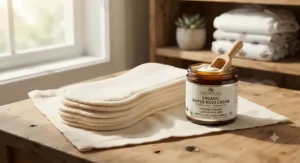
How to Choose Diaper Rash Cream for Cloth Diapers
Picking the right diaper rash cream for cloth diapers comes down to a handful of decision points, in roughly this order of importance:
- Check the active barrier ingredient first — zinc-free herbal balms need no liner, while zinc oxide or petroleum-based creams do.
- Match the strength to the rash severity — mild daily chafing needs a lighter balm, while broken or weepy skin benefits from a stronger zinc option under a liner.
- Consider your fabric mix — synthetic microfiber and stay-dry linings hold onto residue more stubbornly than natural cotton or bamboo, so synthetic-heavy stashes should lean zinc-free.
- Factor in scent sensitivity — essential-oil-based balms are lovely for most babies but worth patch-testing on genuinely reactive skin.
- Weigh cost per ounce against jar size, since bulk tubs from brands like CJ’s BUTTer often beat smaller premium jars on long-term value.
- Confirm Health Canada NPN registration where available, since it’s a meaningful signal of regulatory review rather than just marketing language.
- Keep a liner on hand regardless of which cream you pick, as cheap insurance against an unexpected repelling issue.
| Price Tier | Approx. Range (CAD) | What You’re Paying For |
|---|---|---|
| Budget | C$12–19 | Basic zinc-free barrier, smaller jars |
| Mid-range | C$16–28 | Organic certification, targeted herbs |
| Premium | C$28–38 | System-specific formulation, larger jars |
The price tiers aren’t a straightforward “you get what you pay for” story — a C$14 tube of Grandma El’s Diaper Rash Ointment can outperform a C$30 premium balm on plain prevention, while the premium tier earns its price mainly through certification, sourcing transparency, or system compatibility rather than raw rash-fighting power. Buyers should treat price as a signal of positioning, not a guarantee of results.
Cloth Diaper Safe Rash Cream vs Regular Zinc Oxide Cream
The core difference between a cloth diaper safe rash cream and a regular over-the-counter zinc oxide cream isn’t effectiveness — it’s compatibility. Standard drugstore zinc pastes, often 40% zinc oxide, are formulated for maximum barrier strength with no thought given to fabric interaction, because most buyers use disposables. That concentration of zinc oxide, combined with petrolatum bases in many mainstream brands, coats synthetic fibres in a way that plain washing struggles to fully remove.
Cloth diaper safe formulas solve this two different ways: either by dropping zinc oxide entirely in favour of plant oils and herbs, or by keeping a lower zinc concentration (like Weleda’s 12%) paired with an explicit liner recommendation. Neither approach is objectively “better” in a vacuum — it depends entirely on what the rash needs.
| Factor | Cloth Diaper Safe Cream | Regular Zinc Oxide Cream |
|---|---|---|
| Barrier strength | Moderate (zinc-free) to strong (low-zinc) | Very strong (30–40% zinc) |
| Cloth diaper compatibility | Yes, with or without liner | Requires liner or disposable diaper |
| Best use case | Daily prevention, mild-moderate rash | Severe, weepy rash regardless of diaper type |
| Typical price range (CAD) | C$12–38 | C$8–15 |
The analysis here favours matching tool to task rather than picking a permanent winner: for everyday cloth diapering, a zinc-free balm avoids the liner hassle entirely, but for a genuinely severe rash, reaching for a stronger zinc option with a liner in place is the more responsible choice, and it’s exactly what several reviewers of Weleda Calendula Diaper Cream describe doing.
Common Mistakes When Buying Diaper Rash Cream for Cloth Diapers
The single most common mistake is assuming “natural” automatically means cloth-safe — plenty of natural-sounding creams still contain petrolatum, mineral oil, or high zinc concentrations that behave identically to conventional pastes once they hit your fabric. Read the ingredient list, not the front-of-package marketing language.
A close second mistake: buying the smallest jar available to “try it out,” then discovering the per-ounce cost is wildly worse than a slightly larger size would have been. Products like Earth Mama Diaper Balm and Motherlove Diaper Balm both offer noticeably better value in their larger sizes.
Third, skipping the liner entirely with a zinc-oxide product out of impatience, then being surprised when diapers start repelling three weeks later — the manufacturer’s own recommendation on Weleda Calendula Diaper Cream exists for a reason, and ignoring it is a false economy.
Finally, some parents assume a premium price guarantees premium performance. As the price-tier analysis above shows, that’s not always true; a C$16 tube of Grandma El’s Diaper Rash Ointment genuinely competes with pricier options for everyday, non-severe rash.

Non-Staining Diaper Cream: What Actually Works
If a non-staining diaper cream is the priority — say, for parents using bright or patterned cloth diapers they’d rather not turn olive-green — ingredient colour matters more than most buyers expect. Creams built around white or pale bases, like Grandma El’s Diaper Rash Ointment, CJ’s BUTTer, and Esembly Everyday Balm, are essentially non-staining in normal use, since none contain deeply pigmented plant extracts.
By contrast, Souris Verte Boo Boo Cream‘s green tint comes directly from its plantain and comfrey macerations, and the brand is upfront that it can leave a faint stain, particularly on lighter fabrics. That’s not a formulation flaw — it’s simply a visible side effect of using whole-herb ingredients rather than filtered extracts, and it’s a fair trade for some parents given the ingredient transparency involved.
What most buyers overlook is that staining and cloth-safety are two entirely separate properties: a cream can stain fabric cosmetically while still rinsing out completely in terms of absorbency, or it can leave no visible mark at all while quietly building up residue that affects performance. If a truly non-staining diaper cream matters to you, prioritize pale, oil-based (rather than pigmented herbal) formulas, and consider sunning any occasional stains that do appear rather than switching creams entirely.
Cloth Diaper Liners and Liner-Compatible Rash Cream: Your Backup Plan
A liner-compatible rash cream paired with a simple disposable or reusable liner solves more problems than switching creams ever will. Cloth diaper liners sit between the baby’s skin and the absorbent fabric, catching solids and, crucially, catching cream residue before it ever reaches your inserts — which means even a heavier zinc-oxide cream can be used worry-free.
Disposable bamboo-viscose liners are the most common choice for households using a genuinely liner-compatible rash cream like Weleda Calendula Diaper Cream, since they’re thin enough not to interfere with absorbency and can simply be tossed after each change. Reusable fleece liners are a greener alternative for zinc-free creams, since fleece resists moisture transfer while still letting most residue rinse away in a normal wash.
The practical rule of thumb: if a cream’s label mentions zinc oxide, petrolatum, or “test on a diaper first,” treat cloth diaper liners as mandatory rather than optional. For the zinc-free balms in this roundup, liners are a nice-to-have rather than a necessity, though heavy users of shea- or coconut-oil-based balms may still appreciate the extra buffer during a particularly bad flare-up week.
Diaper Rash Cream for Different Cloth Diaper Types
Pocket diapers with synthetic microfiber inserts and stay-dry linings are the least forgiving fabric type for any cream, cloth-safe or not — their whole design relies on wicking moisture away quickly, and oily residue interferes with that mechanism faster than it does on natural fibres. Parents using pocket diapers should lean toward the lightest zinc-free balms, like Grandma El’s Diaper Rash Ointment, or use a liner as standard practice.
All-in-one (AIO) diapers, which sew the absorbent layer directly into the cover, share the same synthetic-lining sensitivity as pockets, making them a good match for Esembly Everyday Balm‘s purpose-built, wash-clean formula.
Fitted diapers and prefolds made from cotton, bamboo, or hemp are considerably more forgiving, since natural fibres release oils and residue more readily in a hot wash. These are the best candidates for richer, more emollient balms like CJ’s BUTTer or Earth Mama Diaper Balm, where the thicker texture wouldn’t be a good match for a synthetic pocket insert.
Wool covers, meanwhile, are typically paired with lanolin-based care rather than a diaper rash cream at all, though a small amount of Motherlove Diaper Balm underneath is generally considered compatible given its similarly gentle, oil-based profile.
Safety, Regulations & Cloth-Safe Skincare Ingredients in Canada
In Canada, diaper creams containing an active medicinal ingredient like zinc oxide are regulated as natural health products, which means legitimate versions carry an eight-digit Natural Product Number that consumers can verify through Health Canada’s licensed database. Both Souris Verte Boo Boo Cream and Weleda Calendula Diaper Cream in this roundup carry NPN registration, which is a genuinely useful shortcut for confirming a product has been reviewed for safety and labelling accuracy rather than simply marketed as safe.
When it comes to cloth-safe skincare ingredients specifically, the ingredients to actively look for are plant oils (olive, coconut, sunflower, shea, jojoba), beeswax, and calendula or chamomile extracts — all of which condition skin without leaving a petroleum-style film. Ingredients to watch for, not necessarily avoid outright, are petrolatum, mineral oil, and high-concentration zinc oxide (above roughly 20%), since these are the formulations most likely to require a liner regardless of brand claims.
If a rash doesn’t improve within a few days of consistent barrier cream use, or looks unusually severe, Canadian Paediatric Society guidance recommends having it assessed, since some diaper-area rashes are caused by yeast or bacterial infection rather than simple irritation and need a different treatment approach entirely. No barrier cream, cloth-safe or otherwise, replaces that assessment when something looks off.

Frequently Asked Questions
❓ Is regular diaper rash cream safe for cloth diapers?
❓ What ingredients should I avoid in diaper rash cream for cloth diapers?
❓ Do I need a liner every time I use a cloth diaper safe rash cream?
❓ How do I get diaper cream residue out of cloth diapers?
❓ Where can I buy cloth diaper safe rash cream in Canada?
Conclusion
Choosing a diaper rash cream for cloth diapers doesn’t have to feel like defusing a bomb every time your baby gets a little red. The honest takeaway from digging through specs and aggregated review sentiment on all seven products is that fabric compatibility and rash severity should drive the decision far more than brand reputation or price alone. A budget-friendly, Canadian-made balm like Souris Verte Boo Boo Cream handles everyday prevention just fine, while a stronger, liner-paired option like Weleda Calendula Diaper Cream earns its place for genuinely stubborn flare-ups.
What ties every recommendation here together is the same underlying principle: read the ingredient list before the marketing copy, match the barrier strength to what the skin actually needs, and keep a pack of liners on hand as cheap insurance regardless of which cream ends up in your diaper bag. It’s worth noting that interest in cloth diapering itself has genuinely resurged in Canada in recent years, partly for environmental reasons that go well beyond the diaper cream aisle — which means more brands are competing for cloth-safe shelf space, and that competition tends to benefit shoppers.
Whichever of these seven you land on, the goal is the same: comfortable skin, functioning diapers, and one less thing to worry about at 2 a.m.
✨ Ready to stock up?
Browse current prices on today’s picks and grab whichever fits your baby’s skin and your stash best — your future laundry day will thank you! 🧺💛
Recommended for You
- 7 Best Diaper Rash Cream For Newborns In 2026 (Gentle; Proven)
- 7 Best Changing Pad Covers for Boys in 2026
- Diaper Pail for Odor Control: 7 Best Picks in 2026
Disclaimer: This article contains affiliate links. As an Amazon Associate, I earn from qualifying purchases. If you purchase products through these links, we may earn a small commission at no additional cost to you.
✨ Found this helpful? Share it with your friends! 💬🤗
