In This Article
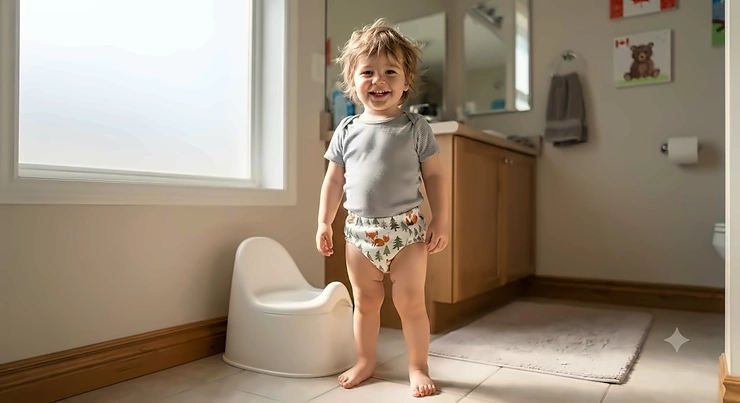
Training pants are pull-on underwear-style products, disposable or reusable, that sit between a diaper and regular underwear, absorbing accidents while letting a toddler practice pulling clothing up and down independently. If you’re standing in the diaper aisle right now, phone in hand, trying to figure out which box actually deserves a spot in your cart, you’re not alone — potty training turns even confident parents into label-readers overnight.
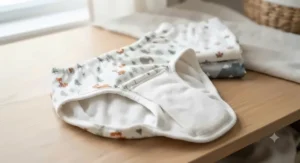
Here’s the thing nobody tells you upfront: not all training pants are built the same, and the “best” one depends entirely on your kid’s stage, your budget, and whether you’re training for daytime independence or surviving the 2 a.m. bed-check. Some pants are engineered to feel like real underwear so your toddler takes ownership of the process. Others are built like tiny fortresses for overnight leak protection. And a few — the reusable cloth kind — are betting on your patience with a washing machine instead of your patience with a diaper budget.
This guide breaks down seven real, currently available products across budget, mid-range, and premium tiers, backed by genuine spec comparisons and aggregated customer-review sentiment rather than guesswork. According to the Quebec public health institute’s guidance on toilet training, readiness varies enormously from child to child, and the right pant can make that transition noticeably smoother — or noticeably messier, if it’s the wrong fit. Let’s get you sorted.
Quick Comparison Table
Before diving into the deep-dive reviews, here’s a scannable snapshot of all seven picks — what makes each one stand out, roughly what to expect to pay, and who it suits best.
| Product | Standout Feature | Price Range (CAD) | Best For |
|---|---|---|---|
| Pampers Easy Ups | Day-and-night absorb channels | C$35–C$45 range | All-around daily use |
| Huggies Pull-Ups Learning Designs | Fade-when-wet indicator | C$35–C$45 range | Visual “wet vs. dry” learning |
| Huggies Pull-Ups Night-Time | Extra overnight absorbency | C$25–C$35 range | Nighttime dryness |
| Seventh Generation Free & Clear | Fragrance-free, hypoallergenic | C$15–C$25 range | Sensitive skin |
| Coterie The Pant | Two ways to change | C$40–C$55 range | Premium comfort seekers |
| Cuties Training Pants | Bulk carton pricing | C$50–C$65 range (bulk) | Daycare & budget bulk buyers |
| Luvable Friends Cotton Training Pants | Reusable, machine washable | Under C$25 range | Eco-conscious, light daytime use |
Looking at the spread here, the split isn’t really “good vs. bad” — it’s “matched vs. mismatched.” Pampers Easy Ups and Huggies Pull-Ups Learning Designs cover the broadest range of everyday scenarios, which is why most households start there. Families juggling a tighter budget or a daycare drop-off tend to gravitate toward Cuties Training Pants for the per-unit savings, while parents chasing genuinely dry mornings usually end up adding Huggies Pull-Ups Night-Time or Coterie The Pant to the rotation once daytime training sticks.
💬 Just one click — help other Canadian parents make better buying decisions too!😊
Top 7 Training Pants: Expert Analysis
We dug into real product specifications, manufacturer documentation, and aggregated customer-review sentiment from major retailers to build this list. Every product below is genuinely available for Canadian households, spans budget to premium pricing, and includes both disposable and reusable formats so you can compare like with like.
1. Pampers Easy Ups — most trusted all-rounder for everyday changes
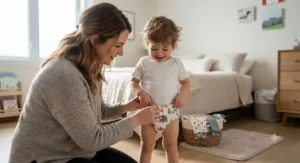
The 360° stretchy waistband is the headline feature here, and it earns the hype — it flexes with a squirming toddler instead of digging in, which matters more than it sounds once you’re wrestling a two-year-old into pants for the fifteenth time that day. Underneath that waistband sits Pampers’ Extra Absorb Channels and Dual LeakGuard Barriers, a combination designed to funnel moisture away from the skin rather than just soaking it up passively; in practice, that means fewer damp patches showing through leggings during nap time. The tear-away side seams turn a blowout into a thirty-second fix instead of a full outfit change. Based on the spec sheet, this is the pant Pampers positions for both day and night use, which is unusual — most competitors split those two jobs into separate SKUs. Reviewers consistently report that Easy Ups outperform velcro-style competitors on comfort and absorbency, with several long-time Huggies users specifically noting they switched brands after trying this one. A recurring complaint in user reviews, though, is leakage during unusually active or extended play sessions, which tracks with the lighter, more underwear-like core. Pampers Easy Ups cover sizes 2T-3T right through 5T-6T, making this a genuinely practical pick for a family that doesn’t want to relearn a new product every few months. At around C$35–C$45 per box depending on size and count, it sits squarely in mid-range territory — not the cheapest option on this list, but arguably the most balanced.
Pros:
- ✅ Doubles as day-and-night protection in one product
- ✅ Stretchy tear-away sides make changes genuinely fast
- ✅ Wide size range spans 2T all the way to 6T
Cons:
- ❌ Some reviewers report leaks during extended active play
- ❌ Licensed character packs cost more than plain designs
Price range: around C$35–C$45 per box (varies by size and count) — a solid value verdict for households wanting one product that handles most scenarios.
2. Huggies Pull-Ups Learning Designs — best wetness-indicator learning pant
What most buyers overlook about this model is that the wetness indicator isn’t just a gimmick — it’s the entire pedagogical point. The printed graphics fade when wet, giving a toddler an immediate, visual cue that connects the physical sensation of “I just went” to a change they can literally see happening on their own clothing. That’s a meaningfully different teaching mechanism than a plain absorbent pant, which just quietly does its job without involving the child in the feedback loop at all. The refastenable sides are the other standout: instead of a full pants-off change every time you want to check for an accident, you can peel back one side, glance, and reseal it. Reviewers describe this as a genuine time-saver during the early “constant checking” phase of training. On the spec sheet, Huggies Pull-Ups Learning Designs run from 2T-3T (18-34 lb) up through an unusually large 6T-7T (55-75 lb) size, which covers late bloomers that most competing lines simply don’t size for. The tradeoff, based on the spec comparison, is a thinner absorbent core than Huggies’ own dedicated night-time line — reviewers note it’s built for daytime learning, not for stretching through eight hours of sleep. A common complaint in user reviews is mild skin irritation from the refastenable tabs on sensitive toddlers, so it’s worth patch-testing before committing to a full case.
Pros:
- ✅ Refastenable sides allow quick peeks without a full change
- ✅ Fade-when-wet indicator visually teaches wet versus dry
- ✅ Widest size range on this list, extending to 6T-7T
Cons:
- ❌ Thinner absorbent core than dedicated night-time pants
- ❌ Refastenable tabs can irritate some sensitive skin
Price range: around C$35–C$45 range — comparable to Easy Ups, making the choice between the two mostly about which teaching mechanism (tear-away vs. refastenable) suits your toddler.
3. Huggies Pull-Ups Night-Time — best for overnight leak protection
Here’s what the spec sheet won’t tell you outright: daytime training pants and night-time training pants are not interchangeable, even within the same brand family, and this product is the clearest illustration of why. The core absorbency is noticeably heavier than the daytime Learning Designs line, engineered specifically to hold a full night’s output without waking a toddler up wet at 3 a.m. Easy-open sides are a small but meaningful feature for parents doing a half-asleep late-night check — you can verify dryness without fully waking the child by removing pants entirely. Reviewers consistently report that this line holds through a full night’s sleep more reliably than daytime pants repurposed for bedtime, which lines up with the design intent. The tradeoff is bulk: this is a noticeably thicker pant than its daytime sibling, which can feel more like a traditional diaper under pajamas than the underwear-like feel toddlers are chasing during the day. Based on the spec comparison, sizing runs from 2T-3T (18-34 lb) through 3T-4T (32-40 lb) in the most commonly stocked configurations, though larger sizes exist. For families who’ve nailed daytime independence but are still fighting overnight accidents, this is the logical next purchase rather than a starting point.
Pros:
- ✅ Extra absorbent core built specifically for full-night wear
- ✅ Easy-open sides simplify late-night dryness checks
- ✅ Stretchy sides keep a snug fit through a night of movement
Cons:
- ❌ Noticeably bulkier fit than daytime training pants
- ❌ Costs more per pant than standard daytime designs
Price range: around C$25–C$35 range for standard pack sizes — a reasonable add-on purchase once daytime training pants are already working.
4. Seventh Generation Free & Clear — best for sensitive skin
If your toddler has ever broken out from a scented product, this is the pant worth reading closely. Seventh Generation strips out fragrances, latex, petroleum-based lotions, and chlorine processing entirely — not “reduced,” entirely absent — which matters in practice for kids prone to contact irritation during the already-frequent changes that potty training demands. The inner leak barriers and lightweight absorbent core aren’t dramatically different in concept from mainstream brands, but the hypoallergenic formulation is the actual differentiator here, not the absorbency numbers. Reviewers describe the fit as genuinely comfortable, specifically calling out the absence of “sharp edges” or rough seams that some cheaper alternatives can have. What most buyers overlook is the sourcing story: the fluff pulp is FSC-certified, meaning it comes from responsibly managed forests, which matters if sustainability is part of your purchasing calculus and not just a marketing footnote. On the practical side, pack counts run smaller than Pampers or Huggies — typically 17 to 25 per package depending on size — so you’ll be reordering more frequently, and the character print selection is far more limited (mostly nature-themed animal prints rather than licensed cartoons). Available in 2T-3T (up to 35 lbs), 3T-4T (32-40 lbs), and 4T-5T (38+ lbs).
Pros:
- ✅ Fragrance-free and chlorine-free formulation for sensitive skin
- ✅ FSC-certified fluff pulp appeals to eco-conscious families
- ✅ Stretchy tear-away panels allow a genuinely custom fit
Cons:
- ❌ Smaller pack counts mean more frequent reordering
- ❌ Far fewer character prints than mainstream competitors
Price range: around C$15–C$25 range per pack — competitively priced for a hypoallergenic formulation, though the smaller counts mean the per-pant cost lands closer to mid-range once you do the math.
5. Coterie The Pant — best premium two-way change design
Coterie The Pant solves a problem that mainstream training pants mostly ignore: sometimes you need to pull a pant up and down like underwear, and sometimes — especially with a wriggly toddler mid-tantrum on the floor — you need to change it flat, like a diaper. This product is built to do both, with a resealable waistband that lets caregivers pick whichever method the moment calls for. Based on independent comparison testing against Huggies Pull-Ups, reviewers rated the fit and thinness noticeably higher, describing it as feeling closer to real underwear than a bulky disposable, while still holding a surprising amount of liquid without leaking, including overnight. That’s a meaningful claim for a daytime-positioned product, and it’s part of why this pant commands a premium price. Aggregated customer reviews are largely positive, with parents calling it “the perfect bridge” between diapers and underwear for building a toddler’s confidence and independence. That said, not every review is glowing — some users report the resealable tab doesn’t always stay firmly attached after repeated adjustments, and a few note the waist runs wider than expected on smaller-framed toddlers, which can undercut the leak protection this brand is known for.
Pros:
- ✅ Two change styles: pull-on like underwear or lay-flat like a diaper
- ✅ Thin, underwear-like feel that toddlers tend to accept readily
- ✅ Strong overnight leak performance according to reviewer reports
Cons:
- ❌ Resealable tab doesn’t always hold securely, per reviews
- ❌ Premium price point well above mainstream training pant brands
Price range: around C$40–C$55 range — the most expensive pick here, and the value verdict depends on whether the two-way design and thinner fit are worth the premium for your household.
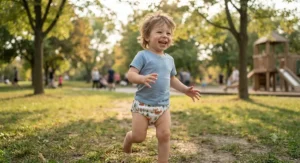
6. Cuties Training Pants — best affordable bulk multi-pack
For households counting every dollar during a process that can stretch six months or more, Cuties Training Pants are the pragmatic choice, and they’re worth taking seriously rather than dismissing as the “cheap option.” The soft cloth-like outer fabric and breathable zones aren’t dramatically different from name-brand competitors in concept, but the vitamin E and aloe lining is a nice inclusion at this price point, aimed at reducing irritation during high-frequency changes. What most buyers overlook is where this brand actually shines: bulk carton sizing. Packages commonly run from roughly 76 to over 140 count per carton, which crushes the per-unit cost compared to standard retail boxes — this is precisely why so many licensed daycare centres stock this brand rather than premium alternatives, since they’re managing multiple toddlers’ worth of changes daily on an institutional budget. The character designs fade when wet, mirroring the learning mechanism found in pricier competitors, and the elastic waistband with stretch sides handles active toddlers reasonably well. The honest tradeoff: fewer size gradations than Pampers or Huggies, and the sheer bulk of a case means you’ll need real storage space, not just a shelf in the closet.
Pros:
- ✅ Bulk cartons dramatically lower the effective cost per pant
- ✅ Vitamin E and aloe lining is gentle for frequent daily changes
- ✅ Popular, tested choice at daycare centres managing multiple toddlers
Cons:
- ❌ Fewer size options than name-brand competitors
- ❌ Bulk cartons require meaningful storage space at home
Price range: around C$50–C$65 range for a bulk carton — expensive as a single purchase, but the per-pant math is the lowest on this list.
7. Luvable Friends Cotton Training Pants — best reusable cloth alternative
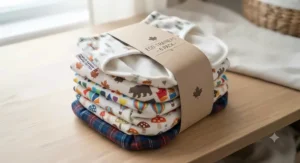
Every product above this one is disposable. Luvable Friends Cotton Training Pants flip the model entirely: a cotton outer layer, polyester filling, and a PEVA waterproof lining, sold in small packs of three to four, designed to be washed and reused rather than thrown away after one use. Here’s what that means in practice — the ongoing per-change cost drops close to zero once you’ve bought the pack, since you’re doing laundry instead of restocking a diaper aisle. Reviewers frame these as “optimal for everyday use” rather than heavy-duty accident containment, and that framing is accurate: the absorbency simply can’t compete with a disposable pant engineered around superabsorbent polymers and dedicated leak channels. What most buyers overlook is that this makes cloth training pants a genuinely different tool, not a worse version of a disposable one — they’re built for a toddler who’s largely got the hang of it and just needs a light backup layer, not a family in the earliest, leak-heavy weeks of training. The cotton feel is also a psychological advantage some parents specifically seek out: it feels and looks like real underwear from day one, reinforcing the “big kid” framing that disposable pull-ups only approximate with printed designs.
Pros:
- ✅ Machine washable and reusable, cutting long-term costs sharply
- ✅ Cotton outer feels like real underwear from the very first wear
- ✅ Reduces disposable diaper waste compared to single-use options
Cons:
- ❌ Lower absorbency than disposables for heavier accidents
- ❌ Requires regular laundering, adding a daily household chore
Price range: under C$25 range for a pack of three to four — the lowest upfront cost on this list, with the tradeoff being ongoing washing rather than ongoing repurchasing.
Top 7 Products: Detailed Comparison
| Product | Size Range | Core Strength | Format | Best For |
|---|---|---|---|---|
| Pampers Easy Ups | 2T-3T to 5T-6T | Day + night absorbency | Disposable | Everyday all-purpose use |
| Huggies Pull-Ups Learning Designs | 2T-3T to 6T-7T | Wetness-indicator learning | Disposable | Visual potty-training cues |
| Huggies Pull-Ups Night-Time | 2T-3T to 3T-4T+ | Overnight absorbency | Disposable | Nighttime dryness |
| Seventh Generation Free & Clear | 2T-3T to 4T-5T | Hypoallergenic core | Disposable | Sensitive skin |
| Coterie The Pant | Toddler sizing | Two-way changing | Disposable | Premium comfort |
| Cuties Training Pants | 2T-3T to 4T-5T | Bulk-carton economy | Disposable | Daycare & budget bulk |
| Luvable Friends Cotton Training Pants | Toddler sizing | Reusable cotton | Reusable/cloth | Light daytime, eco-conscious |
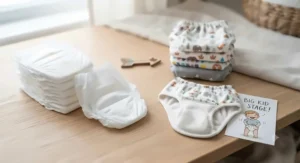
Read across this table and a pattern emerges: the disposable brands mostly compete on absorbency mechanics and teaching features, while the two outliers — Cuties Training Pants and Luvable Friends Cotton Training Pants — compete on cost structure instead. If your toddler is early in training and prone to frequent, heavy accidents, the absorbency-focused disposables like Pampers Easy Ups or Huggies Pull-Ups Night-Time are the safer bet. Once accidents taper off, shifting even partially toward Cuties Training Pants or a reusable option can meaningfully cut your ongoing spend without sacrificing the “big kid underwear” psychology that keeps toddlers motivated.
How to Know If Your Child Is Ready: Potty Training Readiness Signs
“When should we start?” is the single most common question in potty training, and the honest answer is: there’s no universal age, only readiness signals. Research summarized in the Canadian Medical Association Journal notes that both the American Academy of Pediatrics and the Canadian Paediatric Society generally suggest starting between 18 and 24 months, provided the child shows genuine interest — starting earlier than a child is developmentally ready can actually extend the total training timeline, according to the same research.
Here’s how to evaluate readiness before you invest in a box of training pants:
- Physical coordination — can your child walk to the bathroom and sit upright on a toilet or potty chair unassisted?
- Dry stretches — does their diaper stay dry for two or more hours at a time, or after a nap?
- Motor skills — can they pull clothing up and down on their own, which training pants are specifically designed to support?
- Communication — can they follow simple two-step directions and tell you, even nonverbally, that they need to go?
- Interest and imitation — do they show curiosity about the toilet or copy older siblings and adults using the bathroom?
- Desire to please — are they motivated by praise and small rewards for trying?
- Consistency over weeks, not days — are these signs showing up repeatedly, not just once during a good afternoon?
If most of these are checked off, training pants become a genuinely useful bridge tool rather than a diaper with a marketing label. If only one or two apply, it’s worth waiting a few more weeks — pushing too early with an unready toddler tends to create frustration on both sides rather than progress.
Training Pants Sizing Chart: Getting the Fit Right
Sizing is where a lot of otherwise-good training pants purchases go wrong. Manufacturers size by weight, not age, and the ranges overlap enough between brands that a “3T-4T” from one company can fit noticeably differently than another’s.
| Size | Typical Weight Range | Approx. Age (varies by child) |
|---|---|---|
| 2T-3T | 18–34 lbs (8–15 kg) | ~18–36 months |
| 3T-4T | 32–40 lbs (14–18 kg) | ~2.5–4 years |
| 4T-5T | 38–50 lbs (17–23 kg) | ~3–5 years |
| 5T-6T | 46–60 lbs (21–27 kg) | ~4–6 years |
| 6T-7T | 55–75 lbs (25–34 kg) | ~5–7 years |
Interpreting this table matters more than memorizing it: always weigh your toddler and size to the weight range, not the age label, since a sturdily built two-year-old can outgrow a “2T-3T” months before an average same-age peer does. If your child sits right at the boundary between two sizes, size up — a slightly loose training pant still functions, while a too-tight one compresses the absorbent core and actually increases leak risk. Brands like Huggies Pull-Ups Learning Designs, which stretch all the way to 6T-7T, are worth considering specifically if your child is training later than average and mainstream sizing tops out too soon elsewhere.
Practical Usage Guide: The First 30 Days
The first month of using training pants sets the tone for the rest of the process, and a few small habits make a disproportionate difference in how smoothly it goes.
Week 1 — Establish the routine. Introduce training pants alongside a consistent potty schedule: right after waking, before meals, and before leaving the house. Let your toddler help pick the box or the print — ownership over the product itself builds buy-in.
Weeks 2–3 — Expect more accidents than progress. This is normal, not a sign the product or the approach is failing. Keep a spare outfit and a couple of extra training pants in your bag at all times; the goal in this phase is exposure and repetition, not a dry streak.
Week 4 — Watch for the shift. Most toddlers begin connecting the physical sensation to the bathroom trip around this point. This is also when it’s worth testing whether a lighter product, like Cuties Training Pants or a reusable option, can start replacing the heavier absorbency pants you needed in week one.
Common first-30-days mistakes to avoid: switching products too frequently (it resets the “feel” your toddler is learning to recognize), over-praising every single bathroom trip to the point it feels performative, and skipping night-time training pants too early — daytime and overnight dryness genuinely develop on different timelines, and rushing the second doesn’t speed it up.
Real-World Scenarios: Matching Training Pants to Your Toddler
The daycare-bound toddler. If your child spends 8+ hours a day in licensed care, cost-per-change and bulk availability matter more than premium features. Cuties Training Pants, bought in bulk and split between a home supply and a daycare bag, keeps costs manageable without sacrificing basic leak protection during a long day away from you.
The heavy overnight sleeper. Some toddlers are dry all day within weeks but soak through anything at night for months longer — this is developmentally normal, not a discipline issue. For this child, Huggies Pull-Ups Night-Time or a similarly absorbency-focused product is worth the extra cost specifically for bedtime, layered with a waterproof mattress protector as backup.
The budget-conscious, mostly-there toddler. Once accidents have dropped to once or twice a day, this is exactly the window where Luvable Friends Cotton Training Pants make sense — light absorbency for occasional slips, reusable so the ongoing cost approaches zero, and a genuine underwear feel that reinforces the final stretch toward being fully trained.
✨ Don’t miss out on the training pants that actually fit your toddler’s stage — check current availability and pricing before your next diaper run!🧷
Affordable Training Pants: Getting Value Without Compromising Protection
“Affordable” and “cheap” aren’t the same thing, and the training pants aisle is a good place to see that distinction play out. The real lever on cost isn’t the sticker price of a single box — it’s the price per pant, which only becomes visible once you divide the box price by the count inside it. A premium product like Coterie The Pant can cost noticeably more per unit than Pampers Easy Ups, even when the box price looks comparable at a glance, simply because of pack-size differences.
Here’s what most buyers overlook when hunting for affordable training pants: buying the largest available pack size of a trusted mid-range brand, like Pampers Easy Ups or Huggies Pull-Ups Learning Designs, in super-pack or value-pack configurations, typically beats chasing the cheapest-looking small box. Subscribe-and-save or auto-replenishment programs on major retail platforms can also shave a meaningful percentage off recurring purchases without switching brands at all. For households genuinely optimizing for the lowest possible spend, Cuties Training Pants in bulk cartons remain the most affordable per-unit disposable option on this list, and pairing them with even a partial rotation of Luvable Friends Cotton Training Pants once your toddler is further along pushes the average cost even lower.
Training Pants Multi-Packs: Are Bulk Buys Worth It?
A training pants multi-pack looks intimidating at checkout — the total is bigger, even when the per-unit math is better — and that sticker shock talks a lot of parents out of what’s actually the smarter purchase. Here’s the interpretation that matters: potty training realistically runs three to six months for daytime dryness alone, based on Canadian paediatric guidance, and often longer for nighttime. That’s not a short-term purchase, it’s a recurring household expense, and multi-packs are priced accordingly by manufacturers who know that.
The case for buying a multi-pack is strongest when you’ve already confirmed the product works for your child — don’t bulk-buy a brand you haven’t tested first, since an ill-fitting or irritating pant in bulk is a worse outcome than a small box that doesn’t work out. Once you’ve validated fit and comfort with a smaller pack, stepping up to Pampers Easy Ups‘ super-pack sizing or a Cuties Training Pants bulk carton meaningfully lowers your cost-per-change over the following months. The case against bulk buying applies mainly to sizing risk: toddlers can jump a full size range in a matter of weeks during growth spurts, so a massive multi-pack purchased right before a growth spurt can leave you with a partially-used case that no longer fits.
Disposable Training Pants vs. Cloth and Reusable Alternatives
This is the comparison most articles skip, and it’s arguably the most consequential decision in this entire category. Disposable training pants dominate the market for good reason — convenience, consistent absorbency engineering, and no laundry — but reusable cloth alternatives like Luvable Friends Cotton Training Pants solve a different set of problems entirely.
| Factor | Disposable Training Pants | Cloth/Reusable Training Pants | Regular Diapers |
|---|---|---|---|
| Absorbency for heavy accidents | High (engineered core) | Low–moderate | Highest |
| Cost over 3–6 months | Ongoing, ranges with brand | Low after initial purchase | Ongoing |
| Toddler independence cues | Moderate–high (varies by brand) | Highest (feels like underwear) | Lowest |
| Environmental footprint | Higher (single-use) | Lower (reusable) | Higher (single-use) |
| Convenience (no laundering) | Highest | Requires regular washing | Highest |
The analysis here isn’t a clean win for either format. Disposable training pants like Pampers Easy Ups or Huggies Pull-Ups Night-Time genuinely outperform cloth options on raw absorbency, which matters most in the early, leak-heavy weeks of training. But cloth alternatives close the gap fast once your toddler is mostly reliable, at which point their lower environmental footprint and near-zero ongoing cost become the deciding factors. A hybrid approach — disposables during the first month and at night, cloth for the home stretch of daytime training — is what a lot of Canadian parents land on after trial and error, and it’s a reasonable default if you’re unsure where to start.
Common Mistakes When Buying Training Pants
Buying by age instead of weight. As covered in the sizing chart above, this is the single most common error, and it’s the one most likely to cause leaks that get blamed on the product rather than the fit.
Assuming daytime and night-time pants are interchangeable. They’re engineered differently on purpose. Using a daytime pant overnight is a common source of parental frustration that’s really a mismatch problem, not a product failure.
Over-buying before validating fit. Bulk-buying a training pants multi-pack before confirming your toddler tolerates the material, tabs, or fit wastes money if it turns out to be the wrong product — start small, then scale up.
Ignoring skin sensitivity signals. If a toddler develops redness or irritation with a scented or licensed-character product, switching to a hypoallergenic option like Seventh Generation Free & Clear before the irritation worsens saves both discomfort and doctor visits.
Treating training pants as a substitute for the toilet, not a bridge to it. Some guidance from parenting and childcare resources cautions against over-relying on pull-ups as a permanent diaper substitute, since it can blur the “wet means change clothes” feedback loop that actually drives learning.
Long-Term Cost & Maintenance: What Potty Training Really Costs
Total cost of ownership for training pants isn’t usually a single number parents calculate upfront, but it’s worth doing the math before committing to a brand for the long haul. A typical toddler in daytime training pants alone, changed several times daily over a three-to-six-month window, works through a meaningful volume of product — which is exactly why the per-unit price matters far more than the sticker price of any single box.
Disposable brands purchased in standard-size boxes, like a single pack of Huggies Pull-Ups Learning Designs, generally carry the highest cumulative cost over the full training window because you’re paying retail pricing repeatedly. Switching to bulk formats — Pampers Easy Ups super-packs or a Cuties Training Pants carton — lowers the per-change cost meaningfully without changing the underlying product experience. The biggest long-term savings, unsurprisingly, come from Luvable Friends Cotton Training Pants or similar reusable options, where the upfront cost of a small pack is largely the entire expense; the ongoing “maintenance” is laundry detergent and machine time rather than repeat purchases. The honest tradeoff is time, not money — washing cloth training pants adds a recurring household task that disposables simply don’t require.

Training Pants for Daycare Families: Policies Canadian Parents Should Know
If your toddler is in licensed child care, potty training isn’t just a household decision — it’s a coordinated one. Many Canadian child care operators, including those regulated under provincial early-years frameworks, require open communication between families and educators about toileting routines so the approach used at home and at the centre stays consistent. The City of Toronto’s child care services guidance outlines infection-control and diapering-area requirements that licensed centres must follow, which is a useful reference point if you’re wondering how seriously your provider takes this process.
In practice, most centres will ask you to supply your own training pants or diapers, clearly labelled, and many prefer pull-on styles over cloth options simply because staff managing several toddlers’ changes need speed and consistency — this is a major reason Cuties Training Pants and similar bulk-friendly brands see heavy institutional use. A daycare potty training policy typically also covers what happens with accidents: most centres change and clean the child without shame or punishment, consistent with the collaborative, patient approach paediatric guidance recommends, and will flag repeated accidents to parents so both sides can adjust the routine together. If your centre has a strict no-diapers-after-a-certain-age policy, it’s worth having that conversation early — some providers require full daytime training before enrollment in older toddler rooms, which can affect your timeline more than any product choice will.
Safety, Regulations & Compliance Guide for Canadian Parents
Training pants sold in Canada fall under general consumer product safety oversight, and a few practical safety habits are worth building into your routine regardless of which brand you choose. Change training pants promptly when wet or soiled to reduce skin irritation risk, and always supervise young children during changes, since training pants — like diapers — carry a choking hazard warning related to packaging and torn components if left within reach.
It’s also worth knowing that Canada operates an active consumer product safety monitoring system: Health Canada maintains a public consumer product recalls and safety alerts database covering children’s products broadly, which is a genuinely useful bookmark for any parent of a young child, not just around potty training. While training pants themselves are rarely subject to safety recalls compared to categories like sleepwear or nursery furniture, checking a brand or specific product line before a large bulk purchase costs nothing and takes under a minute. Beyond recalls, look for hypoallergenic and dermatologically tested labelling if your toddler has known sensitivities — brands like Seventh Generation Free & Clear lead specifically with this positioning, while mainstream brands like Pampers Easy Ups and Huggies Pull-Ups Learning Designs also carry hypoallergenic, paraben-free claims on their standard lines.
Frequently Asked Questions
❓ What age should a child start using training pants?
❓ How many training pants does a toddler go through per day?
❓ Are disposable training pants bad for the environment?
❓ Can training pants be used overnight?
❓ Do daycares require a child to be potty trained before enrollment?
Conclusion
There’s no single “best” training pant, and honestly, that’s good news — it means the decision comes down to matching a genuinely well-made product to your specific toddler’s stage, sensitivity, and your household budget, rather than chasing a mythical perfect box. Pampers Easy Ups and Huggies Pull-Ups Learning Designs remain sensible starting points for most families precisely because they’re built to handle the widest range of everyday scenarios without requiring a second purchase for backup. If sensitive skin, nighttime leaks, or genuine long-term cost are driving your decision instead, Seventh Generation Free & Clear, Huggies Pull-Ups Night-Time, and Luvable Friends Cotton Training Pants each solve that specific problem better than a generalist product ever could.
What actually moves the needle in potty training isn’t the brand on the box — it’s consistency, patience, and picking a product that fits both your toddler’s body and your family’s routine well enough that it fades into the background. Get the sizing right, watch for the readiness signs before you start, and don’t be afraid to mix formats — daytime, nighttime, disposable, and reusable — as your toddler’s needs shift over the coming months. The right training pants won’t do the training for you, but the wrong ones can absolutely get in the way.
Recommended for You
- Diaper Rash Cream For Cloth Diapers: 7 Safe Picks (2026)
- 7 Best Diaper Rash Cream For Newborns In 2026 (Gentle; Proven)
- 7 Best Changing Pad Covers for Boys in 2026
Disclaimer: This article contains affiliate links. As an Amazon Associate, I earn from qualifying purchases. If you purchase products through these links, we may earn a small commission at no additional cost to you.
✨ Found this helpful? Share it with your friends! 💬🤗
