In This Article
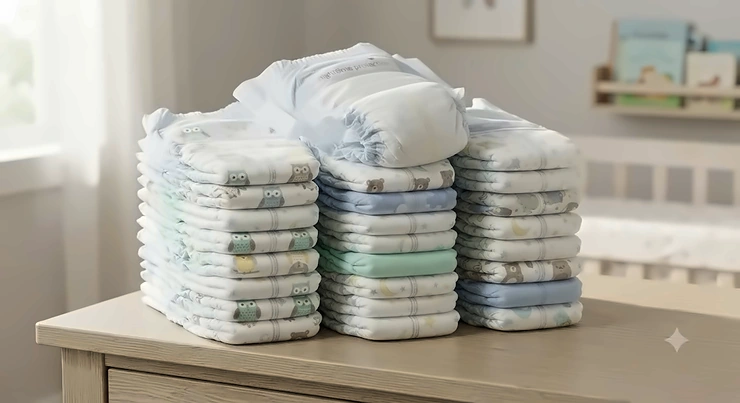
It’s 2 a.m., the hallway light just clicked on, and you’re peeling back a duvet that’s gone from cozy to cold and damp in about four seconds flat. If that scene sounds familiar, you already know that daytime potty training and nighttime potty training are two completely different beasts — a kid can be dry for a full week at daycare and still soak through by 3 a.m., because bladder control during sleep is a physical maturity milestone, not a discipline one. Training pants for nighttime exist precisely for that gap: pull-on underwear-style pants built with denser absorbent cores than daytime versions, designed to hold a full night’s output without waking your child (or you) up for a change.
So what is training pants for nighttime, exactly? It’s a disposable or reusable pull-up garment engineered specifically for overnight wear during potty training, with extra absorbent material concentrated where nighttime wetting typically happens, a snug-but-stretchy waistband, and — in most disposable versions — a moisture-wicking inner layer that pulls wetness away from skin so a child can sleep through a single accident undisturbed. According to the Canadian Paediatric Society’s guidance on bedwetting, nighttime dryness typically lags daytime control by months or even a couple of years, and that’s completely normal rather than a sign something’s wrong.
This guide walks through seven real, currently available training pants for nighttime, covering disposable mainstream options, an eco-friendly overnight-specific line, a premium refastenable pick, and two genuinely good reusable alternatives for families who’d rather wash than toss. We’ll also dig into the secondary questions that come up constantly around this topic — overnight training pants versus daytime ones, what actually separates bedwetting training pants for older kids from toddler versions, when extra-absorbent training pants are worth the upcharge, how nighttime potty training regression shows up and what to do about it, whether bedwetting alarms are worth trying, and how to actually read overnight absorbency ratings instead of just trusting the marketing copy on the package.
Quick Comparison Table
Before the full breakdowns, here’s a fast snapshot of how these seven picks stack up on type, price tier, and who each one actually suits best.
| Product | Type | Price Range (CAD) | Best For |
|---|---|---|---|
| Pampers Easy Ups Nighttime Training Pants | Disposable | around C$25-C$38 | most widely available mainstream pick |
| Huggies Pull-Ups Night-Time Training Pants | Disposable | around C$25-C$38 | families already using daytime Pull-Ups |
| GoodNites Nighttime Bedwetting Underwear | Disposable | around C$20-C$32 | older kids and true bedwetting, not just training |
| Bambo Nature Dreamy Night Pants | Disposable, eco | around C$28-C$42 | sensitive skin and chlorine-free preference |
| Coterie The Pant | Disposable, premium | around C$40-C$58 | refastenable checks without a full change |
| Super Undies Nighttime Undies | Reusable cloth | around C$55-C$75 for a set | families committed to washing over tossing |
| Peejamas | Reusable, hybrid | around C$40-C$60 for a 2-pack | kids who resist anything that feels like a “diaper” |
Looking at this lineup, the split really comes down to how much control a family wants over fit and absorbency versus how much convenience they want at 2 a.m.: the Pampers Easy Ups Nighttime Training Pants and Huggies Pull-Ups Night-Time Training Pants win on sheer availability and simplicity, GoodNites Nighttime Bedwetting Underwear and Bambo Nature Dreamy Night Pants solve for specific needs (older kids and sensitive skin, respectively), and the Super Undies Nighttime Undies and Peejamas trade a bit more laundry for a lot less landfill. If you’re brand new to this and just want something reliable tonight, the top three rows are the sensible starting point.
💬 Just one click — help other Canadian parents find the right nighttime training pants too!😊
Top 7 Training Pants for Nighttime: Expert Analysis
We picked these seven specifically to cover the real range of what Canadian parents actually shop for: budget-conscious mainstream disposables, a dedicated bedwetting option for older kids, an eco-friendly line, a premium refastenable design, and two legitimately capable reusable options. None of these are daytime training pants dressed up with nighttime marketing — every product here is either built specifically for overnight wear or explicitly rated for it.
| Product | Absorbency Focus | Sizing Range | Price Range (CAD) | Best For |
|---|---|---|---|---|
| Pampers Easy Ups Nighttime Training Pants | Dense rear/core zone | 2T-3T up to 4T-5T | around C$25-C$38 | first-time nighttime trainers |
| Huggies Pull-Ups Night-Time Training Pants | Dense rear/core zone | 2T-3T up to 4T-5T | around C$25-C$38 | consistency with daytime Pull-Ups sizing |
| GoodNites Nighttime Bedwetting Underwear | Full-coverage, high-capacity | roughly 17 kg to 54+ kg (38-120+ lb) | around C$20-C$32 | kids age 4 and up, including school-age |
| Bambo Nature Dreamy Night Pants | Full-coverage, chlorine-free core | roughly 17 kg to 39+ kg | around C$28-C$42 | eczema-prone or reactive skin |
| Coterie The Pant | Dense core, refastenable sides | 6 kg to 27+ kg | around C$40-C$58 | quick nighttime checks without a full strip-down |
| Super Undies Nighttime Undies | Sewn-in heavy-absorbency insert | roughly 18-45 kg | around C$55-C$75 for a set | long-term reuse, multiple kids |
| Peejamas | Patented absorbent “pocket” liner | 2T-3T up to 8/9 youth | around C$40-C$60 for a 2-pack | kids who want underwear, not a “pull-up” |
Reading this table left to right, sizing range is really the column that separates who each product is for: the Pampers Easy Ups Nighttime Training Pants and Huggies Pull-Ups Night-Time Training Pants are built for toddlers early in the process, while GoodNites Nighttime Bedwetting Underwear and Bambo Nature Dreamy Night Pants stretch into school-age sizing for kids whose daytime training is long finished but nighttime dryness hasn’t caught up yet. That distinction matters more than brand loyalty once you’re shopping for a six- or eight-year-old rather than a toddler.
1. Pampers Easy Ups Nighttime Training Pants — most widely stocked overnight pick
Pampers built this line as the nighttime-specific counterpart to its daytime Easy Ups, and it shows in the small design choices: a thicker absorbent zone through the seat and lower back, stretchy sides that pull on and off like real underwear, and a wetness indicator strip that fades so you can check without waking a light sleeper. Based on the spec comparison against daytime training pants, the core here is noticeably denser, which is exactly the trade-off that matters most for eight-plus hours of sleep rather than a two-hour nap. It’s a solid pick for families already using daytime Pampers who want the same fit and sizing logic without guessing at a new brand’s cut. Reviewers consistently report strong overnight containment for average-to-moderate wetters, though a recurring theme in feedback is that genuinely heavy overnight wetters sometimes need to size up a notch specifically for the extra capacity rather than sticking with daytime sizing.
Pros:
- ✅ Widest retail availability of any product on this list
- ✅ Wetness indicator fades without needing a full check
- ✅ Stretchy sides mimic real underwear for easy pull-on/pull-off
Cons:
- ❌ Heavy overnight wetters may need to size up
- ❌ Core is bulkier than the brand’s daytime version
At around C$25-C$38 per mega pack, this is the easiest starting point for a family trying nighttime training pants for the first time without overthinking the decision.
2. Huggies Pull-Ups Night-Time Training Pants — best for daytime Pull-Ups consistency
Huggies’ Night-Time line mirrors the sizing and cartoon-character branding of its daytime Pull-Ups, which sounds like a small thing until you’re standing in the diaper aisle trying to match a fit your kid already tolerates. What most buyers overlook about switching brands between day and night is that fit inconsistency, not absorbency, is usually the real cause of overnight leaks — a training pant that gaps at the leg loses far more than one with a slightly thinner core but a snugger seal. The Night-Time version adds a heavier absorbent layer and a slightly higher back panel than the daytime cut, which on paper means better protection against the classic “leaked out the back while lying down” scenario. It’s the strongest pick for a family that wants zero guesswork on sizing because they’re already deep into daytime Pull-Ups. Aggregated review sentiment frequently praises the stretchy waistband for staying put through a full night of tossing and turning, while a common complaint is that the higher absorbency makes the pant noticeably stiffer and crinklier than competitors.
Pros:
- ✅ Matches daytime Pull-Ups sizing for a familiar fit
- ✅ Raised back panel reduces the classic overnight back-leak
- ✅ Stretchy waistband holds through active sleepers’ movement
Cons:
- ❌ Noticeably stiffer and crinklier than some competitors
- ❌ Cartoon designs fade faster with repeated overnight wear
Priced around C$25-C$38, it’s the logical night-time companion for any household that’s already committed to the Huggies daytime system.
3. GoodNites Nighttime Bedwetting Underwear — built for older kids, not just toddlers
GoodNites occupies a different lane entirely: it’s marketed as bedwetting underwear rather than toddler training pants, with sizing that runs from roughly 17 kg up past 54 kg (about 38 lb to well over 120 lb), meaning it fits kids from preschool age through the early teens. Here’s what to weigh: a 7-year-old who’s fully daytime trained but still wets most nights isn’t a “training” case anymore in the toddler sense — it’s a maturity timeline the Canadian Paediatric Society says can extend well past age five without indicating a problem, and a product cut and sized for a school-age body handles that reality far better than a toddler-branded pant stretched to its limit. GoodNites also leans into discreet, underwear-like prints specifically so older kids don’t feel babyish wearing them, which matters enormously for a child’s willingness to cooperate at bedtime. Reviewers of the GoodNites line commonly note strong overnight capacity for genuinely heavy wetters, while a recurring complaint is that the largest sizes run pricier per unit than toddler multi-packs, reflecting the smaller market for that size range.
Pros:
- ✅ Sizing extends to fit school-age and pre-teen kids
- ✅ Underwear-style prints designed to feel less babyish
- ✅ Strong capacity rating for heavy overnight wetters
Cons:
- ❌ Larger sizes cost more per unit than toddler packs
- ❌ Not designed with toddler-specific fit in mind
Expect to pay around C$20-C$32 per pack, positioning this as the go-to when the conversation shifts from “still training” to “still growing out of bedwetting.”
4. Bambo Nature Dreamy Night Pants — best for sensitive or reactive skin
Bambo Nature is a Danish brand that built its entire catalogue around Nordic Swan Ecolabel certification, and the Dreamy Night Pants are its dedicated overnight line rather than a daytime product repurposed for bedtime. The core skips chlorine bleaching and several common fragrance and lotion additives found in mainstream disposables, which on paper means less irritant exposure across a full eight-hour wear window — genuinely relevant for kids prone to diaper rash or eczema flare-ups. What the spec sheet won’t tell you, but user reports suggest, is that the softer, more breathable outer shell runs slightly less crinkly than mainstream competitors, which some parents notice helps lighter sleepers stay settled through minor nighttime movement. It’s the clear pick for a family managing a skin sensitivity that mainstream brands have already aggravated. Reviewers consistently report noticeably calmer skin after switching from conventional brands, though a fair number mention the import pricing and narrower Canadian retail availability compared to Pampers or Huggies.
Pros:
- ✅ Chlorine-free, fragrance-light core for sensitive skin
- ✅ Softer outer shell than most mainstream competitors
- ✅ Nordic Swan Ecolabel certified manufacturing
Cons:
- ❌ Pricier than mainstream disposable options
- ❌ Narrower retail availability across Canada
At around C$28-C$42, it’s a reasonable premium to pay if a child’s skin has already told you mainstream brands aren’t working.
5. Coterie The Pant — best for quick checks without a full change
Coterie built its reputation on refastenable side tabs, a feature borrowed from newborn diapering that most training pant brands skip entirely once a product is marketed as “pull-up” underwear. That refastening matters specifically at night: you can peek at whether a light wetter actually needs a change without fully removing and discarding a pant that’s still mostly dry, which cuts down on unnecessary 2 a.m. wake-ups. The core uses a hypoallergenic, plant-based absorbent blend that the brand markets specifically for overnight leak protection rather than as a daytime product stretched to cover nighttime use. Based on the spec comparison, this refastening feature is the single biggest functional difference separating Coterie from every other disposable on this list, and it’s the reason to pick it over a cheaper option if false-alarm changes are a recurring frustration. Reviewers frequently highlight the softer, less plasticky feel against skin compared to mainstream brands, while a common theme in feedback is that the premium price only clearly pays off if a family genuinely uses the refastening feature rather than just changing pants outright each time.
Pros:
- ✅ Refastenable sides allow checks without full removal
- ✅ Hypoallergenic, plant-based absorbent core
- ✅ Softer feel against skin than most mainstream brands
Cons:
- ❌ Sizing tops out below school-age ranges
- ❌ Premium pricing only pays off if refastening gets used
Priced around C$40-C$58, it’s the pick for parents who want fewer unnecessary changes rather than maximum overnight capacity alone.
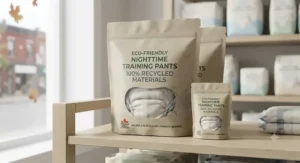
6. Super Undies Nighttime Undies — best long-term reusable option
Super Undies makes its nighttime line with a sewn-in, heavy-absorbency insert layered under an organic cotton or bamboo-blend outer, designed to be washed and reworn rather than tossed after one use. The honest analytical case for a reusable overnight training pant comes down to total cost across the training period rather than the sticker price of one pair: a family buying four or five sets and washing them every couple of days spends noticeably less over several months than buying weekly disposable packs, and produces a fraction of the landfill waste. What most buyers overlook about cloth overnight options generally is that a genuinely rated heavy-absorbency insert, tested the same way incontinence products are under the ISO 11948-1 absorbency standard, can match or exceed a mid-tier disposable’s capacity — it’s not automatically a downgrade in performance, just a different maintenance commitment. It’s the strongest pick for a family with laundry capacity to spare and a genuine interest in reducing disposable waste through what can be a months-long training window. Reviewers of Super Undies’ nighttime line consistently report strong containment for moderate wetters, though a recurring note is that genuinely heavy wetters sometimes need to double up with an extra insert.
Pros:
- ✅ Reusable across the full training period, cutting long-term cost
- ✅ Heavy-absorbency insert genuinely comparable to disposables
- ✅ Organic cotton blends are gentle against sensitive skin
Cons:
- ❌ Requires consistent laundering to stay ready for use
- ❌ Heaviest wetters may need a doubled-up insert
Expect to spend around C$55-C$75 for a starter set of three or four, which pays for itself compared to disposables within a few months of regular use.
7. Peejamas — best for kids who refuse anything “diaper-like”
Peejamas takes a genuinely different approach: instead of a bulky pull-up silhouette, it’s built to look and feel like ordinary cotton underwear or pajama bottoms, with a patented absorbent “Pee-Pocket” liner sewn directly into the garment rather than a visible padded core. That design choice solves a specific, common problem — kids in the later stages of nighttime training who flatly refuse to wear anything that resembles a diaper, even when they’re still having regular accidents. Here’s what to weigh: the moisture-wicking liner pulls wetness away from skin reasonably well for light-to-moderate accidents, but it’s genuinely less absorbent by volume than a dedicated bedwetting pant like GoodNites, so it suits a child who’s mostly dry with occasional slip-ups rather than one still wetting heavily most nights. Reviewers consistently describe a real boost in a child’s willingness to wear nighttime protection once it stops looking like a diaper, while a common complaint is that a genuinely heavy accident can still leak through onto sheets, so a waterproof mattress protector remains a sensible backup.
Pros:
- ✅ Looks and feels like real underwear, not a training pant
- ✅ Genuinely improves cooperation with resistant kids
- ✅ Reusable and washable, reducing long-term cost
Cons:
- ❌ Lower capacity than dedicated bedwetting pants for heavy wetters
- ❌ Best paired with a waterproof mattress protector as backup
At around C$40-C$60 for a 2-pack, it’s the right call for the tail end of nighttime training rather than the early, heavy-accident stage.
Practical Usage Guide: Setting Up a Nighttime Training Routine
Getting the routine right matters as much as the product itself, since even the best training pants for nighttime can’t compensate for a bedtime setup working against them. Cut off fluids roughly 60-90 minutes before bed rather than right at bedtime, and always include a bathroom trip as the very last step before lights out — that single habit alone prevents a meaningful share of nighttime accidents by starting the night with an empty bladder. Layer a waterproof mattress protector under the sheets regardless of which product you choose, since even a well-fitted training pant can leak during a genuinely large accident, and a protector turns a 2 a.m. crisis into a five-minute sheet swap instead of a full mattress cleanup. ✅ Check the fit at the leg openings and waistband every few weeks, especially during a growth spurt — a training pant that fit snugly a month ago can suddenly gap and leak simply because your child grew. Keep a fresh pant and a spare set of pajamas within easy reach of the bed rather than in another room, since a half-asleep parent fumbling through drawers at 2 a.m. is exactly when accidents turn into bigger messes than they need to be. Finally, resist the urge to wake a sleeping child for a “just in case” bathroom trip once you’ve started nighttime training pants — the whole point is letting their body signal wake them naturally over time, and interrupting that process can actually slow the transition to full dryness.
Real-World Scenarios: Matching Training Pants to Your Child
Picture a newly potty-trained three-year-old who’s solidly dry all day at daycare but still wets most nights — for that child, the Pampers Easy Ups Nighttime Training Pants or Huggies Pull-Ups Night-Time Training Pants makes the most sense, since the toddler-specific sizing and familiar pull-up format matches exactly where they are in the process. Now picture a seven-year-old who finished daytime training years ago but still wets the bed several nights a week — that’s squarely GoodNites Nighttime Bedwetting Underwear territory, or Bambo Nature Dreamy Night Pants if skin sensitivity is also a factor, since both are sized and marketed for kids well past toddlerhood without the babyish branding a younger product carries. Finally, imagine a five-year-old who’s mostly dry overnight with the occasional slip-up but absolutely refuses to wear anything resembling a diaper to a sleepover — Peejamas solves that exact standoff by looking like real underwear, while a family committed to reducing disposable waste across a longer bedwetting timeline gets real value from Super Undies Nighttime Undies instead. In each case, the right training pants for nighttime aren’t the ones with the flashiest packaging — they’re the ones matched to your child’s age, sensitivity, and stage in the process.
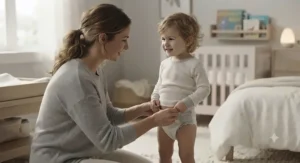
Nighttime Potty Training Regression: Why It Happens and What to Do
Nighttime potty training regression — a child who was dry for weeks suddenly starting to wet the bed again — is one of the most common and most misunderstood parts of this whole process, and it rarely means training has failed. According to Canadian Paediatric Society guidance on toilet learning, regression frequently tracks alongside big life changes: a new sibling, starting school, moving homes, illness, or even just a growth spurt disrupting sleep depth, all of which can temporarily override bladder signals a child had otherwise mastered. The practical fix isn’t punishment or pressure, which research consistently shows backfires by adding shame to an already physiological issue — it’s a temporary step back to nighttime training pants without framing it as a failure, paired with the same fluid-timing and bedtime-bathroom routine that worked the first time around. ✅ Most regressions resolve within a few weeks once the underlying stressor passes, and reintroducing training pants calmly, without drama, tends to speed that timeline rather than slow it. If regression persists past a couple of months with no clear trigger, or comes with pain, unusual thirst, or daytime symptoms, that’s the point to loop in a pediatrician rather than assume it’ll resolve on its own — those signs occasionally point to something beyond ordinary developmental variation.
What Is Training Pants for Nighttime?
Training pants for nighttime are pull-on, underwear-style garments built specifically for overnight potty training, featuring a denser absorbent core than daytime versions, a snug elastic waistband and leg cuffs to contain a full night’s output, and — in most disposable versions — a moisture-wicking liner that keeps a single accident from waking a sleeping child. They range from mainstream disposables sized for toddlers to dedicated bedwetting products sized for school-age kids, plus reusable cloth alternatives for families who prefer washing over tossing.
How to Choose Training Pants for Nighttime
Picking the right product comes down to matching a handful of factors to your specific child, roughly in the order most parents should weigh them.
- Start with your child’s actual age and size, not just the training stage. A toddler needs toddler-cut products like the Pampers Easy Ups Nighttime Training Pants; a school-age bedwetter needs sizing like GoodNites Nighttime Bedwetting Underwear offers.
- Assess how heavy a wetter your child genuinely is. Light-to-moderate wetters do fine with mainstream options or even Peejamas; heavy overnight wetters need maximum-capacity products.
- Factor in skin sensitivity honestly. A child with eczema or recurring rash benefits meaningfully from a chlorine-free option like Bambo Nature Dreamy Night Pants.
- Decide between disposable convenience and reusable cost savings. Reusables like Super Undies Nighttime Undies cost more upfront but less over months of regular use.
- Consider how your child feels about the product itself. A resistant kid may cooperate far more with something underwear-like than an obvious pull-up.
- Check whether refastening or quick-check features matter to your routine. Families doing frequent nighttime peeks benefit from Coterie The Pant‘s side-tab design.
- Always pair any product with a waterproof mattress protector. No training pant, disposable or reusable, eliminates the need for that backup layer completely.
Extra-Absorbent Training Pants: When Your Child Needs Maximum Overnight Protection
Not every child needs the highest-capacity product on the shelf, but for genuinely heavy overnight wetters, extra-absorbent training pants stop being a nice-to-have and become the difference between a dry morning and a daily laundry cycle. The spec that actually matters here is core density and coverage area, not brand name — products like GoodNites Nighttime Bedwetting Underwear and Bambo Nature Dreamy Night Pants concentrate absorbent material across a wider zone specifically because bedwetting underwear is designed around a worse-case-scenario wetting event rather than an average night. What most buyers overlook is that sizing up within extra-absorbent lines isn’t just about a bigger waist — larger sizes in these product lines typically carry proportionally more absorbent material, not just a stretched-out version of the smaller size. For reusable fans, doubling up a Super Undies Nighttime Undies insert achieves a similar effect without switching brands entirely. The honest trade-off is bulk: maximum absorbency products are noticeably thicker and can feel less like real underwear, which occasionally becomes its own cooperation problem with older, image-conscious kids — a real reason some families land on Peejamas instead once accidents become infrequent enough to risk the lower capacity.
Bedwetting Training Pants vs Regular Nighttime Training Pants: What’s the Difference
The line between bedwetting training pants and regular nighttime training pants isn’t always obvious from packaging alone, and it’s worth breaking down with real numbers rather than assuming they’re interchangeable.
| Feature | Regular Nighttime Training Pants | Bedwetting Training Pants |
|---|---|---|
| Typical age range | roughly 2-5 years | roughly 4-15 years |
| Marketing framing | toddler potty training | ongoing bedwetting management |
| Sizing basis | toddler weight brackets | school-age and teen weight brackets |
| Discretion in design | character prints, playful | underwear-style, deliberately low-key |
| Example products | Pampers Easy Ups Nighttime Training Pants, Huggies Pull-Ups Night-Time Training Pants | GoodNites Nighttime Bedwetting Underwear, Bambo Nature Dreamy Night Pants |
Analyzing this pattern, the real difference isn’t the core technology inside the product — it’s who the product is designed to be worn by and how a child feels wearing it. A toddler doesn’t think twice about a cartoon-printed pull-up, but a nine-year-old absolutely does, which is exactly why bedwetting-specific lines lean into discreet, underwear-like prints and sizing that fits a body years past toddlerhood. If your child has aged out of toddler training pants but nighttime dryness hasn’t caught up, reaching for a genuine bedwetting product rather than sizing up a toddler line, which often simply doesn’t fit or flatters correctly, makes a real difference in both containment and how willingly your child wears it.
✨ Ready to end the 2 a.m. sheet-changes? Compare today’s prices on these seven picks and find the nighttime training pants that actually fit your child!🌙
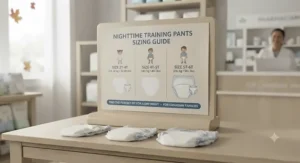
Overnight Absorbency Ratings Explained: What the Numbers Actually Mean
Marketing phrases like “up to 100% leak protection” or “12-hour overnight coverage” sound precise, but they’re brand-specific claims rather than a standardized, independently verified rating most parents can compare apples-to-apples across products. The closest thing to an actual industry standard comes from the incontinence products world, where absorbency is measured under a recognized laboratory protocol known as the Rothwell method, formalized as ISO 11948-1, which saturates a sample under controlled conditions and measures exactly how much fluid it holds before leaking. Most consumer training pant brands don’t publish results against that standard, so “extra absorbent” on a package is genuinely a relative claim rather than a number you can verify. What actually predicts real-world overnight performance better than marketing language is core thickness relative to size, the width of the absorbent zone (front-only versus full wraparound), and how the product performed in your own child’s use over a few nights — which is honestly the most reliable “rating” available to any individual family. Features That Actually Matter (And Those That Don’t): a wider absorbent core and a snug leg-cuff seal matter enormously; scented liners, cartoon prints, and “training” versus “protective” framing on the package matter far less than brands would like you to believe.
Bedwetting Alarms: How They Work and When It’s Time to Try One
Bedwetting alarms are a different tool entirely from training pants — instead of containing an accident, they’re designed to interrupt it, using a small moisture sensor clipped to underwear or a pad under the sheet that triggers a sound or vibration the instant wetness is detected, waking the child to finish in the bathroom. On paper this means the alarm is training the brain to recognize a full bladder signal during sleep, gradually building the same nighttime awareness that naturally develops in most kids anyway, just on an accelerated and more consistent timeline. Clinical guidance generally reserves alarms for children around age six or seven and older, since younger kids typically haven’t developed the physiological readiness an alarm can meaningfully train, and success usually takes six to twelve weeks of consistent, nightly use rather than a quick fix. Here’s what to weigh: alarms require real commitment from the whole household, since a parent typically needs to help the still-groggy child actually get up and finish in the bathroom in the early weeks, and inconsistent use significantly undercuts the training effect. They’re genuinely worth discussing with a pediatrician when a child past the typical age range is still wetting nightly despite normal daytime bladder control, training pants alone haven’t resolved things after several months, or the family is looking for a longer-term fix rather than ongoing nightly containment.
Common Mistakes When Buying Training Pants for Nighttime
The most common mistake is buying based on daytime training pant sizing charts rather than nighttime-specific ones, which often run differently because they’re built around maximum capacity rather than daytime comfort and mobility. A second frequent error is assuming a toddler-branded product will simply “still work” for a school-age bedwetter, when a genuine bedwetting-specific line like GoodNites Nighttime Bedwetting Underwear is both sized and designed for an older child’s needs and self-image. Parents also commonly skip the fit-check habit during growth spurts, discovering leaks are actually a sizing issue rather than a product-quality one weeks after a child has clearly outgrown their current size. Another overlooked issue is choosing a reusable option without realistically assessing laundry capacity — a genuinely great product like Super Undies Nighttime Undies only delivers its cost and waste advantages if the washing routine actually happens consistently. Finally, plenty of families give up on nighttime training pants after a single rough week, when the Canadian Paediatric Society is clear that nighttime dryness genuinely lags daytime control by design, and consistency over months, not days, is what actually resolves it.
Safety, Skin Health & Canadian Guidance for Nighttime Training
Skin health deserves real attention during any extended overnight training period, since a child can spend eight-plus hours in a single training pant, far longer than most daytime wear cycles. HealthLink BC’s guidance on toilet learning recommends a full change and a quick clean at wake-up regardless of how dry a product feels, since prolonged contact with even absorbed moisture can still irritate sensitive skin over time, and a consistent morning routine catches early rash before it becomes painful. Families managing recurring rash should look toward chlorine-free, fragrance-light options like Bambo Nature Dreamy Night Pants, and a thin barrier cream at bedtime adds a genuinely useful extra layer of protection for kids prone to breakouts. No Canadian regulatory body mandates a specific safety standard unique to training pants the way it does for children’s sleepwear flammability, so product safety here comes down to material transparency and brand reputation rather than a certification badge to check for. It’s also worth normalizing the emotional side for your child: nighttime accidents are never a behavioural failure, and framing training pants as a practical tool rather than a punishment measurably improves cooperation and speeds the whole process along.
Frequently Asked Questions
❓ What age should kids stop wearing training pants for nighttime?
❓ Are nighttime training pants the same as bedwetting training pants?
❓ How many dry nights before dropping nighttime training pants?
❓ Do bedwetting alarms actually work for nighttime potty training?
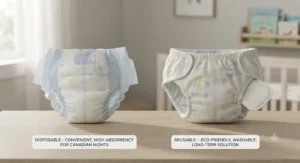
❓ Are reusable overnight training pants as absorbent as disposable ones?
Conclusion
Nighttime potty training runs on its own timeline, and the right training pants for nighttime are the ones that match where your child actually is, not the ones with the loudest packaging. Toddlers early in the process do well with the Pampers Easy Ups Nighttime Training Pants or Huggies Pull-Ups Night-Time Training Pants, while school-age kids still working on bedwetting need the sizing and discretion of GoodNites Nighttime Bedwetting Underwear or Bambo Nature Dreamy Night Pants. Families wanting fewer unnecessary changes should look at Coterie The Pant, and anyone ready to trade a bit of laundry for long-term savings and less waste has two genuinely solid options in Super Undies Nighttime Undies and Peejamas. Whichever product you land on, pairing it with a steady bedtime routine, a waterproof mattress protector, and patience through the occasional regression matters just as much as the pant itself.
Recommended for You
- Training Pants: 7 Best Picks In Canada For 2026 (Ranked)
- Diaper Rash Cream For Cloth Diapers: 7 Safe Picks (2026)
- 7 Best Diaper Rash Cream For Newborns In 2026 (Gentle; Proven)
Disclaimer: This article contains affiliate links. As an Amazon Associate, I earn from qualifying purchases. If you purchase products through these links, we may earn a small commission at no additional cost to you.
✨ Found this helpful? Share it with your friends! 💬🤗
