In This Article
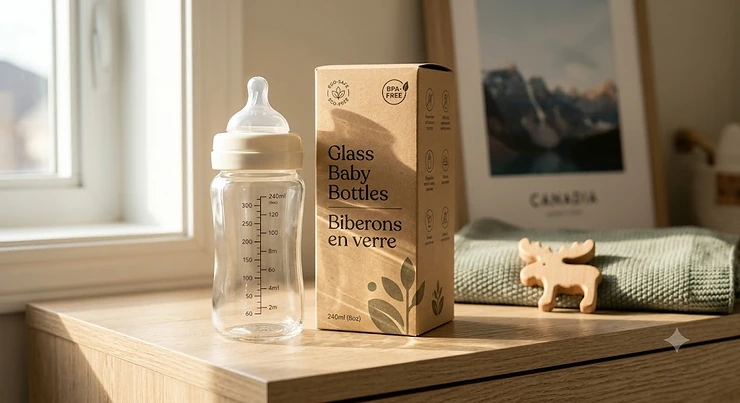
You’re standing in the baby aisle — or more realistically, scrolling Amazon.ca at 2 a.m. with a newborn on your chest — staring at an overwhelming wall of bottles. Plastic, glass, silicone, BPA-free labels, anti-colic vents, fancy nipple designs… where do you even begin? Here’s the thing: if you’ve landed on this page, you’ve already made one of the smartest decisions a new Canadian parent can make. You’re considering glass baby bottles, and in 2026, that choice matters more than ever.
Glass baby bottles have surged in popularity across Canada, and for good reason. They contain zero BPA, no phthalates, no PVC — none of the chemical concerns that have quietly worried parents for decades. Canada was actually the first country in the world to ban BPA-containing baby bottles back in 2008, a landmark move by Health Canada under the Canada Consumer Product Safety Act. But here’s what the average product listing won’t tell you: even “BPA-free” plastics can leach bisphenol substitutes like BPS under heat — and Health Canada’s own 2021 study found trace amounts in every brand of plastic bottle tested. Glass sidesteps all of that entirely.
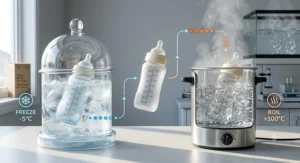
So what exactly are glass baby bottles? Simply put, they are infant feeding bottles made from food-safe glass — typically pharmaceutical-grade borosilicate — rather than plastic. Borosilicate glass is chemically inert, meaning it won’t react with breast milk, formula, or warm water at any temperature you’d realistically use. It’s the same type of glass used in laboratory equipment and high-end cookware. For Canadian parents navigating cold-weather routines — warming bottles from the fridge, sterilizing in boiling water, tossing them in the dishwasher after a long day — that thermal resilience is not a marketing claim; it’s a practical daily advantage.
In this guide, we’ve researched 7 top-rated glass baby bottles available on Amazon.ca, compared them head-to-head, and given you the kind of practical, experience-driven insight you won’t find on any product page. All prices are in CAD. Let’s get into it.
Quick Comparison: Best Glass Baby Bottles in Canada 2026
| Product | Material | Size Options | Anti-Colic | Best For | Price Range (CAD) |
|---|---|---|---|---|---|
| Philips Avent Natural Response Glass | Borosilicate | 120 ml, 240 ml | ✅ Yes | Breastfed babies | $20–$55 |
| Dr. Brown’s Options+ Narrow Glass | Borosilicate | 120 ml, 250 ml | ✅ Yes (vent system) | Colic/reflux babies | $20–$60 |
| Lifefactory Glass with Silicone Sleeve | Borosilicate | 120 ml, 270 ml | ❌ No | Safety-conscious parents | $18–$45 |
| NUK Simply Natural Glass | Borosilicate | 120 ml, 270 ml | ✅ Yes (nipple-integrated) | Budget buyers | $15–$40 |
| BIBS Baby Glass Bottle | Borosilicate | 110 ml, 225 ml | ✅ Yes | Design-forward parents | $25–$60 |
| Evenflo Vented+ Glass | Tempered glass | 120 ml, 240 ml | ✅ Yes | Value-focused families | $15–$35 |
| Joovy Boob Glass Bottle | Borosilicate | 150 ml, 250 ml | ✅ Yes (CleanFlow) | Active families | $20–$50 |
The table above shows a clear pattern: borosilicate glass is the gold standard across almost every top pick. The main differentiators come down to anti-colic technology, nipple design for breastfed babies, and whether a silicone sleeve is included — critical for Canadian parents who know a tile floor in winter is unforgiving. Budget buyers will find real value in the NUK and Evenflo options, while parents managing colic or reflux should look closely at Dr. Brown’s vent system.
💬 Just one click — help others make better buying decisions too! 😊
✨ Don’t Miss These Exclusive Deals!
🔍 Take your feeding routine to the next level with these carefully selected glass baby bottles. Click on any highlighted item to check current pricing and availability on Amazon.ca. These tools will help you create a healthier, chemical-free start for your baby!
Top 7 Glass Baby Bottles in Canada: Expert Analysis
1. Philips Avent Natural Response Glass Baby Bottle — Best Overall for Breastfed Babies
The Philips Avent Natural Response Glass is the bottle I recommend most often to new Canadian parents, and here’s the reason that doesn’t appear on the box: the Natural Response nipple only releases milk when your baby actively sucks. This isn’t just a branding claim — it genuinely mimics the variable flow of breastfeeding, which dramatically reduces nipple confusion if you’re going back and forth between breast and bottle.
Made from premium borosilicate glass, it handles the freeze-to-boil temperature swings that are part of everyday Canadian baby life without a second thought. The wide, breast-shaped nipple makes latch transitions smoother, and the bottle’s few parts mean even a sleep-deprived parent at midnight can clean and assemble it without losing a gasket somewhere behind the stove. The built-in anti-colic valve sends swallowed air away from baby’s tummy — useful, though it’s not quite as comprehensive as Dr. Brown’s full vent system.
Canadian parents particularly appreciate that Philips Avent is widely stocked on Amazon.ca, often with Prime shipping eligibility. Reviewers consistently note babies who rejected other bottles accepted this one within a feed or two, which matters enormously when you’re under the pressure of a newborn’s feeding schedule. Available in 120 ml (4 oz) for newborns and 240 ml (8 oz) for older babies.
✅ Wide nipple excellent for breast-to-bottle transition
✅ Borosilicate glass — thermal shock resistant
✅ Very few parts; easy to clean
❌ No silicone sleeve included (sold separately)
❌ Slightly pricier per bottle than budget options
Price range: around $20–$55 CAD depending on pack size. Excellent value given how many parents rely on it from birth to toddlerhood.
2. Dr. Brown’s Options+ Narrow Glass Anti-Colic Baby Bottle — Best for Colic & Reflux
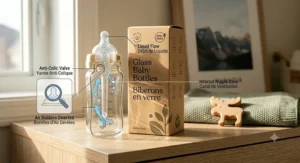
If your newborn is gassy, colicky, or showing signs of acid reflux, Dr. Brown’s Options+ Narrow Glass is the bottle to reach for — and the evidence backs it up. The internal vent system is clinically shown to reduce feeding problems by creating a vacuum-free flow, which means your baby swallows far less air. For Canadian parents managing a baby with reflux through long winter nights, this can genuinely be the difference between a manageable evening and an exhausting one.
The borosilicate glass construction handles repeated sterilization without degrading — you can boil, steam-sterilize, or run these through the dishwasher indefinitely. The “Options+” in the name matters: when your baby outgrows the colic phase, you can simply remove the vent insert and use it as a standard bottle, extending its useful life considerably.
The trade-off? There are more parts to wash than any other bottle on this list. The vent system requires careful cleaning of each component, and if you’re already juggling the chaos of a newborn, this can feel like a lot. That said, most parents find the relief from colic symptoms worth every extra minute of cleaning. Canadian reviewers frequently mention they wish they’d bought these bottles sooner. Available in 120 ml (4 oz) for newborns and 250 ml (8 oz) for older infants.
✅ Clinically proven anti-colic vent system
✅ Converts to standard bottle when vent removed
✅ Borosilicate glass — durable and chemical-free
❌ Most parts to clean of any bottle on this list
❌ Vent system is plastic (contact with milk minimal but present)
Price range: $20–$60 CAD depending on pack size. Well worth the investment for colic-prone babies.
3. Lifefactory Glass Baby Bottle with Silicone Sleeve — Best for Safety-Conscious Parents
The Lifefactory Glass Baby Bottle is the only option on this list that comes standard with a full silicone sleeve wrapped around the entire bottle body — and for Canadian parents with hardwood or tile floors, that design decision is quietly brilliant. Borosilicate glass can and does break on hard impact; the thick silicone sleeve absorbs shock, dramatically reducing that risk, while also giving babies and toddlers a proper grip surface on the bottle.
What most buyers overlook about this model is the minimal plastic contact design. The milk path in a Lifefactory bottle is almost entirely glass — a significant advantage over bottles where a plastic vent or valve sits directly in the liquid stream. For parents who’ve switched from plastic specifically to eliminate chemical exposure, this matters. The borosilicate glass is thermal shock resistant, transitioning safely from freezer storage to warm water baths without cracking.
The downside: Lifefactory doesn’t have a built-in anti-colic system. If gas and reflux are a concern, pair it with paced bottle feeding techniques — a practice many Canadian lactation consultants recommend anyway. The bottle is available on Amazon.ca, though selection may vary — check for Prime eligibility as shipping to northern and remote regions of Canada can take longer for non-Prime items.
✅ Full silicone sleeve included — best drop protection
✅ Minimal plastic-to-milk contact
✅ Borosilicate glass, thermal shock resistant
❌ No anti-colic vent system
❌ Narrower neck can be messier to fill
Price range: $18–$45 CAD. Superb long-term value given the sleeve’s protective function.
4. NUK Simply Natural Glass Baby Bottle — Best Budget-Friendly Glass Bottle
Budget doesn’t have to mean compromise when it comes to glass baby bottles, and the NUK Simply Natural Glass proves it. Made from borosilicate glass with a notably thick-walled construction, this bottle resists breakage better than many pricier alternatives. The nipple design features multiple holes modelled after a mother’s breast, producing a variable flow that more closely mimics natural feeding than traditional single-hole nipples.
Here’s what the spec sheet won’t tell you: the anti-colic air system is built directly into the nipple rather than a separate vent assembly. That means one less part to clean — a genuine quality-of-life advantage that new parents deeply appreciate. You can boil, steam, or dishwasher-sterilize these without concern. The wide mound and flattened nipple tip also make this a reasonable choice for babies who regularly switch between breast and bottle.
One caveat worth mentioning: the NUK Simply Natural Glass doesn’t include a silicone sleeve, so it’s best suited for home feeding rather than on-the-go use, particularly if your baby is at the grabbing-and-dropping stage. For Canadian families on a tighter budget — or parents wanting a secondary bottle for daycare or grandparents’ homes — this is excellent value. Available on Amazon.ca in 120 ml and 270 ml sizes.
✅ Budget-friendly without sacrificing borosilicate quality
✅ Anti-colic built into nipple — fewer parts to clean
✅ Thick walls reduce breakage risk
❌ No silicone sleeve included
❌ Fewer nipple flow options than some competitors
Price range: $15–$40 CAD. The smartest buy for parents wanting glass quality on a limited budget.
5. BIBS Baby Glass Bottle with Anti-Colic Design — Best for Design-Forward Families
The BIBS Baby Glass Bottle from Denmark has earned a devoted following among Canadian parents who care about aesthetics alongside safety — and while that might sound superficial, there’s actually a practical dimension to it. Beautifully designed products get used consistently. If a bottle feels like a premium object in your hands, you’re more likely to stick with the chemical-free feeding routine you’ve committed to.
Beyond the Scandinavian aesthetic, the BIBS bottle is built on premium borosilicate glass completely free of BPA, PVC, and phthalates. The natural rubber-latex nipple is notable — it’s softer and more flexible than silicone, producing a feeding rhythm many babies find closer to breastfeeding. That said, Canadian parents should check for latex allergies before purchasing, particularly for babies with sensitive skin or any family history of latex sensitivity.
The anti-colic design reduces air intake effectively, and the overall bottle assembly is refreshingly simple — a priority when you’re doing six bottle washes a day. BIBS is available on Amazon.ca, with availability particularly strong through third-party sellers shipping to Canada. Note that Canadian pricing on BIBS tends to run slightly higher than US equivalents due to the import factor, but you avoid cross-border shipping fees, customs paperwork, and warranty headaches. Available in 110 ml and 225 ml sizes.
✅ Stunning Scandinavian design
✅ Premium borosilicate — BPA, PVC, phthalate-free
✅ Natural rubber nipple for realistic feeding rhythm
❌ Latex nipple not suitable for latex-sensitive babies
❌ Slightly higher price point in Canada vs. US
Price range: $25–$60 CAD. Worth it for parents who value design alongside function.
6. Evenflo Vented+ Glass Baby Bottle — Best Value Glass Bottle
The Evenflo Vented+ Glass Baby Bottle occupies a unique position on this list: it’s the most affordable glass option that still includes a functional venting system. For Canadian families watching their budget while still making the switch from plastic to glass, this is the entry point that makes the transition financially painless.
It’s worth noting one technical distinction: Evenflo uses tempered glass rather than borosilicate. Tempered glass is created through a chemical or heat treatment process that increases durability over standard glass, but it doesn’t offer the same extreme thermal resistance as borosilicate. In practical terms, this means you should avoid rapid temperature shifts — don’t take it straight from the freezer and run it under boiling water. For normal fridge-to-warm-water transitions that most Canadian feeding routines involve, it performs fine.
The venting system reduces colic symptoms effectively, and the bottle is dishwasher safe (top rack recommended). For grandparents or caregivers who simply need a safe, no-fuss glass bottle to keep on hand, the Evenflo Vented+ Glass is a practical, no-regrets purchase on Amazon.ca. Available in 120 ml and 240 ml sizes, often with free shipping at the $35 CAD threshold or with Prime membership.
✅ Most affordable glass option on this list
✅ Venting system reduces colic effectively
✅ Widely available on Amazon.ca
❌ Tempered glass, not borosilicate — avoid extreme temperature changes
❌ Less thermal resistant than borosilicate alternatives
Price range: $15–$35 CAD. The gateway into glass feeding without straining your budget.
7. Joovy Boob Glass Baby Bottle — Best for Active Families on the Go
The Joovy Boob Glass Baby Bottle is the option that rewards closer attention. The patented CleanFlow Vent system is engineered with four venting points around the rim of the bottle, meaning the bottle vents air consistently regardless of feeding angle — an advantage that sounds minor until you’re feeding a wriggly three-month-old in the back of an SUV on the way to your parents’ place in the suburbs.
Made from borosilicate glass with a silicone sleeve included, the Joovy Boob offers the combination of chemical-free feeding and impact protection that active Canadian families need. The nipple — available in five flow rates from preemie through X-Cut — is notably soft, and the “Naturally Nood” nipple variant (with texture) is specifically designed for babies who resist bottle feeding entirely, a feature no other bottle on this list offers. Canadian parents who’ve struggled with bottle refusal often find this nipple design the key to breaking the impasse.
Availability on Amazon.ca can vary by colour and size, so check stock on both the 150 ml and 250 ml versions. Shipping to remote or northern regions of Canada may require Prime membership for reasonable delivery windows. At its price point, the Joovy Boob Glass represents premium value — particularly for families doing a lot of feeding on the move, where both the silicone sleeve and the 360° venting system earn their keep daily.
✅ CleanFlow Vent works at any bottle angle
✅ Silicone sleeve included — good drop protection
✅ Five nipple flow rates including preemie option
❌ Availability on Amazon.ca can vary
❌ Higher price than budget options
Price range: $20–$50 CAD. Ideal for active families who need reliability in any feeding position.
How to Use Glass Baby Bottles Safely: A Canadian Parent’s Practical Guide
Switching to glass baby bottles is a great decision — here’s how to get the most out of them from day one, with some tips specifically relevant to Canadian routines.
Step 1: Sterilize before first use. All glass baby bottles should be boiled for 5 minutes or run through a full dishwasher cycle before initial use. Borosilicate glass handles this without issue.
Step 2: Warm milk gently. Run the bottle under warm tap water or use a bottle warmer set to a gentle temperature. Avoid the microwave — microwaves heat unevenly and can create hotspots that burn your baby, as Health Canada specifically cautions. Never go from frozen to boiling with tempered-glass bottles like the Evenflo.
Step 3: Store breast milk in the fridge or freezer in the bottle. Borosilicate glass transitions safely from freezer temperatures to a warm water bath. Leave about a centimetre of space at the top if freezing, as liquid expands.
Step 4: Cold-weather tip for Canadian winters. If you’re transporting a bottle in your diaper bag during a Canadian winter, use an insulated sleeve or small thermal bag. Glass loses heat faster than plastic in cold air — a consideration if you’re walking between parking and an appointment in January in Calgary or Winnipeg.
Step 5: Inspect regularly. Glass doesn’t degrade chemically like plastic does, but it can develop micro-cracks after repeated drops. Check your bottles under good light once a month. A cracked bottle should be retired immediately.
Step 6: Clean after every use. Use a bottle brush with warm soapy water, or the top rack of the dishwasher. Glass doesn’t absorb odours or stain — one of its genuine advantages over plastic.
Real-World Canadian Profiles: Which Glass Baby Bottle Fits Your Life?
Different families need different things from a bottle, and Canadian life adds its own specific wrinkles. Here are three realistic profiles to help you self-identify before scrolling back up to the product list.
Profile 1: The Toronto Condo Parent You live in a downtown Toronto condo, you’re combination feeding, and your baby has started showing signs of gas and fussiness after bottles. You do six feeds a day and need bottles that sterilize easily in a countertop steam sterilizer. Best pick: Dr. Brown’s Options+ Narrow Glass — the vent system addresses the colic, and the borosilicate handles your steam sterilizer without issue. Yes, there are more parts to clean, but the relief from fussy evenings is worth it.
Profile 2: The Vancouver Outdoor Family You’re in North Vancouver, baby in arms on the SeaBus or out on a trail. You need a bottle that can survive a drop onto concrete, won’t leach anything if it warms up in your bag, and looks put-together. Best pick: Lifefactory Glass with Silicone Sleeve or Joovy Boob Glass — both include protective sleeves, both use borosilicate glass, and the Joovy’s 360° vent system is a plus when feeding angles vary on the go.
Profile 3: The Budget-Conscious Winnipeg Family You’ve got a newborn and a toddler, you’re already spending heavily on diapers and formula, and you want to make the switch to glass without breaking the bank. Best pick: NUK Simply Natural Glass or Evenflo Vented+ Glass — both deliver the core benefits (chemical-free, easy to sterilize) at prices that won’t add stress to an already stretched budget.
Glass vs. Plastic Baby Bottles: The Honest Canadian Comparison
This is the question every parent arrives at eventually, so let’s give it the direct treatment it deserves.
| Feature | Glass Baby Bottles | Plastic Baby Bottles |
|---|---|---|
| Chemical safety | ✅ Zero BPA, BPS, PVC, phthalates | ⚠️ “BPA-free” may still leach BPS |
| Durability | ⚠️ Can break if dropped | ✅ Highly impact-resistant |
| Weight | ❌ Heavier (approx. 150–200g) | ✅ Lightweight |
| Longevity | ✅ Years with care | ⚠️ Degrades, scratches over time |
| Environmental impact | ✅ Recyclable, lower microplastic risk | ❌ Plastic waste, microplastics |
| Sterilization | ✅ Handles boiling, dishwasher | ⚠️ Can warp at high heat |
| Health Canada compliance | ✅ Fully compliant | ✅ If BPA-free certified |
| Cost (CAD) | $15–$60+ | $10–$40 |
The analysis behind this table is worth spelling out. The phrase “BPA-free” on a plastic bottle sounds reassuring, but Canada’s own Health Canada research found that bisphenol substitutes like BPS were detected in every brand of plastic baby bottle tested in their 2021 study. Glass eliminates the entire category of concern — not just the one chemical. On environmental grounds, glass is infinitely recyclable and produces no microplastics, a growing concern in Canadian water systems. The weight disadvantage is real but manageable: most parents find glass bottles are primarily used at home, with lighter options kept for travel.
The one genuine advantage of plastic is impact resistance. For families with babies who fling their bottles (and they all do eventually), a silicone-sleeved glass bottle like the Lifefactory or Joovy significantly closes that gap.
How to Choose Glass Baby Bottles in Canada: 6 Expert Criteria
Narrowing down your choice doesn’t need to be overwhelming. Here are the six factors that actually matter, in order of importance:
- Glass type — borosilicate vs. tempered. Borosilicate glass is the superior choice for Canadian families because it handles extreme temperature changes without cracking. Go from the fridge to warm water, to the dishwasher — no problem. Tempered glass is more affordable but requires gentler temperature transitions.
- Anti-colic venting system. If your newborn is already showing gas or colic symptoms, prioritize a built-in vent system (Dr. Brown’s, Evenflo, Joovy). If your baby feeds easily without fussing, a simpler bottle like the Lifefactory saves cleaning time.
- Nipple design for feeding type. Breastfed babies need wide, breast-shaped nipples (Philips Avent, BIBS, Joovy) to reduce nipple confusion. Exclusively formula-fed babies have more flexibility, but breast-shaped nipples don’t hurt.
- Silicone sleeve availability. Living in Canada means cold floors, tiles, and hardwood in most homes. A silicone sleeve — standard on Lifefactory and Joovy, sold separately for Philips Avent — is a meaningful addition to any glass bottle.
- Pack size and Amazon.ca availability. Check whether your preferred bottle is Prime-eligible on Amazon.ca. For remote or northern communities, Prime membership is often the practical way to ensure reliable delivery times, especially for newborn essentials.
- Budget in CAD and long-term value. While Canadian pricing runs slightly higher than US equivalents due to import and exchange factors, the durability advantage of glass means you’re often buying these once rather than repeatedly. A $45 CAD glass bottle that lasts two years beats a $15 plastic bottle you replace every six months.
Common Mistakes When Buying Glass Baby Bottles in Canada
Even well-researched parents make avoidable errors. Here are the most frequent ones:
Assuming all “glass” bottles are the same. They’re not — borosilicate glass and tempered glass have meaningfully different thermal properties. Read the product description carefully, especially if you plan to move bottles between freezer and warm water regularly.
Overlooking the nipple flow rate. Newborns need slow flow (Stage 1 or Flow 1–2). Too fast a flow overwhelms a newborn and causes gas regardless of the bottle material. This is particularly common when parents receive gifted bottles intended for older babies.
Ignoring silicone sleeve options. Canadian homes with tile or hardwood are bottle-breaking environments. If your chosen bottle doesn’t come with a sleeve, factor in the cost of purchasing one separately — most are widely available on Amazon.ca for a few dollars.
Buying based on price alone. The Evenflo Vented+ Glass is excellent value, but it’s tempered glass — a distinction that matters in certain scenarios. Spending a bit more on borosilicate from the start is often the better long-term investment in CAD terms.
Not checking Amazon.ca stock before committing. Product availability on Amazon.ca is sometimes narrower than Amazon.com. A few models in this guide have variable Canadian availability — always verify before counting on a specific bottle for a due date.
Skipping the pre-use sterilization. It seems obvious but gets overlooked in the chaos of a newborn’s arrival. All glass baby bottles, no matter how clean they look out of the box, should be sterilized before first use.
Health Canada Regulations & Canadian Safety Standards for Baby Bottles
Canadian parents have more regulatory protection than most realize. Under the Canada Consumer Product Safety Act, the manufacture, advertisement, sale, and import of baby bottles containing BPA is prohibited — a ban that made Canada the global pioneer on this issue when it was first enacted. This regulation is enforced at the federal level and applies to all products sold through Amazon.ca and Canadian retailers.
BPA is also formally classified as toxic under the Canadian Environmental Protection Act, 1999, which gives Health Canada ongoing monitoring and assessment powers. Products must meet bilingual labelling requirements under Canadian law — a practical consideration when scanning bottles at Canadian retailers, as the French labelling on packaging signals a product has cleared Canadian compliance checks.
For additional peace of mind, look for bottles that reference compliance with Canadian food-contact safety standards. All seven bottles reviewed in this guide are BPA-free by construction (glass contains no BPA inherently) and are suitable for sale under Canadian consumer protection law. When in doubt, Health Canada’s website at canada.gc.ca is the authoritative source for ongoing regulatory updates on infant products.
The broader implication of Canada’s regulatory leadership: Canadian parents can trust that products sold through major Canadian retailers and Amazon.ca have passed stricter baseline safety checks than products available in many other markets. Glass baby bottles simply go one step further by removing the plastic variable entirely.
✨ Don’t Miss These Exclusive Deals!
🔍 Ready to make the switch to chemical-free feeding? Click on any highlighted product to check current pricing and Prime availability on Amazon.ca. Your baby’s first months deserve the safest, most thoughtfully chosen products you can find!
Environmental Impact: Why Glass Baby Bottles Are the Eco-Friendly Choice for Canadian Families
Canada has set ambitious sustainability targets, and an increasing number of Canadian parents are factoring environmental impact into their purchasing decisions — particularly around single-use and frequently-replaced baby products.
Glass baby bottles have a measurably better environmental profile than plastic alternatives across their lifecycle. Glass is infinitely recyclable through Canadian municipal recycling programs — the same bottle material, reclaimed and reused without quality degradation. Plastic bottles, by contrast, typically end up in landfill after 6–12 months of use as scratches degrade the surface and parents replace them. Every scratched plastic bottle that ends up in a Canadian landfill is also a microplastic source as it slowly degrades.
Borosilicate glass bottles, maintained properly, last years rather than months. The upfront cost in CAD is higher, but the cost-per-use calculation strongly favours glass over a two to three year feeding window. A set of quality borosilicate glass bottles purchased for your first child can be sanitized, inspected, and used for a second — plastic bottles should never be reused between children as surface scratches harbour bacteria that thorough washing can’t fully address.
For Canadian families in provinces with active composting and recycling infrastructure — British Columbia’s deposit-return system, Ontario’s expanded Blue Box program — glass fits naturally into existing sustainability practices. If you’re already thinking carefully about reducing your family’s plastic footprint, glass baby bottles are a straightforward, baby-safe place to start.
FAQ: Glass Baby Bottles in Canada
❓ Are glass baby bottles safe for newborns in Canada?
❓ Can glass baby bottles ship to all provinces in Canada through Amazon.ca?
❓ What is the difference between borosilicate and tempered glass baby bottles?
❓ Do glass baby bottles help with colic and gas in babies?
❓ Are glass baby bottles BPA-free and compliant with Health Canada standards?
Conclusion: The Clearest Choice for Chemical-Free Feeding in Canada
After reviewing seven of the best glass baby bottles available on Amazon.ca, the conclusion is clear: for Canadian parents who want the safest, most environmentally responsible, and longest-lasting bottle feeding solution, glass is the right choice — and 2026 is a better time than ever to make the switch.
The Philips Avent Natural Response Glass earns the overall top spot for its combination of breastfeeding compatibility, anti-colic design, and wide Amazon.ca availability. Dr. Brown’s Options+ Narrow Glass is the standout choice for colic-prone babies. The Lifefactory Glass with Silicone Sleeve leads for parents prioritizing maximum chemical-free construction and drop protection. Budget-minded Canadian families will find real value in the NUK Simply Natural Glass and Evenflo Vented+ Glass, while design-conscious parents and active families should look at the BIBS and Joovy Boob Glass respectively.
Whatever your situation — downtown Toronto condo, suburban Ottawa home, or a rural farmhouse in Saskatchewan — there’s a glass baby bottle on Amazon.ca that fits your life, your budget, and your values. Canada’s pioneering regulatory work on BPA gave parents here a head start. Glass baby bottles take that head start and run with it.
Check current prices and availability on Amazon.ca using the highlighted links in this article. Prices are in CAD and change regularly — always verify before purchasing.
✨ Don’t Miss These Exclusive Deals!
🔍 Found your perfect match? Click the highlighted product names throughout this article to check live pricing and shipping options on Amazon.ca — and start your baby’s feeding journey the chemical-free way!
Recommended for You
- Best Wide Neck Baby Bottles for Breastfed Babies in Canada 2026
- Best Anti-Colic Bottles Canada 2026: 7 Top Picks for Gassy Babies
- 7 Best Baby Bottles Canada 2026: BPA-Free & Anti-Colic Picks
Disclaimer: This article contains affiliate links. As an Amazon Associate, I earn from qualifying purchases. If you purchase products through these links, we may earn a small commission at no additional cost to you.
✨ Found this helpful? Share it with your friends! 💬🤗
