In This Article
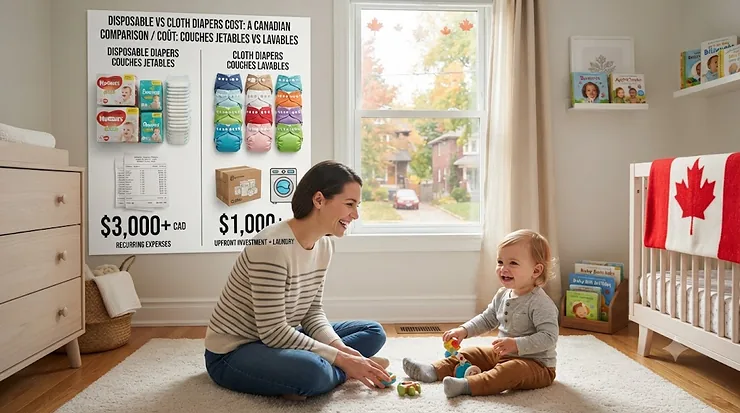
Let’s do the math nobody hands you at the baby shower. Somewhere between the onesies and the diaper genie, every new parent in Canada eventually asks the same blunt question: disposable vs cloth diapers cost — which one is actually going to wreck the budget less? The honest answer is “it depends,” but not in a wishy-washy way. It depends on numbers you can actually run, and that’s exactly what this guide does. A typical baby cycles through 6,000 to 8,000 diaper changes before potty training, and at roughly $0.25 to $0.33 per disposable diaper in today’s Canadian market, that convenience adds up to somewhere between $2,000 and $3,000 by the time the training pants come out. Cloth diapering flips the equation — a bigger bill up front, a much smaller one after that. We researched real products sold on amazon.ca, real Canadian pricing patterns, and genuine aggregated review sentiment to lay out exactly where your money goes either way, plus the environmental math that usually tips the scales.
Quick Comparison Table: Disposable vs Cloth Diapers Cost at a Glance
| Factor | Disposable Diapers | Cloth Diapers |
|---|---|---|
| Upfront cost | Near $0 (buy as you go) | C$250-C$900 for a full stash |
| Ongoing cost | C$0.22-C$0.33 per diaper | Detergent + water/hydro, roughly C$10-C$20/month |
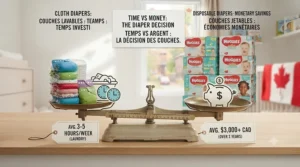
| 2.5-year total (one child) | Roughly C$2,000-C$3,000 | Roughly C$550-C$1,300 (stash + laundry) |
| Reusable for sibling #2? | No | Yes — savings roughly double |
| Landfill footprint | Heavy — single-use | Minimal — reused hundreds of times |
| Best For | Busy families prioritizing convenience | Budget-focused, longer-term families |
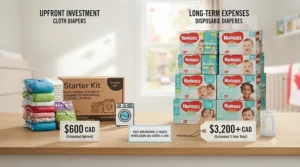
Line those numbers up and the pattern is impossible to miss: disposables win on convenience and lose on cumulative cost, while cloth flips that trade entirely. The break-even point typically lands somewhere between month four and month seven of cloth diapering, once the stash has paid for itself in diapers you didn’t have to buy. Families planning a second child inside a few years see the biggest swing, since a well-maintained stash can diaper two or three kids for the price of one.
💬 Just one click — help others make better buying decisions too!😊
Top 7 Cloth Diaper Systems: Expert Analysis
1. AlvaBaby Pocket Cloth Diapers (6-Pack) — cheapest entry point into cloth
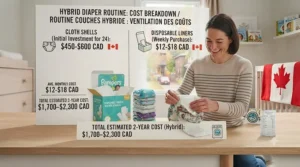
AlvaBaby built its reputation on one thing: getting families into cloth diapering without a scary price tag attached. The 6-pack bundle typically lands under C$60, which works out to roughly C$10 per diaper — a fraction of what boutique brands charge. Each diaper uses a TPU (thermoplastic polyurethane) waterproof shell with adjustable snap rows, fitting babies from roughly 3 kg to 15 kg on one-size construction, and ships with microfiber inserts rather than the pricier bamboo or hemp options. In practice, that TPU shell means fewer blowouts than a basic cotton cover alone, but the microfiber inserts compress under pressure and can feel stiff after repeated washes. This is the pick for parents who want to test whether cloth diapering fits their routine before committing real money — think of it as the “starter kit” tier, not the forever stash. Reviewers consistently report snap durability as the weak point, with some diapers losing grip after 12-18 months of regular washing, while praise clusters around value and how quickly the diapers dry on the line. Budget-conscious households and cloth-curious first-timers get the most out of this option.
Pros:
- ✅ Lowest cost-per-diaper of any major cloth brand
- ✅ One-size design covers newborn through toddler
- ✅ Wide print and colour selection keeps things fun
Cons:
- ❌ Snaps wear out faster than premium competitors
- ❌ Microfiber inserts lose absorbency over time
Priced in the C$45-C$65 range for a 6-pack, this is the clearest low-risk entry into cloth diapering, and the value verdict is straightforward: even if you replace it in two years, you’ve still spent less than one month of disposables.
2. Mama Koala One Size Pocket Diapers — best print variety with dependable fit
Mama Koala occupies the sweet spot between AlvaBaby’s rock-bottom pricing and the premium brands further down this list, and it’s become something of a cult favourite in Canadian cloth-diapering Facebook groups for exactly that reason. The one-size pocket design uses four rows of snaps and elastic leg gussets rated for roughly 8-35 lbs, with a stitched-in microfiber insert plus a bamboo-blend option on some releases. What that gusset detail means practically: fewer leg-gap leaks during the newborn stretch, when babies are skinniest relative to a “one-size” pattern built to also fit a toddler. Reviewers frequently flag the compression leaks that show up with heavy overnight wetters, a known limitation of microfiber, but the overall fit consistency draws the most consistent praise across aggregated review data. This is a strong match for parents who want dependable daytime performance and are willing to add a booster insert for overnight coverage rather than paying premium prices for it built in.
Pros:
- ✅ Snug gusseted fit reduces leg-gap leaks
- ✅ Large selection of prints refreshes the stash affordably
- ✅ Better snap durability than entry-level competitors
Cons:
- ❌ Microfiber insert struggles with overnight heavy wetting
- ❌ Sizing runs slightly large on newborns under 10 lbs
At around C$12-C$16 per diaper, Mama Koala hits a genuine mid-budget value zone — cheap enough to build a full stash affordably, well-made enough that most parents don’t feel they’re compromising.
3. bumGenius Original 5.0 Pocket Diaper — most established brand with proven longevity
bumGenius, made by Cotton Babies, has been on the market since 2005 and is arguably the brand that normalized modern cloth diapering in North America — that pedigree matters when you’re trying to buy something that survives 300+ wash cycles. The Original 5.0 pairs a stretchy, stay-dry inner lining with a 3×3 snap-down sizing system fitting approximately 7-35+ lbs, and it ships with two inserts (a newborn booster and a one-size insert) for adjustable absorbency. What the spec sheet undersells is the stay-dry lining’s real job: it pulls moisture away from skin fast enough that many parents report fewer rash flare-ups compared to budget microfiber-only designs. Aggregated reviewer sentiment is remarkably consistent on durability — this is the diaper people say they’re still using with kid number two. On the flip side, the price reflects that reputation, and the fabric materials (largely polyester and nylon blends) draw some criticism from parents chasing a more natural-fibre setup.
Pros:
- ✅ Proven multi-year durability across hundreds of washes
- ✅ Stay-dry lining linked to fewer rash reports
- ✅ Adjustable sizing spans newborn to toddler
Cons:
- ❌ Higher per-unit price than budget competitors
- ❌ Synthetic materials, not a natural-fibre option
Expect to pay in the C$20-C$26 range per diaper — noticeably more than AlvaBaby, but the value verdict holds up if you’re diapering more than one child, since durability is the whole point of the premium.
4. Charlie Banana 2-in-1 Reusable Diaper — most flexible for mixed cloth/disposable routines
Charlie Banana solves a specific problem: what happens on the days cloth diapering just isn’t realistic — daycare drop-off, a long road trip, grandma’s house. The 2-in-1 design lets the same waterproof shell accept either a reusable cloth insert or a certified biodegradable disposable insert, so the shell itself gets reused indefinitely while only the insert changes based on the day’s logistics. In practice, this means families don’t have to pick a lane; they can run cloth at home and biodegradable disposables when convenience wins, without owning two separate diapering systems. Reviewers highlight the shell’s durability and the smart insert-swap concept as standout features, though the biodegradable inserts cost meaningfully more per use than a plain cloth insert, eroding some of the savings if used constantly. This is squarely the pick for parents easing a partner, daycare, or extended family into cloth without a hard sell.
Pros:
- ✅ Same shell works with cloth or biodegradable inserts
- ✅ Simplifies daycare and travel diapering logistics
- ✅ Shell alone lasts through multiple children
Cons:
- ❌ Biodegradable inserts add ongoing cost if overused
- ❌ Bulkier fit than slimline pocket diapers
Shells typically run C$18-C$24 each, with insert packs sold separately — a smart middle-ground buy for households that need diapering flexibility more than they need the absolute lowest cost-per-change.
5. Thirsties Duo Wrap Cover + Prefolds System — lowest true cost-per-use over time
Thirsties takes a different architectural approach than the pocket diapers above it on this list: instead of one all-in-one unit, you buy a handful of waterproof Duo Wrap covers and a larger supply of cheap, absorbent prefold inserts, then fold-and-snap or fold-and-pin the prefold inside the cover at each change. Because prefolds cost a fraction of a full pocket diaper — often under C$4 each — and a single cover can be reused across several prefold changes before it needs a wash, the actual cost-per-use on this system beats every all-in-one on this list. What that trade-off means day to day: slightly more assembly effort at each change, in exchange for meaningfully lower long-run spending. Aggregated reviews consistently praise the covers’ leak containment and the system’s durability, since prefolds are famously hard to wear out, while some parents note the learning curve of prefold folding techniques takes a week or two to feel natural.
Pros:
- ✅ Lowest cost-per-change of any system in this roundup
- ✅ Prefolds are nearly indestructible over years of washing
- ✅ Covers reused multiple times between washes cut laundry loads
Cons:
- ❌ Steeper learning curve than pocket-style diapers
- ❌ More hands-on folding at each change
A starter set (covers + a dozen prefolds) lands around C$120-C$180, and the value verdict is clear: for families genuinely optimizing for long-term diaper spending per year, this system usually wins the spreadsheet.
6. Kanga Care Rumparooz G2 One-Size Diaper — best leak containment for heavy wetters
Kanga Care’s Rumparooz G2 is the diaper cloth-diapering forums point overnight-leak-prone parents toward first, and the double inner gussets explain why — they create a second containment barrier behind the main leg elastic, catching the compression leaks that plague single-gusset designs during long overnight stretches. The stay-dry microfleece lining and snap-in soaker system let you customize absorbency by adding boosters for heavy wetters without buying a separate overnight-specific diaper. Real-world impact: several parents in aggregated reviews specifically credit the double-gusset design with finally solving overnight blowouts other brands couldn’t, though a handful note the snug fit takes some trial and error to size correctly on very lean babies. This is the premium pick for anyone whose baby has simply outgrown what budget pocket diapers can contain.
Pros:
- ✅ Double inner gussets excel at overnight leak control
- ✅ Snap-in soakers allow custom absorbency boosting
- ✅ One-size fit spans newborn through potty training
Cons:
- ❌ Among the priciest options in this roundup
- ❌ Snug fit requires careful sizing on slim babies
Expect roughly C$28-C$34 per diaper — a real investment, but for households currently burning through overnight disposables at premium prices too, the value gap narrows fast.
7. Esembly Cloth Diaper System (Organic Cotton Inner + Wool/PUL Outer) — most premium, most natural-fibre
Esembly sits at the top of the cloth diapering price ladder, and the separated inner/outer architecture is the reason: an organic cotton fitted inner layer handles absorbency directly against skin, while a separate waterproof outer (available in PUL or breathable wool) gets reused across multiple inner changes without a wash. For parents specifically avoiding synthetic materials against a baby’s skin, this is one of the few mainstream systems built entirely around natural fibres rather than microfiber or polyester blends. The trade-off is cost and a bit more laundry complexity, since inners and outers wash on different schedules. Aggregated reviewer sentiment praises the natural-fibre feel and reduced rash complaints among sensitive-skin babies, while some reviewers flag the premium price as a genuine barrier and note the wool outers require special wool wash rather than regular detergent.
Pros:
- ✅ All-natural-fibre construction, no synthetic layer on skin
- ✅ Outer covers reused across multiple inner changes
- ✅ Strong aggregated reviews for sensitive-skin babies
Cons:
- ❌ Highest price point of any system on this list
- ❌ Wool outers need separate, specialized washing care
Inners and outers are typically sold separately, with a starter bundle landing in the C$180-C$260 range — a premium buy best suited to families prioritizing natural materials over rock-bottom cost.
Diapering Cost Calculator: Your Real Annual Diaper Spending Estimate
What is a diapering cost calculator, in plain terms? It’s simply your diaper changes per day, multiplied by your cost per diaper, multiplied by 365 — the fastest way to turn “diapers are expensive” into an actual dollar figure you can compare against a cloth stash.
Here’s the framework, step by step:
- Count daily changes. Newborns average 10-12 changes a day; toddlers settle closer to 6-8.
- Multiply by your per-diaper cost. Canadian disposable pricing averages C$0.25-C$0.33 per diaper depending on brand and bulk-buying habits.
- Multiply by 365 for a yearly figure. At 8 changes/day and C$0.28/diaper, that’s roughly C$818/year — a realistic diaper spending per year estimate for a toddler-stage child.
- Add non-diaper costs. Wipes, diaper cream, and pail liners typically tack on another C$150-C$250 annually for disposable routines.
- For cloth, add the stash cost once, then only laundry. A C$500 stash amortized over 2.5 years of use works out to roughly C$200/year, plus C$10-C$20/month in laundry costs.
- Compare the totals side by side. In year one, disposables often look deceptively similar in cost to cloth (since the cloth stash is a lump sum); by year two, cloth pulls dramatically ahead.
- Multiply savings by number of children using the same stash. This is where cloth diapering’s real financial upside shows up.
Run these numbers against your own household’s diaper count and cost-per-unit, and the picture sharpens fast — most Canadian families land somewhere between C$625 and C$1,200 a year on disposables alone, before wipes and cream.
✨ Ready to Run the Real Numbers?
🔍 Compare the 7 cloth systems above against your own daily diaper count, and pick the one that fits your family’s routine — not just your budget on paper.
Real-World Scenarios: Which Diapering Path Fits Your Family
The downtown condo family with in-suite laundry. If you’ve got a washer and dryer steps from the nursery and you’re home most days, cloth diapering is close to a no-brainer — the Thirsties prefold system or a mid-tier Mama Koala stash pays for itself in a matter of months, and the extra laundry load barely registers against an already-running machine.
The two-income household relying on daycare. Many Canadian daycares accept cloth diapers, but plenty don’t, or charge extra to manage them. Here, the Charlie Banana 2-in-1 shell is worth a hard look: cloth at home on evenings and weekends, biodegradable inserts for daycare days, without buying two separate diapering systems.
The family planning baby number two within a few years. This is where the math gets genuinely dramatic. A durable stash like bumGenius or Rumparooz that survives one child with room to spare effectively halves (or thirds) your total diapering cost once a sibling reuses it — the long-term diaper savings compound instead of resetting to zero.
Laundry Cost of Cloth Diapering: What It Actually Adds to Your Water Bill
This is the number cloth-diapering skeptics always ask about first, and it’s smaller than most people assume. A typical wash-and-dry load of cloth diapers costs roughly C$0.50-C$1.00 in water, electricity, and detergent, and most families run one diaper-specific load every 1.5 to 2 days. Multiply that out and the laundry cost of cloth diapering usually lands between C$10 and C$25 a month, or roughly C$120-C$300 a year — nowhere close to erasing the savings versus disposables, which is the number that actually matters here. Detergent choice affects this too: cloth-diaper-safe detergents like Rockin’ Green or Charlie’s Soap run a little pricier per load than regular laundry soap, since they’re formulated without the fabric softeners and heavy fragrances that can coat absorbent fibres and cause repelling. Line-drying diaper covers and shells instead of machine-drying them cuts both the electricity cost and the wear on elastic, stretching their usable lifespan further. Households on well water or with older, less efficient washing machines should budget toward the higher end of that range.
How to Choose Between Cloth and Disposable Diapers
- Start with your laundry access. In-suite or nearby laundry makes cloth realistic; a shared basement machine three floors down makes it a harder daily habit.
- Be honest about daycare or caregiver rules. Call ahead — some Canadian daycares require disposables outright.
- Calculate your actual diaper spending per year estimate using the framework above, based on your real diaper count, not a generic average.
- Weigh time against money. Disposables save time at each change; cloth saves money over months, not days.
- Consider a hybrid approach first. Systems like Charlie Banana let you test cloth without committing your whole routine to it.
- Factor in a second child, if planned. A durable stash reused for sibling #2 dramatically shifts the long-term diaper savings math in cloth’s favour.
- Check for local cloth diaper rental or trial programs. Several Canadian municipalities and retailers offer trial kits so you’re not guessing blind.
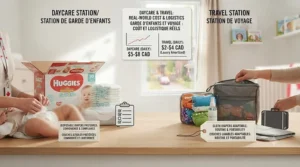
Cloth vs Disposable Environmental Impact
The cloth vs disposable environmental impact conversation usually gets reduced to “landfill bad, cloth good,” but the honest picture has more nuance — and the landfill side of the ledger is still the heavier weight. According to Statistics Canada data reported via industry sources, an estimated 1.5 billion disposable diapers are discarded in Canada annually — roughly 4 million a day. Because a disposable diaper’s outer layer is typically polypropylene or polyethylene plastic, with an absorbent core built around wood-pulp fibre and a super-absorbent polymer, and because landfills lack the oxygen needed for that plastic layer to break down, these materials effectively don’t biodegrade once buried, sitting in Canadian landfills for decades. Cloth diapering isn’t impact-free either — it trades landfill volume for water and electricity use in washing, plus the manufacturing footprint of the diapers themselves — but that footprint is spread across hundreds of reuses rather than a single change. For families weighing the landfill impact of disposables specifically, the calculus is straightforward: every cloth diaper in rotation is one fewer item added to a national household-waste stream that, per Canada’s most recent environmental indicator data, sent 26.6 million tonnes to landfill or incineration in a single year.
Long-Term Diaper Savings: The Real ROI Over 2.5 Years
Run the full 2.5-year diapering window — roughly birth to potty training — and the long-term diaper savings case for cloth stops being theoretical. Disposable diapering over that stretch typically totals C$2,000-C$3,000 per child once wipes, creams, and pail liners are factored in. A mid-range cloth stash like bumGenius or Mama Koala, plus laundry costs for the full period, usually lands between C$700 and C$1,300 total — savings in the neighbourhood of C$1,000-C$2,000 for a single child. Reuse that same stash for a second child within a few years, and the second child’s diapering cost drops to essentially the laundry bill alone, since the upfront stash cost has already been recovered. That’s the detail Amazon listings and disposable diaper marketing never mention: the real return on cloth diapering isn’t the first year, it’s every year after.
Common Mistakes When Switching to Cloth Diapers
Buying a huge stash before testing fit is the most expensive misstep — babies’ proportions change fast, and a system that fits at 3 months may gap at the legs by 6. Skipping a cloth-diaper-safe detergent is the second: regular detergent with fabric softener coats absorbent fibres and causes repelling, mimicking a “broken” diaper that’s actually just soap-coated. Underestimating overnight absorbency needs is third — daytime-rated inserts routinely leak overnight, which is exactly why boosters and gusseted designs like Rumparooz exist. Finally, many parents skip a stripping wash (a deep detergent-free rinse cycle) when diapers start smelling off, assuming the diapers are simply worn out when a buildup issue is often the real culprit.
Safety, Regulations & Certification: What Canadian Parents Should Know
Cloth and disposable diapers alike need to manage the same core risk: prolonged skin contact with moisture, which is the leading driver of diaper rash regardless of diaper type. The Canadian Paediatric Society recommends frequent changes, mild cleansing, and unscented barrier creams as the front-line defence, and specifically advises against baby powder due to inhalation risk — guidance that applies whether you’re using Esembly organic inners or a standard disposable. Look for cloth diaper materials that carry OEKO-TEX certification, which confirms the fabric has been independently tested for harmful substances — most of the reputable brands in this roundup, including AlvaBaby and Mama Koala, meet this standard on their core fabrics. There’s no Canada-specific regulatory body certifying diapers the way there is for car seats, so certification claims and aggregated review sentiment are the most reliable signal available to consumers.
Problem → Solution: Fixing the Top Cloth Diapering Headaches
Problem: Leaking during long stretches. Solution: add a microfiber or bamboo booster insert, or switch that slot in your stash to a double-gusset design like Rumparooz.
Problem: Diapers smell like ammonia even after washing. Solution: run a hot, detergent-free “strip” wash to clear detergent and mineral buildup, then resume a cloth-safe detergent at the recommended dose.
Problem: Snaps or elastic wearing out early. Solution: line-dry instead of machine-drying, which is consistently the single biggest factor in extending elastic and PUL lifespan.
Problem: Daycare won’t accept cloth. Solution: a hybrid system like Charlie Banana, cloth at home and biodegradable disposables at daycare, keeps costs down without a fight.
Problem: Newborn stage fit is inconsistent. Solution: budget for a small newborn-specific set (even a cheap AlvaBaby starter pack) rather than forcing one-size diapers onto a baby under 10 lbs.
FAQ
❓ Is cloth diapering actually cheaper than disposable in Canada?
❓ How much do disposable diapers cost per year in Canada?
❓ Do cloth diapers really save money with a second child?
❓ How much does washing cloth diapers add to a hydro bill?
❓ Are disposable diapers bad for the environment in Canada?
Conclusion
Weigh disposable vs cloth diapers cost honestly, and the pattern holds up across nearly every scenario we ran: disposables win on day-to-day convenience, cloth wins on the spreadsheet, and the size of that win grows every month you stick with it. Whether that means a bargain AlvaBaby starter pack, a dependable bumGenius stash built to survive two kids, or a premium Esembly system built around natural fibres, the seven products in this guide cover every entry point into cloth diapering without pretending it’s a one-size, one-price decision. The honest advice is simple: run your own numbers using the calculator framework above, be realistic about your laundry access and daycare situation, and pick the system — not just the price tag — that your routine can actually sustain for the next couple of years.
✨ Ready to Start Saving on Diapers?
🔍 Check current pricing on any of the 7 cloth diaper systems above and see which one matches your baby’s stage, your laundry setup, and your budget. A small switch now adds up to real savings by month six.
Recommended for You
- Disposable Diapers 2026: 7 Real Picks That Save Money
- Best Baby Bibs 2026: 7 Picks That Actually Stop the Mess
- Best baby food maker 2026: 7 Picks Canadian Parents Actually Trust
Disclaimer: This article contains affiliate links. As an Amazon Associate, I earn from qualifying purchases. If you purchase products through these links, we may earn a small commission at no additional cost to you.
✨ Found this helpful? Share it with your friends! 💬🤗
